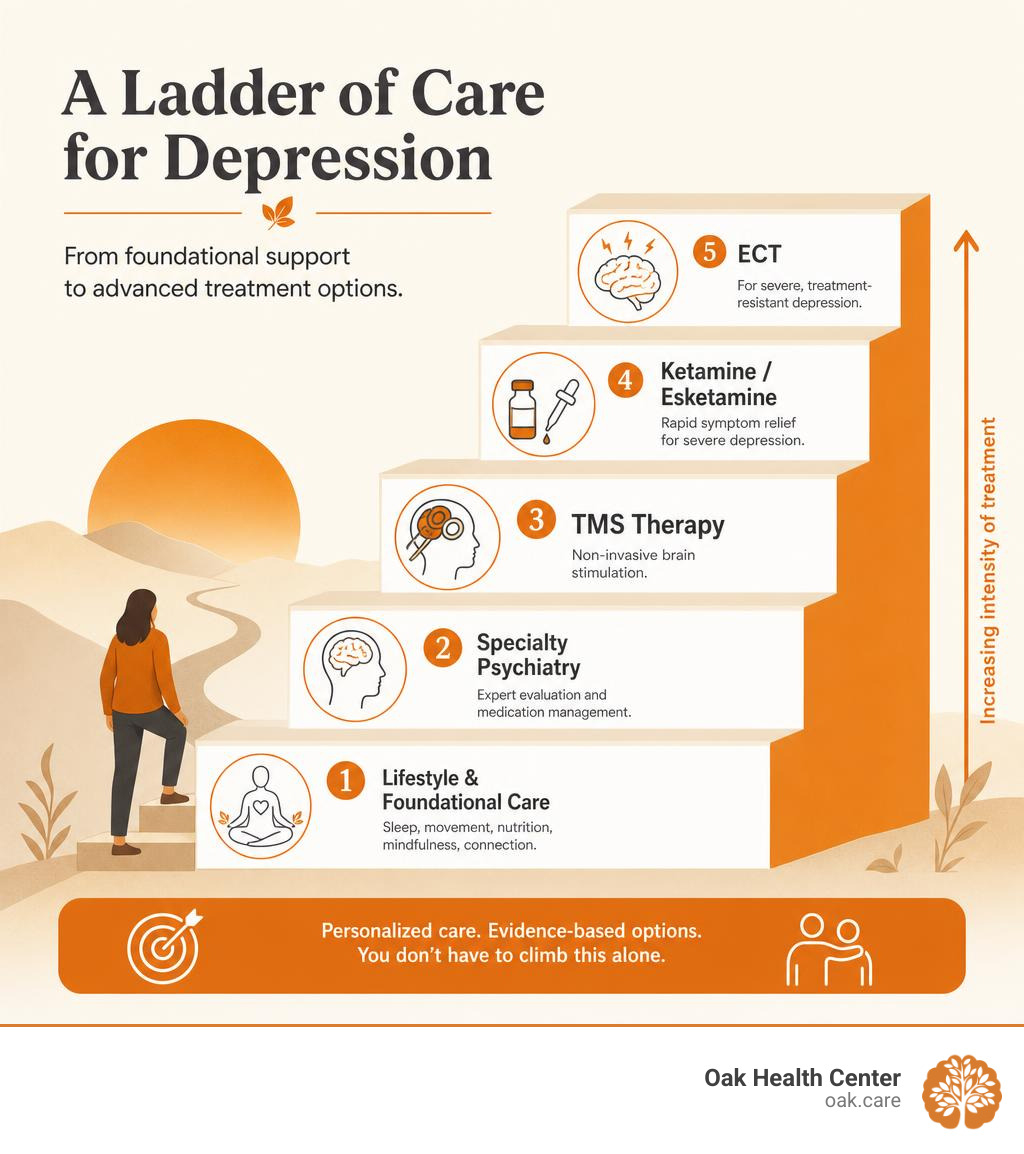
Alternative depression treatment options encompass a range of evidence-based interventions outside of traditional oral antidepressants like SSRIs. These include neuromodulation techniques such as Transcranial Magnetic Stimulation (TMS), rapid-acting therapies like ketamine infusion, and structured lifestyle interventions involving nutritional psychiatry and specialized exercise protocols designed to recalibrate the brain’s neurochemistry and stress response systems.
Major depressive disorder (MDD) remains one of the leading causes of disability worldwide. While traditional pharmacological treatments and psychotherapy serve as the frontline of defense, approximately one-third of individuals diagnosed with depression do not achieve full remission after trying multiple standard medications—a condition often categorized as treatment-resistant depression (TRD). By 2026, the landscape of mental healthcare has expanded significantly, offering more precise, rapid-acting, and technologically advanced alternatives for those who have found little relief through conventional means.
Understanding the Need for Alternative Interventions
The traditional "monoamine hypothesis"—the idea that depression is simply a chemical imbalance of serotonin, norepinephrine, or dopamine—is increasingly viewed as an oversimplification. Modern neuroscience suggests that depression involves complex disruptions in neural plasticity, circadian rhythms, neuroinflammation, and the "gut-brain axis."
When standard Selective Serotonin Reuptake Inhibitors (SSRIs) or Serotonin-Norepinephrine Reuptake Inhibitors (SNRIs) fail, it is often because the underlying cause of the patient's depression resides in these more complex systems. Alternative treatments aim to target these alternative pathways, offering hope to those who experience debilitating side effects from pills or whose symptoms remain stagnant despite years of talk therapy.
Neuromodulation: Rewiring the Brain’s Circuitry
Neuromodulation involves using electrical or magnetic stimulus to alter nerve activity. These procedures are increasingly popular because they target specific regions of the brain associated with mood regulation, such as the dorsolateral prefrontal cortex (DLPFC), without the systemic side effects associated with oral medications.
Transcranial Magnetic Stimulation (TMS)
TMS is a non-invasive procedure that uses magnetic fields to stimulate nerve cells in the brain. During a session, an electromagnetic coil is placed against the scalp near the forehead. The electromagnet delivers a magnetic pulse that stimulates nerve cells in the region of the brain involved in mood control and depression.
- How it Works: By repeatedly stimulating specific areas, TMS increases neural activity and strengthens the connections between neurons.
- The Protocol: A typical course involves sessions five days a week for four to six weeks. It is performed in an outpatient setting, and patients can drive themselves home immediately afterward.
- Suitability: TMS is primarily indicated for patients who have not seen improvement from at least one antidepressant medication.
Electroconvulsive Therapy (ECT)
Despite historical stigmas, modern ECT is a highly refined and effective medical treatment. It is performed under general anesthesia and involves the brief application of electric currents to the brain, intentionally triggering a brief, controlled seizure.
- Mechanism: Researchers believe the seizure causes a massive release of neurotransmitters and helps "reset" the brain’s signaling pathways.
- Efficacy: It remains the most effective treatment for severe, treatment-resistant depression and psychotic depression, often showing results faster than any other method.
- Modern Safeguards: The use of muscle relaxants and anesthesia ensures the patient feels no pain and experiences no physical convulsions.
Vagus Nerve Stimulation (VNS)
VNS involves an implanted device, similar to a pacemaker, that sends regular, mild pulses of electrical energy to the brain via the vagus nerve.
- Long-term Support: Unlike TMS, which is a discrete course of treatment, VNS provides ongoing stimulation. It is typically reserved for chronic, highly resistant cases where depression has lasted for years.
Rapid-Acting Therapies: The Rise of Glutamatergic Interventions
One of the most significant shifts in psychiatry in the mid-2020s is the transition from medications that take weeks to work to those that offer relief within hours.
Ketamine and Esketamine
Ketamine works on the glutamate system rather than the serotonin system. Glutamate is the brain’s most abundant excitatory neurotransmitter and plays a crucial role in synaptic plasticity—the brain's ability to change and grow.
- IV Ketamine Infusions: Administered in a clinical setting, these sub-anesthetic doses can lift suicidal ideation and deep depressive "fog" within 24 hours.
- Esketamine (Spravato): An FDA-approved nasal spray version of ketamine. Because of its potency and potential for dissociation, it must be administered in a certified doctor's office where the patient is monitored for two hours.
- The "Synaptic Repair" Theory: Ketamine is believed to physically repair synapses in the brain that have withered due to chronic stress and cortisol exposure.
Psychedelic-Assisted Therapy
By 2026, psilocybin-assisted therapy has moved through rigorous clinical trials and is available in specific jurisdictions under strict medical supervision. Unlike recreational use, this involve "set and setting," where a patient takes a controlled dose in the presence of two trained therapists to process deep-seated emotional trauma.
- Neuroplasticity Window: Psychedelics promote a state of heightened neuroplasticity, allowing patients to "unlearn" negative thought patterns that have become hardwired over time.
Nutritional Psychiatry and the Gut-Brain Axis
The connection between the gastrointestinal tract and the brain is a major focus of alternative depression treatment. The gut microbiome produces about 95% of the body's serotonin, and inflammation in the gut often manifests as inflammation in the brain.
The Anti-Inflammatory Diet
Research into the Mediterranean diet and the SMILES trial has shown that a diet high in whole grains, legumes, colorful vegetables, and omega-3 fatty acids can significantly reduce depressive symptoms.
- Why it works: These foods reduce systemic inflammation and provide the precursors necessary for neurotransmitter synthesis.
Targeted Supplementation
While "supplements" are often viewed with skepticism, specific compounds have strong clinical backing for depression:
- Omega-3 Fatty Acids (EPA/DHA): Essential for maintaining the structural integrity of neuronal membranes.
- S-Adenosylmethionine (SAMe): A naturally occurring compound that helps produce and regulate hormones and maintain cell membranes.
- L-Methylfolate: A medical food that provides the active form of folate needed to synthesize serotonin, dopamine, and norepinephrine.
Lifestyle and Technological Interventions
Exercise as Medicine
The "runner's high" is more than just a feeling; it is the result of Brain-Derived Neurotrophic Factor (BDNF) being released. BDNF acts like "fertilizer" for the brain. For depression, a combination of aerobic exercise (cardio) and resistance training (weights) 150 minutes per week has been shown in some studies to be as effective as standard antidepressants for mild to moderate MDD.
Digital Therapeutics and VR
Virtual Reality (VR) is now being used to facilitate "environmental enrichment." Patients can engage in immersive mindfulness or exposure therapy in a controlled, virtual environment. Additionally, AI-driven wearable devices can now track Heart Rate Variability (HRV) and sleep patterns to alert patients and clinicians to an impending depressive episode before symptoms become severe.
Comparison of Alternative Treatment Options
The following table provides a high-level comparison of the most common alternative treatments available in 2026.
| Treatment Type | Mechanism | Duration of Effect | Primary Side Effects | Best For |
|---|---|---|---|---|
| TMS | Magnetic Pulses | Long-term (months/years) | Scalp discomfort, mild headache | Moderate TRD; those avoiding meds |
| Ketamine | Glutamate modulation | Short to Medium (weeks) | Dissociation, temporary BP rise | Rapid relief; suicidal ideation |
| ECT | Electrical "Reset" | Long-term with maintenance | Temporary memory loss, fatigue | Severe/Psychotic depression |
| Nutritional | Inflammation reduction | Permanent lifestyle shift | Minimal; digestive adjustment | Adjunct therapy; mild/moderate MDD |
| Psilocybin | Serotonin 2A receptor | Potential long-term (months) | Anxiety during session, nausea | Deep trauma; TRD |
| VNS | Vagus Nerve stimulation | Permanent (implanted) | Hoarseness, cough | Chronic, multi-year depression |
Access, Costs, and Insurance Considerations
Navigating the cost of alternative treatments is a critical step for patients. In 2026, insurance coverage for these options has improved but remains variable.
- TMS Coverage: Most major insurers, including Medicare, now cover TMS if a patient has failed two to four antidepressant trials. Documentation of "medical necessity" is required.
- Ketamine/Spravato: Spravato is often covered under pharmacy benefits, but IV ketamine is frequently an out-of-pocket expense, ranging from $400 to $800 per infusion.
- Holistic Options: While nutritionists and specialized exercise coaches are rarely covered by standard health insurance, many Health Savings Accounts (HSA) and Flexible Spending Accounts (FSA) can be used to pay for these services if a doctor provides a Letter of Medical Necessity.
Safety and Medical Supervision
It is imperative that patients do not attempt "DIY" versions of these treatments. Whether it is a supplement regimen or a neuromodulation procedure, medical supervision is required to:
- Identify potential contraindications (e.g., TMS is unsafe for those with metal implants in the head).
- Monitor for adverse psychological reactions during rapid-acting therapy.
- Manage the transition or tapering off of existing medications.
FAQ
What exactly is "Treatment-Resistant Depression"?
Treatment-resistant depression (TRD) is generally defined as a condition where a person has tried at least two different classes of antidepressant medications at an adequate dose and duration without experiencing a significant reduction in symptoms. This status often qualifies patients for more advanced alternative treatments like TMS or Esketamine.
Is ketamine therapy the same as the street drug?
While the active chemical is the same, the clinical application is vastly different. In a medical setting, ketamine is administered in highly controlled, sub-anesthetic doses. The purity is pharmaceutical grade, and the administration is paired with medical monitoring and often therapeutic integration, which is essential for safety and efficacy.
How long do the effects of TMS last?
For many patients, the benefits of a full TMS course can last anywhere from six months to over a year. Some patients require "maintenance" sessions—perhaps once a month or a short "booster" course every year—to keep symptoms at bay. It is not considered a one-time permanent cure but rather a long-term management tool.
Can lifestyle changes really replace medication?
For mild to moderate depression, significant lifestyle changes in diet, sleep, and exercise can sometimes lead to remission. However, for severe or clinical depression, lifestyle changes are usually most effective as an adjunct (additional) therapy rather than a replacement. They provide the biological foundation that allows other treatments to work more effectively.
Are there risks of memory loss with modern ECT?
Memory loss remains a potential side effect of ECT, typically involving the period immediately surrounding the treatment sessions. However, modern techniques, such as "unilateral" placement (stimulating only one side of the brain) and "ultrabrief" pulse widths, have significantly reduced the risk and severity of cognitive side effects compared to older methods.
Next Steps for Patients
If you or a loved one is struggling with depression that has not responded to traditional therapy, the first step is to seek a consultation with a psychiatrist who specializes in interventional psychiatry.
Begin by requesting a formal "Treatment-Resistant Depression Evaluation." This evaluation should include a review of your medication history, a physical check for underlying conditions (like thyroid dysfunction), and a discussion about which alternative pathway—neuromodulation, rapid-acting medication, or intensive lifestyle medicine—is most appropriate for your specific symptom profile. Always ensure that the facility you choose is accredited and that they provide a clear roadmap for both the acute treatment phase and long-term maintenance.