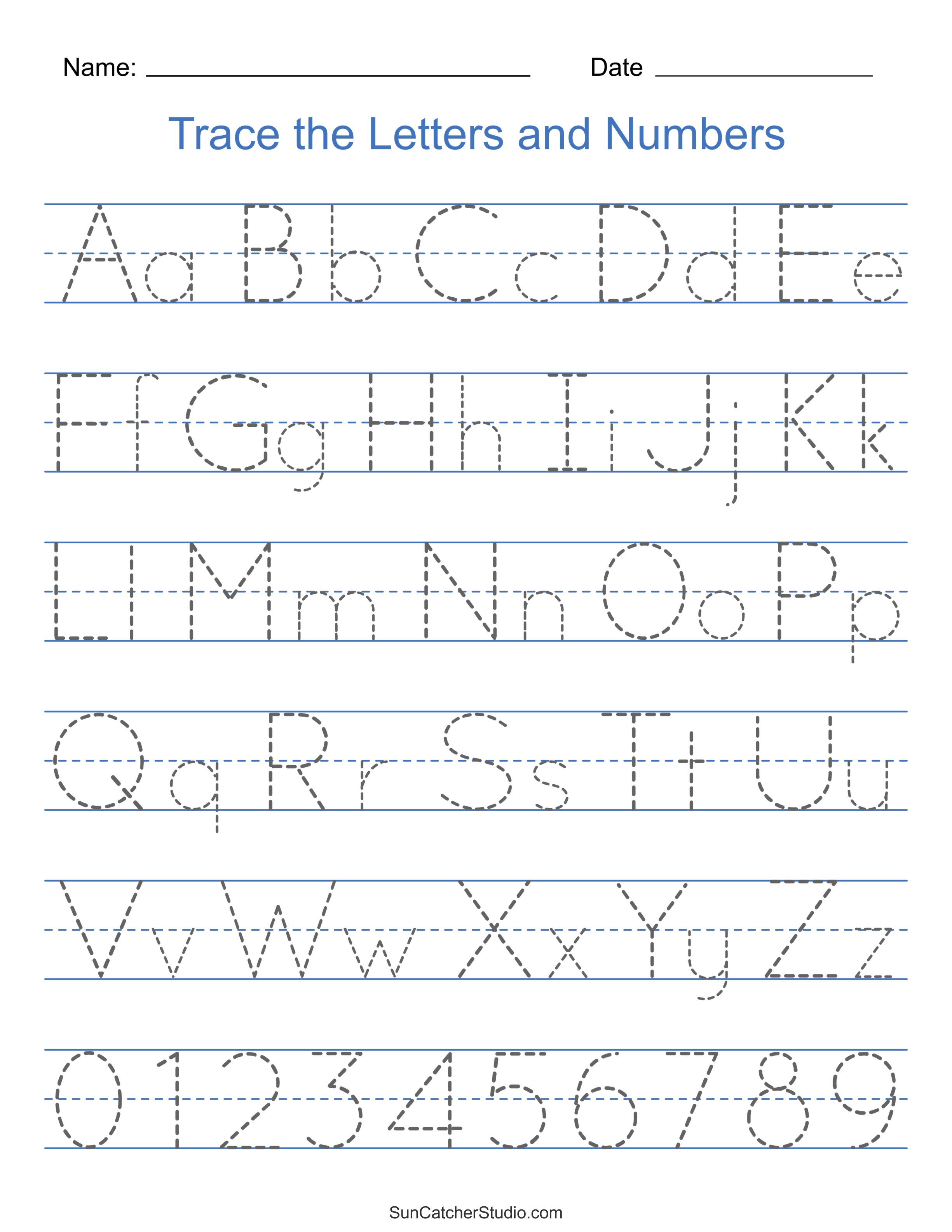
Alphabet tracing worksheets from A to Z are foundational educational resources designed to guide children through the precise mechanics of letter formation. By providing visual and tactile paths, these tools help learners transition from simple recognition to the motor-memory-driven skill of independent writing, ensuring a robust start to their literacy journey in both home and classroom settings.
The Science of Handwriting: Why Tracing Matters in 2026
Despite the proliferation of digital interfaces and voice-to-text technology, the year 2026 sees a renewed emphasis on physical handwriting in early childhood curricula. Research consistently demonstrates that the act of physically forming letters—known as graphomotor skill—activates specific neural pathways that typing does not. When a child uses an alphabet tracing worksheet, they are not merely "drawing" shapes; they are engaging in a complex neurological process that links visual perception with fine motor execution.
The connection between the hand and the brain is critical for literacy. Studies from the National Institutes of Health have historically highlighted that handwriting improves letter recognition and spelling accuracy. In the current educational landscape, educators use tracing as a "scaffolding" technique. It provides the necessary support for a child to build confidence before the training wheels are removed for freehand writing. This process builds proprioception, the brain’s ability to understand where the hand is in space, which is vital for maintaining consistent letter size and spacing.
Categorizing Alphabet Tracing Worksheets A to Z
Not all worksheets are created equal. Depending on the child's developmental stage, different styles of tracing guides are required to maximize learning outcomes. Choosing the right "A to Z" set involves understanding the specific needs of the learner.
Standard Block Print
Standard block print is the most common starting point. These worksheets feature clean, sans-serif letters that match the typography found in most early-reader books. The primary goal here is grapheme-phoneme correspondence—helping the child associate the shape of the letter "A" with its sound. These worksheets usually include both uppercase and lowercase versions to help the child understand that while the shapes differ, the name and sound remains the same.
D'Nealian and Slanted Scripts
D'Nealian is a popular alternative to standard block print because it adds a slight slant and "tails" to many letters. This style is specifically engineered to make the future transition to cursive writing much easier. For parents and teachers planning a curriculum that moves into cursive by the second or third grade, D'Nealian alphabet tracing worksheets are a strategic choice. They reduce the amount of "lifting" the pencil does, promoting a more fluid writing motion.
Themed and Associative Worksheets
In 2026, engagement is key to maintaining a child's attention. Themed worksheets—such as those featuring animals, space, or nature—provide a contextual hook. For example, an "A" worksheet might feature a large apple or an astronaut for the child to color after completing their tracing. This reinforces the phonetic sound of the letter through visual association, a method supported by the National Association for the Education of Young Children (NAEYC).
Technical Specifications of High-Quality Worksheets
When selecting or designing alphabet tracing worksheets, certain technical elements must be present to ensure the child develops correct habits. Poorly designed worksheets can lead to "learned errors" that are difficult to correct later.
- Directional Arrows: Every letter should feature small arrows and numbered steps. For instance, the letter "B" should show a vertical line down (1), followed by two semicircles (2 and 3). Without these, children often develop inefficient "bottom-up" writing habits.
- The Three-Line System: Standard worksheets utilize a top line (sky), a middle dotted line (plane), and a bottom line (grass). Some also include a "basement" line for letters like "g," "j," and "p" that descend below the main line.
- Starting Dots: A bold dot at the beginning of each stroke tells the child exactly where to place their pencil. This reduces hesitation and cognitive load.
- Graduated Support: The best A to Z sets offer a progression. The first row might be thick, solid lines; the second row might be dashed lines; and the final row might provide only the starting dots, encouraging the child to complete the letter independently.
Comparative Overview of Tracing Methodologies
The following table compares the most common tracing styles used in modern early education to help you decide which is appropriate for your specific goals.
| Feature | Standard Block Print | D'Nealian Script | Cursive Tracing | Sensory Tracing |
|---|---|---|---|---|
| Primary Goal | Recognition & Legibility | Cursive Readiness | Writing Speed & Flow | Tactile Feedback |
| Target Age | 3–5 Years | 5–6 Years | 7+ Years | 3–4 Years |
| Stroke Style | Vertical & Horizontal | Slanted & Curved | Continuous Loops | Variable (Sand/Salt) |
| Complexity | Low | Medium | High | Low |
| Cognitive Focus | Shape Memorization | Movement Efficiency | Word Integration | Sensory Integration |
Step-by-Step Implementation Guide
To effectively use alphabet tracing worksheets from A to Z, follow a structured approach that respects the child's physical and cognitive limits.
1. Establish the Proper Grip
Before the pencil touches the paper, the child must master the tripod grasp. This involves using the thumb, index, and middle finger to hold the writing utensil. In 2026, many educators recommend triangular-shaped pencils or specialized grips to naturally guide the fingers into this position. A proper grip prevents hand fatigue and allows for the fine motor control necessary to stay within the lines.
2. Begin with Pre-Writing Strokes
Jumping straight into "A to Z" can be frustrating for a toddler. Start with worksheets that focus on vertical lines, horizontal lines, circles, and zig-zags. These are the "building blocks" of all letters. Once a child can trace a perfect circle and a straight line, they are mechanically ready for the alphabet.
3. The "Say and Trace" Method
As the child traces, encourage them to say the name of the letter and its primary sound. For example: "A says /a/." This multi-sensory approach (tactile tracing, visual seeing, and auditory speaking) creates stronger neural connections. It transforms a simple motor exercise into a comprehensive literacy lesson.
4. Sequence Matters
While it is tempting to go from A to Z in alphabetical order, many experts suggest grouping letters by stroke similarity. For example, teaching "L, T, I, H, F, E" (the "straight line" letters) first can be more effective than starting with "A," which requires slanted lines and a horizontal bridge.
Troubleshooting Common Handwriting Challenges
It is common for children to encounter obstacles when using alphabet tracing worksheets. Identifying these early prevents frustration and the development of poor habits.
- Letter Reversals: Reversing letters like "b" and "d" or "p" and "q" is developmentally normal until about age seven. If a child continues to reverse letters on a tracing worksheet, use visual cues, such as a small "bed" drawing where the "b" is the headboard and "d" is the footboard.
- Excessive Pressure: If the child is ripping the paper or their hand cramps quickly, they are likely applying too much pressure. Encourage them to practice with markers first, which require almost no pressure to leave a mark, before moving back to pencils.
- Floating Letters: If the child’s letters are not sitting on the "grass" line, they may need more high-contrast worksheets. Using worksheets with a highlighted bottom row (often colored yellow or light blue) can provide a clearer "landing zone" for their letters.
- Poor Spacing: Even when tracing, children might struggle with the concept of "finger spaces" between letters. Use worksheets that provide specific "box" boundaries for each letter to reinforce the idea of individual character space.
The Role of Paper Quality and Writing Tools
In 2026, the technical side of the "physical" worksheet still matters. The tactile feedback a child receives is influenced by the materials used. For alphabet tracing, a slightly toothy (rough) paper is often better than smooth, glossy printer paper because it provides more friction, giving the child better control over the pencil.
Pencil lead hardness also plays a role. A standard #2 (HB) pencil is the baseline, but children with weaker hand strength might benefit from a 2B pencil, which has softer lead and leaves a darker line with less effort. Conversely, for children who need to work on control, a harder lead can provide the resistance necessary to slow down their movements.
Digital vs. Physical Worksheets in the 2026 Classroom
The debate between digital tracing on tablets and physical paper remains relevant. While digital apps provide instant feedback (such as "dinging" when a stroke is correct), they lack the resistance that paper provides. This resistance is what builds the small muscles in the hand.
A hybrid approach is often most effective. Digital tracing can be used for "gamified" repetition and to keep a child engaged during travel or short breaks. However, the core of handwriting instruction should remain on physical alphabet tracing worksheets. The 1:1 correlation between the physical effort and the resulting mark on the paper is a vital part of the learning cycle that screens cannot fully replicate.
FAQ
What is the best age to start alphabet tracing?
Most children are ready to begin basic alphabet tracing between the ages of 3 and 5. The key indicator is not age, but the ability to hold a crayon and follow a simple line. If a child can mimic a vertical stroke or a circle, they have the foundational motor skills to begin tracing letters.
Should I start with uppercase or lowercase letters?
Most educators recommend starting with uppercase letters. These are generally composed of simpler straight lines and large curves, making them easier for small hands to master. Lowercase letters often involve more complex shapes and "descenders" that go below the line, which can be introduced once the child is comfortable with the uppercase alphabet.
How many letters should a child practice per day?
Consistency is more important than quantity. For a preschooler, practicing one or two letters for 10–15 minutes is usually sufficient. Overloading a child with a full A to Z session can lead to fatigue and a negative association with writing. The goal is "perfect practice," ensuring each stroke is done correctly rather than rushing through a whole page.
Are cursive tracing worksheets still necessary in 2026?
Yes, cursive tracing remains a valuable skill. Beyond the ability to read historical documents, cursive has been linked to improved syntax and better integration of the left and right brain hemispheres. Many modern curricula introduce cursive tracing in the late second or early third grade as a way to improve writing speed and cognitive fluidity.
My child hates tracing. What should I do?
If a child resists worksheets, try "multi-sensory tracing." Have them trace letters in a tray of sand, salt, or shaving cream first. Once they enjoy the motion of forming the letters with their fingers, they are often more willing to transition to the pencil-and-paper format of a standard worksheet.
Practical Recommendation for Educators and Parents
To achieve the best results with alphabet tracing worksheets A to Z, integrate them into a broader literacy environment. Do not treat the worksheet as an isolated chore. Instead, pair the "B" worksheet with a book about bears, or have the child "hunt" for the letter "B" on cereal boxes after they finish their tracing.
In 2026, the most successful learners are those who see the connection between the marks they make on a page and the world of information around them. Use high-quality, arrow-guided worksheets to build the motor skill, but use real-world interaction to build the passion for writing. Start with the "straight line" letters to build early wins, and always prioritize the quality of the stroke over the number of pages completed.