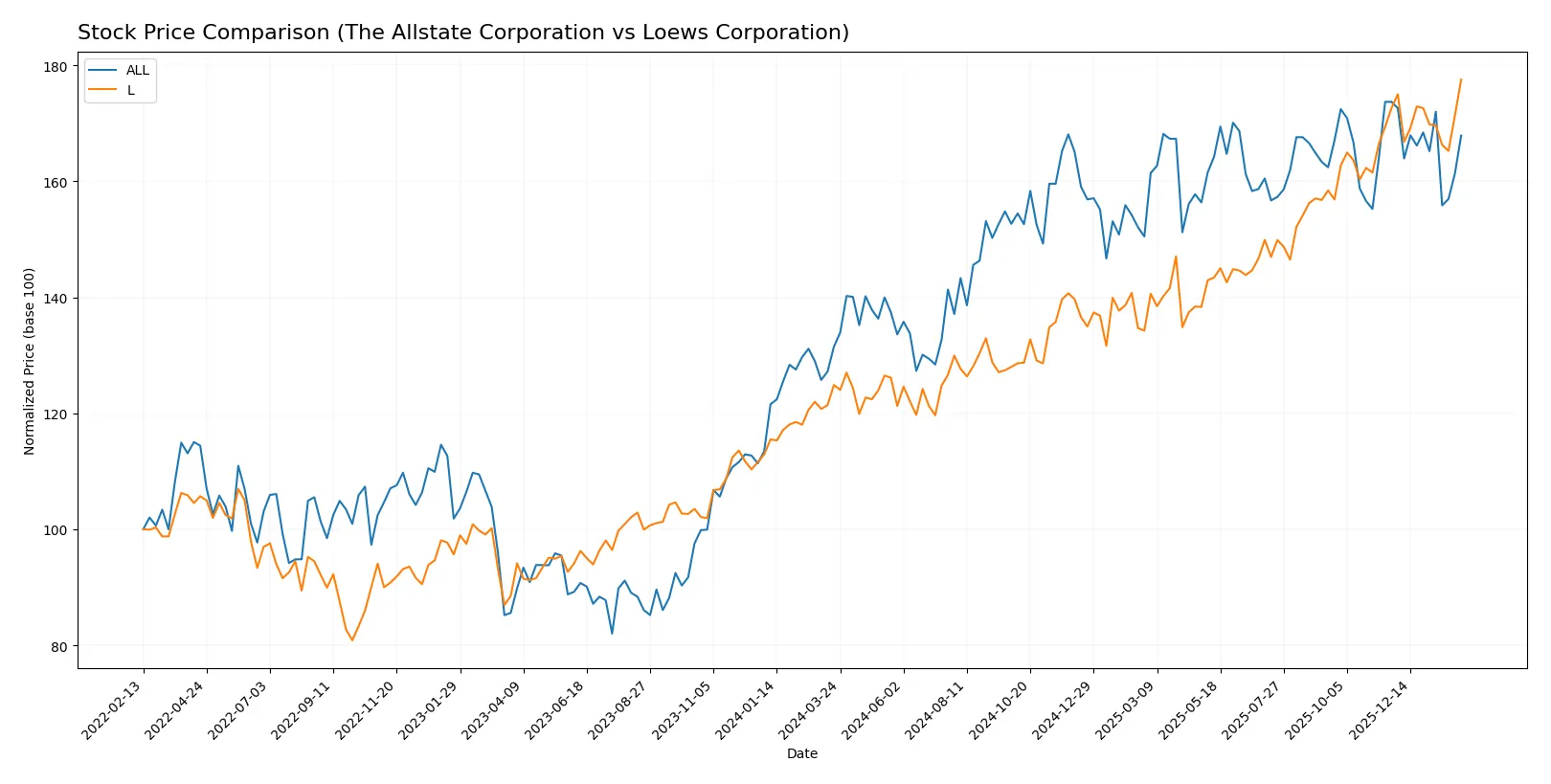
The Allstate Corporation (NYSE: ALL) is a premier American insurer specializing in personal lines property and casualty insurance. As of 2026, the stock remains a staple for value-oriented investors, offering a combination of consistent dividend growth, a modernized digital distribution model, and improved underwriting margins following a multi-year strategic pivot to counter inflationary pressures in the automotive and housing sectors.
The Evolution of Allstate’s Business Model
The Allstate Corporation has undergone a significant structural transformation over the last several years, moving from a diversified financial services provider to a lean, technology-driven property and casualty (P&C) powerhouse. By 2026, the company has largely completed its "Transformative Growth" plan, which aimed to increase market share in personal lines insurance by expanding multi-channel distribution and lowering costs.
Historically known for its "Good Hands" slogan and a vast network of captive agents, Allstate has successfully integrated direct-to-consumer models and independent agency channels, notably through the acquisition and scaling of National General. This multi-track approach allows Allstate to capture different segments of the market—those who value personalized advice from an agent and those who prefer the efficiency of digital-first platforms.
In the current 2026 fiscal environment, Allstate’s primary revenue drivers include:
- Allstate Protection: This remains the core segment, providing private passenger auto and homeowners insurance.
- Protection Services: This includes "Allstate Protection Plans" (formerly SquareTrade), which provides warranties for consumer electronics and appliances, and "Arity," a telematics data company that fuels the group’s pricing precision.
- Allstate Health and Benefits: Providing voluntary supplemental health and life insurance products to employer groups and individuals.
Financial Performance and Underwriting Discipline
For an insurance company like Allstate, the most critical metric for investors to monitor is the Combined Ratio. This figure represents the sum of incurred losses and expenses divided by earned premiums. A combined ratio below 100% indicates an underwriting profit, while a ratio above 100% indicates that the company is paying out more in claims and expenses than it is collecting in premiums.
Throughout the early 2020s, Allstate, like many of its peers, faced challenges due to "social inflation," rising litigation costs, and the skyrocketing price of vehicle repairs and medical care. However, by 2026, the company’s aggressive rate-filing strategy has caught up with these costs. Allstate’s ability to leverage its proprietary data through Arity has allowed for more granular risk assessment, helping to keep the combined ratio in a healthy range, typically targeting the low-to-mid 90s in non-catastrophic quarters.
Investment income also plays a vital role in Allstate’s profitability. The company manages a massive portfolio of tens of billions of dollars, primarily invested in fixed-income securities. With interest rates in 2026 providing more attractive yields than the historic lows seen in the previous decade, Allstate’s "float"—the money held between receiving premiums and paying claims—is generating substantial recurring income, providing a buffer during years with high natural disaster claims.
Allstate Stock Valuation and Market Dynamics
Investors evaluating Allstate (NYSE: ALL) in 2026 often focus on the Price-to-Earnings (P/E) ratio and the Price-to-Book (P/B) value. Compared to high-growth tech stocks, Allstate typically trades at a lower P/E multiple, reflecting its status as a mature, "value" stock. However, its valuation often fluctuates based on two primary external factors: interest rate cycles and catastrophe (CAT) losses.
When interest rates rise, Allstate’s investment income increases, which the market often rewards with a higher stock price. Conversely, years with a high frequency of hurricanes, wildfires, or severe convective storms can weigh on the stock, as these events lead to "CAT losses" that temporarily depress earnings. To mitigate this volatility, Allstate has refined its reinsurance program, which essentially involves buying insurance for itself to cap its exposure to massive disasters.
In 2026, Allstate’s market capitalization reflects its position as one of the top three personal lines insurers in the United States. Its scale provides a "moat" through brand recognition and the ability to outspend smaller competitors on advertising and technological infrastructure.
Dividend Profile and Shareholder Returns
One of the primary reasons for the inclusion of ALL stock in long-term portfolios is its commitment to returning capital to shareholders. Allstate has a long history of paying dividends and has consistently increased its payout over the last decade.
By 2026, the dividend yield remains competitive within the financial sector. Management’s philosophy is to maintain a sustainable payout ratio that allows for both dividend growth and opportunistic share repurchases. Share buybacks are a critical component of Allstate’s strategy; by reducing the total number of shares outstanding, the company increases the Earnings Per Share (EPS) for remaining investors, often providing a steady upward floor for the stock price.
| Metric (2026 Est.) | Allstate (ALL) | Progressive (PGR) | Travelers (TRV) |
|---|---|---|---|
| Dividend Yield | 2.5% - 3.0% | 0.5% - 1.2% | 2.0% - 2.4% |
| P/E Ratio (Forward) | 11x - 13x | 18x - 21x | 12x - 14x |
| Primary Focus | Personal Lines (Home/Auto) | Auto / Commercial | Commercial / Personal |
| Combined Ratio Target | 92% - 95% | 90% - 92% | 93% - 96% |
| Distribution Model | Multi-channel (Agent/Direct) | Direct/Independent Agent | Independent Agent |
Strategic Growth Drivers: Arity and Protection Plans
While the core insurance business is the engine, Allstate’s "Protection Services" segment is the high-growth fuel. Arity, Allstate’s telematics subsidiary, has become a significant asset. By collecting billions of miles of driving data, Arity allows Allstate to price insurance based on how a person drives rather than just their demographic profile. In a 2026 market where "Usage-Based Insurance" (UBI) is becoming the standard, Allstate’s early investment in this technology provides a distinct competitive advantage over smaller regionals.
Furthermore, Allstate Protection Plans (SquareTrade) has expanded its reach far beyond smartphones. In 2026, this segment covers everything from smart home appliances to e-bikes and specialized medical equipment. This business is capital-light compared to traditional insurance because it does not require the same level of regulatory reserves, leading to high returns on equity and diversifying the company’s revenue away from traditional catastrophe-exposed lines.
Risks and Operational Challenges
No stock overview is complete without a thorough analysis of the risks. For Allstate, these are primarily concentrated in three areas:
- Climate Change and Catastrophe Frequency: As the severity of weather events increases, Allstate’s homeowners' business faces higher volatility. While reinsurance helps, the cost of that reinsurance also rises, potentially squeezing margins.
- Autonomous Vehicle Technology: In the long term (beyond 2026), the rise of self-driving features could reduce the frequency of accidents. While this sounds positive, it could eventually lead to lower premiums and a smaller total addressable market for auto insurance.
- Regulatory Hurdles: Insurance is regulated at the state level. In some jurisdictions, it can be difficult for insurers to get approval for the rate increases necessary to stay ahead of inflation. Allstate has occasionally had to pause writing new business in states like California or Florida when the regulatory environment became untenable.
Comparative Analysis: Allstate vs. The Competition
When comparing Allstate to its chief rivals, Progressive and State Farm, distinct differences emerge. Progressive is often viewed as the "growth" play in the sector, frequently trading at a higher multiple due to its superior underwriting margins in the auto segment. State Farm, being a mutual company, does not have a public stock, making Allstate the primary vehicle for investors wanting exposure to the "agent-based" personal lines model.
Travelers (TRV) is another common comparison, but Travelers has a much heavier tilt toward commercial insurance. Allstate’s 2026 profile is uniquely concentrated on the American consumer. This makes Allstate more sensitive to domestic consumer spending and housing trends, but less sensitive to global industrial cycles compared to a company like Chubb or Travelers.
Assessing Allstate’s Technical Outlook
From a technical standpoint, Allstate’s stock often exhibits lower beta (volatility) than the broader S&P 500. It is frequently used by institutional investors as a defensive play during periods of market turbulence. In 2026, the stock’s performance is closely watched by analysts through the lens of "Book Value Per Share" growth. If Allstate can continue to grow its book value while maintaining a high Return on Equity (ROE), the stock is likely to maintain its upward trajectory.
The integration of AI in claims processing has also reached maturity in 2026. Allstate uses sophisticated image-recognition algorithms to estimate repair costs from photos submitted via their mobile app. This reduces the need for physical adjusters for minor claims, significantly lowering the "Expense Ratio" component of the combined ratio. Investors should look for continued improvements in this ratio as a sign of successful digital execution.
FAQ: Key Questions Regarding Allstate Stock
Does Allstate pay a reliable dividend?
Yes, Allstate has a long-standing history of paying quarterly dividends. As of 2026, it is considered a reliable income stock within the Financials sector. The company typically reviews its dividend policy annually, often announcing increases in the first quarter of the year. The payout is supported by diversified income streams from both underwriting and its large investment portfolio.
How does inflation affect Allstate stock?
Inflation typically has a two-phased effect on Allstate. In the short term, rising costs for labor and auto parts can hurt profit margins if premiums aren't raised quickly enough. However, in the long term, higher inflation usually leads to higher interest rates, which increases the yield on Allstate's fixed-income investments. By 2026, Allstate has refined its "inflation-responsive" pricing models to mitigate the lag between rising costs and rate adjustments.
What is Allstate's "Transformative Growth" plan?
The Transformative Growth plan was a multi-year strategy launched to increase Allstate’s competitiveness. It focused on reducing costs, expanding distribution (moving beyond just captive agents to include direct and independent channels), and investing heavily in technology. For investors in 2026, the success of this plan is visible in Allstate’s expanded market share and lower expense ratios.
Is Allstate stock a good hedge against market volatility?
Insurance stocks like Allstate are often considered defensive because people generally maintain their home and auto insurance regardless of the economic climate. While ALL stock is not immune to market crashes, its low beta and consistent dividend often make it less volatile than high-growth sectors like Technology or Consumer Discretionary.
What are the biggest threats to Allstate's stock price in 2026?
The primary threats include an unusually high year for natural disasters (hurricanes/wildfires), which can cause massive one-time losses. Additionally, adverse regulatory shifts in large states or a sudden, sharp decline in interest rates could negatively impact the company's earnings power.
Final Recommendation for Investors
For investors seeking a balance of income and stability in 2026, The Allstate Corporation (ALL) represents a solid core holding. The company has successfully navigated the transition into the digital age, maintaining its brand dominance while modernizing its cost structure.
Prospective buyers should monitor quarterly Catastrophe Loss reports and the Combined Ratio as primary indicators of health. If Allstate continues to demonstrate that it can price risk accurately in a changing climate while growing its "Protection Services" revenue, the stock remains a compelling value proposition. It is particularly suited for those with a long-term horizon who value "Total Return"—the combination of steady share price appreciation and reinvested dividends.
Disclaimer: This overview is for informational purposes only and does not constitute professional financial advice. Investors should conduct their own due diligence or consult with a certified financial advisor before making investment decisions.