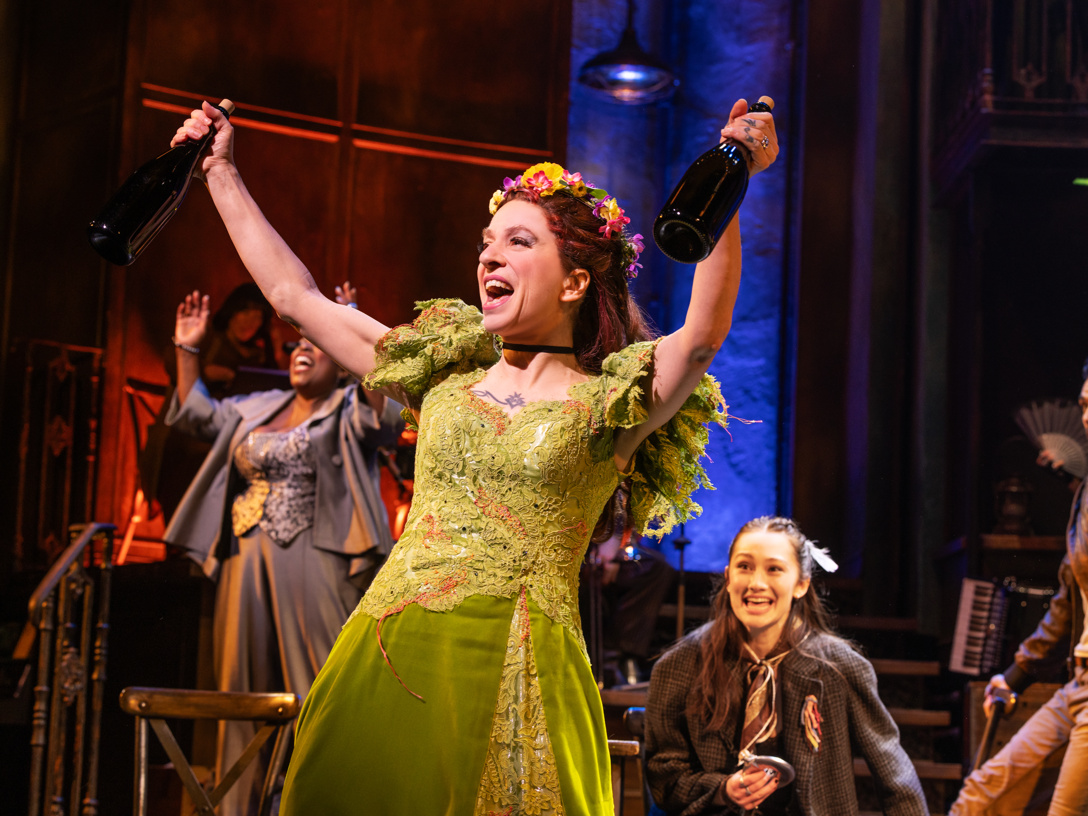
Allison Russell’s arrival on the Broadway stage in Anaïs Mitchell’s critically acclaimed musical Hadestown marked a historic milestone, blending her virtuosic musicianship and profound storytelling with the show's deeply rooted folk-opera tradition. Stepping into the role of Persephone, the Grammy Award-winning singer-songwriter, poet, and activist brought a distinct emotional gravity, vocal power, and instrumental versatility that expanded the artistic boundaries of the character. This transition from acclaimed independent folk artist to Broadway luminary not only showcased her multifaceted performance abilities but also underscored the evolving nature of casting on the Great White Way, where genre-defying creators are increasingly invited to breathe new life into established theatrical masterworks.
The Artistic Landscape of Hadestown and the Role of Persephone
To understand the weight of Allison Russell’s Broadway debut, one must examine the unique architectural and musical landscape of Hadestown. Conceived by singer-songwriter Anaïs Mitchell and directed by Rachel Chavkin, the musical reimagines the ancient Greek myth of Orpheus and Eurydice alongside the tragic romance of Hades and Persephone. Set in a post-apocalyptic, Depression-era industrial landscape, the narrative operates as a hybrid of a New Orleans jazz funeral, a gritty American folk revival, and classical musical theater.
Persephone stands as the narrative anchor of the show's first act. She is the Queen of the Underworld who splits her time between the vibrant, blooming earth and the bleak, mechanized factory floor of Hades' domain. Traditionally, the role demands a powerhouse vocalist capable of commanding the stage with brassy swagger, world-weary cynicism, and underlying maternal warmth.
Before Russell stepped into the role, it had been defined by iconic originators and successors such as André De Shields (who originated Hermes, though the show's vocal blueprint for Persephone was famously established by Amber Gray). Gray’s portrayal of Persephone was marked by a theatricality that combined blues-soaked rasps with high-drama charisma. When Russell assumed the mantle, she chose not to mimic her predecessors. Instead, she leaned into her identity as a multi-instrumentalist, singer-songwriter, and narrative lyricist, imbuing Persephone with an earthy, radical empathy and a sharp-eyed resilience born of lived experience.
| Production Element | Traditional Musical Theater Approach | Allison Russell’s Artistic Contribution |
|---|---|---|
| Vocal Style | Standard belt and legit musical theater technique | Rooted Americana, blues phrasing, and dynamic folk storytelling |
| Stage Persona | Script-bound theatrical characterization | Lived-in authenticity infused with activist ethos and poetic grace |
| Musical Integration | Performing with the pit orchestra as directed | Bringing instrumental fluency and organic rhythmic pulse to the ensemble |
| Character Arc | Balancing between divine detachment and earthly sorrow | Emphasizing ecological grief, generational cycles, and hard-won hope |
The Journey to Broadway: From Birds of Chicago and Our Native Daughters to the Walter Kerr Theatre
Allison Russell’s path to the Walter Kerr Theatre was built upon a rich, hard-earned foundation in the roots music community. A co-founder of acclaimed musical acts such as Birds of Chicago and Our Native Daughters—an all-women Black banjo supergroup that included Rhiannon Giddens, Leyla McCalla, and Amythyst Kiah—Russell spent decades touring, writing, and centering marginalized histories through song. Her breakthrough solo album, Outside Child (2021), garnered widespread critical acclaim, earning multiple Grammy nominations and establishing her as a singular literary and musical voice.
When the opportunity arose to join Hadestown, it represented a natural extension of her artistic ethos rather than an abrupt pivot. Anaïs Mitchell and Russell shared mutual admiration within the broader roots and folk ecosystem. The musicality of Hadestown—built on syncopated acoustic rhythms, trombone-heavy brass, and poetic lyricism—mirrored the sonic palette Russell had mastered over her career.
Stepping onto the Broadway stage required adapting intimate storytelling techniques to a proscenium theater while maintaining the raw vulnerability that defined her independent work. Rehearsal processes for major Broadway productions are notoriously rigorous, requiring performers to harmonize blocking, choreography, and vocal stamina across eight shows a week. For Russell, this transition meant balancing the physical demands of theatrical performance with her ongoing advocacy work and creative output, proving that indie-folk artists could not only survive the grueling Broadway ecosystem but fundamentally elevate it.
Critical Reception and Fan Impact
The announcement and subsequent execution of Allison Russell’s Broadway debut generated immense excitement among both theater critics and her dedicated global fanbase, often referred to affectionately as her community. Reviewers praised her ability to seamlessly integrate into the tight-knit ensemble while carving out a distinct emotional signature for Persephone.
Critics frequently noted that Russell’s vocal delivery brought a fresh layer of fragility and earthiness to songs like "Our Lady of the Underground." Rather than playing Persephone purely as a cynical, hard-drinking deity escaping her marital prison, Russell framed the character as an emotional barometer for the climate and the human spirit. Her performance highlighted the ecological undertones of the myth, drawing parallels between the plundering of the earth in Hades' industrialized underworld and contemporary environmental crises.
Furthermore, her presence on Broadway broadened the demographic reach of the production. Fans who primarily followed Americana, folk, and roots music traveled from across the country to witness her theatrical debut, introducing a new cohort of music lovers to the mechanics of live theater. Conversely, Hadestown regulars found renewed depth in a role they thought they knew intimately, proving that the porous, living nature of the musical's score welcomes diverse interpretive lenses.
The Broader Cultural and Industry Impact
Allison Russell’s stint in Hadestown holds significance beyond individual accolades; it reflects a broader shift in how major commercial theater approaches casting and artistic cross-pollination. For decades, Broadway relied heavily on a pipeline of traditional musical theater training programs, occasionally bringing in pop stars for limited runs to boost ticket sales. In recent years, however, productions have increasingly looked to the indie-folk, alt-rock, and Americana scenes to find authentic storytellers whose voices carry cultural weight.
| Aspect of Impact | Traditional Broadway Model | The Allison Russell Paradigm |
|---|---|---|
| Casting Origin | Conservatories, regional theater, and dance backgrounds | Independent singer-songwriter and roots music communities |
| Audience Development | Retaining traditional theatergoers and tourists | Attracting cross-genre music fans and literature enthusiasts |
| Thematic Resonance | Focus on dramatic performance of written text | Deep synergy between the artist's real-world advocacy and character themes |
| Score Interpretation | Precision adherence to orchestrator arrangements | Organic folk-inflected phrasing and rhythmic flexibility |
By casting artists with deep roots in social justice and community-building, shows like Hadestown reinforce their thematic commitments off-stage as well as on-stage. Russell’s public advocacy for equity, healing from trauma, and marginalized communities aligned perfectly with the show’s underlying message of collective resilience and the necessity of turning back to look at the past with clear eyes.
Frequently Asked Questions
What role did Allison Russell play in Hadestown?
Allison Russell played the role of Persephone, the Queen of the Underworld and wife to Hades. In this capacity, she performed signature numbers such as "Livin' It Up on Top" and "Our Lady of the Underground," anchoring the musical's first act with her distinct vocal style and theatrical presence.
How did Allison Russell's background influence her Broadway performance?
With a career spanning decades in folk, Americana, and roots music—including work with Birds of Chicago and her Grammy-nominated solo album Outside Child—Russell brought authentic acoustic phrasing, emotional vulnerability, and a strong storytelling instinct that recontextualized Persephone as an earthy, deeply empathetic figure.
Why is Allison Russell's debut significant for Broadway casting?
Her transition to the Great White Way highlights a growing industry trend of casting acclaimed singer-songwriters and independent artists who bring non-traditional performance backgrounds, helping to bridge the gap between commercial musical theater and the contemporary roots music scene.
Did Allison Russell write any music for Hadestown?
No, the book, music, and lyrics for Hadestown were written entirely by Anaïs Mitchell. Russell’s contribution was purely interpretive and performance-based, though her unique musical sensibilities deeply influenced the vocal coloring she brought to Mitchell’s established score.
Conclusion and Next Actions
Allison Russell’s debut in Hadestown stands as a masterclass in cross-genre artistic translation. By anchoring a major commercial theater production in the raw, authentic traditions of American roots music, she expanded the emotional vocabulary of Persephone and proved that indie-folk storytellers can thrive on the Broadway stage. For theater enthusiasts and music fans alike, exploring her broader discography—such as her solo records and collaborative projects—offers a deeper appreciation of the poetic depth she brought to the Walter Kerr Theatre. To experience this legacy firsthand, audiences can seek out archival cast recordings, live performance clips, and her extensive body of independent recorded work.