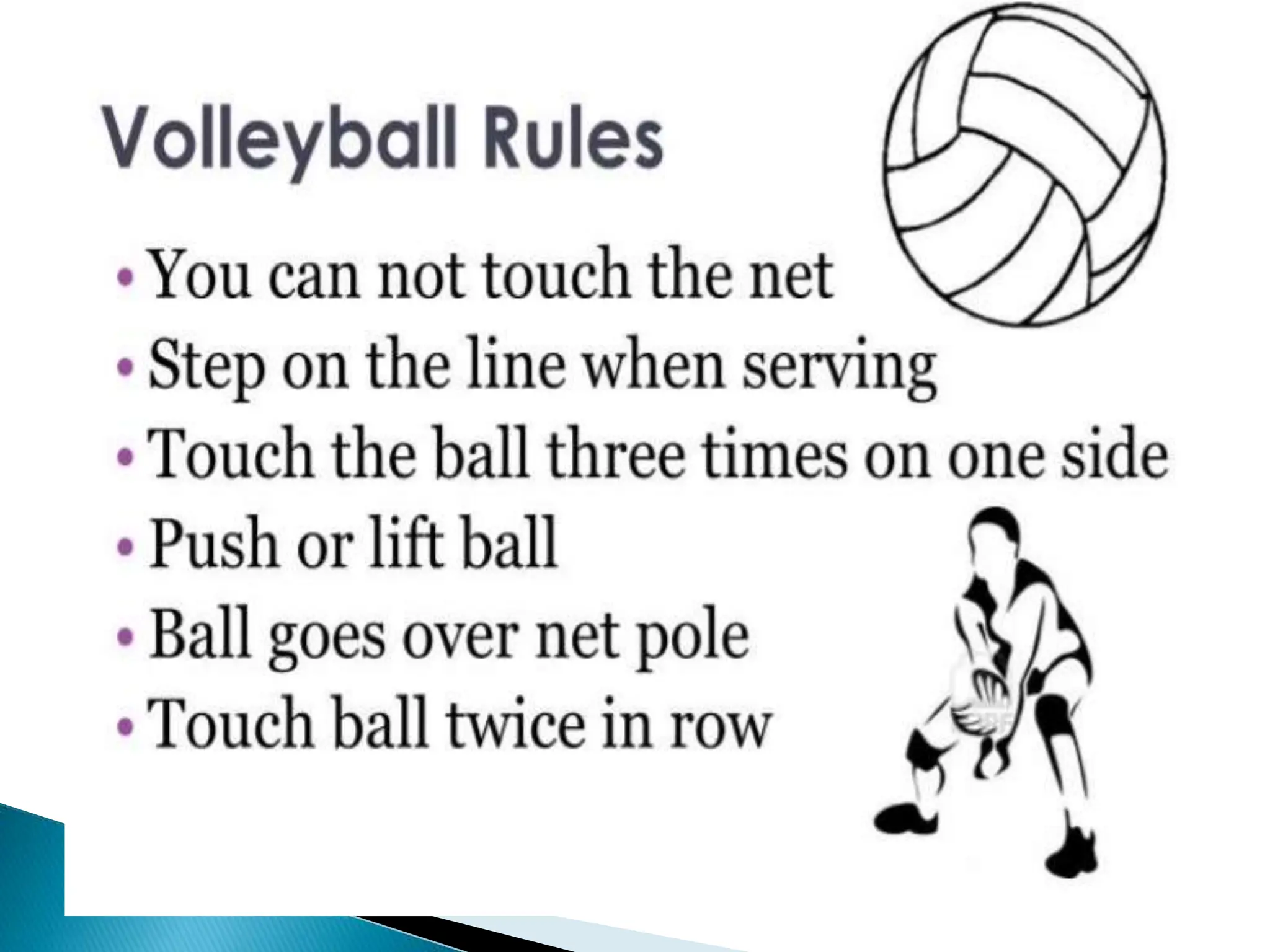
Volleyball is a high-energy team sport where two squads of six players are separated by a net, aiming to ground the ball on the opponent’s court. Teams use up to three touches to return the ball, adhering to strict regulations regarding contact, rotation, and court boundaries to score points through a rally-scoring system.
Whether you are a beginner picking up a ball for the first time or a seasoned player looking to clarify the latest FIVB (International Volleyball Federation) regulations, understanding the mechanics of the game is essential. In 2026, the rules remain focused on speed, athleticism, and fair play. This guide provides an exhaustive breakdown of every rule governing the indoor game, from court dimensions to the nuances of the libero position.
The Foundation: Court Dimensions and Equipment
To understand how volleyball is played, one must first understand the environment. An official indoor volleyball court is a rectangle measuring 18 meters by 9 meters (approximately 59 feet by 29.5 feet). This space is surrounded by a "free zone" that must be at least 3 meters wide on all sides to allow players to pursue balls that fly off-course.
The Net and Its Specifications
The net is the most critical piece of equipment, placed vertically over the center line. The height of the net varies based on the gender and age of the participants. For men’s senior competitions, the top of the net is set at 2.43 meters (7 feet, 11 5/8 inches). For women’s senior competitions, it is set at 2.24 meters (7 feet, 4 1/8 inches).
Attached to the net, directly above the sidelines, are two flexible rods known as antennae. These antennae extend 80 centimeters above the net and act as boundary markers. Any ball that touches an antenna or crosses the net outside the antennae is considered "out." This ensures that the ball stays within the vertical plane of the court during play.
Lines and Zones
The court is divided into several specific zones:
- The Center Line: This line runs directly under the net, dividing the court into two equal 9m x 9m halves.
- The Attack Line (3-meter line): Located 3 meters back from the center line, this line separates the front-row players from the back-row players. Its primary purpose is to restrict back-row players from attacking the ball near the net.
- The Service Zone: This is the 9-meter wide area behind each end line. Players must stay within this zone when serving.
Scoring Systems and Match Structure
Modern volleyball utilizes the Rally Point System, which was adopted to make the game more predictable for television and spectators. In this system, a point is scored on every single rally, regardless of which team served the ball.
Winning a Set and Match
A standard match is played as a "best-of-five" sets. The first four sets are played to 25 points, but a team must win by at least a two-point margin (e.g., 26-24). There is no "cap" or ceiling; the set continues until a two-point lead is established.
If the match reaches a fifth and deciding set, it is played to 15 points, again requiring a two-point lead to win. This shortened set ensures a dramatic conclusion while maintaining the endurance requirements of the sport.
How Points Are Awarded
A team scores a point when:
- The ball successfully touches the floor of the opponent's court.
- The opposing team commits a fault (an illegal action).
- The opposing team receives a penalty.
- The ball is hit "out" by the opponent (landing outside the boundary lines or touching an external object).
Service Rules and Rotation
The serve is the act of putting the ball into play. It is the only time a single player has total control over the ball.
The Execution of the Serve
The server must stand in the service zone and hit the ball with one hand or any part of the arm. Once the referee whistles for service, the player has 8 seconds to execute the serve. If the ball is tossed and then caught or allowed to drop without being hit, it is considered a service fault in most professional tiers, though some amateur leagues allow one "re-toss."
A serve that touches the net but still lands on the opponent's side (a "let serve") is considered legal and remains in play. However, the ball cannot touch the antennae or land out of bounds.
Rotation Requirements
Rotation is one of the most unique aspects of volleyball. When the receiving team wins a rally, they gain the right to serve and must rotate one position clockwise. This ensures that every player (except the Libero) eventually plays in every position on the floor, requiring a well-rounded skill set.
If a team fails to rotate correctly or is out of their assigned positions at the moment the server hits the ball, they commit a positional fault, resulting in a point for the opponent.
Ball Handling and Contact Regulations
To keep the game fluid, the rules regarding how a player can touch the ball are very specific. Each team is allowed a maximum of three hits to return the ball (in addition to the block).
Legal Contacts
A player may touch the ball with any part of their body, including the feet. However, the contact must be "clean." This means the ball cannot be caught, thrown, or carried. It must rebound immediately upon contact.
Common ball-handling faults include:
- Four Hits: A team touches the ball four times before sending it over.
- Double Hit: A player touches the ball twice in succession (except during a block or the first team contact).
- Held Ball (Lift): The ball does not rebound but is instead momentarily caught or thrown.
- Assisted Hit: A player takes support from a teammate or any structure to reach the ball.
The Block
Blocking is the action of players close to the net reaching higher than the top of the net to intercept the ball coming from the opponent. A touch by a blocker does not count as one of the team's three allowed hits. After a block, the same player who blocked the ball may touch it again immediately as the first of the three hits.
Net Violations and Center Line Rules
The net is a "no-touch" zone for players during the action of playing the ball.
Net Touches
Contact with the net by a player between the antennae, during the action of playing the ball, is a fault. The "action of playing the ball" includes the take-off, the hit, and the landing. Touching the net outside the antennae or touching the cables and posts is generally allowed, provided it does not interfere with the play.
Crossing the Center Line
The rules regarding the center line are designed to prevent injuries, particularly ankle collisions.
- Feet: A player's foot may touch the opponent's court provided that some part of the foot remains in contact with or directly above the center line. Stepping completely over the line with the entire foot is a fault.
- Other Body Parts: Any other part of the body (hands, knees, etc.) may touch the opponent's court provided it does not interfere with the opponent’s play.
Reaching Beyond the Net
A blocker is allowed to place their hands beyond the net, provided they do not interfere with the opponent's play before or during the attack hit. However, a player cannot touch the ball on the opponent's side of the court before the opponent has executed an attack hit.
The Libero: A Specialized Defensive Role
The Libero is a specialized defensive player who wears a contrasting jersey color. This role was introduced to enhance defensive rallies and allow shorter players to excel in a sport dominated by height.
Restrictions on the Libero
The Libero is subject to several unique rules:
- Back-Row Only: The Libero can only play in the back-row positions.
- No Attacking: They are not allowed to complete an attack hit from anywhere if the ball is entirely above the top of the net at the moment of contact.
- No Serving (Generally): Under FIVB international rules, the Libero cannot serve. However, in USA Volleyball (USAV) and NCAA play, the Libero is permitted to serve in one specific rotation.
- No Setting in the Front: If a Libero overhand sets the ball while standing in the front zone (in front of the 3-meter line), the hitter cannot attack the ball above the height of the net.
Libero Replacements
Unlike regular substitutions, Libero replacements are unlimited and do not count toward the team’s total substitution limit. They must take place between rallies while the ball is out of play.
Comparison of Indoor and Beach Volleyball Rules
While the core concept remains the same, the rules of indoor volleyball differ significantly from those of beach volleyball.
| Feature | Indoor Volleyball | Beach Volleyball |
|---|---|---|
| Players per Team | 6 players | 2 players |
| Court Size | 18m x 9m | 16m x 8m |
| Scoring | 25 points (Sets 1-4), 15 (Set 5) | 21 points (Sets 1-2), 15 (Set 3) |
| Substitution | Up to 12 per set (FIVB) | No substitutions |
| Setting | Strict "double-contact" rules | Extremely strict; rotation is discouraged |
| Blocking | Block does NOT count as a touch | Block DOES count as the first touch |
| Ball Type | Slightly smaller, heavier, higher pressure | Larger, lighter, lower pressure |
Officiating and Misconduct
A match is managed by a first referee (on the stand), a second referee (on the floor), a scorer, and two to four line judges.
Sanctions and Cards
Referees use cards to manage player and coach behavior:
- Yellow Card (Warning): No point is awarded; it serves as a formal warning for minor misconduct.
- Red Card (Penalty): A point and service are awarded to the opponent.
- Yellow + Red Card (Expulsion): The player or coach must leave the competition area for the remainder of the set.
- Yellow + Red Card separately (Disqualification): The player or coach must leave the entire match area for the duration of the match.
Delays
Teams can also be penalized for "delays," such as taking too long to substitute or clean the floor. A first delay results in a delay warning, while subsequent delays result in a delay penalty (a point for the opponent).
Frequently Asked Questions
Can you kick the ball in volleyball?
Yes, you can use any part of your body to keep the ball in play, including your feet and legs. While traditionally discouraged because it is less accurate than using your hands, kicking is perfectly legal and often used as a last resort to "dig" a ball near the floor.
What is a "back-row attack" fault?
A back-row player (including the Libero) cannot jump from on or in front of the 3-meter line and hit the ball while it is completely above the height of the net. If they do, it is a back-row attack fault. To attack legally, a back-row player must take off from behind the 3-meter line.
How many timeouts are allowed?
Under standard FIVB rules, each team is allowed a maximum of two timeouts per set. Each timeout lasts for 30 seconds. In some televised matches, there are also "Technical Timeouts" when the leading team reaches 8 and 16 points, though these are less common in 2026 domestic play.
Is the line "in" or "out"?
In volleyball, the boundary lines are considered part of the court. If any part of the ball touches any part of the line, it is ruled "in." This is why many professional matches now use electronic review systems (similar to "Hawk-Eye" in tennis) to determine ball placement with millimeter precision.
What happens if two players touch the ball at the same time?
If two teammates touch the ball simultaneously, it is counted as two hits (except during a block). If two opponents touch the ball simultaneously above the net—a "joust"—and the ball remains in play, the team receiving the ball is entitled to another three hits. If the ball falls out of bounds after a joust, the team on the opposite side of where the ball landed is considered the winner of the rally.
Can a player reach under the net to play a ball?
A player may reach under the net into the opponent's space to play a ball, provided the ball has not completely crossed the vertical plane of the net and the player does not interfere with the opponent’s play. However, you cannot touch a ball that is entirely on the opponent’s side unless it is an attack hit that has already been executed.
Recommendation for New Players
To master the rules of volleyball, the best approach is to start by focusing on clean contact and rotational awareness. Most beginner mistakes occur because of "lifts" or being "out of rotation." Before your first match, practice the legal "set" and "underhand pass" techniques to ensure your touches aren't whistled for faults. Additionally, always communicate with your teammates to avoid "four-hit" errors. If you are ever in doubt during a match, the floor captain is the only player authorized to ask the referee for clarification on a rule application.