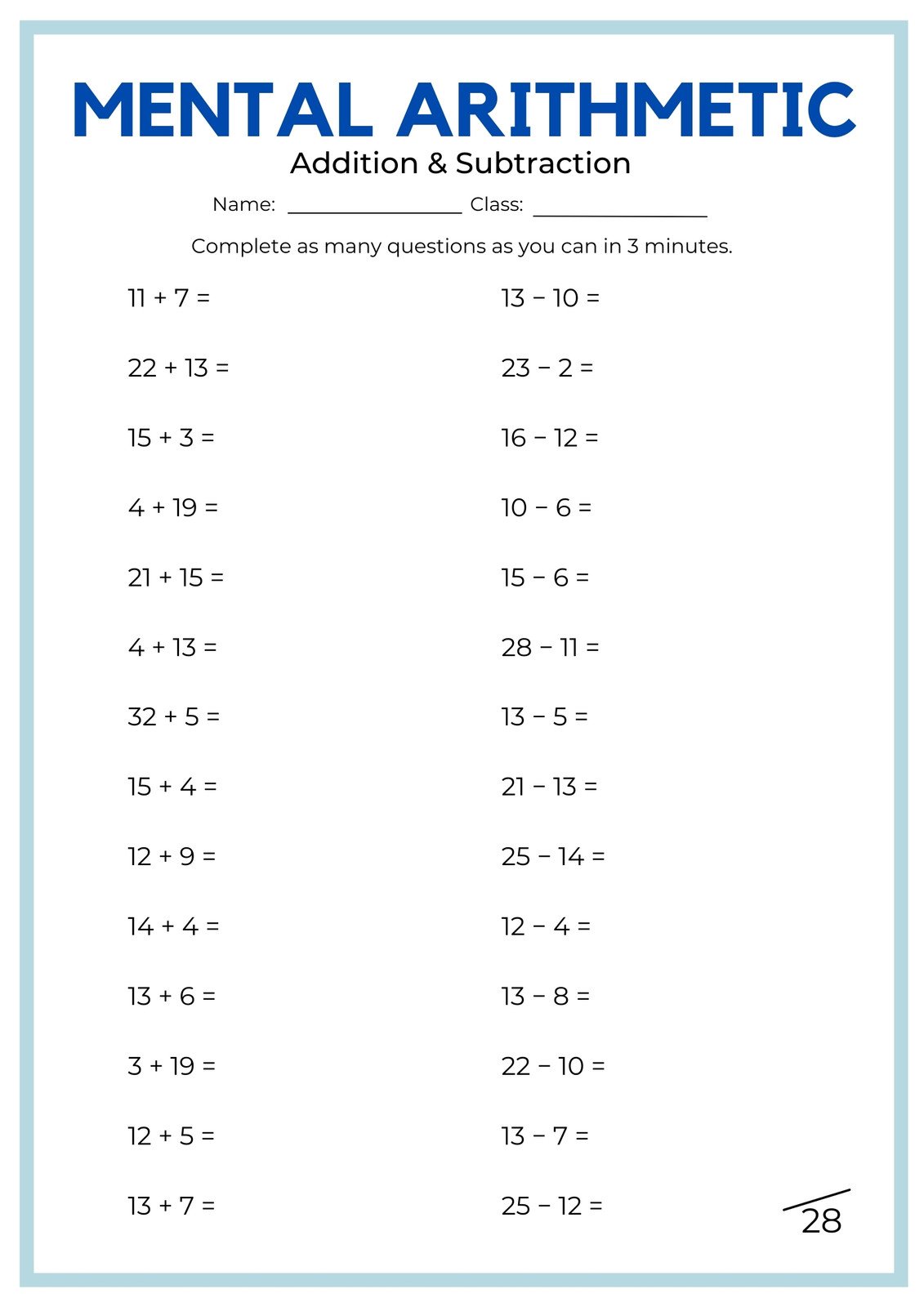
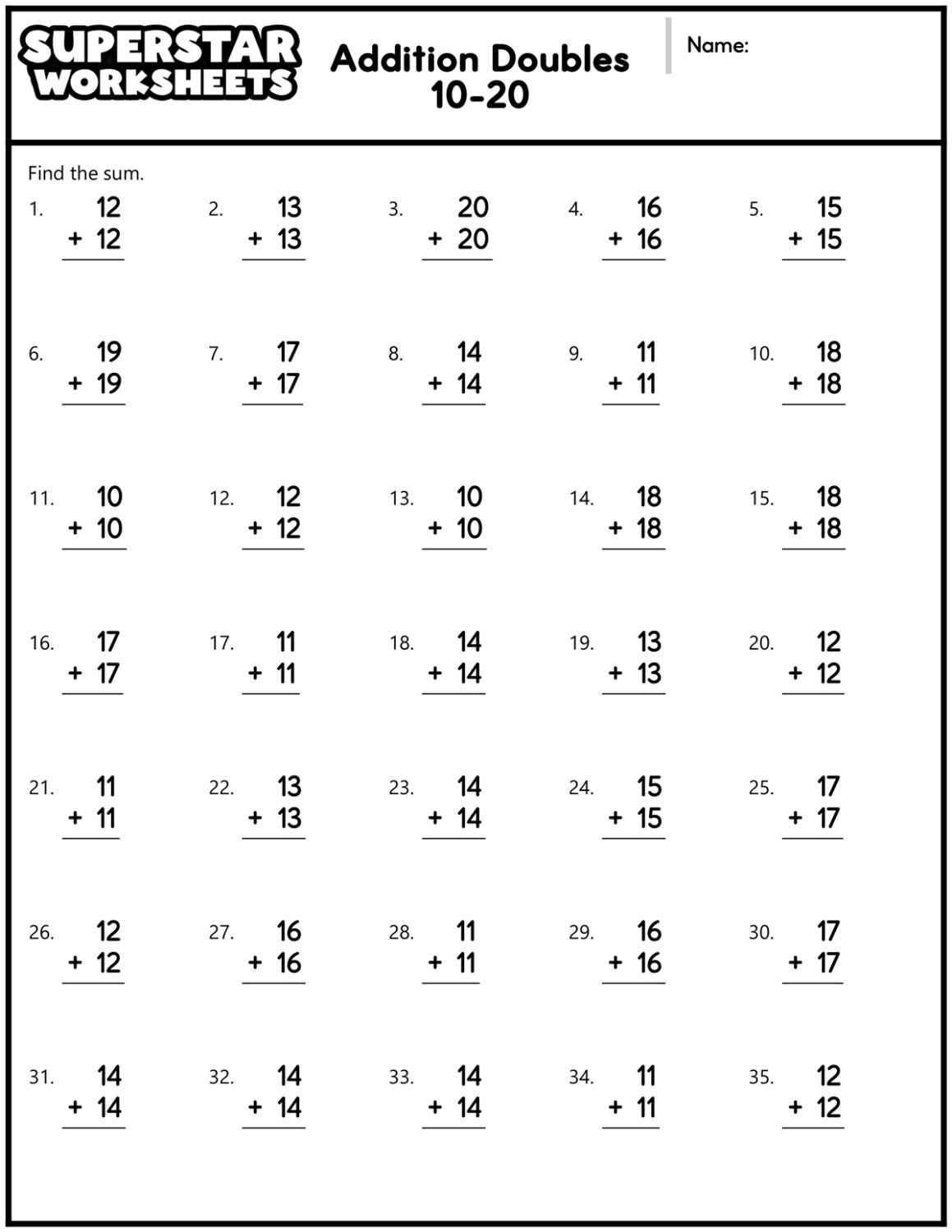
Algebra worksheets provide structured, deliberate practice to help students transition from arithmetic thinking to abstract symbolic reasoning. Effective algebra worksheets combine clear worked examples, scaffolded problem sets, and targeted error analysis across core domains—from solving linear equations to manipulating polynomials—reinforcing conceptual understanding rather than rote mechanical execution.
The Pedagogical Role of Algebra Worksheets
Algebra marks a fundamental shift in a student’s mathematical development. In primary arithmetic, operations act as procedural instructions: two numbers are combined to produce a result. In algebra, symbols represent unknown quantities, variables, or entire functional relationships, requiring students to reason about structure, equivalence, and transformation.
Worksheets serve as an essential bridge in this cognitive transition when constructed with deliberate instructional intent. According to cognitive load theory, working memory is strictly limited when processing novel information. When a student encounters a multi-step algebraic task—such as solving a linear equation with variables on both sides—the mental effort required to track arithmetic facts, manipulate signs, apply inverse operations, and maintain balance can overwhelm working memory.
Carefully sequenced algebra worksheets manage this cognitive load by isolating component skills before integrating them into composite tasks. Rather than functioning as mindless "drill-and-kill" sheets, high-impact worksheets provide:
- Fluency automation: Ensuring basic structural maneuvers (such as isolating a variable or distributing a negative term) become automatic, freeing working memory for higher-level problem formulation.
- Externalized cognitive tracking: Providing space for students to record intermediate steps, which makes underlying logic visible, auditable, and easier to debug.
- Pattern recognition: Exposing students to varied equation structures so they learn to recognize underlying mathematical forms rather than relying on superficial algorithmic shortcuts.
Relying entirely on open-ended discovery without structured paper-based practice often leaves struggling students without the procedural fluency required for advanced STEM coursework. Conversely, assigning uncurated, repetitive sheets without conceptual anchoring produces brittle knowledge that shatters when problem formats deviate from the template.
Core Skill Progressions: Structuring Worksheets by Level
Algebraic proficiency develops along a hierarchical continuum. An effective worksheet program aligns directly with this natural progression, ensuring prerequisites are mastered before students face complex representations.
- Pre-Algebra (Foundations)
- Algebra 1 (Linear & Quadratic)
- Algebra 2 (Non-Linear & Complex)
Pre-Algebra Foundations
Pre-algebra worksheets must address the transitional misconceptions that derail students entering formal algebra. The primary objective is shifting the perception of the equal sign from an "operational announcement" (meaning "the answer comes next") to a symbol of "relational equivalence" (meaning "the values on both sides are balanced").
Essential topics for pre-algebra worksheets include:
- Integer arithmetic and signed numbers: Worksheets should reinforce positive and negative number rules through number lines and zero-pair models rather than detached sign mnemonics.
- The distributive property: Visual area models should precede purely symbolic distributions to prevent the common error of distributing only to the first term inside parentheses (e.g., writing $3(x + 4) = 3x + 4$).
- Order of operations with algebraic substitution: Evaluating algebraic expressions given specific integer or rational replacements, emphasizing parentheses around negative substitutions.
- One-step and two-step inverse operations: Developing the "balance method" across an equality boundary, pairing addition with subtraction and multiplication with division.
Algebra 1 Core Competencies
Algebra 1 worksheets establish the foundational mechanics of secondary mathematics. The focus shifts toward linear relationships, foundational polynomials, and quadratic equations.
- One-Step/Two-Step
- Multi-Step with Distribution
- Variables on Both Sides
- Literal Equations
Worksheets at this tier must systematically address:
- Multi-step linear equations and inequalities: Incorporating clearing fractions via the least common denominator (LCD), distributing negative coefficients, and reversing inequality signs when multiplying or dividing by negative values.
- Linear functions and coordinate representations: Transitioning between tabular values, slope-intercept form ($y = mx + b$), point-slope form ($y - y_1 = m(x - x_1)$), and standard form ($Ax + By = C$). Worksheets should require students to sketch graphs and interpret slopes in real-world contexts.
- Systems of linear equations: Dedicated sets comparing graphical intersection, algebraic substitution, and linear elimination (addition/subtraction), prompting students to justify which method is most efficient for a given system.
- Polynomial arithmetic and factoring: Progressing from factoring out the greatest common factor (GCF) to factoring trinomials of the form $x^2 + bx + c$, and subsequently $ax^2 + bx + c$ where $a \neq 1$. Factoring by grouping and identifying special products (difference of two squares, perfect square trinomials) require repeated, structured exposure.
- Quadratic equations: Solving via factoring, completing the square, and applying the quadratic formula. Worksheets must require students to compute the discriminant ($b^2 - 4ac$) to determine the nature and number of real roots before calculating solutions.
Algebra 2 and Advanced Topics
Intermediate and advanced algebra worksheets target non-linear functions, systems involving non-linear equations, and analytical transformations.
Key domains include:
- Rational expressions and equations: Factoring numerators and denominators to simplify, multiply, divide, and find common denominators for addition and subtraction. Worksheets must incorporate finding domain restrictions and identifying extraneous solutions generated during cross-multiplication.
- Radical expressions and complex numbers: Simplifying square roots, cube roots, and higher-order roots; rationalizing binomial denominators using conjugates; and performing arithmetic with the imaginary unit $i$, including powers of $i$.
- Exponential and logarithmic functions: Converting between exponential form ($b^y = x$) and logarithmic form ($\log_b(x) = y$), applying logarithmic properties (product, quotient, and power rules), and solving exponential equations with differing bases.
- Polynomial functions and higher-degree equations: Synthetic division, long division, the Remainder Theorem, the Rational Root Theorem, and graphing polynomial behavior based on end behavior and multiplicity of roots.
Anatomy of an Effective Algebra Worksheet
A pedagogically sound algebra worksheet is not merely a list of twenty identical equations. It is an intentionally engineered learning document built with specific structural components.
1. Faded Worked Examples
The worked-example effect, supported by research from the Institute of Education Sciences, demonstrates that novice learners acquire problem-solving schemas more efficiently when studying fully worked solutions than by engaging immediately in unassisted problem solving.
Effective worksheets open with a completely solved reference model accompanied by brief annotations explaining why each manipulation occurs. The subsequent problems should utilize faded scaffolding:
- Problem 1: Completely solved model with step-by-step explanatory annotations.
- Problem 2: Partially solved model where the student fills in specific intermediate operations (e.g., the distribution is completed, but combining like terms is left blank).
- Problem 3: Template outlines provided (e.g., blank coordinate grids or balance brackets), but all calculation steps are executed by the student.
- Problems 4 and beyond: Fully independent execution.
2. Tiered Problem Sets
Worksheets should avoid flat difficulty curves. A well-designed page uses a three-tier structural model:
- Tier 1: Procedural Fluency (40% of page): Direct, predictable applications designed to establish motor memory and operational rhythm. Coefficients should be straightforward integers to minimize arithmetic distraction while reinforcing algebraic form.
- Tier 2: Structural Variations and Edge Cases (40% of page): Equations featuring fractions, negative lead coefficients, terms requiring rearranging before execution, or zero solutions/infinite solutions (identities and contradictions).
- Tier 3: Conceptual Application and Non-Routine Problems (20% of page): Word problems requiring students to define a variable, write the governing equation, solve it, and interpret the result within the problem's physical constraints.
3. Integrated Error Analysis
Rather than solely asking students to produce answers, high-impact worksheets incorporate pre-solved problems containing deliberate, common algebraic misconceptions. Students are asked to locate the precise line of the error, describe the mathematical flaw in writing, and compute the correct resolution.
Sample Error Analysis Exercise:
- Given: 4(x - 3) = 20
- Line 1: 4x - 3 = 20
- Identify the error: Distribution omitted for the second term
- Line 2: 4x = 23
- Line 3: x = 23/4
Error analysis interrupts automatic, unreflective calculation and forces the learner to evaluate mathematical syntax critically.
Comparing Algebra Practice Formats
Educators and self-directed learners can source or produce algebra worksheets in several formats. Each format features distinct pedagogical advantages and operational trade-offs.
| Practice Medium | Primary Advantages | Operational Limitations | Ideal Use Case |
|---|---|---|---|
| Static Printable Worksheets (Curated PDF) | Enforces step-by-step written work; eliminates screen fatigue; allows easy visual inspection of student scratchwork. | Fixed problem sets; zero instant feedback unless an answer key is provided; no automated differentiation. | Initial skill introduction, in-class guided practice, formal paper-and-pencil assessments. |
| Dynamic Worksheet Generators | Generates infinite variations of specific equation templates; excellent for generating re-takes and differentiated practice sets. | Problems can occasionally produce awkward fractions or unintended arithmetic complexity; lacks contextual word problems. | Homework generation, computational fluency drills, makeup quizzes, targeted remediation. |
| Interactive Digital Platforms | Delivers immediate step-by-step grading; provides hints on demand; tracks classwide diagnostic data automatically. | Encourages guessing; students often bypass recording intermediate algebraic scratchwork; interface can be cumbersome for complex notation. | Asynchronous homework, remote practice, initial formative checks, independent study. |
| Blended "Show Your Work" Packets | Combines short physical response packets with QR-code-accessible video solutions or self-check digital portals. | Requires access to secondary devices; demands disciplined self-regulation from students to avoid viewing answers prematurely. | Flipped classroom models, long-term review packets, comprehensive exam preparation. |
Evidence-Based Implementation Strategies
Distributing a worksheet without instructional framing frequently leads to frustration, passive disengagement, or simple copying. Applying cognitive science principles significantly increases retention and comprehension.
Interleaving vs. Blocked Practice
Most commercial algebra textbooks and worksheets rely on blocked practice: a unit on factoring differences of squares features twenty consecutive difference-of-squares problems. While blocked practice builds quick, short-term confidence, it fails to teach an essential algebraic skill: selecting the correct strategy when the problem type is not announced in advance.
- Blocked Practice: [Type A] [Type A] [Type A] [Type A]
- High immediate performance, low retention
- Interleaved Practice: [Type A] [Type B] [Type A] [Type C]
- Higher initial struggle, superior retention
To implement interleaved practice, worksheets should deliberately mix problem types:
- In a quadratic practice sheet, intersperse equations that factor easily with equations requiring the quadratic formula, along with linear equations masquerading as quadratics (e.g., $(x + 2)(x - 3) = x^2 + 4$).
- Dedicate the final 25% of any worksheet to spaced review covering material taught two to six weeks prior (e.g., maintaining linear equation skills during a unit on exponential growth).\n\n### Dual-Coding and Visual Representations
Equations represent relationships that can also be represented visually. Worksheets achieve greater depth when they demand translation between symbolic and visual registers:
- Algebra Tiles: For early polynomial operations, print worksheets with physical or drawn representations of $x^2$, $x$, and unit tiles to ground abstract sign multiplication physically.
- Tape Diagrams and Bar Models: Highly effective for formulating equations from complex word problems, showing how constituent segments sum to a total quantity.
- Simultaneous Graphical Verification: Require students to sketch rough graphs of both sides of an equation (e.g., treating $2x + 1 = -x + 4$ as the intersection of $y = 2x + 1$ and $y = -x + 4$) to visually confirm their algebraic solution.
Managing Visual Clutter and Page Layout
Visual presentation directly affects mathematical accuracy. Cluttered pages cause tracking errors, where students misread signs or misplace exponents simply because elements are packed too tightly.
- Adequate white space: Limit worksheets to 8–12 multi-step problems per single-sided page. Multi-step algebra requires physical space for vertical transformations.
- Vertical alignment cues: Encourage students to keep equal signs aligned vertically throughout their steps by providing light grid lines or wide margins.
- Consistent typography: Ensure variable fonts clearly differentiate between the variable $x$ and the multiplication symbol $\times$, between the number $1$, the letter $l$, and the variable $I$, and between the letter $t$ and the addition sign $+$. Standard mathematical typography uses italicized variables (e.g., $x, y, t$) to maintain this clarity.
Common Pitfalls in Commercial Worksheets
When selecting or designing algebra worksheets, avoid these frequent design and pedagogical flaws:\n\n### 1. The "Answer-Getting" Orientation
Many cheap or crowdsourced worksheets emphasize rapid numerical completion over relational reasoning. If a worksheet consists solely of isolating variables without asking students to verify, explain, or interpret solutions, students develop a purely mechanical view of the discipline. Worksheets should periodically require students to check their solutions via substitution, demonstrating that a solution is a value that makes an open sentence true.
2. Predictable Structural Traps
Novice problem designers often fall into unconscious generation patterns:
- The variable is always on the left-hand side ($x = \dots$). When students suddenly encounter $14 = 2 - 3y$, they struggle because they have learned a mechanical script ("move everything to the right") rather than the underlying concept of maintaining equality balance.
- All solutions resolve cleanly to small integers. While helpful for early problem sets, exclusively using whole-number outcomes creates an artificial expectation. Students assume they have committed an error whenever their calculations yield fractions like $-\frac{17}{3}$ or decimals, leaving them unprepared for real-world modeling.
3. Ignoring Justification Steps
Worksheets should not merely be computational output pages. High-quality designs occasionally include a "Justification" column next to the mathematical work, requiring students to state the property applied at each stage:
| Equation Step: | Mathematical Justification: |
|---|---|
| 3x - 5 = 16 | Original Equation |
| 3x = 21 | Addition Property of Equality |
| x = 7 | Division Property of Equality |
Explicitly naming these properties solidifies the logical foundation of deductive reasoning required in formal geometry and advanced mathematical analysis.
Frequently Asked Questions
How many problems should an algebra worksheet contain?
For independent daily practice on multi-step problems, a worksheet should typically contain between 8 and 15 carefully curated problems. Assigning 30 to 50 repetitive problems often leads to mechanical fatigue and mindless calculation errors without providing additional pedagogical benefit. If the objective is rapid fluency on one-step operations or integer rules, a larger set of 20 to 25 items can be utilized, provided it is time-capped.
What is the "faded examples" approach in algebra practice?
The faded examples approach is a research-backed scaffolding strategy where learners transition gradually from studying fully worked problems to solving problems independently. A worksheet using this method begins with a complete, annotated solution, moves to problems where intermediate algebraic steps are partially completed for the student to finish, and culminates in completely unassisted equations. This minimizes cognitive overload during early skill acquisition.
How do I support students who struggle with word problems on algebra worksheets?
To support students with algebraic translation, provide worksheets that isolate the modeling phase from the computational phase. Dedicate sections solely to identifying unknown quantities, defining variables with precise units, and translating verbal phrases into mathematical expressions without requiring them to solve the resulting equations. Once translation fluency is established, combine the modeling and solving phases.
Are physical paper worksheets better than digital algebra platforms?
Both mediums offer distinct advantages depending on the instructional goal. Physical paper worksheets are superior for developing multi-step problem organization, as they allow teachers to inspect intermediate steps, identify conceptual errors, and evaluate scratchwork. Digital platforms excel at rapid procedural checks, providing immediate corrective feedback, and generating dynamic, individualized problem sets that prevent copying.
When should answer keys be provided to students?
Answer keys should be provided immediately following practice rather than held exclusively for final grading. Providing numerical answers allows students to catch computational or sign errors instantly, preventing them from reinforcing flawed procedures across an entire problem set. For homework, providing an answer-only key allows students to verify their final results while requiring them to supply the complete vertical algebraic steps to receive credit.
Next Steps for Implementing High-Impact Practice
To upgrade your algebra practice materials immediately, begin with an audit of your current worksheet collection:
- Audit for Scaffolding: Check that your introductory practice sheets open with an annotated worked model and provide sufficient vertical space for students to write multi-step transformations without crowding.
- Incorporate Mixed Review: Modify existing sets by replacing the final three problems of every assignment with two review problems from previous weeks and one error-analysis problem.
- Standardize Formatting: Reformat practice pages to ensure standard mathematical typography, clear differentiation between variables and operational signs, and a balanced distribution of integer, rational, and fractional solutions.