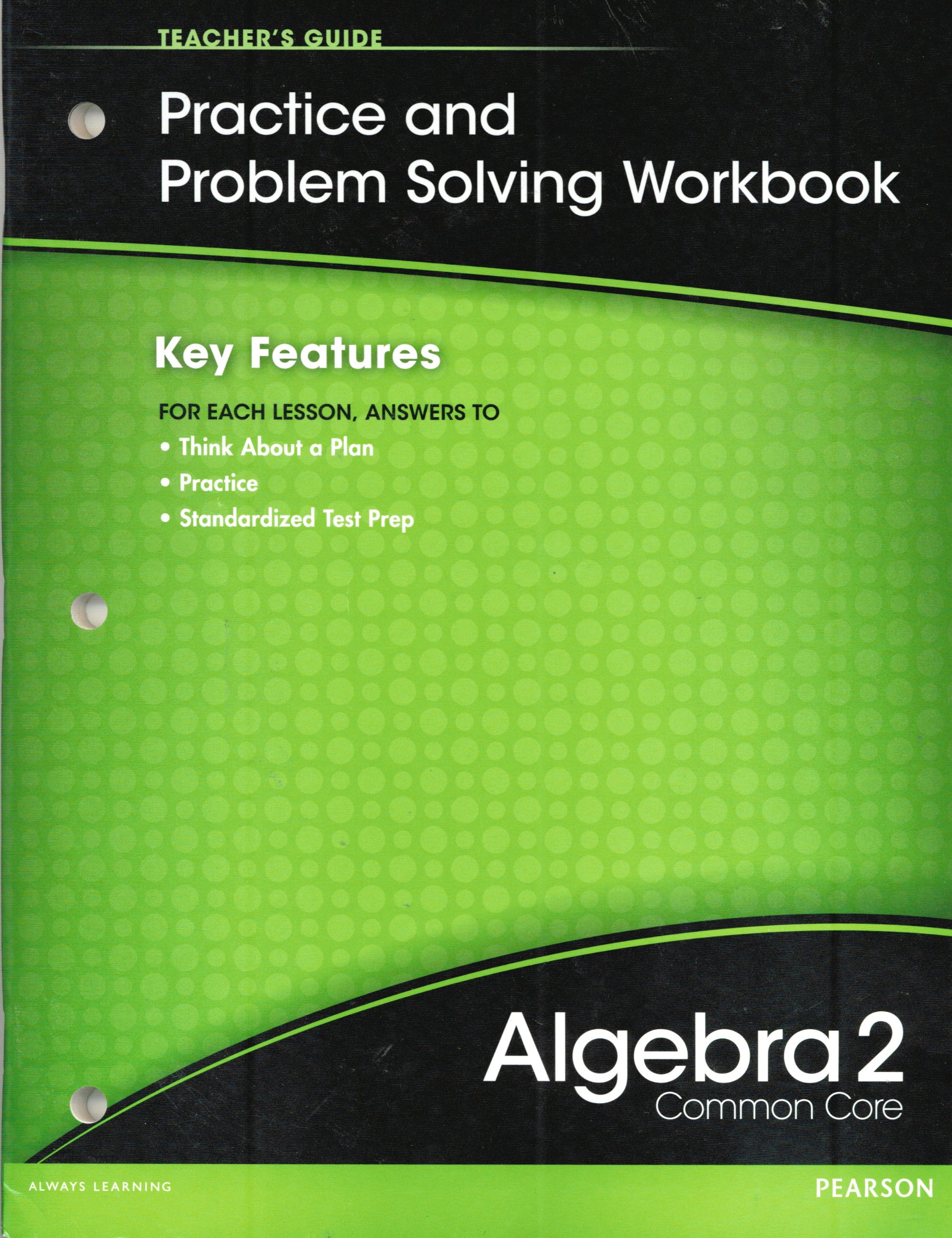
You can legally download a complete Algebra 2 textbook PDF through reputable Open Educational Resources (OER) such as OpenStax, CK-12 Foundation, and LibreTexts at zero cost. These peer-reviewed digital textbooks provide comprehensive coverage of intermediate algebra topics—including polynomial functions, exponential models, and trigonometry—without requiring paid subscriptions, proprietary software licenses, or copyright violations.
Finding reliable study materials is essential for high school students, homeschool educators, and independent learners tackling intermediate mathematics. While physical textbooks can cost well over one hundred dollars, the expansion of open-access academic publishing ensures that rigorous, standards-aligned digital editions are available in universal PDF formats. This guide outlines verified legal sources, breaks down standard curriculum requirements, compares the best available texts, and explains how to study effectively from a digital document.
Core Topics Covered in a Standard Algebra 2 Curriculum
Before selecting a specific textbook, you must verify that its table of contents aligns with the academic benchmarks set by your school, state, or standardized testing framework (such as Common Core, Texas TEKS, or Florida B.E.S.T.). Algebra 2 acts as the critical bridge between elementary algebra and advanced coursework like pre-calculus, AP Precalculus, statistics, and calculus.
A comprehensive textbook must thoroughly address several primary mathematical domains:
1. Advanced Linear Systems and Matrices
While introductory algebra addresses basic two-variable linear equations, Algebra 2 extends these concepts into three-variable systems, matrix operations, and linear programming. Quality textbooks explain Gaussian elimination, determinants, matrix inverses, and how to represent real-world constraint problems through systems of inequalities.
2. Quadratic Functions and Complex Numbers
Intermediate algebra expands quadratic theory beyond basic factoring. Students explore the fundamental theorem of algebra, derivation of the quadratic formula, vertex and standard forms, transformation of parabolas, and operations involving imaginary numbers ($i = \sqrt{-1}$) and complex conjugates.
3. Polynomial and Rational Functions
Textbooks must dedicate substantial chapters to higher-degree polynomials. Core subjects include:
- Polynomial long division and synthetic division.
- The Remainder Theorem and Rational Root Theorem.
- End behavior analysis using limit concepts.
- Graphing rational functions, identifying vertical and horizontal asymptotes, slant asymptotes, and removable discontinuities (holes).
- Solving rational equations and checking for extraneous roots.
4. Radical, Exponential, and Logarithmic Functions
Students learn the formal definitions and laws governing rational exponents and radicals. From there, texts transition into exponential growth and decay models, the natural base $e$, and the inverse relationship between exponents and logarithms. Essential skills include mastering logarithmic properties (product, quotient, power rules), base conversion, and solving complex exponential equations.
5. Trigonometric Functions and the Unit Circle
In many modern curricula, Algebra 2 introduces foundational trigonometry. The book should cover angle measurements in degrees and radians, unit circle coordinates, definitions of the six trigonometric functions, graph transformations of sine and cosine waves, and fundamental Pythagorean identities.
6. Sequences, Series, Probability, and Statistics
The final units of a standard course encompass arithmetic and geometric sequences, partial sums, sigma notation, binomial expansion using Pascal's triangle, permutations, combinations, and basic normal distribution models.
Top Verified Sources for Legal Algebra 2 Textbook PDFs
Several academic publishers and state education agencies distribute complete, unabridged textbooks under open licenses such as Creative Commons. These editions may be downloaded directly as standalone PDFs, stored offline, and printed for personal or classroom use.
OpenStax (Rice University)
OpenStax is widely considered the gold standard for free, peer-reviewed textbooks. While OpenStax does not label a single book solely as "Algebra 2," it provides equivalent mastery through two primary titles:
- Intermediate Algebra 2e: Perfectly mirrors standard high school Algebra 2 and college-level intermediate algebra courses. It focuses heavily on factoring, rational expressions, radicals, quadratic equations, and introductory functions.
- Algebra and Trigonometry 2e: Ideal for honors-level Algebra 2 students. It begins with algebraic foundations and advances rapidly through polynomial, rational, exponential, and logarithmic functions, concluding with an extensive treatment of analytic trigonometry.
Both volumes feature clean PDF formatting, embedded hyperlinks to exercise solutions, and full alignment with introductory collegiate prerequisites.
CK-12 Foundation
CK-12 offers customized digital textbooks known as "FlexBooks." Their CK-12 Interactive Algebra II curriculum integrates Common Core state standards with clear explanatory prose. Users can download complete modular chapters or full course compilations as PDFs. CK-12 materials are known for visual clarity, step-by-step worked examples, and real-world application sidebars that help contextualize abstract concepts.
LibreTexts Mathematics
LibreTexts is a multi-institutional collaborative project supported by the U.S. Department of Education. Its mathematics library hosts multiple community-curated Algebra 2 volumes. The platform allows readers to export entire textbooks or individual units into high-resolution PDFs. Because LibreTexts combines materials from various university professors, the content often includes alternative explanation paths and varied exercise sets, making it particularly valuable for self-learners seeking multiple approaches to difficult proofs.
State Open Education Curricula (EngageNY / Eureka Math)
The New York State Education Department developed EngageNY (now preserved and distributed through various educational repositories and Great Minds/Eureka Math). Its Algebra II modules are distributed as public, downloadable PDFs. The curriculum is known for exceptional conceptual rigor, proof-based problem sets, and extensive teacher manuals that contain full solution explanations for every assigned problem.
Comparison of Leading Algebra 2 PDF Resources
Choosing the right digital book depends on whether you require honors-level depth, standard remediation, or homeschool-friendly step-by-step guidance. The table below compares the leading legitimate PDF options available today.
| Resource Name | Primary Provider | Licensing / Cost | Best For | Included Components |
|---|---|---|---|---|
| Intermediate Algebra 2e | OpenStax (Rice University) | CC BY 4.0 / Free | Standard high school, remedial college | Full chapter exercises, odd-numbered answers, review tests |
| Algebra and Trigonometry 2e | OpenStax (Rice University) | CC BY 4.0 / Free | Honors Algebra 2, Pre-Calculus prep | Comprehensive trigonometry, regression modeling, full answer keys |
| CK-12 Algebra II | CK-12 Foundation | CK-12 License / Free | Visual learners, homeschool programs | Concept summaries, guided practice, real-world connection boxes |
| EngageNY Algebra II | NY State Education Dept. | CC BY-NC-SA / Free | Rigorous conceptual study, classroom teachers | Complete lesson plans, student workbooks, full teacher solution keys |
| Utah Middle & High School Math | University of Utah / USBE | CC BY-NC / Free | Integrated math pathways, structured practice | Task-based learning, student workbooks, parent support guides |
| Commercial eTextbooks (McGraw-Hill, Pearson) | Commercial Publishers | Proprietary / Paid license | School district enrollments, AP tracks | Interactive portal access, graded homework software, digital PDF/ePub |
How to Evaluate a Digital Math Textbook
Not all freely circulating math files are created equal. Before committing dozens of study hours to a downloaded PDF, evaluate the document against these technical and educational criteria:
Evaluation Checklist:
- Rigorous, standards-aligned scope and sequence
- Clear, step-by-step worked examples with commentary
- Odd-or-even exercise solutions for self-checking
- High-resolution mathematical typesetting (LaTeX-rendered)
- Fully functional internal navigation (PDF bookmarks and index)
Navigational Usability and Document Bookmarks
A standard high school math text spans 700 to 1,200 pages. A poorly compiled PDF lacking an embedded document outline forces users to scroll endlessly to find specific chapters. OpenStax and CK-12 PDFs incorporate interactive tables of contents and hyperlinked indices, allowing users to jump directly to specific subsections or answers with a single click.
Typesetting and Equation Legibility
Mathematical notation requires precise visual rendering. Low-quality scans of older physical textbooks often blur exponents, negative signs, and radical bars, which can cause significant confusion during study. Legitimate digital-first PDFs are compiled from LaTeX or modern publishing software, ensuring that subscripts, radical indices, and fraction bars remain sharp even when magnified on tablet screens.
Availability of Verified Solutions
Self-study without feedback creates bad problem-solving habits. Confirm whether the PDF includes an answer key in the appendix. Standard academic textbooks typically provide answers to odd-numbered practice problems at the end of the file. For comprehensive home study, look for texts that offer separate teacher editions or companion solution manuals detailing intermediate algebraic steps.
Digital Workflow and Study Strategies for PDF Textbooks
Reading an electronic mathematics book requires a different workflow than handling a paper novel or printed workbook. Passive reading does not build mathematical fluency. Implement the following practices to maximize comprehension when using a PDF text:
1. Dedicated Dual-Screen or Split-Screen Setup
Attempting to read a textbook, work out problems, and consult a digital graphing calculator on a small smartphone screen is inefficient. Utilize a tablet with a stylus or a desktop computer running a split-screen layout:
- Place the textbook PDF on one half of the screen.
- Dedicate the other half to a digital workspace, such as a note-taking application or an interactive graphing tool like Desmos or GeoGebra.
2. Active Margin Annotation
Modern PDF readers (such as Adobe Acrobat Reader, Goodnotes, or Notability) allow users to annotate documents directly. Use color-coded highlighting to isolate core components:
- Yellow: Key definitions and mathematical properties (e.g., Logarithm Power Rule).
- Blue: Formulas and identity templates.
- Red or Orange: Warning notes regarding common procedural errors (such as dividing by zero or forgetting the $\pm$ symbol when taking square roots).
3. The "Cover and Calculate" Technique
When encountering a worked example in the PDF, resist the urge to simply read through the author's solution steps. Cover the solution with an index card, a piece of paper, or a floating application window. Attempt to solve the problem independently on scratch paper. Once you reach an answer or hit an impasse, uncover the text step by step to verify your mechanics. This practice forces active retrieval, which dramatically improves retention during exam preparation.
Avoiding Pirated Files and Technical Risks
Searching for terms like "algebra 2 textbook pdf download" frequently leads to unauthorized file-sharing websites, torrent networks, and dubious document lockers. Relying on unauthorized uploads introduces significant practical and security challenges:
- Malware and Adware: File-hosting sites frequently wrap downloads in malicious executable installers or deceptive advertising scripts that compromise personal data.
- Corrupt or Truncated Files: Scanned copies hosted on third-party domains often have missing chapters, skewed pages, or illegible equations that disrupt learning.
- Legal and Ethical Issues: Downloading copyrighted commercial textbooks (such as proprietary volumes from Pearson, Houghton Mifflin Harcourt, or McGraw-Hill) without an authorized institutional license infringes on copyright law.
Because robust, fully accredited, and completely legal alternatives like OpenStax and CK-12 exist in the public domain, you never need to resort to illegal downloads to obtain an elite mathematics education.
Frequently Asked Questions
Which OpenStax book is closest to standard high school Algebra 2?
The OpenStax Intermediate Algebra 2e is the closest match to a standard high school Algebra 2 course. It systematically covers linear equations, quadratic equations, rational expressions, roots and radicals, and logarithmic functions. If your curriculum requires an extensive introduction to analytic trigonometry, select Algebra and Trigonometry 2e instead.
Can I print an open-access Algebra 2 textbook PDF?
Yes. Books distributed under Creative Commons licenses (such as CC BY or CC BY-NC) permit personal and educational printing. You can print individual chapter packets at home or upload the PDF to a commercial printing service to create a spiral-bound physical copy for personal study.
Are teacher answer keys available for free Algebra 2 PDFs?
Yes, but access depends on the platform. OpenStax provides odd-numbered answers directly in the back of the student PDF. Complete, step-by-step instructor solution manuals are available for free on their official website, though they require educators to create a verified teacher account to prevent students from accessing exam solutions. EngageNY/Eureka Math provides full answer keys openly in their separate teacher edition PDFs.
Do free digital textbooks align with the Common Core standards?
Most modern open-access textbooks explicitly state their standards alignment. CK-12's Interactive Algebra II and EngageNY are engineered specifically around Common Core state standards. OpenStax books are designed around the College Board's recommendations and standard university prerequisite competencies, which naturally overlap with or exceed Common Core high school benchmarks.
How do I open and annotate large textbook PDFs without lagging?
Large PDF textbooks containing hundreds of vector graphics can cause performance lag in web browsers. For the best experience, download the file completely to your local drive rather than reading it inside a browser tab. Open the file with dedicated, lightweight PDF software such as Adobe Acrobat Reader, Foxit PDF Reader, or dedicated tablet annotation software like Goodnotes, Notability, or Xodo.
Next Steps and Recommended Plan
To begin your studies effectively, follow this streamlined approach:
- Review Your Syllabus: Check your course outline to determine if you need basic intermediate algebra or an honors text with analytic trigonometry.
- Download Verified Open Material: Navigate to OpenStax and download the PDF version of Intermediate Algebra 2e (for standard courses) or Algebra and Trigonometry 2e (for advanced tracks).
- Set Up Your Tools: Install a reliable PDF reader on your computer or tablet, bookmark a digital graphing tool, and maintain a dedicated physical notebook for pencil-and-paper scratchwork.