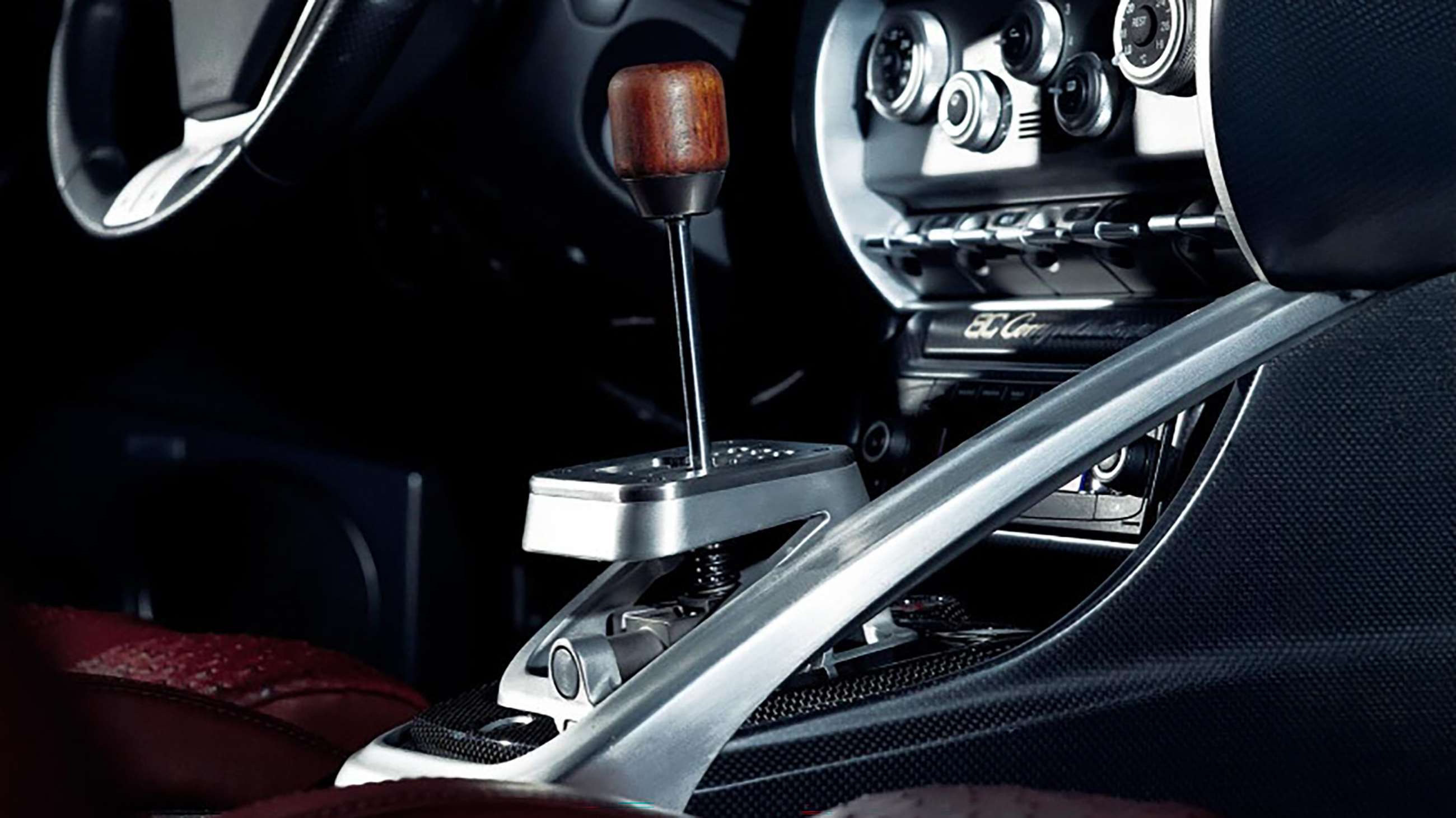
In 2026, the landscape of the automotive industry has almost entirely shifted toward electrification and high-efficiency automatic systems, making the Alfa Romeo manual transmission a coveted relic of "Il Cuore Sportivo" (The Sporting Heart). While new Alfa Romeo models like the Tonale and the latest iterations of the Giulia utilize sophisticated ZF automatic or dual-clutch transmissions, the manual gearbox remains the primary point of interest for purists seeking a tactile connection to Italian engineering.
The Evolution of the Alfa Romeo Manual Transmission
For decades, the manual transmission was not just a component but the very soul of an Alfa Romeo. From the five-speed gearboxes of the 105-series Spiders to the transaxle setups in the Alfetta and the 75 (Milano), Alfa Romeo prioritized weight distribution and driver engagement.
As we look back from 2026, the "golden era" of the modern Alfa manual ended with the phase-out of the 952-generation Giulia manual options in the European market. During the initial launch of the Giulia in 2016, Alfa Romeo offered a six-speed Getrag manual transmission. While the North American market was restricted to the ZF 8-speed automatic, European enthusiasts could pair the 2.2-liter diesel and the 2.9-liter V6 Quadrifoglio with a traditional stick shift.
The transition away from manuals was driven by three primary factors:
- Integration of ADAS: Advanced Driver Assistance Systems (like traffic jam assist and adaptive cruise control) are significantly easier to calibrate with automatic transmissions that can control gear selection without driver intervention.
- Performance Benchmarks: The ZF 8HP automatic can shift in 100 milliseconds—faster than any human—making it the superior choice for standardized 0-60 mph testing.
- Global Emissions Standards: Automatics allow for more precise control over engine load and RPM, which is critical for meeting the stringent Euro 7 and subsequent carbon-neutral mandates of the mid-2020s.
Technical Specifications of Modern Alfa Manuals
The most significant manual gearbox in Alfa’s recent history is the Getrag (Magna) 6MTI550. This six-speed unit was designed to handle the massive 600 Nm of torque produced by the Quadrifoglio’s Ferrari-derived V6.
The C635 Gearbox
Used extensively in the Giulietta, MiTo, and early 159 models, the C635 is a three-axle transverse manual transmission. It was a "clean sheet" design by Fiat Powertrain Technologies (FPT) to handle up to 350 Nm of torque. It features:
- Compact Dimensions: The three-axle layout reduces the longitudinal size, making it ideal for front-wheel-drive engine bays.
- Synchronizers: Multi-cone synchronizers on the first three gears to ensure smooth engagement even when the oil is cold.
- Weight: Approximately 50kg, utilizing high-strength steel and aluminum alloys.
The Quadrifoglio 6-Speed
The longitudinal Getrag unit found in early 952 Giulia Quadrifoglios is a masterpiece of mechanical feel but was criticized by some for its long-throw shift linkage. Technically, it featured a dual-mass flywheel to dampen the vibrations of the high-output V6. In 2026, these specific models have become high-value collector items precisely because they represent the last time 500+ horsepower was paired with a third pedal in an Italian sport sedan.
Identifying Manual Availability by Model
If you are navigating the secondary market in 2026, it is essential to know which models actually left the factory with a manual transmission.
| Model Series | Years Produced | Transmission Type | Market Availability |
|---|---|---|---|
| Giulia (952) Quadrifoglio | 2016–2018 | 6-Speed Getrag | Europe / RHD Markets |
| Giulia (952) 2.2 JTDm | 2016–2019 | 6-Speed Manual | Europe |
| Giulietta (940) | 2010–2020 | 5/6-Speed C635 | Global (excl. US) |
| MiTo (955) | 2008–2018 | 5/6-Speed | Global (excl. US) |
| 159 / Brera / Spider | 2005–2011 | 6-Speed M32/F40 | Global |
| GT / 147 / 156 | 1997–2010 | 5/6-Speed / Busso V6 | Global |
Note: The Alfa Romeo 4C was never offered with a manual transmission; it utilized the TCT (Twin Clutch Transmission) exclusively to maintain its lightweight, track-focused ethos.
Maintenance and Common Issues
Owning a manual Alfa Romeo in 2026 requires a proactive approach to maintenance, as parts for these specialized gearboxes are no longer in high-volume production.
Gearbox Oil Requirements
Alfa Romeo typically specifies Tutella Transmission Gearforce (75W) for its modern C635 and Getrag units. Using the incorrect viscosity can lead to "notchy" shifting, particularly in the transition from first to second gear when cold. Enthusiasts often switch to high-performance synthetics like Redline or Motul to improve shift quality, though following the original Petronas-sourced Tutella specs is recommended for longevity.
The "M32" Bearing Issue
In older models like the 159 and some early MiTos, the GM-sourced M32 six-speed gearbox was known for premature bearing failure. If you hear a whining sound in 5th or 6th gear, or notice the gear lever moving slightly when applying or releasing the throttle, the end-case bearings likely need replacement. In 2026, updated end-cases with larger bearings are the standard fix.
Clutch and Dual-Mass Flywheels (DMF)
Modern Alfas use a Dual-Mass Flywheel to isolate the cabin from engine vibrations. These are wear items. When the DMF fails, you may experience:
- Vibrations through the floorboards at idle.
- A "clacking" sound during engine shutdown.
- Slipping under high torque loads (common in remapped JTDm diesel engines).
The Manual Driving Experience: The DNA System
One unique aspect of the Alfa Romeo manual transmission is how it interacts with the DNA Selector (Dynamic, Natural, All-Weather). Unlike a standard manual car where the driver has total control, the Alfa's ECU modifies throttle mapping and steering weight based on the selected mode.
In Dynamic Mode, the throttle response becomes significantly sharper. This can make "heel-and-toe" downshifting easier or more difficult depending on your skill level, as the engine revs much faster than in Natural mode. In 2026, many owners use aftermarket "pedal boxes" to further refine this relationship, though the stock calibration in a Giulia or Giulietta is generally praised for its intuitive feel.
Manual Swaps: Is it Possible?
A common question in the Alfa community is whether a North American Giulia or a later model Stelvio can be retrofitted with a manual transmission.
While technically possible—given that the 952 chassis was designed to accommodate the Getrag 6-speed—the execution is immensely complex. It requires not just the mechanical hardware (pedal box, master cylinder, gearbox, driveshaft, and interior trim), but a complete rewrite of the vehicle's Proxi configuration. Modern Alfas are highly integrated; if the Body Control Module (BCM) does not detect the ZF 8-speed's electronic control unit, the car will often enter a "limp mode" or refuse to start. As of 2026, only a handful of specialized Italian and Dutch tuning houses have successfully completed a full manual swap with factory-level integration.
Practical Recommendations for Buyers
If you are searching for an Alfa Romeo with a manual transmission today, prioritize the following:
- Service History: Look for documented gear oil changes every 60,000 miles, even if the manual claims it is "lifetime" fluid.
- Synchro Check: Test the second-gear engagement at high RPM. Alfa gearboxes (historically) have weak second-gear synchros that show wear before others.
- Clutch Feel: Ensure the pedal return is snappy. A "lazy" pedal often indicates a failing slave cylinder, which on many models (like the 159) is concentric and requires the gearbox to be dropped for replacement.
- The Busso Exception: If looking for a classic, the 3.2L "Busso" V6 found in the 147 GTA or 156 GTA paired with the 6-speed manual is considered the pinnacle of the experience. Ensure the "Q2" limited-slip differential has been retrofitted, as the factory open diff can be a failure point under heavy torque.
Frequently Asked Questions
Which was the last Alfa Romeo sold with a manual transmission?
The last mass-production Alfa Romeo available with a manual transmission was the Giulietta, which ended production in late 2020. However, some 2021 model-year Giuliettas remained in dealer stock in various markets. The Giulia also offered a manual until roughly 2019 in Europe for specific engine configurations.
Did the Alfa Romeo 4C ever come with a manual?
No. To minimize weight and maximize shift speeds, Alfa Romeo exclusively equipped the 4C with a 6-speed dry-clutch TCT. While some enthusiasts have attempted to engineer manual versions, there was never a factory-produced manual 4C.
Is the manual transmission in an Alfa Romeo reliable?
Generally, yes. The modern C635 and Getrag units are robust. The most common "failures" are actually related to peripheral components like the dual-mass flywheel, slave cylinders, or gear linkage bushings rather than the internal gears themselves.
Why wasn't the Giulia manual sold in the United States?
The decision was primarily driven by take rates and certification costs. Alfa Romeo determined that the demand for a manual sedan in North America was too low to justify the expense of crash-testing and emissions-certifying a separate transmission variant, especially when the ZF 8-speed was already highly praised by the automotive press.
What is the best Alfa Romeo manual for a daily driver?
The Alfa Romeo Giulietta (post-2014 facelift) with the 1.4 MultiAir or 2.0 JTDm engine is widely considered the best balance of reliability, modern amenities, and engaging manual driving. The C635 gearbox in these models is well-refined and parts are readily available.
The Future of "The Stick" at Alfa Romeo
As Alfa Romeo moves toward a fully electric lineup by the late 2020s, the manual transmission has transitioned from a functional choice to a high-value enthusiast feature. For the driver in 2026, the manual Alfa Romeo represents a final link to a century of racing heritage—a mechanical interface that requires more from the driver but offers a level of satisfaction that no paddle-shift system can replicate. Whether it is a vintage Giulia Super or a modern-classic Giulietta, the manual gearbox remains the ultimate expression of the Alfa Romeo spirit.