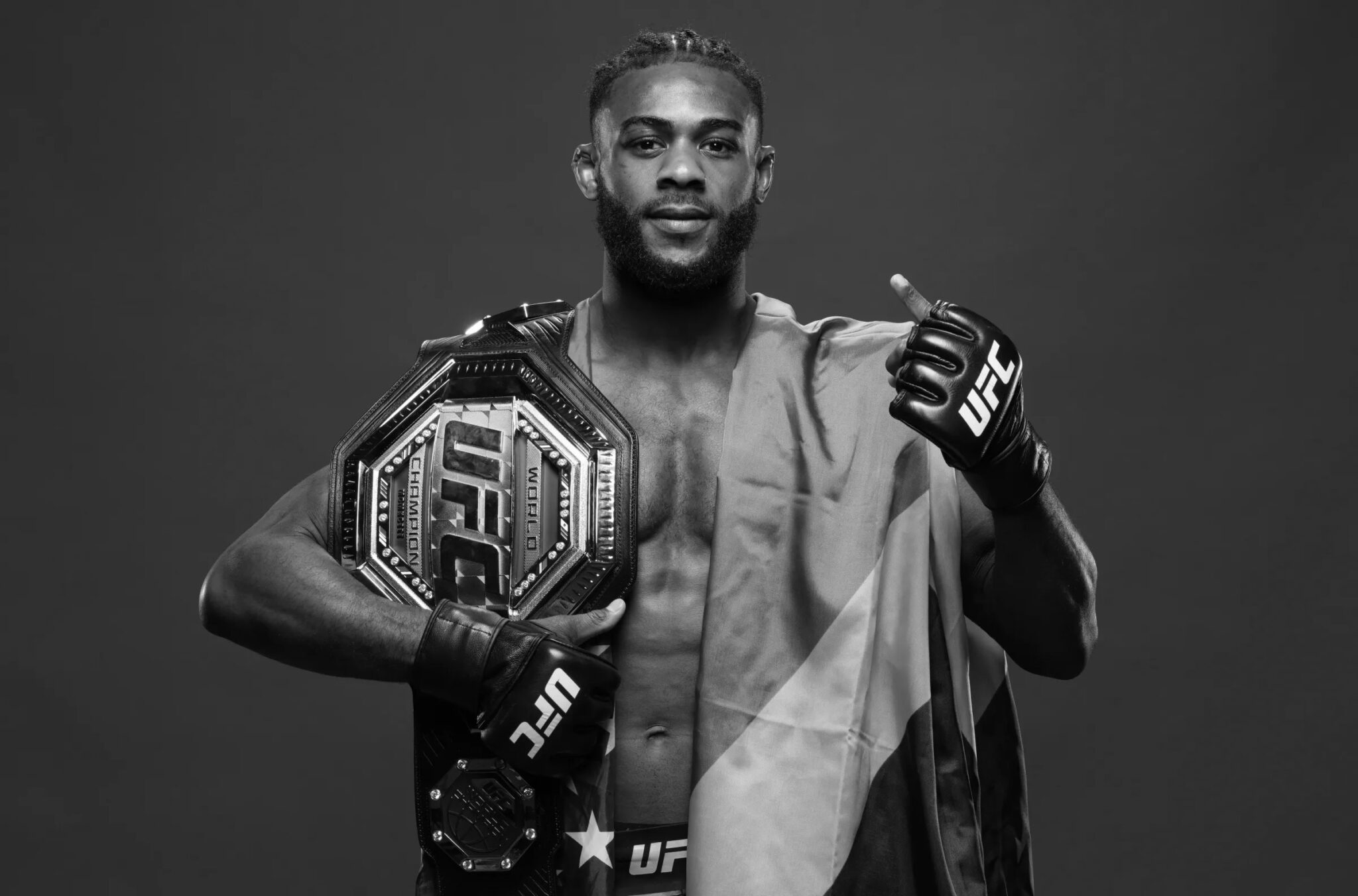
Alex Pereira’s UFC record stands as one of the most anomalous and impressive resumes in the history of mixed martial arts. Since his debut in 2021, Pereira has secured championships in two weight classes, defeated five former or current UFC champions, and maintained a finishing rate that ranks among the highest in the promotion's elite tiers. As of 2026, his record reflects a career built on unprecedented efficiency and tactical striking dominance.
The Rapid Ascent: From Kickboxing Legend to UFC Prospect
Alex "Poatan" Pereira entered the UFC with a reputation that preceded him, largely due to his storied career in GLORY Kickboxing and his two victories over Israel Adesanya in that sport. However, his transition to the Octagon was met with skepticism by purists who questioned his grappling credentials and gas tank for five-round MMA contests.
His debut at UFC 268 in November 2021 against Andreas Michailidis provided the first glimpse of his potential. After a first round where he had to navigate clinch work and takedown attempts, Pereira unleashed a flying knee early in the second round that ended the fight instantly. This victory served as a proof of concept: Pereira’s power was not just localized to his fists; his entire physical frame was a weapon.
Following his debut, the UFC accelerated his path, matching him against Bruno Silva at UFC Fight Night: Santos vs. Ankalaev. This bout was critical for Pereira's record because it went the distance. Silva, known for his durability and punching power, forced Pereira to demonstrate his technical striking over 15 minutes. Pereira won via unanimous decision, proving he could maintain his power and composure in the later rounds of a high-paced fight.
The Turning Point: Sean Strickland and the Title Shot
The most significant catalyst in Alex Pereira’s UFC record was his fight against Sean Strickland at UFC 276. At the time, Strickland was a top-five contender known for his defensive "philly shell" style and constant pressure. Many analysts believed Strickland’s wrestling would be the litmus test for Pereira.
Instead, the fight lasted less than three minutes. Pereira utilized a low-line calf kick to manipulate Strickland's stance before landing his signature left hook. This knockout propelled Pereira directly into a title shot. From a statistical standpoint, this was one of the fastest rises to a championship opportunity in modern UFC history, occurring just three fights into his promotional tenure.
The Middleweight Championship and the Adesanya Saga
The centerpiece of Pereira's early UFC record is his rivalry with Israel Adesanya. Their first MMA meeting at UFC 281 in Madison Square Garden is a masterclass in psychological resilience. Pereira was losing the fight on the judges' scorecards entering the fifth round. However, his ability to find the "off button" remained intact. He cornered Adesanya against the fence and unleashed a flurry of strikes that forced a standing TKO.
This victory made Pereira the UFC Middleweight Champion in only his fourth UFC fight. The subsequent rematch at UFC 287 saw Pereira suffer his first promotional loss. Despite losing the belt via knockout, the tactical data from that fight showed Pereira was arguably winning the exchange until the final sequence, highlighting the razor-thin margins at the elite level of the 185-pound division.
Transition to Light Heavyweight: Cementing a Legacy
Following the loss to Adesanya, Pereira made the strategic decision to move up to the Light Heavyweight (205 lbs) division. This move was necessitated by the grueling weight cuts to 185 lbs and a desire to seek new challenges. His debut in the division against former champion Jan Błachowicz at UFC 291 was a grueling tactical battle at altitude in Salt Lake City.
Pereira won a split decision, a result that reflected his improved defensive wrestling against a world-class grappler. This win immediately positioned him for the vacant Light Heavyweight title. At UFC 295, Pereira faced Jiří Procházka. In a battle of two of the most eccentric and dangerous strikers in the world, Pereira’s calf kicks eventually compromised Procházka’s mobility, leading to a second-round TKO.
With this win, Pereira joined an elite group of "double champions," holding titles in two different weight classes—a feat achieved by only a handful of athletes in UFC history.
Detailed UFC Fight Record and Statistics
The following table outlines the key bouts that define Alex Pereira's UFC career trajectory up to the current 2026 timeframe.
| Event | Opponent | Date | Result | Method | Round/Time |
|---|---|---|---|---|---|
| UFC 268 | Andreas Michailidis | Nov 6, 2021 | Win | KO (Flying Knee) | R2, 0:19 |
| UFC Fight Night 203 | Bruno Silva | Mar 12, 2022 | Win | Decision (Unanimous) | R3, 5:00 |
| UFC 276 | Sean Strickland | Jul 2, 2022 | Win | KO (Left Hook) | R1, 2:36 |
| UFC 281 | Israel Adesanya | Nov 12, 2022 | Win | TKO (Punches) | R5, 2:01 |
| UFC 287 | Israel Adesanya | Apr 8, 2023 | Loss | KO (Punches) | R2, 4:21 |
| UFC 291 | Jan Błachowicz | Jul 29, 2023 | Win | Decision (Split) | R3, 5:00 |
| UFC 295 | Jiří Procházka | Nov 11, 2023 | Win | TKO (Elbows) | R2, 4:08 |
| UFC 300 | Jamahal Hill | Apr 13, 2024 | Win | KO (Left Hook) | R1, 3:14 |
| UFC 303 | Jiří Procházka | Jun 29, 2024 | Win | KO (Head Kick) | R2, 0:13 |
| UFC 307 | Khalil Rountree Jr. | Oct 5, 2024 | Win | TKO (Punches) | R4, 4:32 |
Analyzing the "Poatan" Tactical Framework
To understand Pereira’s record, one must analyze the technical elements that allow him to defeat naturally larger or more experienced grapplers. His success is built on three primary pillars:
1. The Power of the Left Hook
Pereira’s left hook is widely considered the most dangerous single strike in the UFC. Unlike traditional hooks that require a large wind-up, Pereira utilizes a "short" hook with minimal shoulder rotation. This makes it difficult for opponents to telegraph. The power is generated through his lead foot placement and internal hip rotation, allowing him to catch opponents mid-exchange.
2. Low-Line Calf Kicks
Pereira uses the inside and outside calf kick not just for damage, but as a range-finding tool. By deadening an opponent's lead leg, he compromises their ability to explode into takedowns or move out of the way of his power shots. This was particularly evident in his second fight against Jiří Procházka, where the calf kicks set up the eventual head kick finish.
3. Defensive Grappling Evolution
Early in his UFC record, Pereira was seen as vulnerable on the ground. However, working under the tutelage of Glover Teixeira, Pereira developed a "get-back-up" style of wrestling. Rather than fighting for offensive takedowns, he focuses on using his long levers to create frames and hip-escape back to his feet. His ability to neutralize the wrestling of Jan Błachowicz was the definitive proof of this evolution.
The Historical Significance of His Run
Alex Pereira’s record is notable for the "quality of competition" metric. He did not spend years fighting unranked opponents to build a padded record. Instead, his path was a vertical climb through the elite of the 185 and 205-pound divisions.
By 2026, Pereira’s legacy is often compared to that of Anderson Silva or Conor McGregor in terms of impact, but his record is distinct because of the age at which he started. Entering the UFC in his mid-30s, he bypassed the developmental phase most fighters undergo, relying on world-class kickboxing fundamentals to bridge the gap.
His role as a "savior" for the UFC has also been documented. Pereira frequently accepted short-notice fights or stepped in to headline major cards (such as UFC 300 and UFC 303) when other champions were unavailable. This willingness to fight anyone, anywhere, has made his record not just a list of wins, but a testament to his reliability as a professional athlete.
Frequently Asked Questions
How many weight classes has Alex Pereira won titles in?
Alex Pereira has won titles in two UFC weight classes: Middleweight (185 lbs) and Light Heavyweight (205 lbs). He is one of only nine fighters in UFC history to accomplish this feat. His victory over Israel Adesanya secured the Middleweight belt, while his win over Jiří Procházka earned him the Light Heavyweight strap.
What is Alex Pereira's knockout percentage in the UFC?
Pereira maintains an exceptionally high knockout rate. Out of his UFC victories, over 75% have come by way of KO or TKO. This statistic highlights his reliance on striking and his ability to finish fights even against elite-level competition with high durability.
Who was the first person to defeat Alex Pereira in the UFC?
The first fighter to defeat Alex Pereira in the UFC was Israel Adesanya at UFC 287 in April 2023. While Pereira had previously beaten Adesanya twice in kickboxing and once in their first MMA meeting, Adesanya won the rematch via a second-round knockout to reclaim the Middleweight championship.
Has Alex Pereira ever competed in the Heavyweight division?
As of current 2026 records, while there has been significant speculation and verbal interest regarding a move to Heavyweight to become the UFC’s first three-division champion, his official promotional record primarily consists of bouts in the Middleweight and Light Heavyweight divisions. Any move to Heavyweight would be a historic attempt to break the existing two-division record.
What is the meaning of his nickname "Poatan"?
"Poatan" translates to "Stone Hands" in the Tupi language. The name was given to him by his first kickboxing coach, Belocqua Wera, acknowledging Pereira’s indigenous Pataxó roots and his extraordinary punching power. The nickname has become a central part of his branding and fighter persona in the UFC.
Future Implications for the 205-lb Division
Looking ahead from 2026, Alex Pereira’s record serves as the benchmark for the Light Heavyweight division. His dominance has forced a tactical shift in the weight class, where contenders are now prioritizing leg kick defense and distance management more than ever before. Whether he chooses to defend his title against the next generation of wrestlers or pursues a historic third belt at Heavyweight, his record is already secured as one of the most impactful in the history of the sport.
For fans and analysts looking to track his ongoing progress, monitoring official UFC Fighter Profiles and verified statistical databases like UFC Stats is the best way to see how his record evolves with each subsequent Octagon appearance.