Airline pricing strategies are complex, algorithmic systems designed to maximize revenue by adjusting ticket costs in real-time based on demand, competition, and consumer behavior. In 2026, these strategies primarily rely on dynamic pricing, sophisticated revenue management software, and unbundled service models to ensure that every seat on a flight generates the highest possible yield before departure.
The aviation industry operates on razor-thin margins, where a single flight's profitability can hinge on the pricing of the last few remaining seats. Unlike retail, where prices remain relatively static, airline seats are "perishable inventory"—once the cabin door closes, the value of an empty seat drops to zero. To combat this, carriers have developed some of the most advanced pricing models in the global economy. This guide explores the mechanics of how airlines determine what you pay, the technology driving these decisions in 2026, and the strategic shift toward total retail optimization.
The Foundations of Revenue Management and Yield Optimization
The bedrock of airline pricing is Revenue Management (RM), a practice that originated in the post-deregulation era of the 1970s and 1980s. The goal of RM is simple: sell the right seat to the right customer at the right time for the right price. To achieve this, airlines utilize yield optimization, which balances the "load factor" (how full the plane is) against the "average fare."
In 2026, yield optimization has transitioned from simple historical data analysis to predictive modeling. Airlines categorize their inventory into different "buckets" or Fare Classes, often represented by alphabetic codes (e.g., Y, B, M for Economy; J, C, D for Business). Each bucket has a specific price point and set of restrictions. As the departure date approaches and lower-priced buckets sell out, the system automatically opens higher-priced buckets.
This process is governed by Littlewood’s Rule and more modern iterations like the Expected Marginal Seat Revenue (EMSRb) version. These mathematical formulas help analysts decide whether to accept a booking at a lower price today or save that seat for a potential high-paying business traveler who might book at the last minute. By 2026, these calculations happen in milliseconds, processing millions of data points across global distribution systems (GDS).
Dynamic Pricing and Real-Time Inventory Control
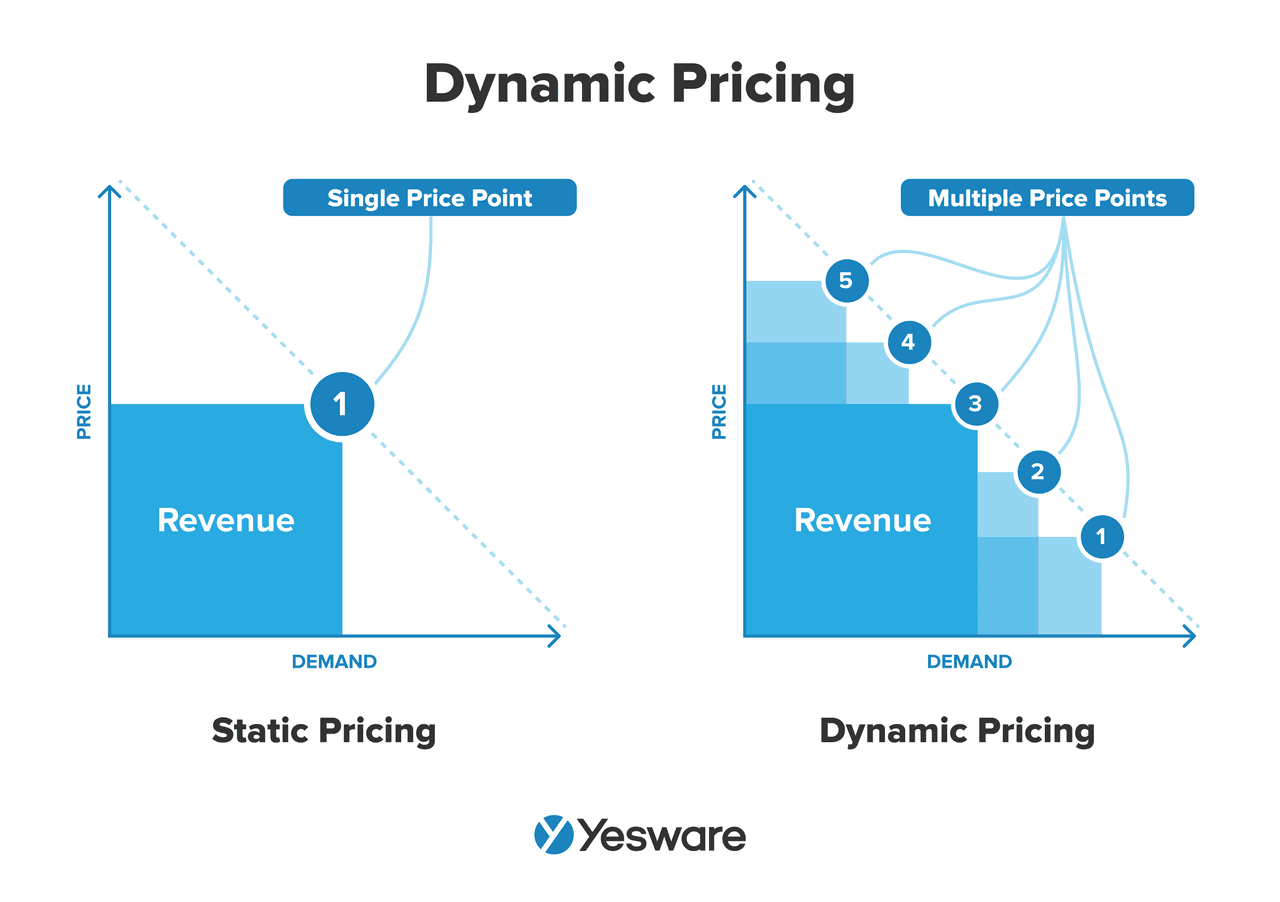
Dynamic pricing is the practice of changing prices frequently—sometimes multiple times an hour—in response to market fluctuations. In 2026, this is no longer just about "high demand" during holidays; it involves a sophisticated analysis of several variables:
- Competitor Matching: Automated scrapers monitor competitor fares on identical or similar routes. If a rival carrier drops a price, the algorithm must decide whether to match it to maintain market share or hold steady to preserve yield.
- Temporal Demand: This includes the "booking curve," which tracks how quickly seats are filling up compared to historical norms. If a flight is 80% full three weeks out, the price will spike to discourage low-yield flyers and save room for emergency or high-priority travelers.
- External Factors: Modern AI engines integrate weather forecasts, major sporting events (like the World Cup or regional championships), and even geopolitical shifts that might redirect travel patterns.
The most significant advancement in 2026 is Continuous Pricing. Historically, airlines were limited to 26 price points (the letters of the alphabet). Continuous pricing allows airlines to move away from these rigid steps and offer a fluid price line, ensuring that the fare offered is exactly what the market will bear at that specific moment.
The Shift Toward NDC and Personalized Pricing
For years, the industry relied on the New Distribution Capability (NDC) standard developed by the International Air Transport Association (IATA). By 2026, NDC has become the dominant method for communicating offers. This technology allows airlines to bypass traditional, restrictive GDS systems and deliver "Rich Content" directly to travel agents and consumers.
The true power of NDC lies in Personalized Pricing. If a traveler is logged into a frequent flyer account, the airline can see their booking history, status, and preferences. A "Platinum" member might be offered a discounted upgrade to Business Class that isn't visible to a first-time flyer. Alternatively, the system might bundle a Wi-Fi pass and lounge access into the base fare because it knows that specific traveler values those amenities.
This is not "price discrimination" in the legal sense, but rather "value-based segmentation." The airline is attempting to capture the maximum "willingness to pay" (WTP) for every individual customer segment, moving the industry closer to a retail-style experience.
Ancillary Revenue and the Unbundling Model
One of the most successful airline pricing strategies is unbundling, popularized by Low-Cost Carriers (LCCs) like Ryanair and Spirit, and now adopted by legacy carriers globally. By stripping the ticket down to its barest form—the "Base Fare"—airlines can appear at the top of search results on price comparison sites.
Once the customer is in the "funnel," the airline generates profit through Ancillary Revenue. This includes:
- Seat Selection: Charging for extra legroom, exit rows, or simply the right to sit with a companion.
- Baggage Fees: Tiered pricing for carry-ons, checked bags, and overweight items.
- On-board Services: Meals, drinks, and high-speed internet.
- Flexibility Credits: Charging a premium for the ability to change or cancel a flight.
In 2026, ancillary revenue often accounts for 30% to 50% of a carrier's total income. This strategy allows the airline to maintain a low "entry-level" price for budget-conscious travelers while extracting higher margins from those who desire more comfort or convenience.
Comparison of Pricing Models by Carrier Type
The strategy an airline employs depends heavily on its business model and route network. Below is a comparison of how different types of airlines approach pricing in 2026.
| Strategy Component | Full-Service Carriers (FSC) | Low-Cost Carriers (LCC) | Ultra-Low-Cost Carriers (ULCC) |
|---|---|---|---|
| Primary Goal | Yield per passenger (High Margin) | Volume and Load Factor | Ancillary extraction |
| Network Logic | Hub-and-Spoke (Connections) | Point-to-Point | Secondary Airports |
| Pricing Structure | Complex bundles (Eco, Premium, Biz) | Unbundled with "Add-on" options | "Bare Fare" with high fees |
| Target Audience | Corporate and Luxury | Value-seekers | Price-sensitive/Leisure |
| Inventory Control | Heavy focus on last-minute business fares | Aggressive early-booking discounts | Static low base, dynamic ancillary |
Psychological Pricing and Consumer Tactics
Airlines are masters of behavioral economics. They use specific psychological triggers to nudge travelers into completing a purchase:
- Scarcity Cues: Phrases like "Only 2 seats left at this price!" create a sense of urgency, even if the airline has 50 more seats available in a slightly more expensive bucket.
- Anchoring: Showing a high "Original Price" next to a "Sale Price" makes the current fare seem like a bargain, regardless of its objective value.
- Charm Pricing: Using prices like $199 instead of $200. While sophisticated, it still effectively targets the "left-digit effect" in consumer cognition.
- Drip Pricing: This is the practice of showing a low initial price and adding fees throughout the booking process. While regulations in 2026 have tightened around "all-in" pricing transparency, the psychological impact of the low initial anchor remains a powerful conversion tool.
The Impact of Corporate Contracts and Alliances
While individual travelers see dynamic prices, a large portion of airline revenue comes from Corporate Travel Agreements. Major corporations negotiate fixed discounts or "shadow fares" with airlines or alliances (such as Star Alliance or SkyTeam).
In 2026, these contracts are increasingly managed via AI-driven portals that automatically apply negotiated rates while still allowing the airline to "throttle" availability on high-demand flights. If a flight is nearly sold out, the airline might "close" the corporate discount bucket, forcing the company to pay the full market rate. This interplay between private contracts and public pricing is a critical, though often invisible, part of the overall strategy.
Challenges and Future Trends in 2026
As we look at the state of airline pricing in 2026, several challenges have emerged that complicate these strategies:
1. Sustainability and Carbon Offsetting: With increasing pressure from the International Civil Aviation Organization (ICAO), many airlines now include "green surcharges" or mandatory carbon offset fees in their base pricing. This adds a new layer of cost that must be passed to the consumer without hurting demand.
2. Regulatory Oversight: Governments in the EU and North America have introduced stricter rules regarding "junk fees" and price transparency. Airlines have had to adapt by creating "all-in" bundles that still allow for some level of customization without violating consumer protection laws.
3. Algorithmic Collusion: There is ongoing debate among regulators regarding whether the widespread use of similar AI pricing engines leads to "unintentional collusion," where prices remain artificially high because all algorithms are programmed to react to market changes in the same way.
FAQ: Understanding Modern Airline Fares
Why did the price of my flight go up after I refreshed the page? This is rarely due to "cookies" tracking you. Instead, it is usually because the specific fare bucket you were looking at sold out, or the airline's Revenue Management system adjusted the price based on a sudden uptick in global demand for that route. In 2026, inventory is synchronized in real-time across hundreds of platforms; if someone else buys the last seat in a bucket while you are searching, the price will instantly jump to the next level.
Is there a "best day" of the week to buy tickets? The "Tuesday afternoon" myth has largely been debunked by 2026. Because pricing is now dynamic and continuous, there is no specific day that guarantees a deal. However, booking 3–6 weeks in advance for domestic flights and 2–4 months for international flights remains a solid rule of thumb, as this is when airlines typically begin aggressively managing their mid-tier fare buckets.
What is "Hidden City" ticketing, and is it a pricing strategy? Hidden city ticketing is a consumer tactic where a passenger books a flight with a layover in their actual intended destination and skips the second leg (e.g., booking NYC to Miami via Atlanta and getting off in Atlanta). This exists because airlines price based on market demand rather than distance. A direct flight to a hub is often more expensive than a connecting flight to a smaller city. Note that airlines strictly forbid this in their contract of carriage and may penalize frequent flyer accounts if caught.
Do airlines charge more if I use a Mac or an iPhone? While some studies have suggested minor variations in "sorting" (showing more expensive hotels or flights first to higher-end device users), there is no evidence that airlines change the actual base fare based on your hardware. They do, however, use device data to tailor ancillary offers, such as suggesting premium Wi-Fi packages to users with the latest smartphones.
Summary and Next Actions
Airline pricing in 2026 is a sophisticated marriage of data science, psychology, and retail strategy. To navigate this landscape effectively, travelers and industry professionals should:
- Use Aggregators Wisely: Use sites like Google Flights or Skyscanner to monitor the "Price Graph," which visualizes the booking curve for your specific route.
- Leverage Loyalty: Always log in to frequent flyer accounts to access Personalized Pricing and NDC-driven offers that are not available to the general public.
- Watch for Unbundling: When comparing prices, calculate the "total cost of travel," including bags and seats, rather than just the headline fare.
- Monitor "Fare Drop" Protections: Some credit cards and booking platforms now offer automatic refunds if a price drops after you book—a vital tool in a world of continuous pricing.