IATA, or the International Air Transport Association, is the global trade organization representing approximately 330 airlines, comprising over 80% of total air traffic. It serves as the primary body for setting international standards in aviation safety, security, efficiency, and sustainability. For travelers and professionals, IATA is the engine behind the three-letter airport codes, ticket pricing structures, and the complex financial systems that allow global air travel to function as a single, interconnected network.
As of 2026, the role of IATA has expanded beyond simple coordination. It is now the central architect for the aviation industry’s digital transformation and its aggressive pursuit of "Net Zero" carbon emissions. Understanding IATA is essential for anyone involved in logistics, travel management, or aviation operations, as its regulations dictate everything from how a suitcase is tagged to how billions of dollars in ticket revenue are settled daily across borders.
The Identity and Mission of IATA
Founded in Havana, Cuba, in April 1945, IATA was created to help airlines cooperate in a way that would promote safe, secure, and economical air transport. While it began with just 57 members from 31 nations, it has grown into a powerhouse that influences almost every aspect of the flying experience.
It is important to distinguish IATA from ICAO (International Civil Aviation Organization). While ICAO is a specialized agency of the United Nations that deals with governments and international "Standards and Recommended Practices" (SARPs), IATA is a private trade association that represents the airlines themselves. In simpler terms, ICAO sets the "rules of the road" for nations, while IATA develops the "best practices" and commercial systems for the companies flying those roads.
The mission of IATA can be broken down into three primary pillars:
- Lead: Helping the industry identify and respond to emerging challenges, such as pandemic recovery or cyber security threats.
- Represent: Acting as a collective voice for airlines when negotiating with governments, airports, and fuel suppliers.
- Serve: Providing the technical infrastructure—such as billing systems and dangerous goods manuals—that individual airlines could not easily manage on their own.
IATA Codes: The Universal Language of Aviation
Perhaps the most visible contribution of IATA to the general public is its coding system. These codes ensure that there is no ambiguity when identifying locations, carriers, or currencies.
Airport Codes (Three-Letter Codes)
The IATA Three-Letter Code is the identifier for airports worldwide. For example, "LHR" refers exclusively to London Heathrow, while "JFK" refers to John F. Kennedy International in New York. These codes are critical for:
- Baggage Handling: Ensuring your suitcase is routed to the correct destination.
- Flight Booking: Allowing Global Distribution Systems (GDS) to pull accurate schedules.
- Ticketing: Providing a standardized reference for travel itineraries.
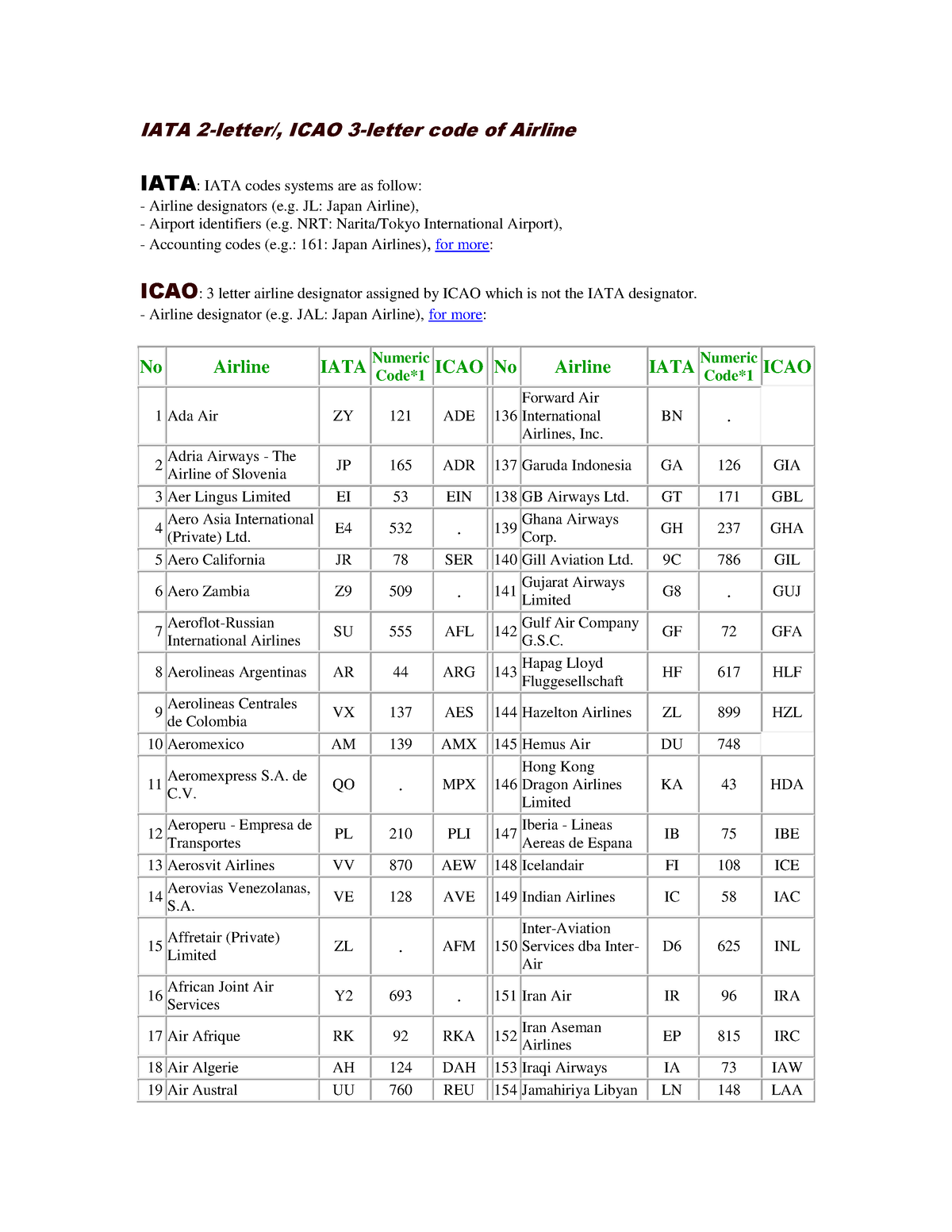
Airline Designators (Two-Character Codes)
Every airline has a unique two-character identifier. Delta Air Lines is "DL," Lufthansa is "LH," and Emirates is "EK." These codes appear on flight numbers (e.g., EK201) and are used in all telecommunications between air traffic control and airline operations centers.
Location and Currency Codes
IATA also standardizes codes for cities that may have multiple airports (like "LON" for London) and maintains the systems used to convert ticket prices into local currencies based on the IATA Five-Letter Alpha Code (and the associated exchange rates).
The Financial Backbone: Billing and Settlement Plans (BSP)
One of the most complex "Air IATA" functions is the management of money. When a travel agent in Tokyo sells a ticket for a flight from Paris to New York on an American airline, the money must travel through various hands, currencies, and tax jurisdictions.
IATA manages this through the Billing and Settlement Plan (BSP). The BSP is a centralized system that simplifies the selling, reporting, and remitting procedures between travel agents and airlines. Instead of an agent having to maintain a separate financial relationship with 100 different airlines, they interact only with the BSP.
As of 2026, the BSP processes over $400 billion in annual ticket sales. It ensures that:
- Airlines receive their money promptly and accurately.
- Travel agents have a standardized way to report sales.
- Security and fraud prevention are maintained at a global level through the IATA Numeric Code, which identifies accredited agencies.
For cargo, IATA operates the CASS (Cargo Account Settlement System), which performs the same function for freight forwarders and airlines, ensuring that global trade moves without financial bottlenecks.
Safety and Security: The IOSA Standard
Safety is the highest priority in aviation, and IATA’s primary tool for maintaining it is the IATA Operational Safety Audit (IOSA). This is an internationally recognized and accepted evaluation system designed to assess the operational management and control systems of an airline.
Membership in IATA is actually contingent upon an airline being IOSA-registered. To pass, an airline must meet over 900 rigorous standards across several areas:
- Organization and Management System
- Flight Operations
- Operational Control and Flight Dispatch
- Aircraft Engineering and Maintenance
- Cabin Operations
- Ground Handling Operations
- Cargo Operations
- Operational Security
Statistics consistently show that the accident rate for IOSA-registered airlines is significantly lower than for non-IOSA airlines. By mandating this audit, IATA has effectively raised the "floor" of global aviation safety, ensuring that a passenger can expect a similar level of operational oversight whether they are flying a major carrier or a small regional airline.
Air Cargo and Dangerous Goods
The "Air" in IATA also refers heavily to the transport of goods. IATA is the author of the Dangerous Goods Regulations (DGR), which is the global standard for shipping hazardous materials by air. Whether it is lithium batteries in smartphones, infectious substances for medical research, or flammable chemicals, the IATA DGR manual dictates how these items must be packed, labeled, and handled.
Furthermore, IATA has introduced various Center of Excellence for Independent Validators (CEIV) certifications to ensure specialized cargo is handled correctly:
- CEIV Pharma: Ensuring temperature-sensitive medicines are kept viable.
- CEIV Live Animals: Focusing on the welfare of animals during transport.
- CEIV Fresh: Optimizing the supply chain for perishable foods to reduce waste.
The Digital Transformation: NDC and One ID
In 2026, IATA is leading the charge toward a fully digital travel experience. Two major initiatives define this era: New Distribution Capability (NDC) and One ID.
New Distribution Capability (NDC)
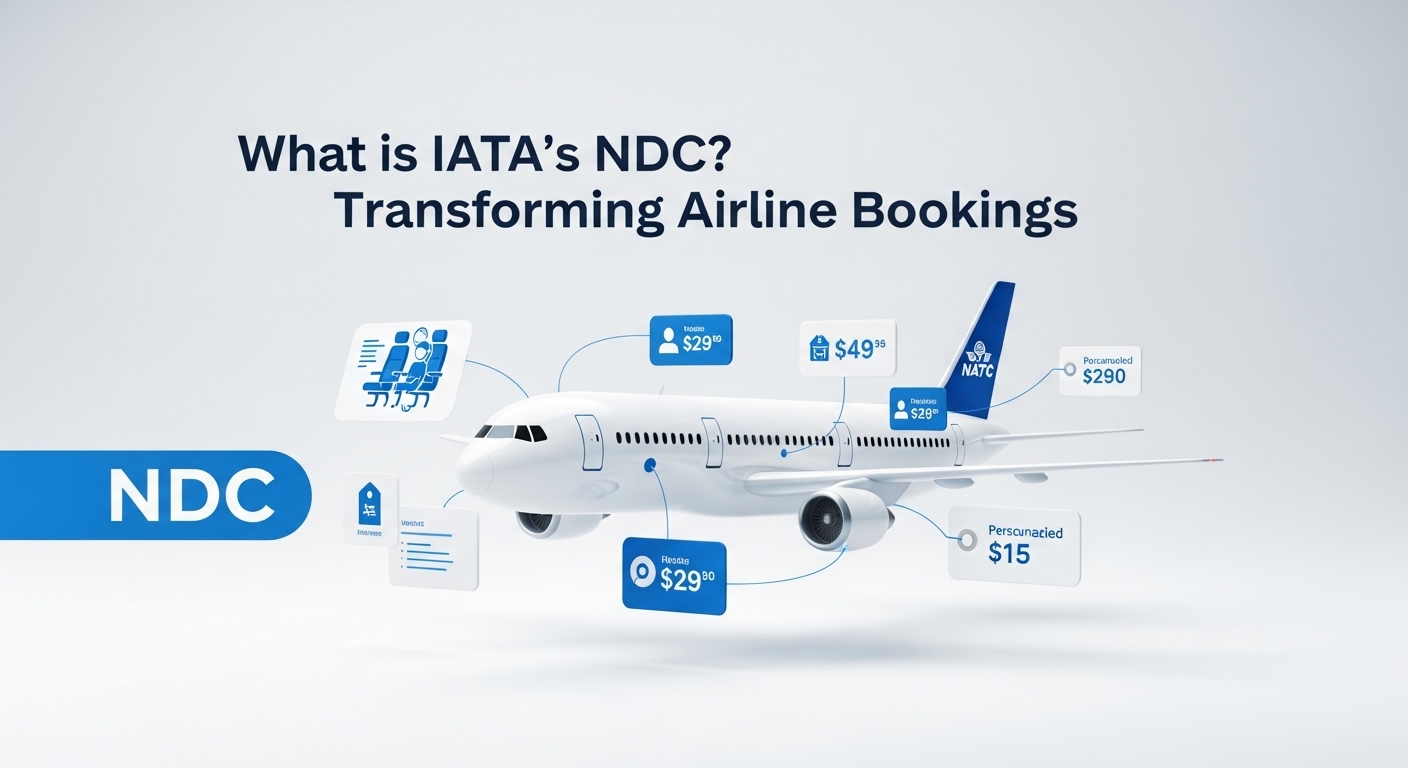
Historically, airlines were limited in what they could sell through travel agents because of legacy technology. NDC is an XML-based data transmission standard that allows airlines to offer "rich content." This means that instead of just seeing a price for a seat, a traveler or agent can see photos of the cabin, purchase WiFi packages, or add lounge access directly through the booking platform. It transforms airline seats into a modern retail experience.
One ID (Identity Management)
The One ID initiative aims to create a "contactless" travel experience using biometrics. By using a digital identity (such as a facial scan linked to a passport), passengers can move through the airport, pass through security, and board the plane without having to repeatedly show physical documents. IATA’s role is to ensure that the standards for this data are the same in London as they are in Singapore, allowing for a seamless international journey.
Comparative Overview: IATA vs. ICAO
To fully understand IATA, it is helpful to see how it compares to its regulatory counterpart, ICAO.
| Feature | IATA (International Air Transport Association) | ICAO (International Civil Aviation Organization) |
|---|---|---|
| Organization Type | Private Trade Association | United Nations Specialized Agency |
| Members | Airlines (approx. 330) | Nations/Governments (193 countries) |
| Primary Goal | Commercial success, efficiency, and safety for airlines. | Uniformity in international aviation law and safety. |
| Key Output | Airport Codes (LHR), BSP (Finance), DGR (Cargo). | ICAO Codes (EGLL), SARPs (Global Standards). |
| Membership Requirement | Must pass the IOSA safety audit. | Must be a sovereign state. |
| Focus Area | Operational and commercial standards. | Regulatory and legal frameworks. |
Sustainability and the 2050 Goal
In 2021, IATA members committed to achieving Net Zero Carbon Emissions by 2050. This is a monumental task for an industry that relies on liquid hydrocarbons. As of 2026, IATA’s strategy focuses on four main areas:
- Sustainable Aviation Fuel (SAF): Encouraging the production and uptake of fuels made from waste oils, fats, and green hydrogen.
- New Technology: Supporting the development of electric and hydrogen-powered aircraft for short-haul flights.
- Infrastructure and Operational Efficiency: Optimizing flight paths to reduce fuel burn and improving ground operations.
- Carbon Offsets and Capture: Utilizing the Carbon Offsetting and Reduction Scheme for International Aviation (CORSIA) to manage emissions that cannot yet be eliminated.
IATA acts as the central tracker for these goals, providing airlines with the methodology to report their emissions and ensuring that "green" claims are verified and transparent.
Frequently Asked Questions
What is the difference between an IATA code and an ICAO code?
An IATA code (e.g., LAX) is primarily used for commercial purposes like ticketing, baggage, and schedules. An ICAO code (e.g., KLAX) is used by pilots and air traffic controllers for flight planning and technical communications. IATA codes are three letters, while ICAO codes are four letters.
How does an airline become an IATA member?
To join IATA, an airline must operate a scheduled or non-scheduled air service and must successfully complete the IATA Operational Safety Audit (IOSA). Once these criteria are met, the airline pays an annual membership fee based on its size and traffic volume.
Can individuals join IATA?
No, IATA is an association for airlines. However, individuals can become "IATA Certified" by taking professional training courses in areas like cargo handling, travel agency management, or aviation safety. Travel agencies can also become "IATA Accredited," which allows them to sell international airline tickets.
Is IATA a government agency?
No, IATA is a private trade association. It does not have the power to pass laws. However, because it represents the vast majority of the world's airlines, governments often adopt IATA's standards into their own national regulations.
What is the IATA Travel Centre?
The IATA Travel Centre is an official resource provided by the association where passengers can check passport, visa, and health requirements for any destination worldwide. It is the same database that airline check-in agents use to verify if a passenger is eligible to fly.
How does IATA influence ticket prices?
While IATA used to be involved in direct price-fixing decades ago, it no longer sets ticket prices due to antitrust laws. Today, it influences prices indirectly by standardizing the "interlining" process—where a passenger flies on two different airlines on one ticket—ensuring that the revenue is split fairly between the carriers.
Practical Recommendations for Industry Stakeholders
For those looking to engage with the IATA ecosystem, whether as a business owner or a professional, the following steps are recommended:
- For Travel Agencies: Prioritize IATA accreditation. While the requirements for financial security and professional competency are high, the "IATA Numeric Code" is the only way to gain direct access to the Billing and Settlement Plan, which drastically reduces administrative overhead when booking international flights.
- For Cargo Professionals: Stay current with the IATA Dangerous Goods Regulations (DGR). These manuals are updated annually. Using an outdated version can lead to grounded shipments, heavy fines, and safety risks.
- For Aviation Students: Pursue IATA-certified training. In the global hiring market, an IATA diploma in "Airline Studies" or "Cargo Operations" is often seen as a universal credential that carries weight across all 193 ICAO member states.
- For Tech Developers: Focus on NDC and One ID compatibility. As the industry moves away from legacy systems, the demand for software that can handle XML-based retailing and biometric data integration is at an all-time high.
The "Air IATA" framework is the invisible scaffolding that allows a passenger to fly from a remote airport in South America to a hub in Asia with a single ticket and a single checked bag. By setting the standards for safety, finance, and digital identity, IATA ensures that the world remains connected through a safe and predictable aviation network.