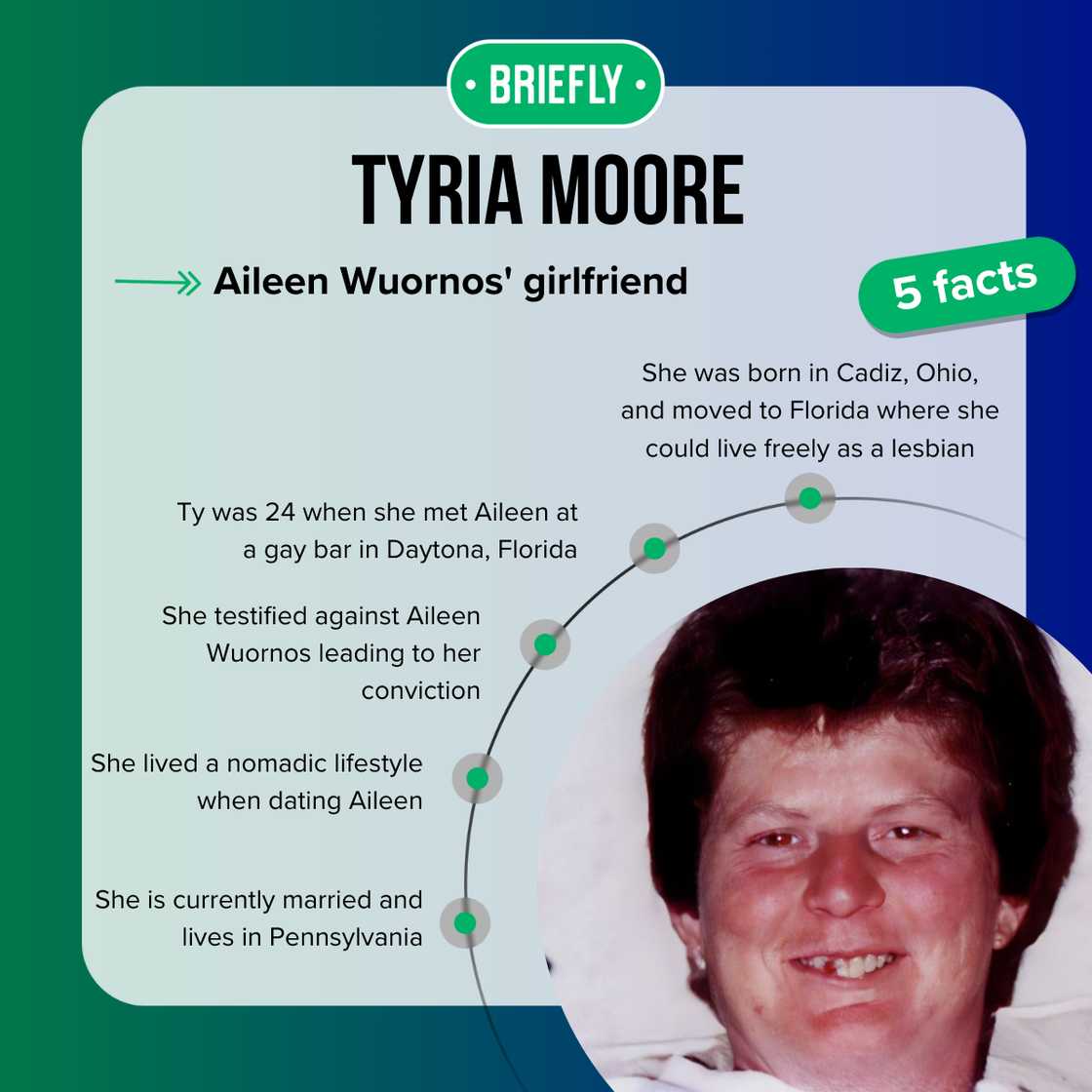
In 2026, the intersection of Aileen Wuornos and Tyria Moore remains a subject of intense historical and legal scrutiny rather than active, ongoing litigation. While public fascination with their relationship and the subsequent 1991–1992 criminal proceedings persists, there are no current, active legal battles involving Tyria Moore regarding Wuornos’s capital cases or state-level convictions. The legal history concluded with the exhaustion of all appeals following Wuornos’s execution in 2002.
Historical Context of the Relationship
To understand the nature of the legal proceedings, one must first recognize the role Tyria Moore played in the investigations conducted by the Florida Department of Law Enforcement and local agencies between 1990 and 1991. Aileen Wuornos, a transient woman who murdered seven men in Florida, was linked to these crimes largely through the cooperation of Moore.
Moore, who was in a long-term relationship with Wuornos, became the central witness for the prosecution. She provided critical testimony that helped investigators connect Wuornos to the firearms and personal property of the victims. In many high-profile criminal cases of this era, the "legal battle" was defined by the trial process itself—the admissibility of confessions, the competency of the defendant, and the negotiation of immunity for key witnesses.
The Dynamics of Immunity and Testimony
Tyria Moore was never charged as an accomplice to the murders. This is a common point of confusion that often fuels speculation about "hidden" legal conflicts. Under Florida law, the state exercises prosecutorial discretion when building a case against a primary defendant. By granting immunity or declining to prosecute a witness like Moore, the state secures the testimony necessary to ensure a conviction for multiple counts of first-degree murder.
There was no legal battle in the sense of a civil suit between Wuornos and Moore. Instead, the "battle" was a systemic one:
- The State vs. Aileen Wuornos: This was the primary legal action, involving multiple trials across different Florida counties.
- The Defense’s Strategy: Wuornos’s legal teams focused on self-defense claims, which were undermined significantly by the evidence Moore provided during depositions and trial testimony.
- Appellate Review: Following the convictions, a lengthy series of mandatory appeals ensued, standard in death penalty cases. Moore’s involvement was a recurring point of contention in these appeals, as defense attorneys often attempted to challenge the credibility and the conditions of her cooperation with law enforcement.
Why Misconceptions Regarding a "Legal Battle" Persist
The term "legal battle" is frequently misapplied in pop culture to describe the ongoing personal or narrative conflict between the two women. In 2026, interest in this case remains high due to true-crime documentaries, podcasts, and dramatizations.
These media representations often frame the relationship as a volatile, unresolved struggle. However, from a strictly legal perspective, the matters are settled. There is no active litigation because:
- Finality of Criminal Judgments: The courts have long since finalized the rulings.
- Lack of Civil Standing: No civil suits were successfully brought forward to challenge the state’s handling of the relationship or the testimony provided by Moore.
- Witness Protection and Privacy: Following the trials, Moore largely exited the public sphere. Any suggestion of a modern legal battle is generally speculative and not supported by court records or dockets in the state of Florida.
Comparative Analysis of Legal Roles
To clarify the distinctions between the parties involved, the following table outlines the roles played during the legal proceedings of the early 1990s.
| Party | Role in Proceedings | Legal Status Post-Trial |
|---|---|---|
| Aileen Wuornos | Primary Defendant | Executed (2002) |
| Tyria Moore | Prosecution Witness | Immune from prosecution |
| State of Florida | Prosecuting Entity | Case closed/concluded |
| Defense Counsel | Legal Representation | Appeals exhausted |
The Role of Evidence and Testimony
The legal weight of Moore’s testimony cannot be overstated. During the investigation, Moore recorded phone calls at the request of police. These recordings were instrumental in securing Wuornos’s confession and providing the prosecution with a roadmap to evidence that would otherwise have been difficult to obtain.
From a technical legal standpoint, the "battle" was fought over the Chain of Custody and the Admissibility of Evidence. The defense argued that the methods used to obtain Moore’s cooperation amounted to coercion, while the prosecution argued that Moore was a voluntary informant acting in the interest of public safety. Courts ruled in favor of the state, establishing that Moore’s cooperation was admissible and that the testimony provided met the standards of the Florida Rules of Evidence.
Navigating the Historical Records
For those seeking to verify the current status of these cases in 2026, it is essential to consult official repositories rather than secondary commentary. The Florida Department of Corrections and the Florida Supreme Court archives hold the definitive records of the criminal case, Case No. 91-0000 (and subsequent regional filings).
Legal scholars and historians examining this case focus on:
- The Plea of Self-Defense: How Wuornos’s claims of self-defense were dismantled by the inconsistency between her narrative and the physical evidence identified through Moore’s assistance.
- Procedural Due Process: The rigorous appeals process required for capital cases, which serves as the formal "battleground" where legal errors are adjudicated.
- The Ethics of Informant Agreements: The balance between using an accomplice (or associate) as a witness and the moral weight of their potential culpability.
FAQs Regarding the Case Status
1. Is there an active lawsuit between Aileen Wuornos and Tyria Moore in 2026? No. There are no active civil or criminal lawsuits between the two individuals. The legal proceedings involving the crimes committed ended with the conclusion of the appeal process and the subsequent execution of Aileen Wuornos.
2. Was Tyria Moore ever prosecuted for her role? No. Tyria Moore was not charged with any crimes related to the seven murders. She cooperated with law enforcement and was granted immunity in exchange for her testimony, a standard procedural tool in major criminal prosecutions.
3. Why do people search for a "legal battle" between them? The phrase likely stems from the high-tension nature of their relationship as depicted in various documentaries and the dramatic nature of the court testimonies. Because the relationship was integral to the trial, audiences often perceive the psychological and emotional conflict as an ongoing legal struggle.
4. Where can I find the official court documents from the trial? Official records of the trials, including motions, testimony transcripts, and appellate decisions, are stored in the archives of the Florida judicial system and the Florida Supreme Court. Requests for access to these archives are governed by the Florida Rules of Judicial Administration.
5. Did Tyria Moore have to testify in court? Yes. Moore provided critical, live testimony during the trials. Her role as a witness was subject to intense cross-examination by Wuornos’s defense team, who attempted to discredit her character and motive for cooperating with the police.
Expert Guidance for Further Research
If you are conducting research into the legal history of this case, move away from sensationalist secondary sources. Focus on:
- Trial Transcripts: These provide the primary source material for what was actually said in court, stripped of media interpretation.
- Appellate Briefs: These documents outline the specific legal arguments used by the defense to challenge the state's case, including objections to Moore's involvement.
- Statutory Research: Review Florida statutes relevant to the 1990–1992 period regarding accomplice testimony and immunity agreements to understand the legal framework that governed the case.
The case of Aileen Wuornos and the testimony of Tyria Moore remains a landmark study in the use of informant-based evidence in capital punishment cases. While the "battle" in the courtroom concluded over two decades ago, the case remains a focal point for those studying criminal psychology, the dynamics of witness cooperation, and the evolution of Florida’s criminal justice system. Any investigation into this matter today should treat it as a closed historical event, focusing on the established record rather than modern speculation.