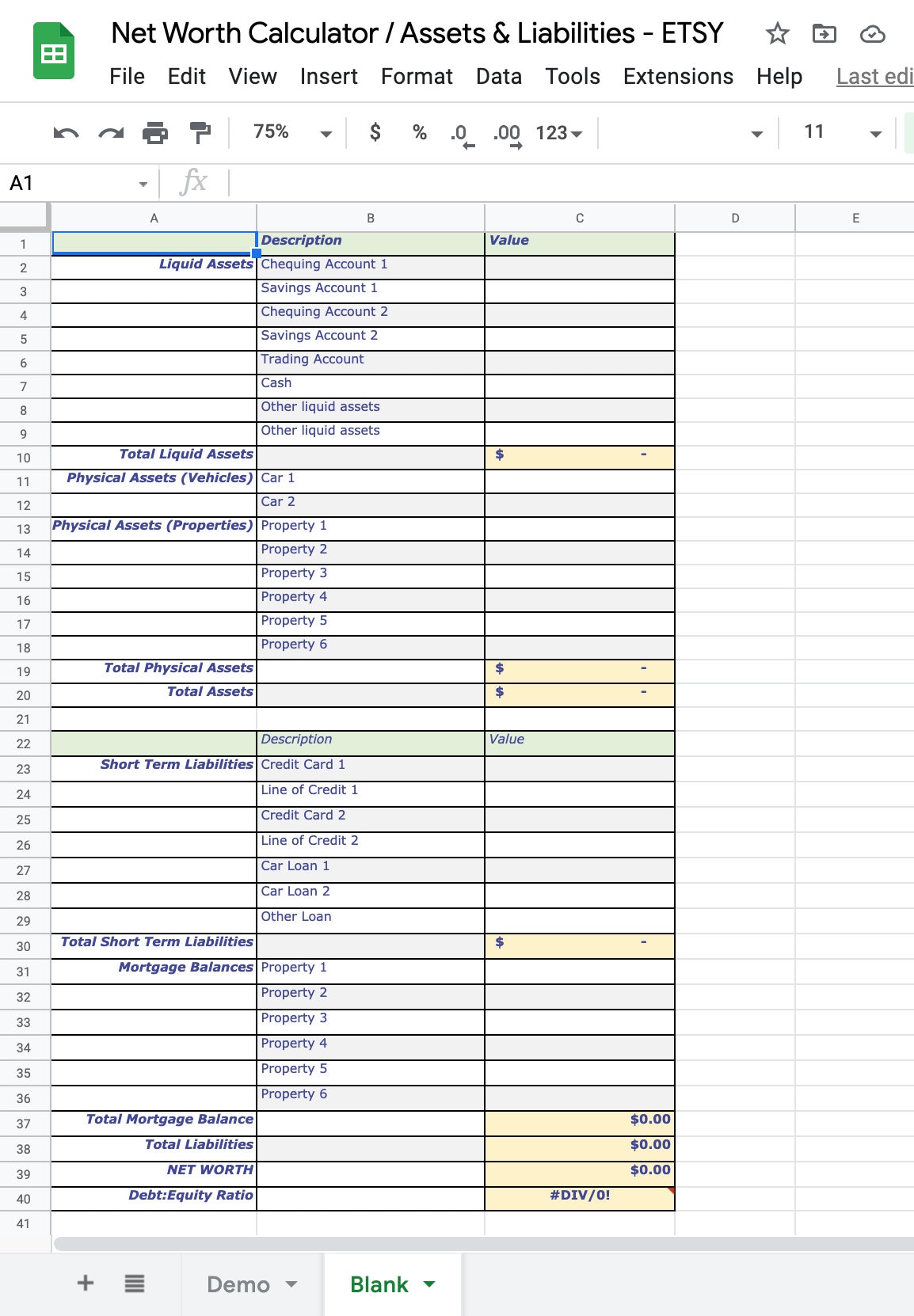
An accredited investor net worth calculator helps individuals determine if they meet the financial eligibility thresholds established by the Securities and Exchange Commission (SEC) to participate in private capital markets. By aggregating liquid and illiquid assets while subtracting liabilities, the calculator provides a standardized way to assess whether you qualify under the “net worth” or “income” criteria defined in Regulation D.
The Role of Accredited Investor Status in Modern Finance
Accredited investor status is a legal classification in the United States that allows individuals to participate in private equity, venture capital, hedge funds, and other unregistered securities offerings. These investments are generally considered higher risk, and the SEC enforces these rules to ensure that participants possess the financial sophistication and capacity to withstand potential losses.
Understanding your status is not merely a bookkeeping exercise; it is a regulatory requirement for issuers of private securities to verify your eligibility before allowing you to invest. Whether you are looking into real estate syndication, angel investing, or startup crowdfunding, knowing how to calculate your net worth according to SEC guidelines is the essential first step.
Defining the SEC Thresholds
To be considered an accredited investor, you do not necessarily need to be a billionaire. The SEC has established clear quantitative thresholds. If you do not meet the income requirements, you must meet the net worth requirement.
- The Net Worth Test: You must have a net worth of at least $1 million, either individually or jointly with your spouse or spousal equivalent. Importantly, this calculation excludes the value of your primary residence.
- The Income Test: You must have an annual income exceeding $200,000 (or $300,000 if combined with a spouse/spousal equivalent) in each of the two most recent years, with a reasonable expectation of reaching the same level in the current year.
How the Accredited Investor Net Worth Calculator Works
An accredited investor net worth calculator functions by systematically isolating assets that count toward the $1 million requirement and subtracting the debts tied to those assets. Because the primary residence is legally excluded from this specific calculation, the tool acts as a filter that separates your personal living space from your investment-grade wealth.
Step 1: Inventory of Assets
The calculator first prompts you to list all holdings that constitute your net worth. This typically includes:
- Cash and Equivalents: Bank accounts, certificates of deposit (CDs), and money market funds.
- Investment Portfolios: Stocks, bonds, mutual funds, and exchange-traded funds (ETFs).
- Retirement Accounts: 401(k) plans, IRAs, and other tax-advantaged accounts.
- Real Estate (Investment Only): Rental properties, commercial holdings, or vacation homes that are not your primary residence.
- Business Equity: The fair market value of your interest in private businesses or partnerships.
- Other Assets: Precious metals, fine art, or collectibles (at their current fair market value).
Step 2: Identification of Liabilities
The calculator then subtracts your total financial obligations. Crucially, while the primary residence is excluded from the asset side, the debt associated with it must be handled carefully. If you have taken out a mortgage against your primary residence, that liability is generally not subtracted from your net worth calculation, as the asset itself is excluded. However, all other debts—such as personal loans, credit card balances, and margin debt—must be deducted.
Step 3: Excluding the Primary Residence
This is the most common area for error. The SEC mandates that your primary home cannot be included in the $1 million threshold. Furthermore, if the mortgage on your primary residence is "underwater" (where the loan amount exceeds the home's value), you cannot use that negative equity to lower your net worth for the purpose of the test.
Comparison of Eligibility Criteria
| Criterion | Requirement | Key Exclusions |
|---|---|---|
| Net Worth Test | $1,000,000+ | Primary Residence |
| Individual Income | $200,000+ | All |
| Joint Income | $300,000+ | All |
| Professional Status | FINRA License (Series 7, 65, 82) | N/A |
Why Calculation Accuracy Matters
Miscalculating your net worth is not just a math problem; it carries legal and financial implications. If you certify that you are an accredited investor but fail to meet the requirements, you may be disqualified from the investment after you have already committed capital. In cases where the issuer relies on your certification, providing inaccurate information can lead to the rescission of your investment or, in extreme cases, regulatory scrutiny regarding the security offering itself.
Verification of Accredited Status
In recent years, the SEC has shifted toward more formal verification processes. While "self-certification" was once common, many private equity platforms now require third-party verification. This is where the results of your calculator are put to the test.
Third-party verification services may request:
- Financial Statements: Tax returns or bank statements.
- Professional Letters: Certification from a CPA, lawyer, or registered investment advisor confirming that they have performed a reasonable investigation of your finances and believe you meet the status.
- Brokerage Reports: Documentation from your financial institution regarding account balances.
Common Pitfalls and Troubleshooting
Even with a robust calculator, users frequently run into issues regarding asset valuation and liability classification.
- Valuation Uncertainty: For illiquid assets like private business equity or art, determine fair market value as of the date of the investment. Do not use book value or purchase price if the market conditions have shifted significantly.
- Spousal Aggregation: You may include the assets of a spouse or spousal equivalent, but you must also include their liabilities. You cannot choose to aggregate assets but keep debts separate.
- Debt on Primary Residence: As noted, if you have a home equity line of credit (HELOC) tied to your primary residence, consult with an accountant. Generally, loans secured by your primary residence are excluded to the extent they do not exceed the home's fair market value.
- Tax Documentation: Remember that the income test relies on AGI (Adjusted Gross Income) from tax returns. If your income fluctuates, you must ensure you meet the two-year, consecutive-year requirement.
Navigating Professional Guidance
While a digital calculator provides a snapshot of your eligibility, it is not a substitute for professional legal or financial advice. Because "net worth" definitions can be impacted by complex trust structures, offshore assets, or shared business interests, you should consult with a certified financial planner or a tax attorney if your situation sits near the $1 million border. These professionals can help you structure your balance sheet in a way that aligns with SEC compliance standards.
Frequently Asked Questions
What happens if my net worth drops below $1 million after I have already invested? Generally, you do not lose your accredited investor status for an investment you have already made. Once you are qualified and have invested in a private placement, you are usually permitted to hold that investment to maturity, even if your net worth subsequently fluctuates below the threshold.
Can I include the value of my primary residence if I have substantial equity in it? No. The SEC explicitly states that the value of your primary residence must be excluded from the net worth calculation. Even if you have significant equity, it is disregarded for this specific regulatory test.
Is there a time limit on how long my accredited status lasts? Accredited status is not a "lifetime" badge. You must verify your status for every new private offering you participate in. While you may not need to perform a full audit every single day, most issuers require verification documents that are no older than 90 days.
How does "spousal equivalent" change the calculation? The SEC rules allow for the inclusion of spousal equivalents (individuals in a relationship with another person with protections similar to those of a marriage) to meet the joint net worth and income thresholds, provided the individuals share assets and liabilities.
Are there alternative ways to become an accredited investor without the $1 million threshold? Yes. As of 2026, individuals who hold certain professional licenses—specifically the Series 7, Series 65, or Series 82—are considered accredited investors regardless of their net worth or income.
Final Recommendation
If you are planning to enter the private markets, start by gathering your last two years of tax returns and a current statement of your assets and liabilities. Use the calculator to get a preliminary sense of your status. If you find that you are within 10–15% of the $1 million threshold, do not rely on your own estimation. Speak with a financial professional to conduct a formal audit of your assets to avoid potential compliance issues during the subscription process for private offerings.