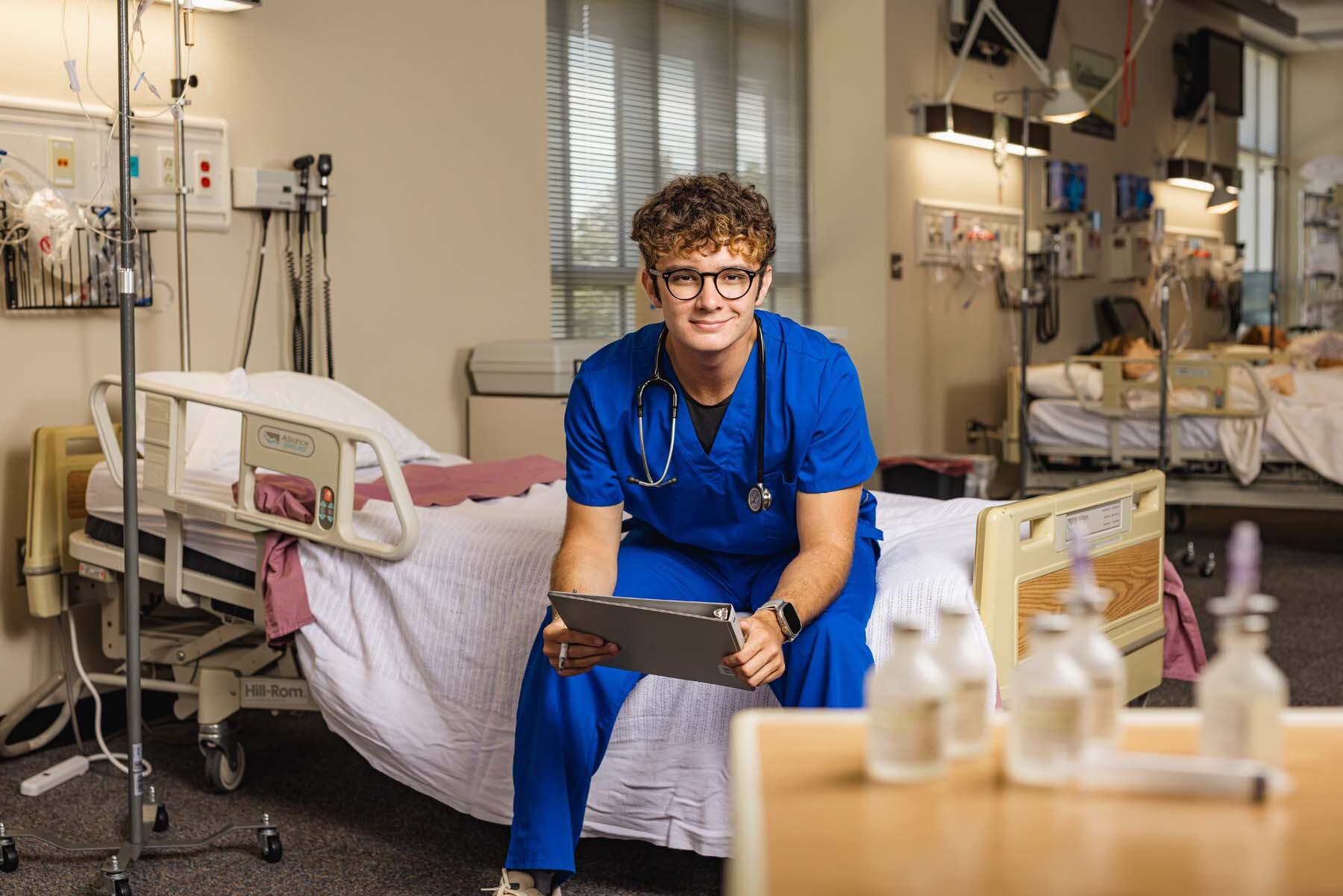
The Accelerated BSN (ABSN) at UW–Madison is a high-intensity, 12-month program designed for students who already hold a non-nursing bachelor's degree. Starting annually in May, it combines rigorous coursework with extensive clinical rotations, allowing career-changers to transition into professional nursing rapidly while leveraging their existing academic foundation and diverse professional backgrounds.
Understanding the UW-Madison ABSN Framework
The University of Wisconsin–Madison School of Nursing established the Accelerated Bachelor of Science in Nursing (ABSN) to address the growing demand for highly skilled registered nurses. Unlike the traditional four-year track, which integrates general education with nursing science, the ABSN assumes the student has already mastered foundational academic concepts. This allows the curriculum to focus exclusively on nursing theory, clinical judgment, and practical skills over three consecutive semesters: Summer, Fall, and Spring.
As of 2026, the program remains one of the most competitive in the Midwest. The "fast track" designation is not merely a marketing term; it describes a pace that requires students to treat the program as a full-time professional commitment. The credit load is heavy, often exceeding 15–18 credits per semester, supplemented by hundreds of clinical hours. This structure is ideal for disciplined individuals who wish to enter the workforce quickly without sacrificing the prestige or educational depth associated with a world-class research institution.
The School of Nursing is housed in Signe Skott Cooper Hall, a facility that features state-of-the-art simulation labs and collaborative learning spaces. This environment is crucial for ABSN students, who must master complex psychomotor skills—such as intravenous placement, wound care, and physical assessment—in a compressed timeframe before entering high-stakes clinical environments like UW Health or the American Family Children's Hospital.
Academic Prerequisites and Eligibility Requirements
Before applying to the UW-Madison ABSN, candidates must ensure they meet stringent eligibility criteria. The most fundamental requirement is the completion of a baccalaureate degree from an accredited institution in a field other than nursing. This degree provides the "academic maturity" that faculty expect from accelerated students.
The Science Foundation
Prospective students must complete a specific suite of prerequisite courses. In 2026, the School of Nursing continues to emphasize the "science heavy" nature of these requirements. Courses typically include:
- Chemistry: Often a general chemistry course with a lab component.
- Human Anatomy: A detailed study of the structure of the human body.
- Human Physiology: Focusing on the functions of bodily systems.
- Microbiology: Understanding pathogens, immunology, and sterilization.
- Psychology: Usually introductory psychology or developmental psychology.
- Statistics: Essential for understanding evidence-based practice and nursing research.
A critical nuance for 2026 applicants is the "recency" and "grade" requirements. Most science prerequisites must have been completed within the last seven to ten years to ensure the knowledge is current. Furthermore, a grade of C or better is required, though successful applicants typically hold a B or higher in these core areas.
The GPA Benchmark
While the minimum cumulative GPA for consideration is often 2.75, the actual competitive landscape is much higher. For the 2026 cohort, the average admitted GPA typically hovers between 3.5 and 3.8. The admissions committee utilizes a holistic review process, looking not just at the numbers, but at the trajectory of the student’s academic history and their ability to handle rigorous science coursework.
The CNA Requirement: A Critical First Step
One unique aspect of the UW-Madison nursing application is the requirement for Wisconsin Nursing Assistant (CNA) certification. This is not just a recommendation; it is a mandatory prerequisite for enrollment. The School of Nursing believes that having foundational experience in direct patient care—such as bathing, feeding, and mobilizing patients—is essential for the rapid transition required in an accelerated program.
By the time the ABSN begins in May, students must have completed an approved CNA training program and successfully passed the state certification exam. This ensures that on day one of clinical rotations, students are comfortable in a hospital setting and possess basic patient safety skills. Many students find that working as a CNA part-time before the program begins provides invaluable context for their later studies in pharmacology and pathophysiology.
Curriculum Deep Dive: From Theory to Practice
The 12-month journey is divided into three distinct phases. Because the program is year-round, there is no summer break, which is a significant factor for students to consider when planning their finances and personal lives.
Summer: The Foundation
The first semester focuses on the "fundamentals" of nursing. Students learn the nursing process, health assessment, and basic pharmacology. This is often the most jarring transition for students, as the volume of information is immense. Labs in Cooper Hall are utilized daily to translate textbook knowledge into physical skills.
Fall: Complex Care and Specialized Populations
During the second semester, the focus shifts to more complex medical-surgical nursing, pediatrics, and maternity care. Students begin to spend more time in clinical settings, moving from 8-hour shifts to 12-hour shifts. The coursework delves into "alterations in health," requiring students to understand how various diseases interact and how to prioritize care for multiple patients simultaneously.
Spring: Leadership and Transition to Practice
The final semester prepares students for the professional world. Topics include nursing leadership, community health, and health policy. The climax of the program is the "capstone" or preceptorship, where students are paired one-on-one with a working Registered Nurse. For several weeks, the student follows the preceptor’s full schedule, gaining a realistic view of the demands of the profession before graduating in May.
Clinical Excellence in the Madison Healthcare Ecosystem
A major advantage of the UW-Madison ABSN is its location. Madison is a hub for high-quality healthcare, providing students with diverse clinical placements that are rarely matched by smaller programs.
Students rotate through several premier institutions:
- UW Health (University Hospital): A Level I trauma center and academic medical center where students see complex cases and cutting-edge treatments.
- William S. Middleton Memorial Veterans Hospital: Providing specialized care for the veteran population, focusing on chronic disease management and mental health.
- UnityPoint Health – Meriter: Known for its robust birthing center and neonatal intensive care unit.
- SSM Health St. Mary’s Hospital: Offering experience in a community-based hospital setting with a strong emphasis on cardiac care.
These clinical rotations are not mere observations. Under the supervision of clinical instructors, students are responsible for patient assessments, medication administration, and care planning. The goal is to ensure that by the end of the 12 months, the student is not just "knowledgeable" but "competent" to practice safely.
The Admissions Process: Crafting a Competitive Application
Admissions for the May start date typically open in the preceding fall. Because of the limited seats in the ABSN (often capped due to clinical placement availability), the application process is rigorous.
- Personal Statement: This is the applicant's chance to explain why they are changing careers. The committee looks for resilience, a clear understanding of the nursing profession, and a commitment to the Wisconsin Idea—the principle that education should influence people’s lives beyond the boundaries of the classroom.
- Letters of Recommendation: Applicants should select individuals who can speak to their academic stamina and professional character. For career changers, a supervisor's recommendation can be just as valuable as a professor's.
- Holistic Review: In 2026, the School of Nursing continues to value diversity of experience. Prior work in social work, teaching, or even the corporate sector is viewed through the lens of how those transferable skills will make the applicant a better nurse.
Financial Considerations and Investment Value
The ABSN is an investment in a high-demand career. As of the 2026 academic year, tuition for the accelerated program is generally structured as a "per-credit" cost rather than a flat undergraduate rate. Prospective students should budget not only for tuition but for "differential tuition" (fees specific to the School of Nursing), textbooks, clinical uniforms, and the cost of the NCLEX-RN exam.
| Feature | Accelerated BSN (ABSN) | Traditional BSN |
|---|---|---|
| Duration | 12 Months (3 Semesters) | 24 Months (4 Semesters) |
| Prerequisite | Previous Non-Nursing Degree | 54+ College Credits |
| Start Date | May (Summer) | September (Fall) |
| Clinical Hours | Approximately 700+ | Approximately 700+ |
| Intensity | High (Full-time only) | Moderate (Full-time) |
| Best For | Career Changers | Undergraduates / Transfers |
Financial aid for second-degree students is different than for first-time undergraduates. While federal Pell Grants are generally unavailable for those who already have a degree, students may still qualify for federal unsubsidized loans and private scholarships. The UW-Madison Office of Student Financial Aid provides specific counseling for ABSN students to navigate these limitations.
Life as an ABSN Student: Managing the Intensity
Success in the ABSN requires a lifestyle shift. Faculty and alumni consistently advise against working during the 12-month program. The combination of early morning clinicals (starting at 6:00 AM), afternoon lectures, and evening study sessions leaves little room for outside employment.
Student support services at the School of Nursing are robust. Dedicated academic advisors help students track their progress, and peer support groups are common. Given the stress of the "fast track," the school also emphasizes mental health resources, encouraging students to utilize the University Health Services (UHS) to maintain well-being during the program.
Post-Graduation: NCLEX and Career Outlook in 2026
The ultimate goal of the ABSN is to prepare students for the NCLEX-RN (National Council Licensure Examination). UW-Madison graduates consistently achieve pass rates well above the national average, often exceeding 95%.
In 2026, the job market for nurses remains exceptionally strong. Wisconsin, like much of the United States, faces a nursing shortage driven by an aging population and the retirement of the "Baby Boomer" nursing generation. ABSN graduates are highly sought after because they bring maturity and diverse perspectives to their healthcare teams. Many graduates secure employment offers months before they actually graduate, particularly within the UW Health system or other major providers in the Milwaukee and Chicago corridors.
Frequently Asked Questions
Can I work while enrolled in the UW-Madison ABSN?
It is strongly discouraged. The ABSN is a full-time, year-round commitment with a schedule that changes frequently based on clinical placements. Most students find that the workload of 18 credits combined with 16–24 hours of clinical per week makes even part-time work nearly impossible to manage while maintaining the required grades.
How many students are accepted into the program each year?
While the numbers can fluctuate based on faculty availability and clinical site capacity, the cohort size is typically around 32 to 48 students. This small cohort size fosters a tight-knit community where students and faculty get to know each other well, which is beneficial for the fast-paced learning environment.
Is the GRE required for admission?
As of the 2026 cycle, the GRE (Graduate Record Examination) is not required for the ABSN program. The admissions committee focuses on your previous undergraduate GPA, your performance in prerequisite science courses, your CNA experience, and your personal statement.
What if I haven't finished my prerequisites when I apply?
You may apply while prerequisites are in progress, but they must be completed by the start of the program in May. It is often required to show proof of enrollment in the remaining courses at the time of application. However, having most of your "heavy" sciences (Anatomy, Physiology, Microbio) completed with grades on your transcript at the time of application generally makes your file more competitive.
What is the difference between a BSN and an ABSN?
The degree earned is exactly the same: a Bachelor of Science in Nursing. The difference lies solely in the pathway. The traditional BSN is for students who do not yet have a degree and takes two years of nursing-specific study. The ABSN is for those who already have a degree and condenses that same nursing content into a single year.
Next Steps for Prospective Students
If you are considering the Accelerated BSN at UW-Madison for the 2026 or 2027 cycle, your first step should be an unofficial transcript review. Contact the UW-Madison School of Nursing academic advisors to confirm which of your previous credits will transfer and which prerequisites you still need to complete.
Simultaneously, look for CNA training programs in your area. Completing your CNA early not only checks off a requirement but also allows you to work a few shifts and confirm that the bedside nursing environment is truly where you want to be. Finally, attend an information session—either in person at Cooper Hall or virtually—to hear directly from admissions officers about the nuances of the current application cycle.