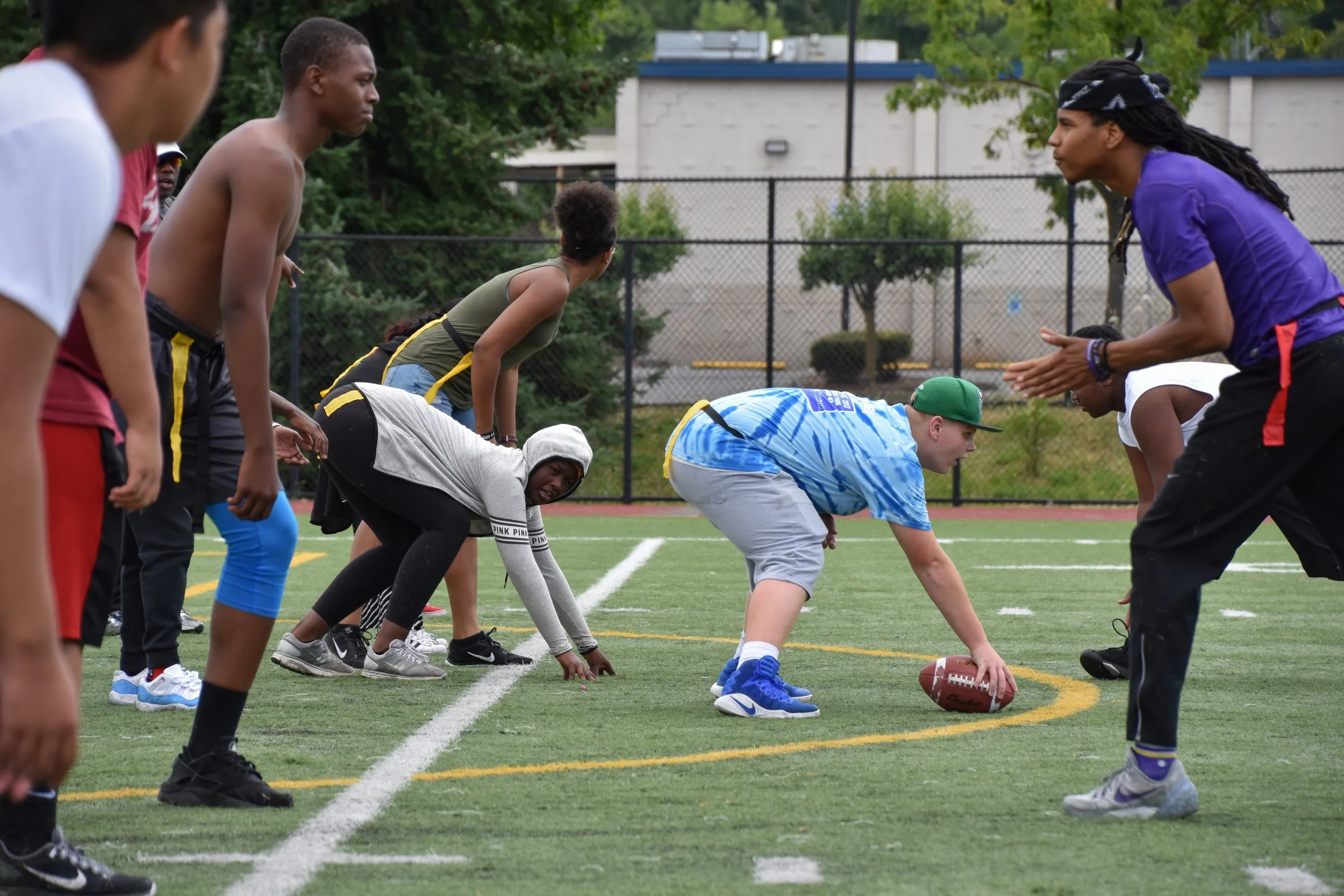
7 on 7 flag football is a high-speed, non-contact variation of American football that prioritizes passing accuracy, route running, and defensive coverage. Played on a shortened field, it removes traditional line play to focus on skill positions. Players are ruled "down" by the removal of a flag from their belt rather than by tackling.
The landscape of flag football has shifted significantly leading into 2026, especially with the sport's growing international profile and its inclusion in major multi-sport events. Whether you are a coach, a player, or a parent, understanding the nuances of the 7 on 7 format is essential for success. This guide provides a deep dive into the standardized rules, scoring, and tactical requirements of the game.
The Fundamental Structure of 7 on 7 Flag Football
7 on 7 flag football is distinct from the 5 on 5 or 8 on 8 formats commonly found in recreational leagues. In the 7-player configuration, the game typically emphasizes the "passing league" style. While some leagues allow running plays, the core of 7 on 7 is designed to develop chemistry between quarterbacks and receivers.
A standard roster usually consists of a Quarterback, a Center (who is often an eligible receiver), and five additional skill players (Wide Receivers, Tight Ends, or Running Backs). On defense, teams deploy a mix of Defensive Backs and Linebackers. Because there are no offensive or defensive linemen in the traditional sense, the game moves at a much faster pace than 11-man tackle football.
Games are generally divided into two halves, typically 20 to 25 minutes each, with a running clock. The clock usually only stops for timeouts, injuries, or in the final two minutes of the second half under specific "pro-style" timing rules. This structure ensures that games remain efficient and highly competitive, making it a favorite for tournament organizers.
Field Dimensions and Equipment Requirements
To play 7 on 7 flag football effectively, the field must be tailored to the speed of the game. While dimensions can vary slightly by league (such as NIRSA or FFWCT standards), the following are the most common specifications used in 2026.
Field Layout
The field is typically 40 to 50 yards long, not including the end zones. The width is usually between 30 and 40 yards. Because 7 on 7 is often a "half-field" game in passing tournaments, the offense starts at the 40-yard line and moves toward the single end zone. However, in full-field competitive flag leagues, the field is 60 to 80 yards long with two end zones.
A critical feature of the flag football field is the "No-Run Zone." These are typically marked 5 yards before the midfield line and 5 yards before the end zone. If the ball is spotted within these zones, the offense is strictly prohibited from running the ball; they must execute a passing play. This rule is designed to prevent "power" running plays in short-yardage situations, forcing teams to rely on skill and precision.
Required Gear
The most important piece of equipment is the flag belt. As of 2026, most competitive leagues require "triple-threat" flags or "popper" flags. Triple-threat flags are integrated into a single belt with three hanging flags, while poppers provide an audible "pop" sound when the flag is pulled, assisting officials in making accurate calls.
- Football Size: Youth leagues typically use "Junior" or "Youth" sized balls, while adult leagues use "Official" NCAA/NFL sized balls.
- Cleats: Non-metal cleats are mandatory. Players usually prefer soccer or football cleats that provide high lateral traction for quick cuts.
- Headgear: While flag football is non-contact, many 2026 leagues now recommend or require soft-shell helmets to protect against accidental collisions or falls.
- Jersey: Jerseys must be tucked in so they do not obstruct the flag belt. If a jersey is untucked and covers a flag, a player may be ruled down at the point of first contact.
Offensive Gameplay: Passing, Running, and The QB Clock
The offense has four downs to reach midfield for a first down, and then another four downs to reach the end zone. The rules governing how the ball is advanced are what make 7 on 7 unique.
The Quarterback Clock
In many 7 on 7 passing leagues, there is no traditional pass rush. Instead, a "QB Clock" is used. The quarterback has a set amount of time—usually 4.0 or 6.0 seconds—to release the ball. If the ball is not thrown within this window, the play is whistled dead, the down is lost, and the ball is returned to the previous line of scrimmage. This forces the quarterback to make quick reads and prevents the play from extending indefinitely.
Running Rules
In leagues that allow running, the quarterback cannot run past the line of scrimmage unless they are pressured by a legal rusher (if the league allows rushing) or if the ball has been handed off first. Direct handoffs and lateral pitches are legal behind the line of scrimmage. Once a handoff occurs, the QB clock is eliminated, and any defensive player can cross the line of scrimmage to pull the flag.
Receptions and Completion
A completion is defined by a player having at least one foot in bounds (some leagues require two in 2026 for "pro" styles) with total control of the ball. If an offensive and defensive player catch the ball simultaneously, the tie goes to the offense.
Defensive Mechanics: Flag Pulling and Coverage Rules
Defense in 7 on 7 is a test of spatial awareness and reaction time. Without the ability to tackle, defenders must master the "flag pull."
Legal Flag Pulling
A defender can only pull the flag of a player who has possession of the ball. Pulling the flag of a player before they catch the ball is considered a penalty (Defense Pass Interference or Illegal Contact). If a ball carrier's flag falls off naturally during a play, most rules dictate that the player is down at the spot where the flag hit the ground, or they must be touched with one hand by a defender to be ruled down.
Rushing the Passer
If the league allows a live rush, the "Rusher" must typically start at least 7 yards behind the line of scrimmage. Often, a special marker (a bean bag or cone) is placed by the official to denote this line. Any number of players can rush the passer as long as they are behind the 7-yard mark at the snap. If the offense fakes a handoff or performs a legal handoff, the 7-yard rule is waived, and all defenders may rush.
Defensive Coverage
Defenders cannot jam receivers at the line of scrimmage. "Bump and run" coverage is generally illegal in 7 on 7 flag football to encourage a clean release for the offense. Contact must be avoided; any significant incidental contact can result in an "Illegal Contact" penalty.
Scoring Systems and Points After Touchdown (PAT)
Scoring follows the traditional football hierarchy but with specific variations for the Point After Touchdown (PAT).
| Scoring Event | Points Awarded | Description |
|---|---|---|
| Touchdown | 6 Points | The ball is carried into or caught within the opponent's end zone. |
| PAT (5 Yards) | 1 Point | A successful pass or run from the 5-yard line. |
| PAT (10 Yards) | 2 Points | A successful pass or run from the 10-yard line. |
| Safety | 2 Points | The ball carrier is "downed" in their own end zone or a fumble goes out of bounds in the end zone. |
| Interception Return (on PAT) | 2 Points | If the defense returns a PAT interception to the opposite end zone. |
In most 2026 tournament formats, there are no kickoffs. The ball is spotted at a designated yard line (usually the 5-yard line) to begin a possession. Furthermore, there are no field goals or extra point kicks in the 7 on 7 format.
Common Penalties and Infractions
Because 7 on 7 is designed to be a "clean" game, penalties are strictly enforced to prevent injuries and maintain the flow of play.
Offensive Penalties
- Flag Guarding: This is the most common offensive penalty. A ball carrier cannot use their hands, arms, or the ball to obstruct a defender's access to the flags. This includes "stiff-arming" or lowering the shoulder in a way that shields the belt.
- Illegal Motion: Only one player is allowed to be in motion at the snap, and they must be moving parallel to or away from the line of scrimmage.
- Impeding the Rusher: The offensive center or any other player must not move in a way that intentionally blocks the path of a legal defensive rusher. While "screening" (standing still) is sometimes legal, moving to block is a penalty.
Defensive Penalties
- Pass Interference: Making contact with a receiver while the ball is in the air, or not playing the ball, results in an automatic first down at the spot of the foul.
- Illegal Flag Pull: Pulling the flag of a non-ball carrier.
- Roughing the Passer: In leagues with a rush, any contact with the quarterback's arm or body while they are in the throwing motion is strictly penalized.
Comparison of 7 on 7 Rule Variations
The rules can change depending on whether you are playing in a "Passing Only" tournament or a "Full-Contact Flag" league.
| Feature | Passing League (High School Style) | Competitive Flag (Adult/Pro Style) |
|---|---|---|
| Running Plays | Usually Prohibited | Allowed (outside No-Run Zones) |
| QB Clock | Strict (e.g., 4 seconds) | Often None (if rushing is allowed) |
| The Snap | Can be side-snap or between legs | Usually must be between legs |
| Fumbles | Dead at spot (No turnovers) | Dead at spot (No turnovers) |
| Contact | Zero Contact Allowed | Minimal "Screen" Blocking Allowed |
Strategic Considerations for 7 on 7
Success in 7 on 7 flag football requires more than just athletic ability; it requires a deep understanding of the rules to exploit mismatches.
Offensive Strategy: The "Short Game"
Because of the QB clock, many teams focus on "Levels" concepts—running receivers at different depths (short, medium, and deep) on the same side of the field. This forces a single defender to choose which player to cover, leaving one open for a quick completion. Using the Center as a "check-down" option is also a vital strategy in 2026, as many defenses overlook the snapper once the play begins.
Defensive Strategy: Zone vs. Man
In 7 on 7, man-to-man coverage is risky because there is no help from a pass rush in most passing leagues. Most elite teams employ a "Cover 3" or "Cover 4" zone. This allows defenders to keep the play in front of them and react to the ball. The goal is often to "bend but don't break," forcing the offense to take many small gains and hoping the QB clock expires or a mistake is made.
Frequently Asked Questions
Is there blocking in 7 on 7 flag football?
In most standardized 7 on 7 rules for 2026, traditional blocking is illegal. Offensive players are not allowed to use their hands to move or stop a defender. Some leagues allow "screening," which is similar to a pick in basketball, where a player remains stationary to obstruct a defender’s path. However, any movement while screening usually results in an offensive penalty.
What happens if a player fumbles the ball?
In flag football, fumbles are almost always ruled "dead balls." There are no fumble recoveries by the defense. If a player drops the ball, it is spotted at the location where the ball hit the ground, and the offense retains possession (unless it was fourth down). This rule exists to prevent the dangerous pile-ups that occur in tackle football.
Can the Quarterback run the ball?
In "Passing League" formats, the QB is strictly a passer and cannot advance the ball past the line of scrimmage. In competitive "Flag League" formats, the QB may only run if the defense sends a legal rusher or if the ball has been handed off and then returned to the QB.
Are interceptions returnable?
Yes, in nearly all 7 on 7 formats, interceptions can be returned for touchdowns. If an interception occurs during a PAT attempt, many leagues allow the defense to return it for 2 points. If the defender's flag is pulled before they reach the end zone, the play is dead, and their team takes possession at the spot or a designated starting line.
What is the "No-Run Zone"?
The No-Run Zone is a 5-yard area located directly before the midfield line and the end zone. Its purpose is to prevent "cheap" scores or first downs via short-yardage dives or QB sneaks. When the ball is in this zone, the offense must execute a legal forward pass that crosses the line of scrimmage to advance.
Next Actions for Players and Coaches
To master 7 on 7 flag football, your next step should be to download the specific rulebook for your local association, as minor variations in the QB clock or rushing rules can drastically change your strategy. Focus your practice sessions on high-repetition passing drills and flag-pulling technique, as these are the two most decisive factors in winning games. For 2026, staying updated on the evolving "soft-shell" headgear requirements is also recommended to ensure eligibility in sanctioned tournaments.