The "best" auto insurance—as defined by national rankings, financial stability ratings, and broad consumer satisfaction—often fails to align with individual needs because these rankings prioritize the average driver. If you own a specialized vehicle, have a unique risk profile, or drive significantly less than average, a top-rated national carrier may provide unnecessary coverage at a prohibitive cost.
When consumers search for the best auto insurance in 2026, they are typically met with lists featuring industry giants recognized for their massive market share and high claims-processing efficiency. However, "best" is a subjective metric in the insurance industry. A policy that earns a five-star rating from an analytical firm might be the wrong choice for you if its underwriting algorithms penalize your specific lifestyle or if its "one-size-fits-all" approach ignores the nuances of your local region.
Choosing the right insurance requires moving beyond aggregate scores and examining how a carrier’s specific strengths—or weaknesses—intersect with your personal circumstances. Below are five detailed reasons why a top-rated insurance provider might actually be a poor fit for your requirements.
1. Over-Insurance and the Diminishing Returns of "Premium" Features
The highest-rated insurance companies often distinguish themselves by offering a suite of "premium" features. These include things like disappearing deductibles, new car replacement coverage, accident forgiveness, and high-limit roadside assistance. While these features are excellent for owners of brand-new, high-value vehicles, they can represent a significant waste of capital for others.
The Actual Cash Value (ACV) Problem
If you are driving a vehicle that is more than eight to ten years old, the gap between the "best" insurance and a standard policy becomes a financial liability. National leaders often bundle comprehensive and collision coverage with various riders that assume the vehicle has significant market value. However, insurance payouts are generally limited to the Actual Cash Value (ACV) of the car at the time of the loss.
If your annual premium for "full coverage" from a top-tier provider is $1,500, but your car is only worth $4,000, you are effectively paying a massive percentage of the car's total value every year for a payout that may never materialize. In this scenario, the "best" company’s robust coverage is overkill. A smaller, regional, or "value-focused" carrier that allows for more aggressive "unbundling" of services would likely serve your financial interests better.
Paying for Perks You Won’t Use
Top-rated insurers often win awards for their seamless mobile apps and concierge claims services. These services are factored into the premium. If you are a driver who prefers handling matters through a local independent agent or if you have a secondary vehicle that rarely leaves the garage, you are subsidizing a digital infrastructure and a level of "white-glove" service that you do not require. For many, a "no-frills" policy from a reputable but less "prestigious" carrier provides the same legal protection and financial indemnity at a 20% to 30% discount.
2. Vehicle Specialization: The EV and Classic Car Gap
In 2026, the automotive landscape is more fragmented than ever. The "best" insurers are typically optimized for the mass market—standard internal combustion engine (ICE) sedans and SUVs. If your vehicle falls outside this bell curve, a generalist insurer, no matter how highly rated, may lack the specialized knowledge required to protect your asset properly.
Electric Vehicle (EV) Nuances
While many top-tier insurers have adapted to EVs, their actuarial data often lags behind specialized EV insurers. Electric vehicles have unique repair requirements, particularly regarding battery health and specialized sensors. A "best" rated general insurer might steer you toward a standard repair network that isn't certified for your specific EV brand, leading to longer wait times or repairs that don't meet OEM standards. Specialized carriers often have better-negotiated rates with EV-specific shops and provide "total loss" protections that better account for the high cost of battery replacement.
The Limitations of Standard "Replacement" Coverage
For enthusiasts with modified vehicles or classic cars, the "best" standard insurance is often a poor choice. Standard policies use "stated value" or "actual cash value," which do not account for the appreciation of a classic or the cost of aftermarket modifications.
- Agreed Value vs. Actual Cash Value: Specialized insurers offer "Agreed Value" policies, where you and the insurer agree on the car's worth upfront.
- Standard Carriers: Most top-rated national carriers will only pay the depreciated market value of a "base model" vehicle, regardless of the $10,000 you spent on performance upgrades or restoration.
In these cases, a niche insurer like Hagerty or Grundy—which might not even appear on a "Best General Auto Insurance" list—is objectively better for the consumer.
3. The Non-Standard Driver and Credit-Based Insurance Scores
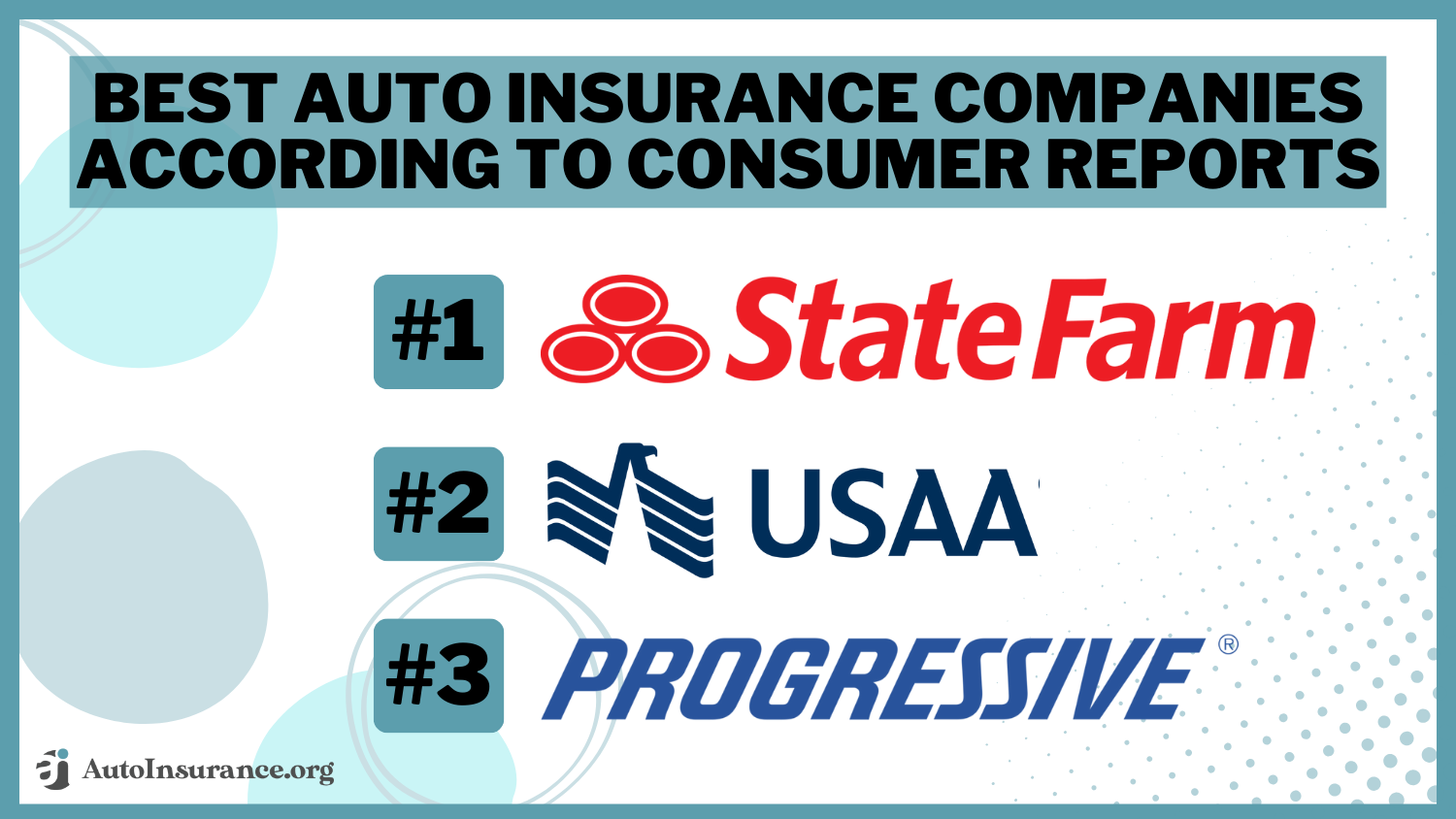
The companies frequently cited as the "best" (such as Amica, USAA, or State Farm) often maintain their high ratings and financial stability by being incredibly selective about whom they insure. They target "preferred" drivers—those with pristine driving records, high credit scores, and long-established insurance histories.
The Penalty for Life Transitions
If you fall into the "non-standard" category, a top-rated insurer will likely quote you a "rejection price"—a premium so high that it serves as a polite way of saying they don't want your business. You might be considered non-standard if you have:
- A gap in insurance coverage (even if you didn't own a car for a few months).
- A low credit-based insurance score (in states where this is legal).
- A recent "at-fault" accident or multiple small claims.
- A requirement for an SR-22 filing.
The "Niche" Carrier Advantage
For these drivers, the "best" company is one that specializes in high-risk or non-standard pools. These companies have underwriting models designed to look past a single mistake or a period of financial hardship. While a national leader might charge a 50% surcharge for a minor infraction, a company specialized in non-standard risk might only charge 15%. In this context, the consumer's "best" choice is the one that provides a path back to standard rates rather than the one with the best TV commercials.
4. Telematics and the Privacy-for-Discount Trade-off
By 2026, telematics—programs that monitor your driving via a smartphone app or an OBD-II device—have become the primary way the "best" insurers offer competitive rates. Companies like Progressive and Allstate often top the charts because their telematics programs can lead to significant discounts for "safe" drivers. However, this technology is not a universal benefit.
When "Safe" Driving Doesn't Help
Telematics algorithms are often rigid. They penalize "hard braking," "fast acceleration," and—most importantly—driving during late-night hours. If you are a nurse, a first responder, or a hospitality worker who drives home at 3:00 AM, the "best" insurer’s telematics program will likely classify you as a high-risk driver, even if you are perfectly safe. The "midnight to 4 AM" window is statistically the most dangerous time to be on the road, and the software cannot distinguish between a drunk driver and a professional coming home from a shift.
The Privacy Cost
Furthermore, the "best" insurers are often those that most aggressively harvest and monetize driver data. If you value your privacy, a company that ranks slightly lower for "innovation" but offers traditional, mileage-based pricing without constant GPS tracking is a better fit. For many, the $100 annual savings offered by a top-tier telematics program is not worth the trade-off of having their location and driving habits tracked 24/7.
5. Regional Disparities and Local Adjuster Networks
National insurance rankings are based on aggregate data from across all 50 states. However, insurance is a highly localized product regulated at the state level. A company that is the "best" in Ohio might be mediocre in Florida due to local litigation environments, weather patterns, or repair shop availability.
The Importance of Local Claims Handling
When you have an accident, your experience is dictated by the local adjuster and the local network of "preferred" repair shops. Some of the highest-rated national companies have centralized their claims processing into massive call centers, using AI and photo-based estimating apps to settle claims. While efficient, this can lead to friction if the local repair shop disagrees with the AI's estimate.
Regional "Powerhouses"
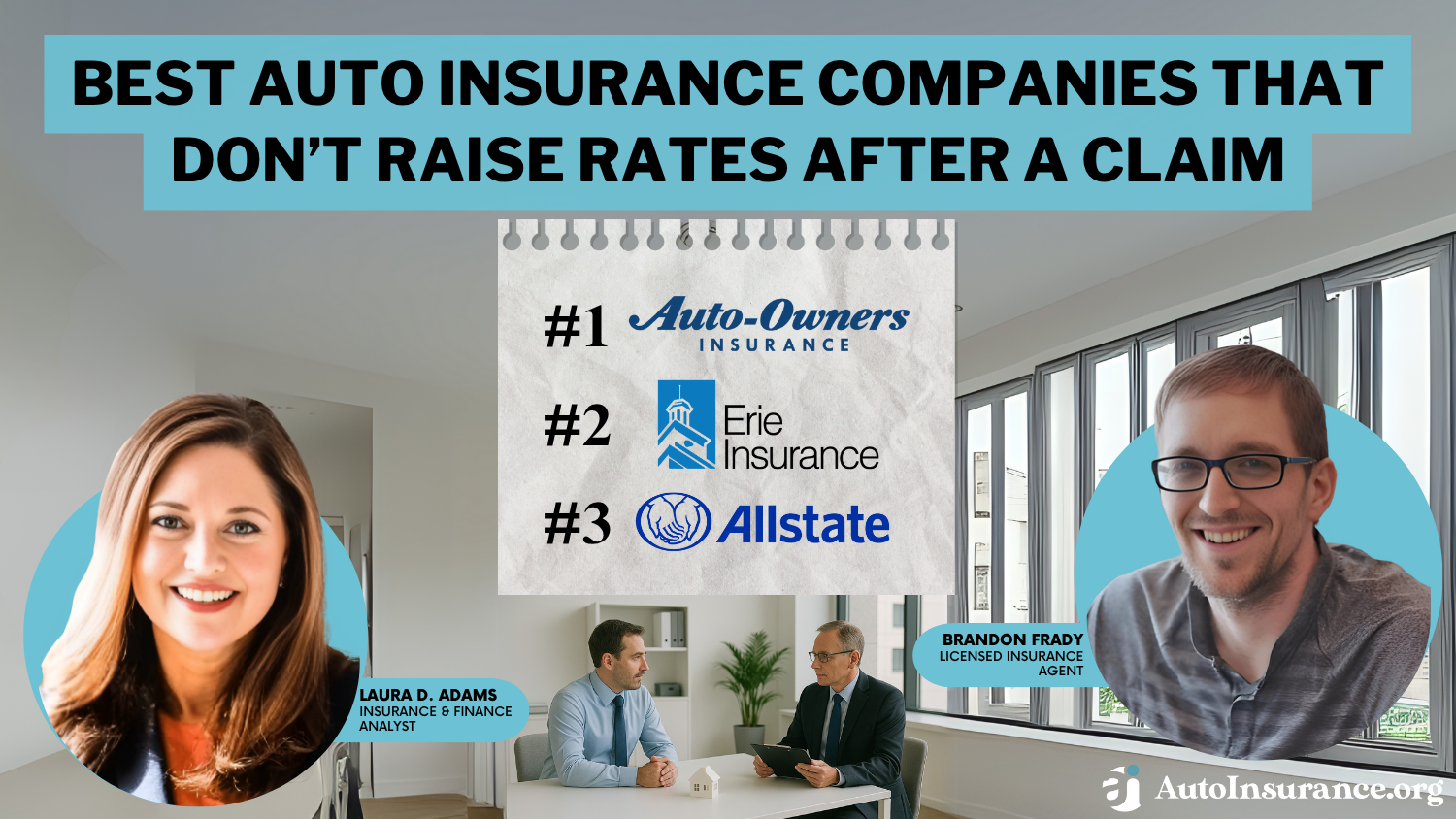
In many states, regional insurers (such as Erie Insurance in the Mid-Atlantic or Auto-Owners in the Midwest) consistently outperform national "best" brands in local claims satisfaction. These regional players often have a deeper understanding of local risks—such as specific hail patterns or deer-strike frequencies—and maintain closer relationships with local contractors. If you live in an area with unique environmental risks, a company with a strong local presence will often be "better" for you than a national giant with a fancy app.
Comparison: National "Best" vs. Personal Suitability
The following table highlights how a "top-rated" carrier's features may or may not benefit specific types of drivers.
| Feature / Driver Type | National "Best" (Preferred) | Specialized / Regional Carrier | Winner for the User |
|---|---|---|---|
| New Car Owner | New car replacement, OEM parts riders | Similar, but often more expensive | National Best |
| Old Car (>10 yrs) | High premiums, bundles ACV only | Liability-only, low overhead | Regional/Value |
| Night-Shift Worker | Telematics penalties (3 AM driving) | Traditional fixed-rate pricing | Regional/Value |
| EV Enthusiast | Standard repair networks | EV-certified network access | Specialized |
| Low Credit Score | High "rejection" premiums | Risk-based specialized pricing | Non-Standard |
| Urban Driver | High rates due to zip-code averages | Usage-based (strictly mileage) | Specialized (Pay-per-mile) |
Frequently Asked Questions
Why do "Best" lists always feature the same 5 or 6 companies?
Most national rankings prioritize financial strength (the ability to pay claims) and total market share. Companies like State Farm, Geico, and Progressive have the largest advertising budgets and the most data, which leads to high scores in broad consumer surveys. However, these surveys rarely account for the "edge cases" like classic cars or high-risk drivers, where these giants are often less competitive.
Is a high A.M. Best rating important if the company isn't "top-rated" elsewhere?
Yes. A.M. Best measures financial stability—basically, how likely the company is to go bankrupt. You should always ensure your insurer has an "A" or better rating. A company can be the "best" for your budget, but if it doesn't have the capital to pay a major claim after a hurricane or wildfire, it is a poor choice. You can check these ratings at the A.M. Best website.
Can I get the benefits of a "top" insurer without the high price?
Often, yes. You can do this by increasing your deductible. If you have a $1,000 emergency fund, moving from a $250 deductible to a $1,000 deductible can drop your premiums significantly. This allows you to keep the claims-handling benefits of a "best" company while avoiding the "premium" price tag.
How do I find a company that is "best" for my specific region?
The best resource is usually your state’s Department of Insurance. Most state regulators (such as the California Department of Insurance or the Texas Department of Insurance) publish annual "complaint ratios." These reports show how many complaints a company receives relative to the number of policies they write in your specific state, which is a much more accurate metric of local performance than national rankings.
Does "best" auto insurance include better legal protection?
Not necessarily. All insurance companies are bound by the liability limits you choose. If you select $50,000 in bodily injury coverage, a "top-tier" company and a "budget" company both provide the same $50,000 limit. The difference lies in the quality of the legal defense they provide if you are sued. Higher-rated companies generally have better-funded legal departments to defend their policyholders.
Summary and Recommended Action
The "best" auto insurance is ultimately the policy that provides the specific coverage you need at a price that reflects your actual risk, not a national average. For a driver with a new car and a high credit score, a top-rated national carrier is usually the right choice. However, if you are a night-shift worker, an EV owner, or someone driving an older vehicle, you are likely overpaying for a service that doesn't fit your life.
Next Step: Review your current policy's "Declarations Page." Identify any "add-on" features like roadside assistance or car rental coverage that you may already have through a credit card or AAA. Then, use your state's Department of Insurance website to find regional carriers with low complaint ratios and request a quote that mirrors only the essential coverages you need.