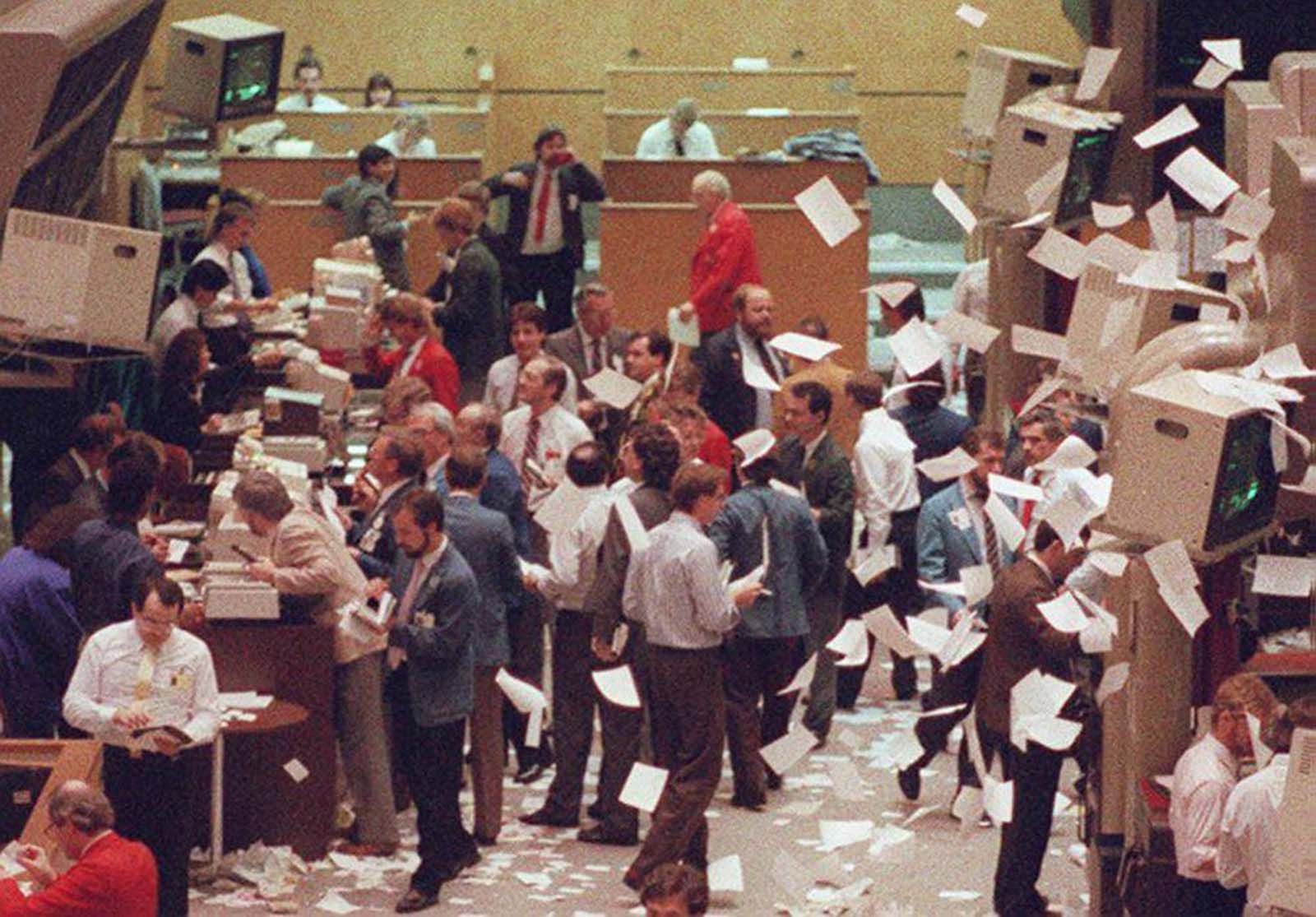
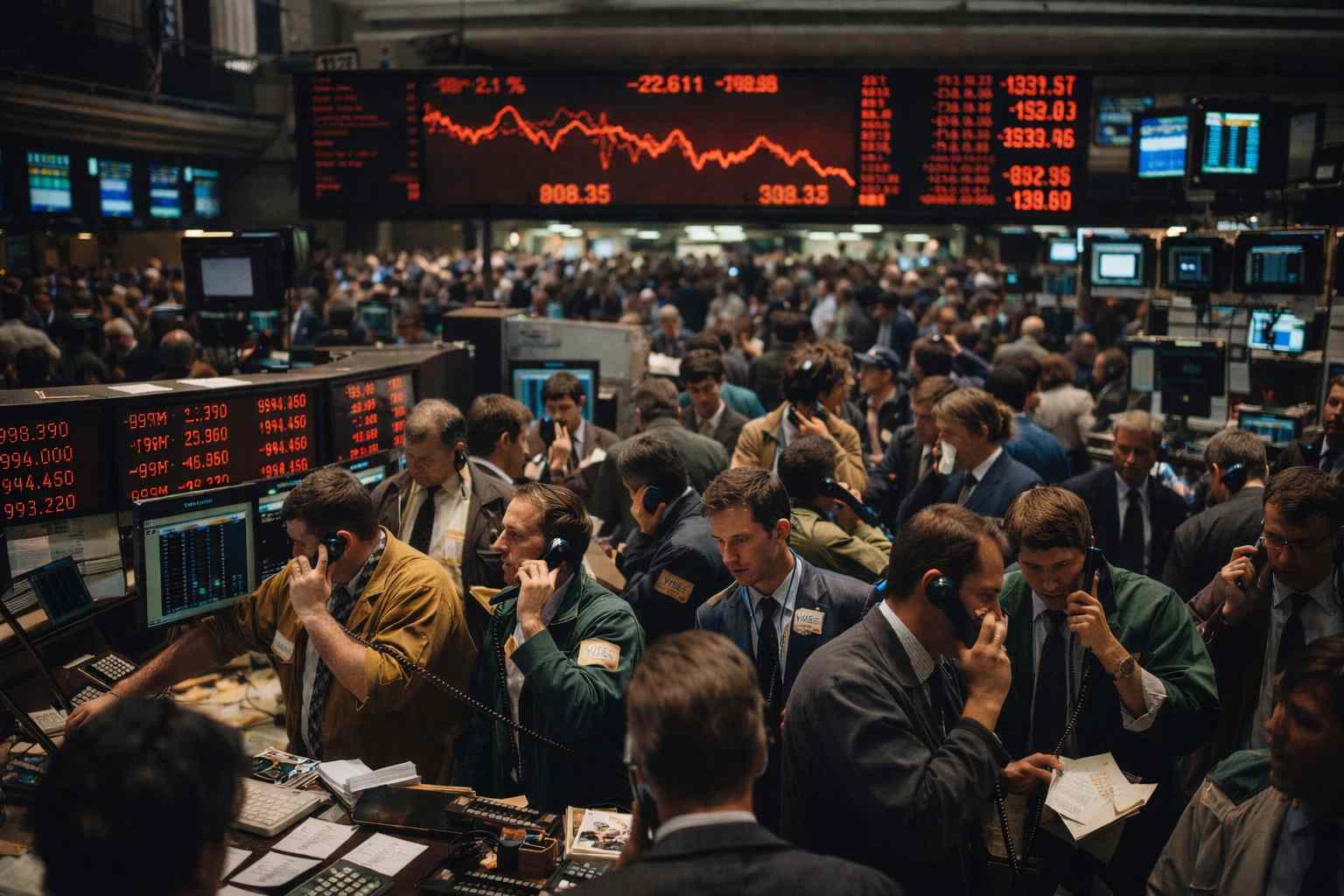
On October 19, 1987, the Dow Jones Industrial Average suffered a catastrophic decline, plunging 22.6% in a single trading session. This historic collapse, known globally as Black Monday, remains the largest one-day percentage drop in stock market history, permanently altering modern financial regulation, market microstructure, and risk management paradigms.
The Historical Context of the 1987 Crash
To understand the magnitude of the 22.6% fall on Black Monday in 1987, one must examine the macroeconomic and market environment leading up to October. The mid-1980s had been characterized by a powerful, sustained bull market. Between August 1982 and August 1987, the Dow Jones Industrial Average (DJIA) more than tripled, rising from approximately 776 to a peak of 2,722 on August 25, 1987. This prolonged expansion fostered widespread investor complacency and elevated stock valuations, with price-to-earnings ratios reaching historic highs.
However, underlying economic tensions began to mount in the autumn of 1987. Investors grew increasingly anxious about rising interest rates, persistent United States trade and federal budget deficits, and a declining U.S. dollar. Furthermore, international tensions—specifically friction between the United States and West Germany regarding monetary policy and interest rates—created an atmosphere of macroeconomic uncertainty. When the market began to correct downward in early September, selling pressure exposed vulnerabilities in the structural mechanics of modern equity markets.
Mechanics and Causes of the 22.6% Drop
The unprecedented speed and depth of the 22.6% crash were not driven by a single factor, but rather by a confluence of structural innovations, automated trading strategies, and panicked human behavior. Financial historians and regulatory investigations, most notably the Brady Commission report commissioned by President Ronald Reagan, identified several primary catalysts.
Portfolio Insurance and Dynamic Hedging
One of the most significant structural contributors to the crash was the widespread adoption of "portfolio insurance." Developed by academic finance theorists and marketed by major Wall Street firms, portfolio insurance was a quantitative strategy designed to protect institutional equity portfolios from severe losses. The strategy involved dynamically adjusting hedge positions—predominantly by selling stock index futures—as the market declined.
As the market dropped in the weeks leading up to October 19, and accelerated during the morning of that fateful Monday, portfolio insurers rushed to sell futures contracts to hedge their underlying stock portfolios. This relentless automated selling drove futures prices far below the cash value of the underlying stocks.
Index Arbitrage and Market Fragmentation
The severe pricing discrepancy between stock index futures (traded on the Chicago Mercantile Exchange) and physical stocks (traded on the New York Stock Exchange) triggered another automated strategy: index arbitrage. Arbitrageurs sought to profit from the price gap by selling stocks and buying futures.
This created a destructive feedback loop:
- Declining stock prices forced portfolio insurers to sell more futures.
- Falling futures prices activated index arbitrageurs to sell physical stocks.
- Selling physical stocks depressed the Dow Jones Industrial Average further, triggering additional portfolio insurance hedges.
Liquidity Crises and Communication Failures
On the morning of October 19, the sheer volume of sell orders overwhelmed the technological and operational infrastructure of the era. Computers and telecommunication lines clogged, leading to severe delays in trade execution and order confirmation. Specialists on the floor of the New York Stock Exchange found themselves unable to clear queues of sell orders.
As market makers exhausted their capital trying to absorb the selling pressure, quotes were withdrawn, and trading in many major stocks was delayed or halted. This lack of transparency exacerbated panic, as institutional and retail investors alike realized they could not exit their positions at predictable prices, leading to indiscriminate dumping of assets.
Timeline of Black Monday: October 19, 1987
The crisis unfolded across global financial centers in a matter of hours, beginning overseas before reaching a crescendo on Wall Street.
| Time / Location | Market Event | Key Characteristic |
|---|---|---|
| Early Trading (Asia/Europe) | Overseas markets crash | Stock markets in Hong Kong, Australia, and European capitals experience steep declines hours before Wall Street opens, setting a panicked tone. |
| 9:30 AM EST (NYSE Open) | Immediate selling onslaught | The Dow Jones Industrial Average opens down significantly with a massive backlog of sell orders waiting to be executed. |
| Midday Session | Feedback loop activation | Portfolio insurance and index arbitrage accelerate downward pressure; trading halts spread across major equities. |
| Afternoon Session | Capitulation and volume record | Selling reaches a frenzied peak; volume shatters all previous records while liquidity evaporates. |
| 4:00 PM EST (NYSE Close) | Final tally: 508-point drop | The DJIA closes down 508.33 points, representing a historic single-day loss of 22.6%. |
Immediate Aftermath and Policy Responses
The devastation of the 22.6% fall on Black Monday in 1987 prompted immediate emergency interventions by central banks and regulatory authorities to prevent a total collapse of the financial system.
Central Bank Intervention
As markets closed on October 19, Federal Reserve Chairman Alan Greenspan recognized the acute danger of a widespread banking liquidity crisis. On the morning of October 20, the Federal Reserve issued a concise, powerful statement: "The Federal Reserve, consistent with its responsibilities as the Nation's central bank, affirmed today its readiness to serve as a source of liquidity to support the economic and financial system."
The Fed aggressively injected liquidity into the banking system, lowering interest rates and encouraging commercial banks to extend credit to beleaguered broker-dealers. This decisive monetary action restored confidence and ensured that solvent financial institutions could meet their clearing and settlement obligations.
Regulatory Reforms and Structural Changes
In the wake of the crisis, the Brady Commission and other regulatory bodies instituted sweeping structural changes designed to prevent a recurrence of a cascade-style crash:
- Circuit Breakers: Regulators implemented market-wide circuit breakers linked to the S&P 500 index. These mechanisms mandate temporary trading halts across all stock and futures exchanges if the market drops by specified percentage thresholds (e.g., 7%, 13%, and 20%), providing a mandatory cooling-off period.
- Collar Mechanisms and Limit-Down Rules: Exchanges refined price limits and trading bands to curb excessive intraday volatility.
- Clearinghouse Integration: Communication and clearing protocols between the stock exchanges in New York and the futures exchanges in Chicago were significantly upgraded to harmonize margin requirements and improve information sharing.
Long-Term Impact on Market Microstructure and Modern Finance
The legacy of the 22.6% fall on Black Monday in 1987 extends far beyond the immediate regulatory fixes of the late 19th century. The crash fundamentally transformed how financial professionals view systemic risk, correlation, and market liquidity.
Modern risk management frameworks, including Value-at-Risk (VaR) models and stress-testing protocols, were born out of the recognition that historical return distributions are not "normal" (Gaussian). Instead, markets exhibit "fat tails"—extreme outlier events that occur with far greater frequency than standard statistical models predicted prior to 1987. Furthermore, the crash exposed the dangers of uncoordinated market structures, cementing the necessity of integrated regulatory oversight across cash and derivative markets.
Frequently Asked Questions
What caused the 22.6% fall on Black Monday in 1987?
The crash was caused by a combination of macroeconomic concerns (rising interest rates, trade deficits), overvalued equity markets, and structural market mechanics—specifically automated portfolio insurance selling programs and index arbitrage that created a self-reinforcing downward spiral.
How does the 1987 crash compare to other historical market drops?
In terms of percentage decline, Black Monday remains the largest single-day drop in stock market history at 22.6%. By comparison, during the 1929 crash, the Dow fell 12.8% on "Black Monday" (October 28) and 11.7% on "Black Tuesday" (October 29). During the 2008 financial crisis, the largest single-day percentage drop was 7.87% (on October 15, 2008).
Did Black Monday lead to an economic depression?
No. Unlike the 1929 stock market crash, which preceded the Great Depression, the 1987 crash did not lead to a prolonged economic depression. Prompt intervention by the Federal Reserve, which provided massive liquidity to the banking sector, successfully averted a broader economic contraction.
What are circuit breakers, and were they created because of 1987?
Circuit breakers are regulatory mechanisms that halt trading temporarily across financial exchanges when the market experiences severe declines. They were instituted directly as a result of the 1987 crash to give market participants time to assess information and halt automated panic selling.
How did portfolio insurance fail during the crash?
Portfolio insurance relied on the assumption that derivatives could be sold smoothly to hedge stock portfolios. However, when everyone attempted to execute the strategy simultaneously, liquidity vanished, futures prices disconnected from underlying stocks, and the strategy exacerbated the downward price spiral instead of protecting assets.
Next Actions and Further Study
For investors, risk managers, and financial historians, studying the mechanics of Black Monday offers critical lessons in market psychology, liquidity management, and systemic risk. To deepen your understanding of this pivotal financial event, examine primary source documents such as the Report of the Presidential Task Force on Market Mechanisms (the Brady Commission Report) and academic analyses of market microstructure and volatility feedback loops.