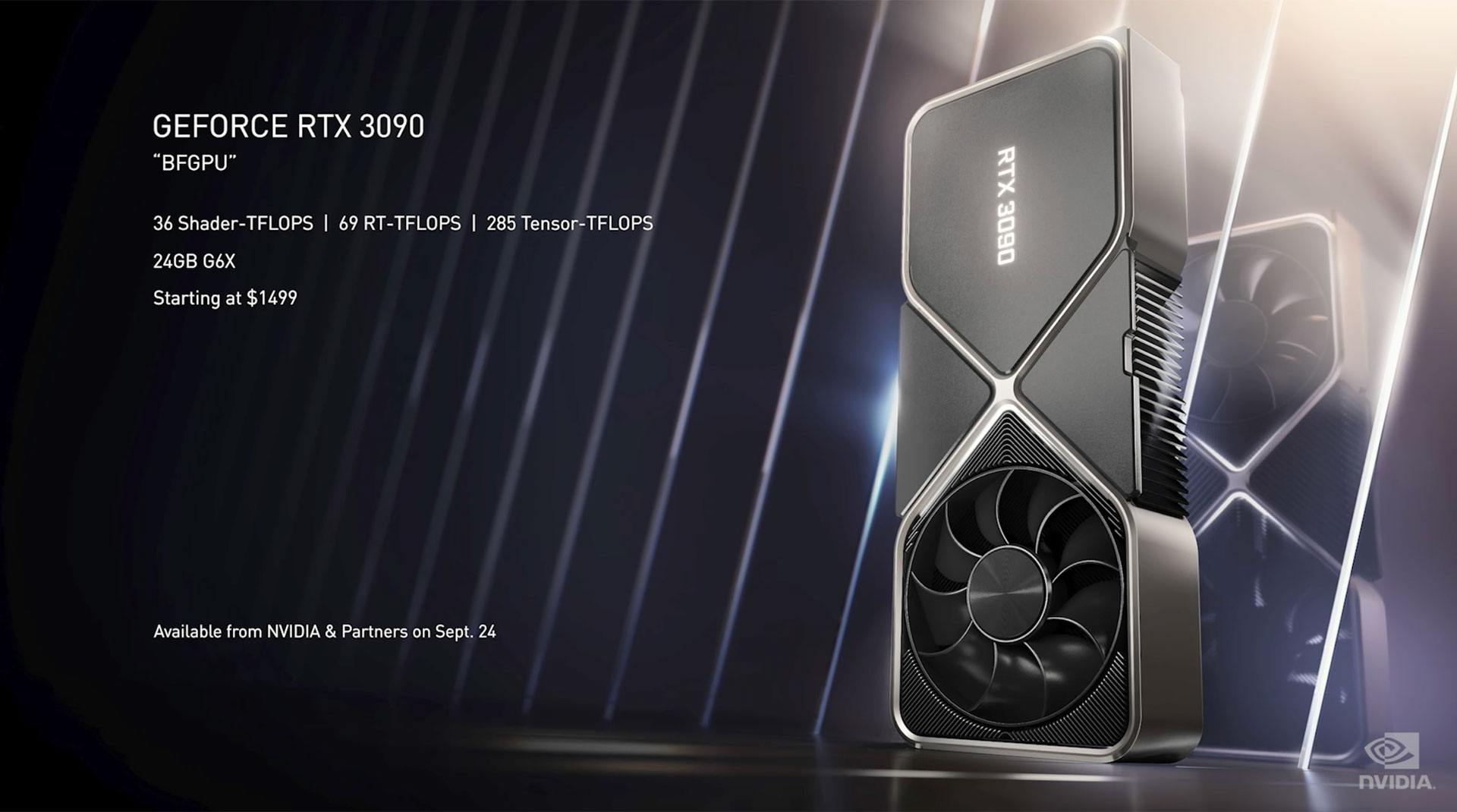
The 2020 release of NVIDIA 3000 series marked a generational leap in consumer graphics technology, introducing the Ampere architecture with unprecedented performance gains in ray tracing, artificial intelligence, and rasterized gaming workloads. Built on a custom Samsung 8nm manufacturing process, these graphics processing units fundamentally reshaped the desktop computing landscape by bringing advanced parallel processing features to mainstream PC builders.
Historical Context and Technological Foundation
Before exploring the architecture of the 2020 release, understanding the hardware landscape of the late 2010s is necessary. NVIDIA's preceding 2000 series, launched in 2018, introduced real-time hardware-accelerated ray tracing and Tensor cores for deep learning super sampling to the consumer market. However, those first-generation ray-tracing cards carried high price points and modest performance uplift in traditional rasterization games, resulting in slower consumer adoption than anticipated.
By September 2020, NVIDIA addressed these market reservations with the official unveiling of the GeForce RTX 30-series, powered by the Ampere architecture. Ampere succeeded the Turing architecture, bringing substantial modifications to the internal structure of the graphics processing unit. The core objective of the 2020 release was to double the rendering throughput per watt compared to previous generations, making high-refresh-rate 4K gaming and real-time ray tracing commercially viable for enthusiasts and high-end creators.
Key Architectural Enhancements in Ampere
The engineering behind the 2020 release centered on maximizing execution efficiency. Every major component of the streaming multiprocessor was redesigned to process concurrent floating-point and integer operations simultaneously.
Second-Generation Ray Tracing Cores
Ray tracing simulates the physical behavior of light, casting rays to calculate realistic reflections, refractions, and shadows. The original implementation in the 2000 series proved computationally expensive. The second-generation RT cores introduced in the Ampere architecture doubled the intersection throughput relative to the prior generation. They added hardware support for concurrent ray tracing and motion blur calculations, dramatically reducing the performance penalty traditionally associated with cinematic lighting effects in real-time applications.
Third-Generation Tensor Cores
Tensor cores are specialized execution units designed explicitly for matrix multiplication operations, forming the backbone of deep learning tasks. In the 2020 release, NVIDIA equipped the 3000 series with third-generation Tensor cores that featured automatic sparsity exploitation. This mechanism doubles the throughput of neural network processing by identifying and skipping zero-value weights in trained AI models without sacrificing output quality. These cores powered technologies like Deep Learning Super Sampling (DLSS), which renders games at a lower native resolution and uses artificial intelligence to upscale the image to match a higher target resolution, often exceeding native rendering fidelity.
Memory Subsystems and Manufacturing Node
While competitors and previous architectures utilized various nodes, NVIDIA partnered with Samsung to develop a custom 8nm manufacturing process optimized for the Ampere architecture. This allowed for the integration of up to 28 billion transistors on the flagship silicon.
Memory configurations also evolved. While cards like the RTX 3070 and RTX 3080 utilized high-speed GDDR6 and GDDR6X memory respectively, the memory bus widths were significantly widened to handle massive texture pipelines. The flagship consumer card, the GeForce RTX 3090, featured a massive 24GB frame buffer, bridging the gap between high-end gaming hardware and professional workstation requirements for 3D rendering and video editing.
Lineup Overview of the 2020 Launch Phase
The initial rollout of the 3000 series established a tiered hierarchy designed to address different performance segments and price points. The rollout began with high-end enthusiast models before cascading down to mainstream tiers in subsequent months.
| Graphics Card | Architecture | VRAM Type & Capacity | Target Use Case | Launch Year |
|---|---|---|---|---|
| GeForce RTX 3070 | Ampere (GA104) | 8GB GDDR6 | High-framerate 1440p and entry-level 4K gaming | 2020 |
| GeForce RTX 3080 | Ampere (GA102) | 10GB GDDR6X | Uncompromising 4K gaming and ray tracing | 2020 |
| GeForce RTX 3090 | Ampere (GA102) | 24GB GDDR6X | Extreme gaming, AI development, and 8K workflows | 2020 |
GeForce RTX 3080: The Performance Flagship
Positioned as the definitive upgrade for high-end gamers, the RTX 3080 delivered up to double the performance of the older RTX 2080 in select titles. Utilizing the GA102 silicon, it incorporated 8,704 CUDA cores and paired them with Micron's high-bandwidth GDDR6X memory. This combination eliminated memory bottlenecks during heavy 4K texture streaming.
GeForce RTX 3090: The Titan Successor
Replacing the traditional Titan brand for consumer-tier enthusiasts, the RTX 3090 was designed for professional content creators, machine learning researchers, and extreme enthusiasts who required a massive local frame buffer. With 24GB of VRAM, it allowed professionals to load massive 3D scenes, uncompressed 8K video timelines, and large neural network models directly into the GPU memory without relying on slower system RAM.
GeForce RTX 3070: Value and Mainstream Power
The RTX 3070 targeted users gaming at 1440p resolution. NVIDIA marketed this card as outperforming the previous generation's flagship, the RTX 2080 Ti, while retailing at less than half the price point. This efficiency and performance-to-cost ratio made it one of the most sought-after components of the 2020 release cycle.
Market Reception, Supply Constraints, and Scalability
Despite favorable technical reviews and strong benchmark results, the 2020 release of the NVIDIA 3000 series encountered severe global distribution hurdles. High demand driven by remote work trends, cryptocurrency mining booms, and global semiconductor manufacturing shortages created unprecedented supply constraints. Retail availability remained constrained for nearly two years following the initial launch, leading to inflated secondary market pricing and widespread stock monitoring practices among consumers.
From a software ecosystem perspective, the 3000 series accelerated the adoption of artificial intelligence in everyday consumer software. Beyond gaming enhancements like DLSS, the introduction of NVIDIA Broadcast transformed microphone and camera inputs for remote communication by leveraging Tensor cores to remove background noise and apply real-time virtual green screen effects without taxing the main central processing unit.
Legacy and Long-Term Impact
The architecture introduced in late 2020 established the modern baseline for computer graphics. By proving that real-time ray tracing and neural network upscaling could coexist without crippling frame rates, NVIDIA shifted the software development paradigm across the video game industry. Modern game engines now assume the presence of hardware-accelerated ray tracing and AI reconstruction as standard features, cementing the Ampere architecture as a foundational turning point in modern digital design.
Frequently Asked Questions
What manufacturing process was used for the NVIDIA 3000 series in 2020?
The 3000 series utilized a custom 8nm manufacturing process developed in partnership with Samsung, enabling dense transistor counts and optimized power delivery across the Ampere architecture.
Why did the RTX 3080 use GDDR6X memory?
GDDR6X memory introduced advanced PAM4 signaling technology, which doubles the amount of data transmitted per clock cycle compared to standard GDDR6, providing the high bandwidth necessary for 4K texture streaming.
How did the 2020 release improve ray tracing performance?
NVIDIA integrated second-generation Ray Tracing (RT) cores that doubled intersection calculation throughput and added concurrent processing capabilities, minimizing the frame rate reduction traditionally caused by realistic lighting calculations.
What role did AI play in the 3000 series launch?
The introduction of third-generation Tensor cores enabled advanced machine learning algorithms, most notably Deep Learning Super Sampling (DLSS), which upscales lower-resolution renders to high resolutions using artificial intelligence.
What were the primary supply challenges during the 2020 launch?
The release coincided with a global semiconductor shortage, increased demand for home computing hardware, and a significant surge in cryptocurrency mining, which collectively depleted retail stock worldwide.
Conclusion and Next Actions
Evaluating a system containing an NVIDIA 3000 series card requires verifying adequate power supply unit capacity, physical case clearance, and motherboard PCIe generation support to ensure the hardware operates at peak efficiency. When planning an upgrade or maintaining an existing Ampere-based system, verify that the thermal paste, driver versions, and power delivery rails meet the specific demands of the installed GPU variant.