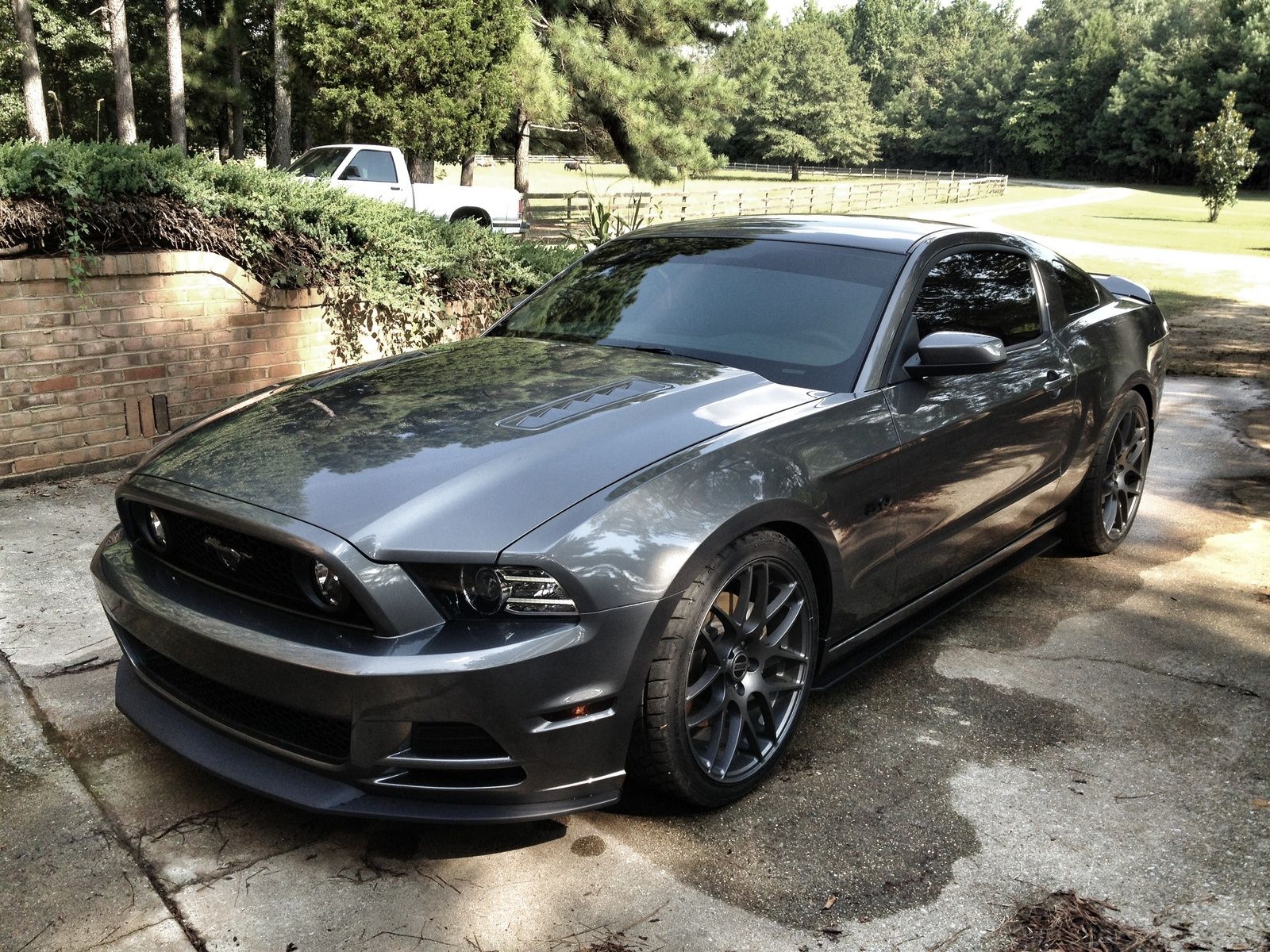
The 2014 V6 Mustang has a factory-tested top speed of approximately 124 to 125 miles per hour, largely governed by an electronic speed limiter designed to match the speed rating of the stock original equipment tires and the structural limits of the driveshaft.
For automotive enthusiasts, muscle car historians, and prospective buyers, understanding the capabilities of the final model year of the S197 platform requires looking beyond a single velocity figure. The 2014 Ford Mustang V6 represents a definitive era in American pony car history, bridging the gap between traditional lightweight design and modern multi-valve engine efficiency. While older base-model Mustangs were often viewed strictly as aesthetic cruisers with modest performance credentials, the 3.7-liter Cyclone V6 engine introduced a paradigm shift. Delivering 305 horsepower right from the factory, this generation shattered the long-standing stigma against non-V8 Mustangs. However, raw horsepower numbers tell only part of the story. Achieving, maintaining, and safely exploring the top speed of this vehicle involves navigating a complex ecosystem of electronic constraints, aerodynamic drag, gear ratios, and suspension dynamics. This analysis examines the engineering, performance metrics, and real-world factors governing the 2014 V6 Mustang top speed.
Engineering the Cyclone V6: The Heart of the 2014 Performance
To understand why the 2014 V6 Mustang performs the way it does at high velocities, one must examine the powerplant hidden beneath the aluminum hood. Ford introduced the 3.7-liter Duratec 37—commonly referred to as the Cyclone V6—to the Mustang lineup for the 2011 model year, continuing through the end of the S197 generation in 2014. This engine was a massive leap forward from the aging 4.0-liter Cologne V6 found in 2005–2010 models.
The Cyclone V6 features an aluminum block and heads, twin independent variable cam timing (Ti-VCT), and a high compression ratio of 10.5:1. These engineering choices allow the engine to spin freely up to a redline of 7,000 RPM. Producing 305 horsepower at 6,500 RPM and 280 lb-ft of torque at 4,250 RPM, the engine breathes efficiently at high revolutions, which is a prerequisite for sustaining elevated highway speeds and racetrack straights.
Unlike older pushrod motors that ran out of breath in the upper RPM ranges, the 3.7L engine builds power progressively. When pushed toward its velocity limits, the engine operates comfortably within its power band, provided the vehicle has sufficient runway to overcome aerodynamic resistance.
The Role of Electronic Limiters and Aerodynamics
While the engine possesses the mechanical capability to push the car past 130 miles per hour, Ford engineers intentionally capped the 2014 V6 Mustang top speed at approximately 124 to 125 miles per hour via an electronic control unit (ECU) speed limiter.
This decision was driven primarily by two factors:
- Tire Speed Ratings: The standard factory tires shipped with the base V6 models were typically rated for speeds up to S (112 mph) or H (130 mph). Operating sustained speeds near or above a tire's maximum rating risks catastrophic tread separation due to heat buildup and centrifugal force.
- Driveshaft Integrity: Base V6 Mustangs built during this era utilized a one-piece composite or steel driveshaft with a rubber elastomeric coupling that lacked the high-RPM balance and structural reinforcement found in the factory GT or Performance Package models. Exceeding the speed limiter on a stock driveshaft can lead to dangerous harmonic vibrations and mechanical failure.
Beyond electronic governance, aerodynamics play a critical role in determining the terminal velocity of the vehicle. The S197 Mustang features a blunt, aggressive retro-inspired fascia that pays homage to the 1969–1970 fastbacks. While aesthetically striking, this boxy silhouette creates significant aerodynamic drag. With a drag coefficient ($C_d$) hovering around 0.36 to 0.37 depending on the presence of a rear decklid spoiler, the car requires substantial horsepower simply to punch a hole through the air at triple-digit speeds. As velocity increases, aerodynamic drag increases exponentially, eventually neutralizing the engine's remaining acceleration capability and establishing a natural terminal velocity even if the electronic limiter is removed.
Transmission Options and Final Drive Ratios
The transmission paired with the 3.7L engine heavily influences how quickly the car reaches its top speed and which gear it utilizes at maximum velocity. Buyers in 2014 could choose between the MT82 6-speed manual transmission and the 6R80 6-speed automatic transmission.
| Transmission Type | Gears | Standard Final Drive Ratio | Top Speed Gear Utilization |
|---|---|---|---|
| Getrag MT82 Manual | 6-Speed | 2.73:1 (Optional 3.31:1) | Typically reached in 5th gear (1:1 ratio) or early 6th (overdrive) |
| Ford 6R80 Automatic | 6-Speed | 2.73:1 (Optional 3.31:1) | Typically reached in 5th gear (direct) or 6th (overdrive) |
The standard 2.73:1 axle ratio was selected by Ford to maximize highway fuel economy—allowing the car to achieve an EPA-estimated 31 mpg on the highway—but it places a heavy burden on tall gearing. In a car equipped with the 2.73 differential, 6th gear is a deep overdrive designed solely for cruising efficiency at low RPMs. Consequently, maximum velocity is rarely achieved in top gear; instead, drivers reach peak speed in 5th gear, where the gear ratio is closer to direct drive (1:1), allowing the engine to spin within its peak horsepower range against wind resistance.
Cars equipped with the optional 3.31 axle ratio or the V6 Performance Package (which included a 3.31 limited-slip differential) exhibit sharper acceleration and reach their governed speed limit more rapidly, though the ultimate top speed remains restricted by the factory ECU unless aftermarket tuning is applied.
Stock vs. Tuned Performance: Removing the Governor
Because the stock 2014 V6 Mustang top speed is artificially restricted by software, many owners turn to aftermarket engine calibration (tuning) to alter the vehicle's parameters. Using an OBD-II flash tuner, enthusiasts can remove or raise the electronic speed limiter, adjust air-fuel ratios, and optimize ignition timing.
When the speed limiter is lifted, a mechanically sound 2014 V6 Mustang with adequate road space can push past the factory 125 mph threshold. Verified closed-course testing and dynamometer-backed runs indicate that an unrestricted stock V6 Mustang can achieve a true top speed of approximately 140 to 145 miles per hour.
However, attempting this without hardware upgrades introduces severe risks. To safely explore speeds beyond 130 mph, modifications are mandatory:
- High-Performance Tires: Upgrading to Z-rated or Y-rated performance tires capable of sustaining speeds well in excess of 150 mph.
- Upgraded Driveshaft: Replacing the factory two-piece or flexible base driveshaft with a balanced, one-piece aluminum or carbon-fiber driveshaft to prevent high-RPM whip and catastrophic failure.
- Brake Upgrades: Factory base V6 brakes utilize smaller single-piston sliding calipers and solid or vented rotors designed for standard street use, which can suffer from severe brake fade during high-speed deceleration events.
Comparing the V6 to Contemporary S197 Models
Context is essential when evaluating the performance metrics of the 2014 V6. While 305 horsepower sounds modest by modern standards, it placed the base Mustang on par with or ahead of many historical V8 muscle cars. The table below outlines how the V6 compares to its stablemates from the final year of the S197 generation.
| Model Variant | Engine Displacement | Factory Horsepower | Stock Top Speed | Primary Limiting Factor |
|---|---|---|---|---|
| V6 Base / Premium | 3.7L V6 | 305 hp | 124–125 mph | Electronic Governor / Tires |
| GT (GT/CS) | 5.0L "Coyote" V8 | 420 hp | 155 mph | Electronic Governor / Aerodynamics |
| Boss 302 | 5.0L "Roadrunner" V8 | 444 hp | 155–160+ mph | Aerodynamic Drag / Gearing |
| Shelby GT500 | 5.8L Supercharged V8 | 662 hp | 202 mph | Extreme Aerodynamic Drag |
As illustrated, the V6 model occupies a distinct tier. While the GT and Boss 302 models were engineered to push past 150 mph out of the box—backed by heavy-duty braking systems, stiffer chassis bracing, and beefier cooling loops—the V6 was positioned as an accessible, daily-drivable grand tourer. Despite this, its top speed capability eclipses many entry-level sports cars of its era, proving that the Cyclone engine is a remarkably potent platform.
Safety, Legalities, and Real-World Track Use
Exploring the upper limits of any vehicle on public roads is illegal, highly dangerous, and poses severe risks to the driver and the general public. Public highways are subject to unpredictable variables, including crosswinds, surface irregularities, animal crossings, and erratic traffic behavior. At 125 miles per hour, a vehicle covers more than 183 feet every single second, leaving virtually zero reaction time for unexpected hazards.
For drivers wishing to test the mechanical limits of a 2014 V6 Mustang, the only responsible and legal venue is a closed-circuit racetrack, an open-road racing event, or a sanctioned standing-mile competition. Before participating in such events, drivers must ensure their vehicle undergoes a rigorous technical inspection (tech check). Key systems to examine include:
- Cooling System: High-speed runs place an immense thermal load on the radiator, water pump, and oil cooler. Factory V6 cooling systems are adequate for street use, but sustained track driving may require upgraded aluminum radiators or lower-temperature thermostats.
- Suspension Health: Bushings, ball joints, and struts must be free of excessive wear. At high velocities, worn suspension components can introduce high-speed instability, tracking wander, or dangerous body roll during lane transitions.
- Wheel Bearings and Lug Torque: Centrifugal forces amplify any minor imbalance in wheels and tires. Ensuring proper wheel balancing and correct torque specifications prevents violent steering wheel vibrations at triple-digit speeds.
Frequently Asked Questions
Can a stock 2014 V6 Mustang outrun a V8 GT?
No. While the V6 is surprisingly fast for a base model, the 5.0L Coyote V8 in the 2014 GT produces 420 horsepower and features a higher factory governor (155 mph) along with superior acceleration curves across all speed ranges.
Does the V6 Performance Package increase the top speed?
The V6 Performance Package—which added a 3.31 rear axle, stiffer suspension tuning, larger brakes, and 19-inch wheels with performance rubber—improves handling, braking, and acceleration responsiveness, but it does not raise the electronic top speed limiter, which remains capped near 125 mph from the factory.
Is it safe to remove the speed limiter on a stock V6 Mustang?
Removing the limiter via an aftermarket tune allows the car to reach roughly 140–145 mph, but it is not safe to do so on completely stock equipment due to the limitations of the factory driveshaft and standard tire speed ratings.
What causes driveshaft failure at high speeds in S197 Mustangs?
Base S197 Mustangs utilize a two-piece driveshaft with a center support bearing and flexible rubber coupler. At high RPMs, this assembly can experience critical harmonic vibrations, causing the rubber joint to tear or the shaft to whip violently, potentially puncturing the floorboard.
What is the quarter-mile time for a 2014 V6 Mustang?
In stock form, a well-driven 2014 V6 Mustang typically completes the quarter-mile in approximately 13.9 to 14.3 seconds at around 98 to 101 mph, depending on transmission choice, axle ratio, and track elevation.
Conclusion and Final Recommendations
The 2014 V6 Mustang top speed of 124–125 miles per hour reflects a carefully engineered balance between everyday street usability, structural safety limits, and tire technology. While the 3.05-horsepower Cyclone V6 engine possesses the mechanical breathing capability to push the car deeper into the 140-mph territory, factory safeguards exist to protect drivers from the hazards of high-speed mechanical failure. For owners looking to experience the vehicle's maximum velocity safely, investing in proper cooling upgrades, high-speed rated tires, a reinforced driveshaft, and taking the car to a sanctioned track event remains the only correct path forward.