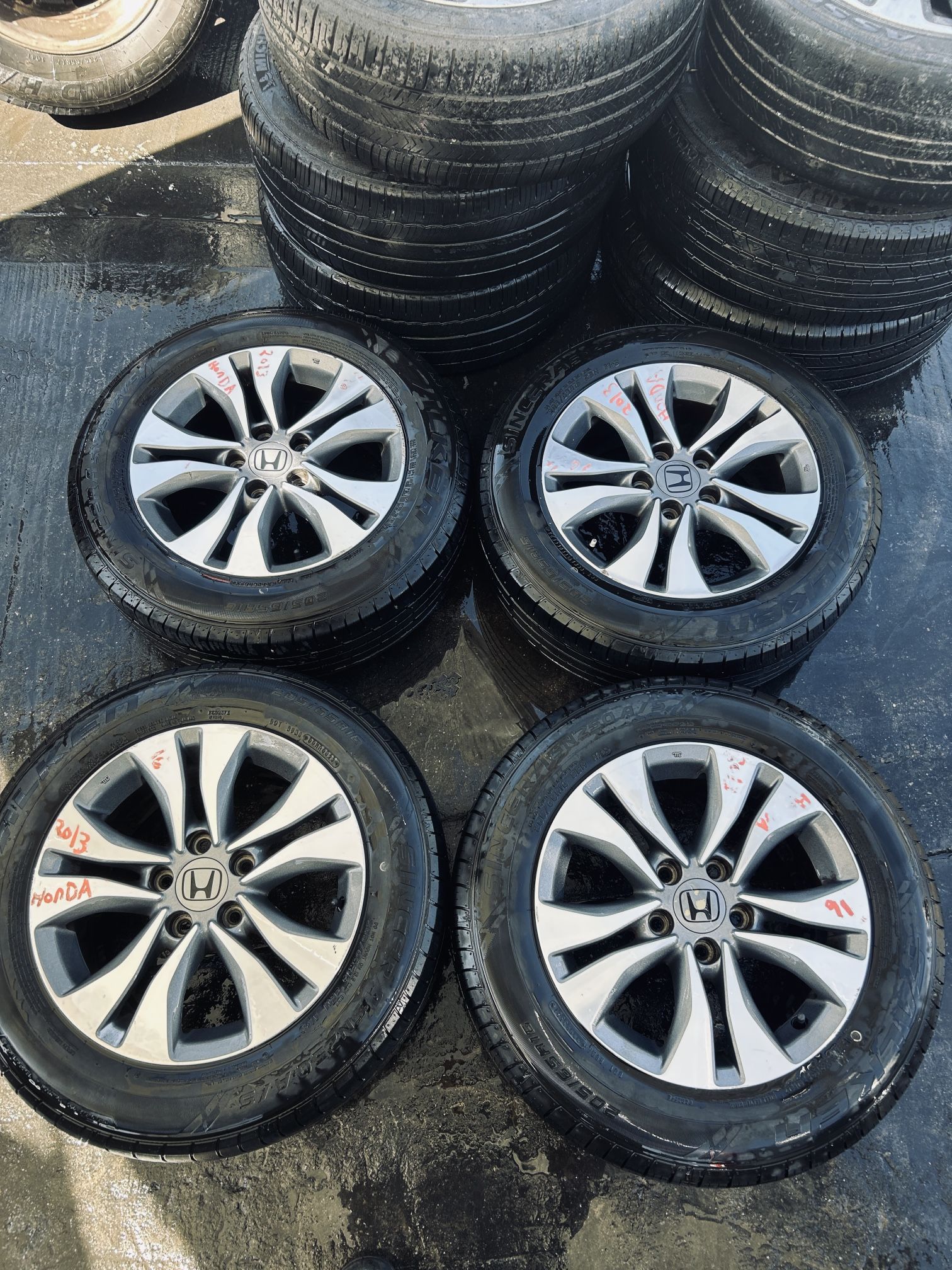
Finding the correct 2014 Honda Accord factory rims requires understanding OEM specifications, wheel sizes ranging from 16 to 18 inches, and trim-specific finishes like machined alloy or chrome. Whether you are replacing a bent wheel, restoring a vehicle to stock condition, or searching for a matching full-size spare, identifying the exact part numbers, bolt patterns, and offset measurements ensures a safe and seamless fit.
Evolution and Overview of the 2014 Honda Accord Wheel Lineup
The ninth-generation Honda Accord, spanning the 2013 through 2017 model years, introduced a diverse lineup of factory wheels. The 2014 Honda Accord factory rims vary significantly depending on whether the vehicle is a sedan or a coupe, as well as the specific trim level, such as the LX, Sport, EX, EX-L, or Touring. Honda engineered these original equipment manufacturer (OEM) wheels to balance structural integrity, unsprung weight reduction, and aerodynamic efficiency.
Unlike universal aftermarket wheels that rely on hub-centric rings and universal bolt patterns, genuine factory rims are built specifically for the Accord’s hub bore and suspension geometry. This precise engineering ensures proper load distribution, prevents steering wheel vibrations at highway speeds, and maintains the vehicle's factory ride quality. Understanding these baseline characteristics is essential before purchasing replacements from salvage yards, dealerships, or online retailers.
Detailed Breakdown of 2014 Honda Accord Factory Rim Specifications
Every 2014 Honda Accord trim level corresponds to specific wheel dimensions. Installing the wrong size can cause brake caliper clearance issues, speedometer calibration errors, or rubbing against the inner plastic fender liners during tight turns.
Trim-by-Trim Specification Analysis
- LX and EX Trims (Sedan & Coupe): These models typically feature 16-inch alloy wheels. The standard size is 16x7 inches with a 5-lug, 114.3mm bolt pattern (also written as 5x4.5 inches). The factory offset is typically 45mm, paired with a hub bore size of 64.1mm. These wheels are generally wrapped in 205/65R16 tires, prioritizing ride comfort and fuel economy.
- Sport Trim (Sedan Exclusive): The Accord Sport stepped up the aggression with 18-inch wheels. These factory rims measure 18x8 inches, utilizing the same 5x114.3 bolt pattern and 64.1mm hub bore, but feature a 55mm offset to accommodate the wider wheel barrel. They are paired with 235/45R18 tires. The distinctive split-spoke design with painted inserts makes Sport wheels one of the most heavily sought-after factory options for owners upgrading lower trims.
- EX-L and Touring Trims: These luxury-oriented trims feature 17-inch alloy wheels measuring 17x7.5 inches with a 55mm offset. The EX-L V6 and Touring variants often received unique multi-spoke or machine-finished face designs, fitted with 215/50R17 tires.
- Hybrid Models: The 2014 Accord Hybrid and Plug-In Hybrid utilized specialized aerodynamic 17-inch alloy wheels designed to reduce drag, often featuring plastic aero inserts or flat-faced styling.
| Trim Level | Wheel Diameter | Width | Bolt Pattern (PCD) | Offset (ET) | Hub Bore | Factory Tire Size |
|---|---|---|---|---|---|---|
| LX / EX | 16 inches | 7.0 inches | 5x114.3 mm | 45 mm | 64.1 mm | 205/65R16 |
| Sport (Sedan) | 18 inches | 8.0 inches | 5x114.3 mm | 55 mm | 64.1 mm | 235/45R18 |
| EX-L / Touring | 17 inches | 7.5 inches | 5x114.3 mm | 55 mm | 64.1 mm | 215/50R17 |
| Hybrid | 17 inches | 7.0 inches | 5x114.3 mm | 45 mm | 64.1 mm | 225/50R17 |
Identifying and Verifying OEM Part Numbers
When purchasing a replacement 2014 Honda Accord factory rim, relying solely on visual appearance can lead to costly mistakes. Honda frequently updates wheel casting designs or finishes mid-production. To ensure an exact match, buyers must locate and verify the OEM part number or casting stamps.
Honda stamps internal identification data on the back of the wheel spokes or along the inner barrel. This information includes:
- The Manufacturer Stamp: Usually marked with "ENKEI" or "TOPY," as these companies manufactured OEM wheels for Honda.
- The Part Number Prefix: Honda part numbers for wheels typically follow a format like
42700-T2A-...or42700-T3V-.... - Rim Dimensions: Stamped directly onto the metal, indicating measurements such as
18x8Jand the offset rating likeET55.
Checking these stamps prevents purchasing replica wheels, which often feature thinner aluminum walls, weaker load ratings, and inferior paint coatings that peel prematurely when exposed to road salt and brake dust.
Sourcing Options: New, Used, and Remanufactured Rims
Finding a replacement wheel requires balancing budget, cosmetic condition, and structural safety. Several primary sourcing channels exist for 2014 Honda Accord factory rims:
1. Authorized Honda Dealerships
Purchasing brand-new OEM rims directly from a Honda dealership guarantees an authentic part straight from the factory. However, this is the most expensive route. Dealerships often sell bare wheels without center caps, tire pressure monitoring sensors (TPMS), or valve stems, meaning those components must be purchased separately or transferred from the old wheel.
2. Certified Online OEM Wheel Suppliers
Specialized online vendors supply certified reconditioned or new-old-stock factory wheels. These companies inspect wheels for structural straightness using industrial balancing and truing machines before listing them. This route offers a middle ground between dealership pricing and salvage yard uncertainty.
3. Automotive Salvage Yards and Pull-Your-Own Parts
Local yards and national online scrap networks (such as Car-Part.com) offer used 2014 Honda Accord factory rims pulled from accident-damaged vehicles. While cost-effective, buyers must thoroughly inspect used wheels for hidden structural hazards.
Inspection and Quality Control for Used Wheels
Buying a used or salvage factory rim demands careful physical inspection. A wheel may look fine from the front while harboring dangerous structural flaws on the backside.
- Check for Cracks: Inspect the inner lip of the barrel where potholes typically impact the wheel. Hairline cracks near the bead seat will cause slow air leaks and can fail catastrophically under load.
- Assess Lateral and Radial Runout: Spin the wheel on a balancer if possible. Visible wobbling or hopping indicates a bent rim that may require professional straightening by a specialized machine shop.
- Examine Curb Rash and Cosmetic Damage: Deep gouges from curbs can compromise the structural integrity of the wheel lip, though surface scratches on machined faces can often be repaired by a mobile wheel-repair technician.
- Verify Corrosion Around the Bead Seat: Aluminum oxidation can build up between the tire bead and the rim, leading to chronic tire deflation. Ensure the inner sealing surface is smooth and clean.
Installation, TPMS Integration, and Balancing
Once the correct 2014 Honda Accord factory rim is secured, proper installation procedures ensure long-term reliability and safety.
Tire Pressure Monitoring Systems (TPMS)
The 2014 Honda Accord utilizes an indirect TPMS system on lower trims (which measures rotational speed via the ABS sensors) or direct TPMS sensors mounted to the back of the valve stem on higher trims. If the replacement wheel requires transferring a direct TPMS sensor, inspect the rubber grommet and valve core. Replacing the service kit during every wheel swap prevents air leaks and sensor failure.
Lug Nuts and Torque Specifications
Factory Honda alloy wheels use ball-seat lug nuts, whereas aftermarket wheels typically use conical (tapered) seat lug nuts. Never use tapered aftermarket lug nuts on factory Honda rims, as this mismatch prevents proper torque distribution, potentially causing the wheel to loosen while driving.
The standard wheel torque specification for the 2014 Honda Accord is 80 lb-ft (108 Nm). Always tighten lug nuts in a star pattern and verify torque with a calibrated click-type torque wrench after driving the first 50 miles.
Frequently Asked Questions
Can I put 18-inch Accord Sport rims on a 2014 Accord LX that came with 16-inch wheels?
Yes, 18-inch 2014 Honda Accord Sport factory rims will bolt directly onto an LX trim because the bolt pattern and hub bore are identical. However, you must install matching 235/45R18 tires to maintain proper speedometer accuracy and ensure the larger wheel assembly clears the suspension components.
How do I know if my 2014 Accord wheel is bent?
Symptoms of a bent factory rim include persistent steering wheel vibrations at highway speeds (typically between 55 and 70 mph), a thumping sensation, or a tire that continually loses air despite no visible puncture. A professional tire shop can verify runout on a dynamic wheel balancing machine.
Are replica wheels as safe as genuine Honda factory rims?
Many replica wheels meet baseline industry safety standards like JWL or VIA, but they often utilize lower-grade aluminum alloys and thinner casting walls to reduce production costs. Genuine Honda factory rims undergo rigorous impact and fatigue testing to meet strict OEM safety margins, making them structurally superior.
Can curb rash on a machined alloy rim be repaired?
Yes. Many 2014 Honda Accord factory rims feature a machined face with painted or clear-coated pockets. A professional wheel repair specialist can lathe-cut or touch up the machined surface to restore the factory finish, provided the damage has not compromised the structural lip of the rim.
What is the correct tire pressure for 2014 Honda Accord factory wheels?
Tire pressure varies depending on the specific rim and tire size installed. The correct cold inflation pressure is listed on the placard located on the driver-side door jamb, typically ranging from 32 to 35 PSI for standard factory configurations.
Next Steps and Actionable Recommendations
When replacing a 2014 Honda Accord factory rim, start by confirming your exact trim level and checking the tire size currently mounted on your vehicle. Pull the OEM part number from an undamaged matching wheel if possible to eliminate guesswork. If purchasing a used rim online or from a local yard, confirm that the seller guarantees the wheel is structurally straight, free of cracks, and holds a proper bead seal before investing in mounting and balancing.