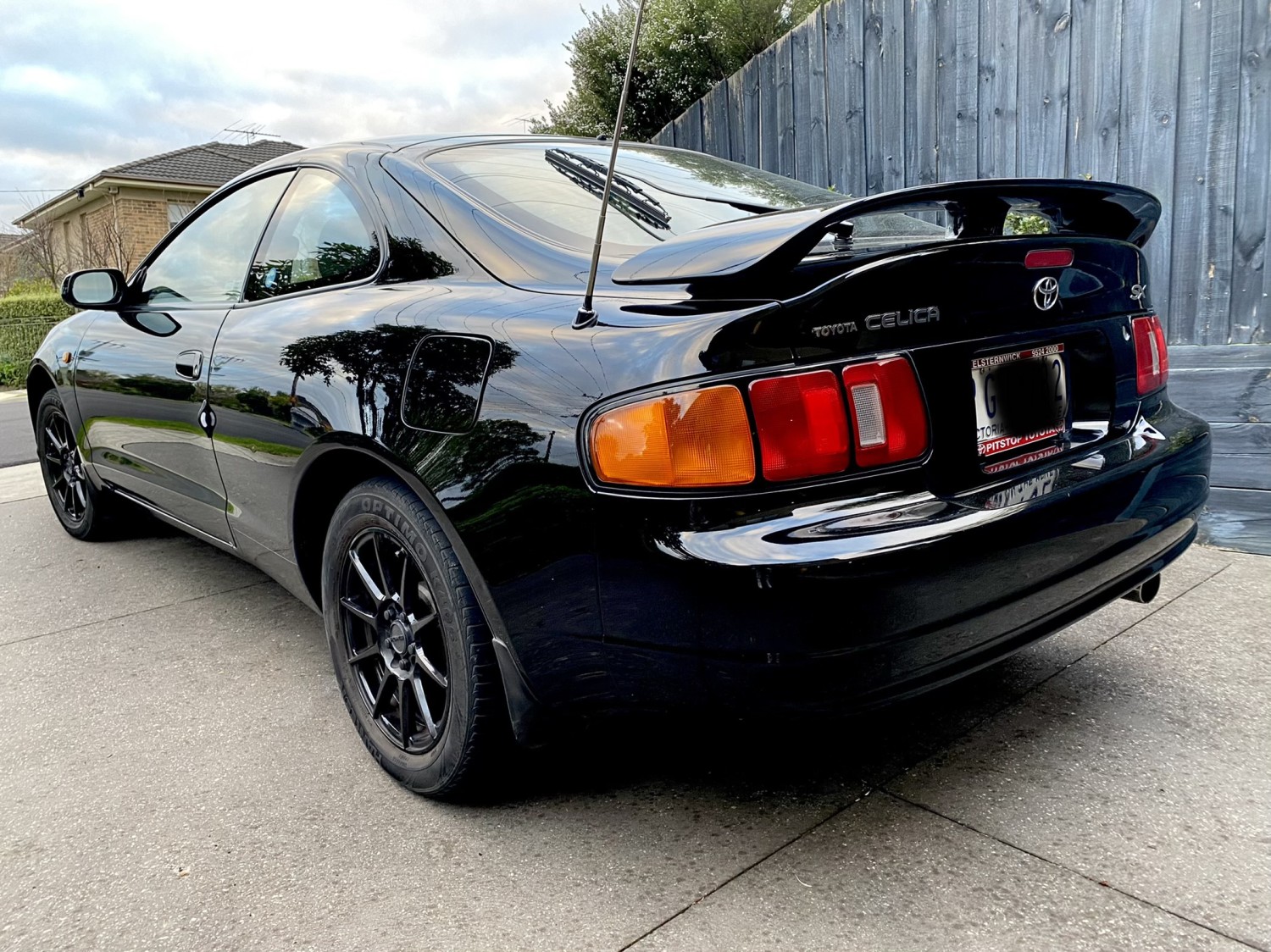
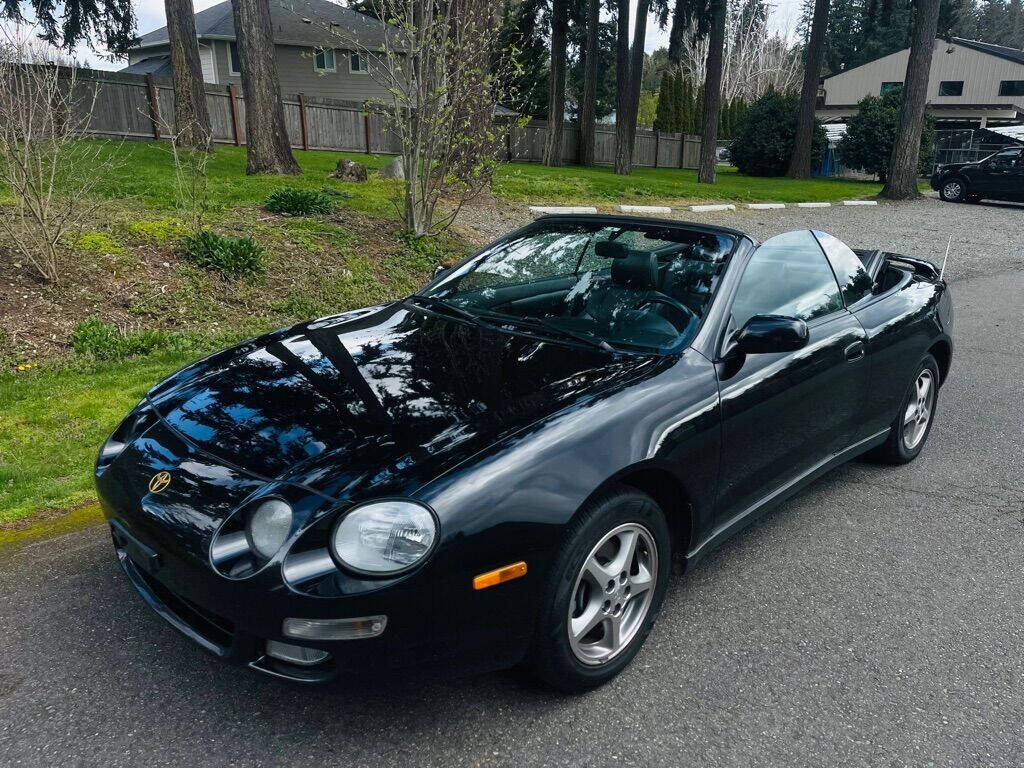
The 1998 Toyota Celica Convertible represents the penultimate year of the sixth-generation "T200" series, blending Toyota’s legendary 1990s reliability with a distinct quad-headlamp design and an open-air driving experience. As a refined "youngtimer" classic in 2026, it offers a balance of approachable maintenance, iconic styling, and surprising daily-driver practicality for enthusiasts.
Historical Context: The Sunset of the T200 Generation
The 1998 model year occupies a specific place in the Celica’s long history. By this time, the sixth generation (1994–1999) had matured significantly. While the early 90s were defined by the rally-bred GT-Four, the 1998 convertible was positioned as a stylish, dependable cruiser rather than a high-performance sports car.
Unlike the standard coupe and liftback models manufactured entirely in Japan, the Celica Convertible had a unique international upbringing. Toyota shipped partially completed coupes from the Tahara plant to American Sunroof Corporation (ASC) in Rancho Dominguez, California. There, the roofs were removed, and the chassis were reinforced to compensate for the loss of structural rigidity before the specialized convertible tops were installed. This partnership allowed Toyota to offer a factory-warranted convertible that met stringent safety standards while maintaining the quality control the brand was known for.
By 1998, Toyota had streamlined the lineup. In the North American market, the convertible was primarily available in the GT trim, which utilized the larger 2.2-liter engine. This version of the Celica remains a favorite among collectors in 2026 because it avoids the complexity of later high-revving engines while offering a more robust torque curve suitable for the extra weight of the convertible bracing.
Design and Aesthetics: The "Four-Eye" Icon
The most striking feature of the 1998 Celica is its front-end styling. Moving away from the pop-up headlights of the fifth generation, the T200 utilized four individual round headlamps. This design was polarizing at launch but has aged gracefully, often being compared to the aesthetics of contemporary Acura Integras or even certain Porsche models of the era.
Exterior Styling
The convertible silhouette is remarkably clean. ASC and Toyota engineers worked to ensure that the car looked cohesive both with the top up and down. With the top retracted, the Celica features a relatively flat beltline that emphasizes its length.
- Aerodynamics: Despite the "soft" nature of the top, the 1998 model maintained decent wind noise insulation for its time.
- Wheel Options: The GT trim typically featured 15-inch five-spoke alloy wheels, which provided a sporty yet comfortable ride profile.
- Rear Profile: The rear of the 1998 model features a integrated spoiler on many GT trims and the characteristic "wrap-around" taillights that defined 90s Toyota sportiness.
The ASC Conversion Details
Because these were converted by ASC, there are specific structural differences to look for. The doors are reinforced, and there is a massive steel "cross-brace" behind the rear seats to reduce "scuttle shake"—the vibration felt in the steering wheel and chassis when a convertible hits a bump. This added weight (roughly 200 lbs more than the liftback) is a trade-off for the structural integrity required to keep the car's handling predictable.
Powertrain and Technical Specifications
Under the hood of the 1998 Toyota Celica GT Convertible sits the 5S-FE engine. This 2.2-liter, naturally aspirated inline-four is widely regarded as one of the most durable engines Toyota ever produced. While it won't win many drag races by 2026 standards, its focus on low-end torque makes it an excellent engine for a heavy convertible.
Engine Performance
- Type: 2.2L Inline-4, DOHC, 16-valve.
- Horsepower: Approximately 130–135 hp @ 5,400 rpm.
- Torque: 145 lb-ft @ 4,400 rpm.
- Bore and Stroke: 87.1 mm x 90.9 mm (undersquare design favoring torque).
The 5S-FE is a non-interference engine, meaning that if the timing belt snaps, the valves will not collide with the pistons. This "fail-safe" nature is a significant advantage for owners looking to maintain a classic on a budget.
Transmission Options
The 1998 Celica Convertible was offered with two main transmission choices:
- 5-Speed Manual (S54): Known for its "notchy" and mechanical feel, this gearbox allows the driver to make the most of the 2.2L engine's limited power.
- 4-Speed Automatic (A241E): A robust electronically controlled transmission with an "Overdrive" button. While it saps some of the engine's urgency, it provides a smooth experience for those who view the car as a boulevard cruiser.
Suspension and Braking
The GT trim features MacPherson struts at all four corners. For the 1998 model year, the suspension was tuned more for comfort than the aggressive "Super Strut" suspension found on some overseas Celica models. Braking is handled by power-assisted discs in the front and discs in the rear (standard on GT), providing adequate stopping power for its 3,000-lb curb weight.
The Convertible Top: Engineering and Maintenance
The centerpiece of the 1998 Celica Convertible is its power-operated soft top. Understanding its operation is vital for any current or prospective owner in 2026.
Mechanism and Operation
The top is powered by two hydraulic cylinders located behind the rear side panels, fed by a pump located in the trunk area. Unlike modern "one-touch" systems, the 1998 Celica requires the driver to manually release two latches at the header rail before the power switch can retract the roof.
Common Failure Points
After nearly 30 years, the hydraulic system is the most common area of concern.
- Leaking Cylinders: The seals in the lift cylinders often fail, leading to hydraulic fluid leaking into the rear floorboards or trunk.
- Motor Fatigue: The electric pump may weaken over time, leading to slow or uneven operation.
- The Glass Window: One of the premium features of the Celica Convertible was the glass rear window with a built-in defogger. If the fabric of the top begins to shrink or dry rot, it can pull away from the glass, leading to leaks that are difficult to repair without replacing the entire top.
| Feature | Specification/Detail |
|---|---|
| Top Material | Heavy-duty vinyl or aftermarket stayfast cloth |
| Rear Window | Heated Glass (standard on GT) |
| Operation Time | ~15-20 seconds |
| Manual Override | Possible via bypass valve on the pump |
| Storage | Folds into a well behind the rear seats (reduces trunk space) |
Interior Comfort and Features
The interior of the 1998 Celica is a hallmark of 90s driver-centric design. The dashboard is slightly angled toward the driver, placing the climate controls and stereo within easy reach.
Ergonomics and Seating
The GT trim usually came with bolstered cloth seats, though leather was an available option. For a convertible, the "2+2" seating arrangement is surprisingly functional, though the rear seats are best reserved for children or short trips. Because the top mechanism takes up side-room, the rear bench is narrower than that of the coupe.
Standard Equipment in 1998
By 1998, several features that were once optional became standard or very common on the GT Convertible:
- Air Conditioning: Standard on almost all GT models.
- Cruise Control: Located on a stalk on the steering wheel.
- Power Windows/Locks: Essential for the convertible lifestyle.
- Dual Airbags: Driver and passenger protection was standard.
One of the more unique features of the late-90s Celicas was the "Storage Bin" center console, which is often found with a functioning lock—a small but important detail for a car that might be left parked with the top down.
Common Issues and Maintenance: The Buyer's Checklist
If you are evaluating a 1998 Celica Convertible in 2026, there are specific mechanical and structural areas that require inspection. While the car is reliable, three decades of use will take a toll.
1. Engine Oil Leaks
The 5S-FE is prone to oil leaks from the distributor O-ring, the valve cover gasket, and the oil pump seal. While none of these are catastrophic, they can lead to a messy engine bay and potential damage to rubber coolant hoses if left unaddressed.
2. Suspension Wear
The "figure-eight" links in the rear suspension and the front control arm bushings often perish with age. If the car feels "wallowy" or clunks over bumps, a full suspension refresh (including struts) is likely necessary.
3. Structural Rust
While Toyotas of this era were better rust-proofed than their predecessors, check the following areas:
- Rear Quarter Panels: Particularly where the convertible top drains meet the body.
- Spare Tire Well: If the convertible top seals fail, water collects in the bottom of the trunk under the spare tire, causing hidden rot.
- Rocker Panels: Inspect the jack points for signs of crunching or oxidation.
4. Steering Rack
The power steering racks on T200 Celicas are known to develop leaks at higher mileages. Replacing the rack is a labor-intensive job, so check the fluid levels and the condition of the boots during a pre-purchase inspection.
2026 Market Value and Collectibility
As of 2026, the 1998 Toyota Celica Convertible has moved out of the "used car" phase and into the "collector car" category. Its value is driven by its rarity compared to the liftback and the increasing nostalgia for 90s Japanese "bubble era" engineering.
- Low-Mileage Examples: Pristine cars with under 75,000 miles can command significant premiums, especially in rare colors like Renaissance Red or Black.
- Driver-Quality Cars: Vehicles with 120,000+ miles that have been well-maintained are still affordable but are no longer $2,000 bargains. Expect to pay a premium for a functioning top and a clean interior.
- Modifications: Unmodified, original examples are the most highly prized. The 1998 Celica responds well to subtle upgrades (like better bushings or modern head units), but heavy aesthetic modifications generally detract from the value.
Compared to its contemporary rivals, such as the Mitsubishi Eclipse Spyder or the Ford Mustang V6 Convertible, the Celica is often preferred by enthusiasts who prioritize longevity and build quality over raw horsepower or "tuner" potential.
Frequently Asked Questions
Is the 1998 Celica Convertible front-wheel drive or rear-wheel drive?
All North American 1998 Celica Convertibles are front-wheel drive (FWD). While the Celica lineage includes famous rear-wheel drive and all-wheel drive models (like the GT-Four), the sixth-generation convertibles were built strictly on a FWD platform to maximize interior space and fuel efficiency.
How difficult is it to find parts for the convertible top?
While mechanical parts (engine, brakes, suspension) are shared with the Camry and other Celicas, convertible-specific parts are becoming rarer. Items like the weatherstripping around the windows, the hydraulic cylinders, and the interior trim pieces for the rear are no longer in production by Toyota. Owners often rely on specialized convertible top shops or the used market (dismantlers) for these specific components.
Does the 1998 Celica Convertible have a backseat?
Yes, it is a four-seater. However, the rear seats are quite cramped compared to the coupe because the convertible top mechanism and the structural bracing for the ASC conversion encroach on the cabin width. It is best suited for two adults in the front and luggage or very small passengers in the rear.
Can the 1998 Celica GT Convertible handle modern highway speeds?
Absolutely. The 2.2L 5S-FE engine was designed for the American market and cruises comfortably at 70–80 mph. However, because it is a 4-cylinder with a soft top, the cabin will be louder than a modern luxury car. The engine will be turning at roughly 3,000 RPM at highway speeds, which is well within its operating comfort zone.
What is the difference between the ST and GT trims for 1998?
By 1998, the ST trim (which used the smaller 1.8L 7A-FE engine) had been mostly phased out of the convertible lineup in North America. Almost all 1998 convertibles you encounter will be the GT trim, featuring the 2.2L engine, 5-lug wheels (the ST used 4-lug), and upgraded interior appointments.
Final Recommendation
The 1998 Toyota Celica Convertible is an exceptional choice for someone seeking a reliable, vintage open-top experience. It lacks the complexity of modern turbocharged engines and computerized roof systems, making it a "DIY-friendly" classic. When purchasing, prioritize the condition of the convertible top and the hydraulic system over minor mechanical engine issues, as the engine is significantly easier and cheaper to repair than the specialized ASC body components. If you find a rust-free example with a documented service history, it remains one of the most sensible ways to enjoy 90s automotive nostalgia in 2026.