The top country hits of 1980 represent a pivotal transition in American music, balancing the traditional sounds of the outlaw movement and classic honky-tonk with the emergence of the polished, crossover-ready production that would define the decade. Led by iconic artists like George Jones, Kenny Rogers, and Dolly Parton, these songs remain enduring staples of the country music canon.
The Landscape of Country Music in 1980
To understand the 1980 country music landscape, one must first recognize the industry's shift in priorities. By 1980, the "Outlaw Country" movement—pioneered by Willie Nelson and Waylon Jennings—had fundamentally changed the production standards of Nashville. Yet, at the same time, the industry was actively courting a broader, pop-adjacent audience. The year 1980 served as a bridge where artists maintained deep-rooted lyrical themes of heartache, blue-collar struggles, and romantic longing, while simultaneously embracing cleaner, studio-perfected arrangements that appealed to adult contemporary radio programmers.
This era was characterized by the dominance of powerful, narrative-driven storytelling. Listeners were not just hearing songs; they were engaging with cinematic vignettes. From the dramatic narrative arc of "Coward of the County" to the raw, soul-baring vocal performance of "He Stopped Loving Her Today," the hits of 1980 demonstrated a remarkable range in technical execution and thematic depth.
Analyzing the Year’s Chart-Toppers
When examining the Billboard Hot Country Songs chart for 1980, it becomes clear that certain tracks achieved a level of cultural penetration that transcended genre boundaries. These songs were measured by their performance on radio airplay, jukebox spins, and retail sales, which were the primary metrics of the time.
George Jones and the Benchmark of Excellence
Perhaps no song better exemplifies the technical and emotional ceiling of 1980 country than George Jones's "He Stopped Loving Her Today." Often cited as one of the greatest country songs ever recorded, it served as a masterclass in vocal phrasing. Produced by Billy Sherrill, the track utilized the "countrypolitan" sound—a fusion of country and pop production techniques—that allowed Jones’s weary, authoritative baritone to cut through the lush string arrangements. It reminded the industry that despite the move toward pop-friendly production, the core of country music remained the raw, unvarnished expression of human grief.
The Crossover Phenomenon
Artists like Kenny Rogers and Dolly Parton were the vanguards of the 1980 crossover movement. Their ability to secure simultaneous placements on country, pop, and adult contemporary charts changed the economic reality for country artists. When Rogers released "Coward of the County" or collaborated on "Islands in the Stream" (though the latter would come later, the foundation was built here), he proved that country music could be commercially viable in global pop markets. This success required a shift in technical production: cleaner mix balances, less aggressive steel guitar usage, and more emphasis on universal, rather than hyper-regional, lyrical themes.
Comparative Overview of 1980 Chart Success
The following table highlights the diversity of sounds that topped the charts in 1980. These tracks represent the varied approaches artists took to achieve commercial dominance during that specific calendar year.
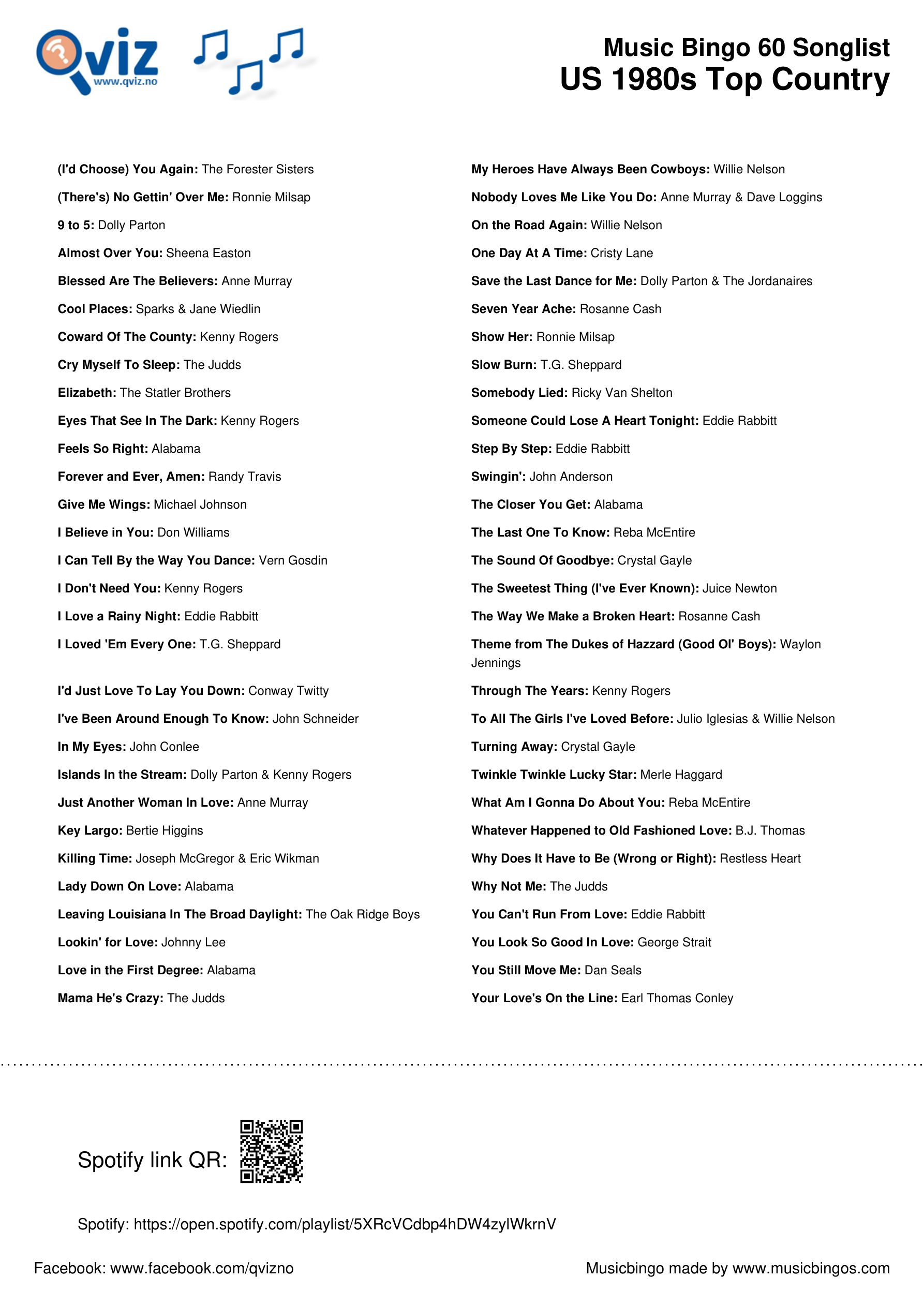
| Artist | Song Title | Primary Musical Style | Crossover Appeal |
|---|---|---|---|
| George Jones | He Stopped Loving Her Today | Traditional / Countrypolitan | High |
| Kenny Rogers | Coward of the County | Narrative Ballad | Very High |
| Dolly Parton | 9 to 5 | Upbeat Country / Pop | Very High |
| Waylon Jennings | Amanda | Outlaw Country | Moderate |
| Anne Murray | Could I Have This Dance | Soft Pop-Country | Very High |
| Don Williams | I Believe in You | Traditional / Folk-Country | Moderate |
Technical Production Trends
The production values of 1980 were distinct from those of the 1970s. Studios began incorporating more sophisticated multi-track recording techniques, allowing for a "layered" sound. You will notice that many of the hits from this year feature:
- Padded Drum Sounds: A departure from the thin, acoustic-heavy drum kits of the previous decade, moving toward a deeper, more compressed kick and snare sound.
- String Sections: The use of orchestral strings was common, adding a cinematic quality that helped transition country tracks onto mainstream pop radio stations.
- Vocal Compression: Increased use of compression on lead vocals ensured that the storyteller’s voice remained front and center, regardless of the complexity of the backing arrangement.
The Role of Narrative Storytelling
The primary search intent for those interested in 1980 country hits often stems from a love of the "story song." In 1980, country songwriting was at a creative peak regarding character development. Songs did not merely describe a situation; they presented a protagonist, a conflict, and a resolution.
This emphasis on narrative is a prerequisite for understanding the genre's growth. In 1980, songwriters like Bobby Braddock or Curly Putman were essentially writing short stories set to music. For listeners today, analyzing these tracks involves paying attention to the lyrical structure: the "verse-verse-chorus-verse-chorus-bridge-chorus" format became the standard structure for maximizing emotional impact.
Common Misconceptions
A frequent mistake when looking back at 1980 is the assumption that it was an "easy-listening" year. While the production was polished, the lyrical content remained gritty. The prevalence of themes concerning poverty, betrayal, and social injustice in 1980 country music challenges the idea that the genre was moving toward a purely "pop" identity. It was, rather, a period where the genre was becoming more sophisticated in its presentation of reality.
Frequently Asked Questions (FAQ)
1. Which country song is considered the definitive hit of 1980? Most music historians and industry charts designate George Jones’s "He Stopped Loving Her Today" as the definitive country hit of 1980. It not only topped the charts but also served as the catalyst for Jones’s career resurgence and remains a gold standard for vocal performance in the genre.
2. Did 1980 country hits feature pop instruments? Yes. While traditional instruments like the fiddle and steel guitar remained present, producers frequently integrated piano, electric bass, and lush string arrangements to soften the sound for wider radio consumption. This helped country artists compete with the burgeoning pop and soft-rock sounds of the early 1980s.
3. Why were 1980s country songs often shorter than today's? In 1980, radio airplay was the primary engine of success. Tracks were optimized for a "three-minute" radio format. Producers and songwriters worked within strict time constraints to ensure the song reached the chorus quickly and stayed under the duration limits required by station managers of that era.
4. Can I find high-fidelity recordings of these 1980 hits today? Yes. Because these tracks were recorded using high-quality analog tape machines, many have been digitally remastered and are available on high-resolution streaming platforms. Look for "remastered" or "expanded edition" labels to ensure the best possible audio quality.
5. How did the 1980 country sound influence modern artists? Contemporary artists like Chris Stapleton, Miranda Lambert, and Jason Isbell frequently cite the production and songwriting of the late 1970s and early 1980s as a primary influence. They often emulate the "live band in the studio" feel combined with the lyrical clarity that became standardized in 1980.
Practical Recommendations for Listeners
If you are looking to explore the 1980 country sound, start by listening to a comprehensive "1980 Country #1s" playlist. To truly appreciate the technical aspects, listen with high-quality open-back headphones or through a calibrated sound system. This allows you to hear the separation between the string arrangements and the rhythm section—a hallmark of the era's sophisticated production.
When you find a song that resonates, research the session musicians involved. Nashville's "A-Team" of session players during this period was remarkably consistent; by following the work of individual drummers or pianists from the 1980 sessions, you can uncover hidden gems and deeper cuts that did not necessarily reach the number one spot but captured the exact same technical brilliance.