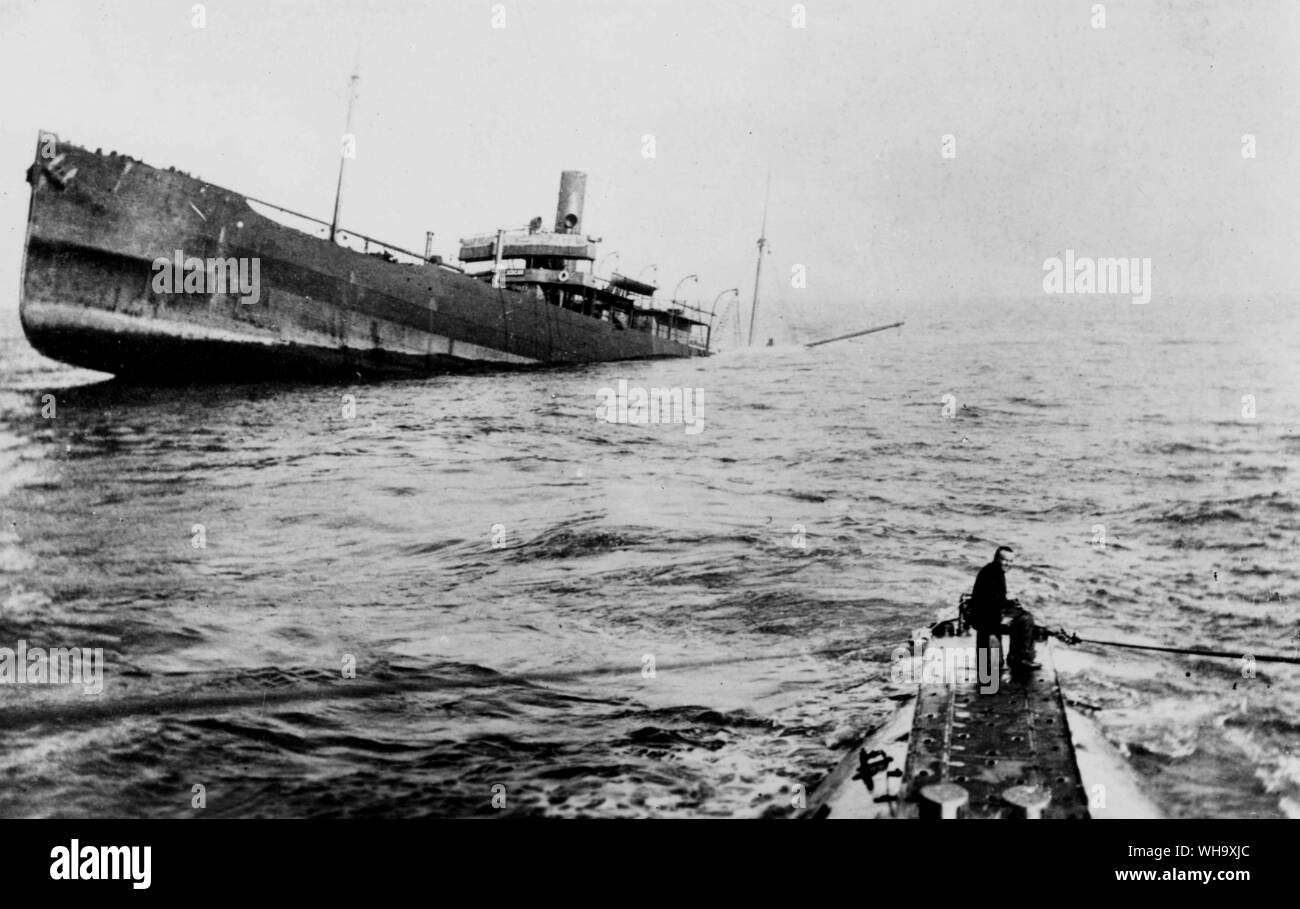
During World War I, Germany sank over 5,000 ships, but the most significant was the RMS Lusitania, a British ocean liner torpedoed by the German U-boat U-20 on May 7, 1915. This single event resulted in 1,198 deaths and became a primary catalyst for the United States' eventual entry into the war.
While the Lusitania remains the most famous vessel lost to German naval action, the German Imperial Navy (Kaiserliche Marine) conducted a massive, systematic campaign against both military and merchant vessels. Using the revolutionary technology of the Unterseeboot (U-boat), Germany attempted to sever the British Isles' supply lines, leading to thousands of sinkings that changed the course of maritime law and modern warfare. As of 2026, the wrecks of many of these vessels continue to be studied by marine archaeologists to understand the technical and human cost of the first "Total War" at sea.
The Sinking of the RMS Lusitania: A Global Turning Point
The destruction of the RMS Lusitania is the definitive answer for those looking for the "one ship" that defined German naval aggression in WWI. Owned by the Cunard Line, the Lusitania was one of the largest and fastest passenger ships in the world. When it departed New York for Liverpool in May 1915, Germany had already declared the waters around the British Isles a war zone.
On May 7, near the Old Head of Kinsale, Ireland, the German submarine U-20, commanded by Kapitänleutnant Walther Schwieger, spotted the liner. Schwieger fired a single torpedo. A second, much larger explosion followed the initial impact—a point of historical controversy for decades. The ship sank in just 18 minutes.
The sinking was a public relations disaster for Germany. Among the 1,198 victims were 128 Americans, which sparked outrage in the United States. Germany argued that the Lusitania was a legitimate target because it was carrying over 4 million rounds of small-arms ammunition and other war supplies. While later forensic dives have confirmed the presence of munitions, the loss of civilian life turned international opinion sharply against the Central Powers. This event forced Germany to temporarily suspend unrestricted submarine warfare to avoid immediate American intervention, though they would resume the practice in 1917.
The First Victim: HMS Pathfinder and the Dawn of Submarine Warfare
While the Lusitania is the most famous, it was not the first ship sunk. That distinction for a modern combat vessel belongs to HMS Pathfinder. On September 5, 1914, early in the war, the German U-boat U-21 torpedoed this British light cruiser off the coast of Scotland.
The sinking of the Pathfinder was a shock to the British Admiralty. It was the first time a submarine had successfully used a self-propelled torpedo to sink a modern warship. The cruiser disappeared beneath the waves in minutes, taking 259 lives with her. This event proved that the submarine was no longer a mere experimental novelty but a deadly weapon capable of challenging the supremacy of the British Royal Navy. It signaled a shift in naval doctrine, moving away from traditional "line of battle" engagements toward a war of stealth and attrition.
The Evolution of German Naval Strategy: Prize Rules vs. Unrestricted Warfare
To understand why Germany sank so many ships, one must look at the shifting legal and strategic landscape of the era. At the start of the war, Germany largely followed the Prize Rules (or "Cruiser Rules"). These international laws required a submarine to surface, stop a merchant vessel, and allow the crew to escape in lifeboats before sinking the ship.
However, this practice put U-boats at extreme risk. The British began using Q-ships—heavily armed merchant vessels with concealed guns. When a U-boat surfaced to follow Prize Rules, the Q-ship would drop its disguises and open fire. In response, Germany adopted Unrestricted Submarine Warfare. Under this policy, U-boats were ordered to sink any vessel in the designated war zone without warning.
This shift led to a massive spike in tonnage lost. By 1917, Germany was sinking nearly 800,000 tons of shipping per month. The goal was to starve Britain of food and raw materials, forcing a surrender before the United States could mobilize its industrial might.
The Tragedy of the HMHS Britannic and Other Notable Vessels
Beyond the Lusitania, several other high-profile ships fell victim to German naval efforts, including the HMHS Britannic, the sister ship of the RMS Titanic.
HMHS Britannic
Requisitioned as a hospital ship, the Britannic hit a German mine laid by U-73 in the Kea Channel of the Aegean Sea on November 21, 1916. Despite having improved safety features compared to the Titanic, the Britannic sank in only 55 minutes. Because it was operating as a hospital ship, it was supposed to be protected under the Geneva Convention, but Germany argued that hospital ships were being used to transport able-bodied troops. Fortunately, only 30 people died, largely due to the ship's proximity to land and better lifeboat deployment.
HMS Hampshire
On June 5, 1916, the cruiser HMS Hampshire struck a mine laid by the German submarine U-75 off the Orkney Islands. This sinking was particularly significant because it claimed the life of Lord Kitchener, the British Secretary of State for War and the face of the famous "Your Country Needs You" recruitment posters. His death was a massive blow to British morale and led to various conspiracy theories that persisted for a century.
The Llandovery Castle
In June 1918, the Canadian hospital ship Llandovery Castle was torpedoed by U-86. This sinking was particularly heinous because the U-boat surfaced and fired on the survivors in their lifeboats to eliminate witnesses. This event was later used as a primary example of "war crimes" during the Leipzig War Crimes Trials following the conflict.
Key Ships Sunk by Germany in World War I
The following table highlights some of the most significant vessels sunk by German action during the 1914–1918 period.
| Ship Name | Type | Date Sunk | Cause | Significance |
|---|---|---|---|---|
| HMS Pathfinder | Light Cruiser | Sept 5, 1914 | Torpedo (U-21) | First modern warship sunk by a submarine. |
| RMS Lusitania | Passenger Liner | May 7, 1915 | Torpedo (U-20) | Catalyzed US entry into the war; 1,198 dead. |
| HMS Hampshire | Armored Cruiser | June 5, 1916 | Mine (U-75) | Killed Lord Kitchener, British War Secretary. |
| HMHS Britannic | Hospital Ship | Nov 21, 1916 | Mine (U-73) | Largest ship lost in WWI; sister to Titanic. |
| SS California | Passenger Liner | Feb 7, 1917 | Torpedo (U-85) | Sunk shortly after Unrestricted Warfare resumed. |
| SS Vigilancia | Merchant Ship | Mar 16, 1917 | Torpedo (U-70) | One of the ships that led to the US declaration of war. |
| Llandovery Castle | Hospital Ship | June 27, 1918 | Torpedo (U-86) | Infamous for the machine-gunning of survivors. |
Technical Mechanics of the Sinkings: Torpedoes and Mines
The effectiveness of German sinkings was driven by two primary technologies: the G7 torpedo and the contact mine.
- Torpedoes: German torpedoes were highly advanced for the time. They used a combination of compressed air and steam to power their propellers. Most U-boats carried between 4 and 12 torpedoes. A single "hit" below the waterline could easily rupture the hull of a non-combatant vessel, causing rapid flooding.
- Mines: German "minelayer" submarines (such as the UC-class) were designed specifically to drop mines in busy shipping lanes. These mines were moored to the seabed and triggered by physical contact. They were responsible for a significant percentage of British naval losses, as they were difficult to detect and clear.
- Deck Guns: While the torpedo was the primary weapon, many merchant ships were actually sunk by deck guns. To save expensive torpedoes, a U-boat would surface and use its 8.8 cm or 10.5 cm deck gun to shell a defenseless merchant ship until it sank.
Impact on Global Diplomacy and the United States
The sinking of American-flagged ships, such as the SS Vigilancia and the SS City of Memphis in early 1917, was the "final straw" for President Woodrow Wilson. Germany knew that returning to unrestricted submarine warfare would likely bring the United States into the conflict, but they gambled that they could win the war in Europe before American troops could arrive in significant numbers.
They were wrong. The entry of the United States provided the Allies with an inexhaustible supply of manpower and industrial resources. Furthermore, the Allies developed the Convoy System, where merchant ships traveled in large groups protected by destroyers. This drastically reduced the effectiveness of U-boats, as submarines found it much harder to attack a protected group than a lone, wandering vessel.
Frequently Asked Questions
Why did Germany sink the Lusitania if it was a passenger ship?
Germany claimed the Lusitania was a legitimate target because it was carrying war materiel (ammunition and shrapnel shells) and was integrated into the British naval auxiliary system. Under the German perspective of the "War Zone" around Britain, any ship aiding the British war effort was subject to attack.
How many ships did Germany sink in total during WWI?
German U-boats sank approximately 5,000 ships, totaling nearly 13 million gross register tons (GRT) of Allied and neutral shipping. The peak of this activity occurred in April 1917, when over 800,000 tons were sunk in a single month.
What was the "Sussex Pledge"?
The Sussex Pledge was a promise made by Germany to the United States in 1916 after the sinking of the French ferry Sussex. Germany agreed to stop sinking passenger ships and to ensure the safety of crews on merchant ships before sinking them. Germany broke this pledge in February 1917 when they declared unrestricted submarine warfare.
Did any ships survive a U-boat attack?
Yes, many ships survived initial torpedo strikes if the bulkhead design was strong enough or if the torpedo failed to detonate. Some ships were even towed back to port and repaired. However, the lack of sonar and radar in WWI meant that once a ship was spotted and targeted by a U-boat, its chances of survival were low unless it was part of a convoy.
Where are the wrecks of these ships today?
As of 2026, many of these wrecks are protected under the Protection of Military Remains Act. The Lusitania lies about 11 miles off the coast of Ireland at a depth of roughly 300 feet. The Britannic is located in the Aegean Sea and is a popular (though restricted) site for technical divers. These sites are considered war graves and are treated with significant historical reverence.
Final Recommendation for History Enthusiasts
If you are researching the ships sunk by Germany in WWI, your next step should be to explore the Imperial War Museums (IWM) digital archives or the National Archives (UK). These institutions hold the original logs from both the British Admiralty and captured German U-boat records. For those interested in the archaeological aspect, the National Oceanic and Atmospheric Administration (NOAA) and similar maritime heritage organizations provide updated data on wreck sites and preservation efforts as of 2026. Understanding these sinkings is not just about the ships themselves, but about the transition of the world into an era of total, industrialized conflict.