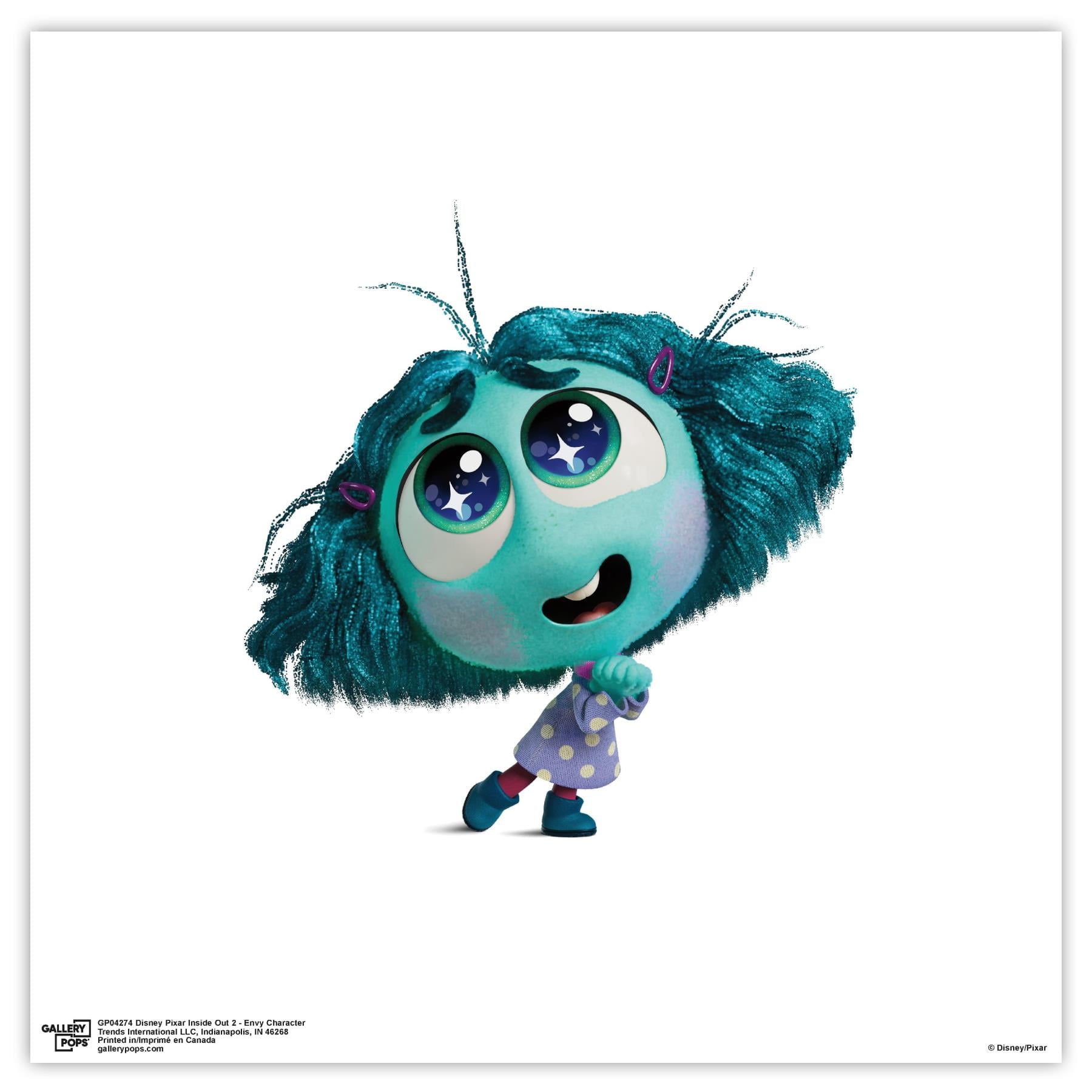
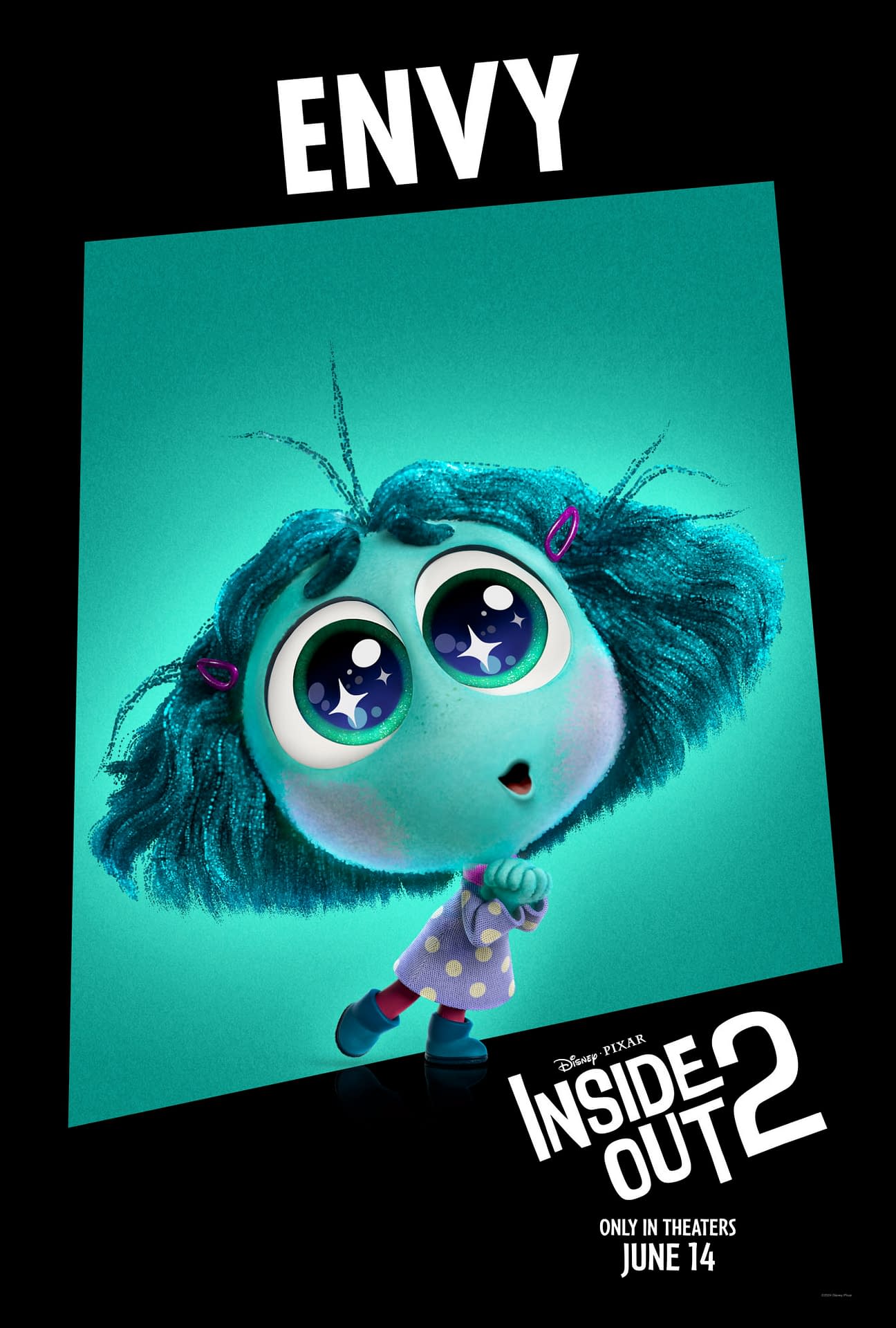
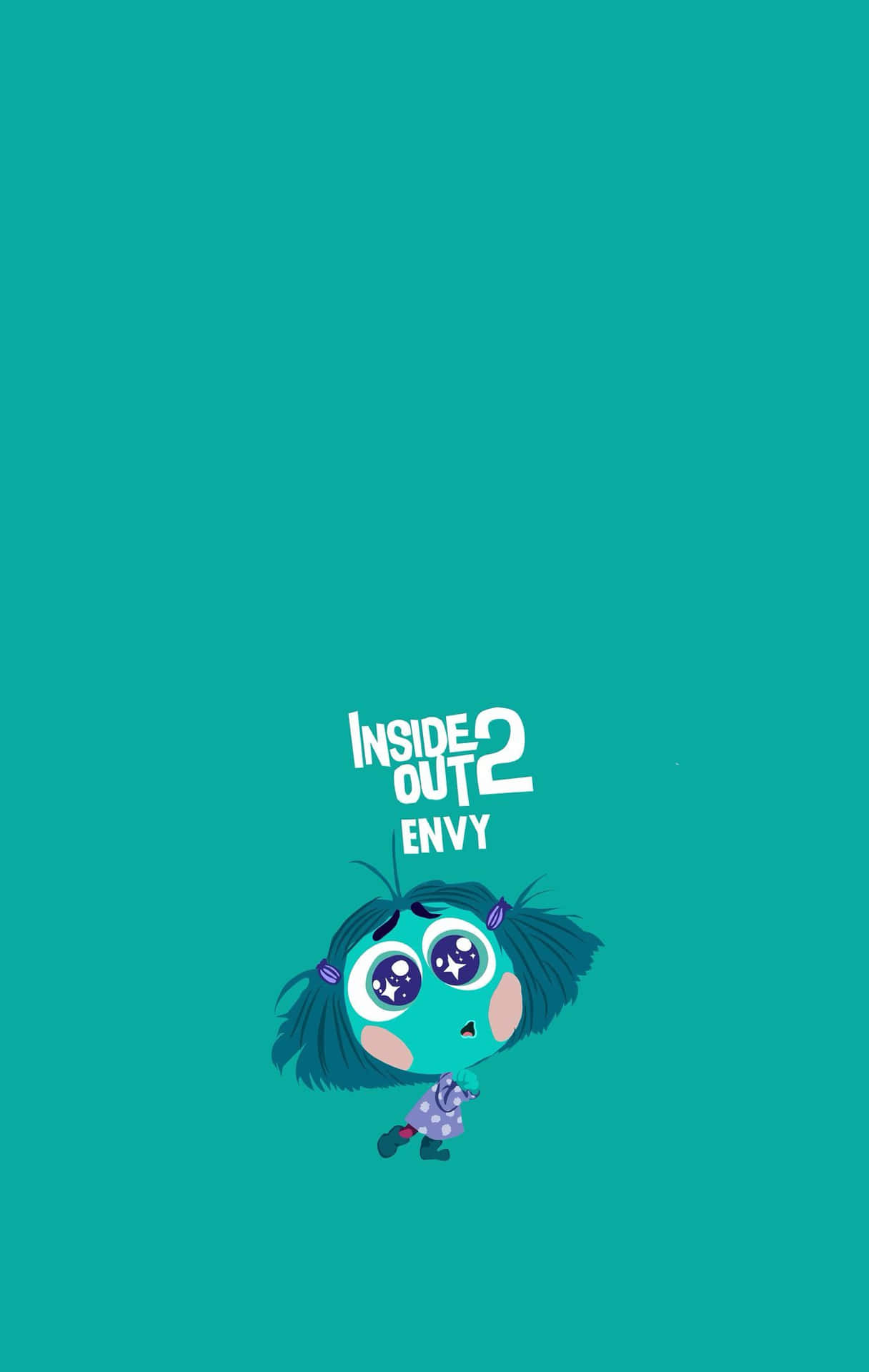
Envy in Inside Out 2 is a petite, teal-colored, wide-eyed emotion voiced by Ayo Edebiri who embodies the painful, longing desire for what others possess. She represents a pivotal developmental shift in Riley's adolescence, illustrating how social comparison and aspiration complicate identity formation during puberty.
Introduction to the Sequel's Emotional Landscape
When Pixar Animation Studios released Inside Out in 2015, the film revolutionized how audiences visualize the human mind. By personifying core emotions like Joy, Sadness, Fear, Anger, and Disgust, the movie provided a tangible framework for understanding mental health and emotional regulation. In the 2024 sequel, Inside Out 2, Riley Andersen transitions into her teenage years, bringing an entirely new set of psychological complexities to her mind’s headquarters. Among the new arrivals—Anxiety, Embarrassment, and Envy—the character of Envy immediately captures attention for her distinct visual design, behavioral quirks, and the complex psychological weight she carries.
Analyzing Envy requires looking beyond her cute, diminutive appearance. She represents a fundamental, albeit uncomfortable, facet of human social development. As Riley enters high school and faces shifting peer dynamics, her emotional ecosystem must expand to process social hierarchies, admiration, ambition, and the bitter sting of wanting what belongs to someone else. This exploration delves into Envy's character design, her narrative function within the film, the psychological realism behind her portrayal, and her ultimate impact on Riley's emotional growth.
The Psychological Role of Envy in Adolescence
To understand why Envy occupies space in a teenage mind, one must examine the psychological realities of early adolescence. Children typically operate within a relatively insular world centered on family, immediate friends, and personal interests. However, the onset of puberty triggers significant neurological and hormonal changes that heighten social awareness. Teenagers become acutely conscious of their social standing, peer acceptance, and perceived inadequacies relative to their peers.
Envy serves as the neurological alarm bell that signals a perceived gap between what Riley has and what she desires. Unlike jealousy, which typically involves the fear of losing something one already possesses to a rival, envy focuses on a deficit. Riley looks at older, cooler high school students, stellar hockey players, and charismatic peers and feels a sharp pang of longing. Envy personifies this internal dialogue:
- "Look at her hair; I wish mine looked like that."
- "She has that specific jacket; why can't I?"
- "They are invited to that party, and I am left out."
In the film, Envy's characterization captures this relentless fixation on external markers of success and validation. She is constantly dazzled by things she deems superior, making her a driving force behind Riley's sudden shifts in style, interests, and behavior as she attempts to fit in with the older crowd at hockey camp.
Character Design and Voice Acting: Bringing Envy to Life
Pixar's creative team utilized visual metaphor and character design to communicate complex emotional states instantly. Envy's physical appearance is deliberately distinct from the original emotions and her fellow new arrivals.
Visual Characteristics and Symbolism
- Stature: Envy is noticeably smaller than Joy, Sadness, and even Anxiety. Her diminutive size visually communicates feelings of smallness, inadequacy, and inferiority that often trigger envious thoughts.
- Eyes: She features oversized, sparkling teal eyes that widen dramatically whenever she perceives something desirable. This emphasizes her role as a watcher—someone constantly looking outward at others with longing.
- Color Palette: Dominated by shades of teal and blue-green, her color scheme subtly invokes the idiom "green-eyed monster," a classic cultural metaphor for envy, while maintaining harmony with the film's established color language.
Ayo Edebiri's Vocal Performance
Comedian and actress Ayo Edebiri infuses Envy with a breathy, high-energy, and hyper-fixated vocal cadence. Edebiri’s delivery captures the breathless awe and frantic urgency of adolescent yearning. Whether Envy is gasping at a cool water bottle or frantically plotting how Riley can acquire a coveted peer group status, her voice acting grounds the character's intense emotional fixation in authentic teenage behavior.
Interaction with Anxiety and the Core Emotional Team
Envy does not operate in a vacuum; her narrative arc is deeply intertwined with that of Anxiety, the film's primary antagonist and driving force. While Anxiety plans for future catastrophes and orchestrates elaborate contingency scenarios to secure Riley's social future, Envy provides the specific benchmarks for what success looks like.
When Anxiety takes over Headquarters, banishing Joy and the original crew, she forms a tight alliance with the new emotions. Envy becomes Anxiety’s eager lieutenant. Whenever Anxiety worries that Riley is not cool enough, athletic enough, or popular enough, Envy points out the exact external attributes, clothing brands, or social circles Riley needs to acquire to measure up.
This dynamic highlights a sophisticated psychological truth: anxiety and envy are frequently symbiotic. People often feel anxious precisely because they compare their internal reality to the curated external presentations of others—a phenomenon heavily amplified in modern adolescent environments. Envy points to the target, and Anxiety figures out the high-stakes roadmap to reach it.
| Emotion Character | Primary Motivator | Behavioral Manifestation in Riley | Constructive vs. Destructive Potential |
|---|---|---|---|
| Joy | Maintaining core happiness and self-worth | Fostering positive memories and optimistic outlooks | Highly constructive when balanced; destructive when suppressing negative truths |
| Anxiety | Preparing for future social and physical threats | Overplanning, hyper-vigilance, and panic induction | Protective in moderation; paralyzing when unchecked |
| Envy | Acquiring perceived missing traits or possessions | Social imitation, consumer desire, and status-seeking | Can inspire self-improvement; frequently leads to chronic inadequacy |
| Embarrassment | Protecting social reputation from humiliation | Blushing, withdrawal, and self-consciousness | Encourages social compliance; can cause severe self-doubt |
The Nuance of Envy vs. Jealousy in the Narrative
A common point of discussion among viewers and critics is the distinction between envy and jealousy within the film's narrative framework. While everyday speech often uses the terms interchangeably, psychology and literature draw a firm line—one that Inside Out 2 navigates with surprising precision.
Envy is a two-party relationship: Riley desires something that someone else has. Jealousy, by contrast, is a three-party relationship involving a perceived threat to an existing valued relationship, such as a best friend abandoning Riley for someone else.
By focusing the character specifically on Envy, the filmmakers address the specific pain of inadequacy and social aspiration. Riley's envy is directed toward the older hockey captain, Val, and her sophisticated peers. Riley does not necessarily want to steal Val's exact life; rather, she wants to absorb Val's effortless coolness, confidence, and acceptance. This distinction prevents the character from becoming a one-dimensional villain and instead frames her as a natural, if painful, mechanism of personal ambition.
Narrative Arc: From Destructive Fixation to Balanced Integration
At the climax of Inside Out 2, Riley experiences a severe panic attack driven by Anxiety's relentless efforts to engineer a perfect social persona. The new emotions, including Envy, realize that their heavy-handed approach is fracturing Riley's sense of self.
When Joy returns to restore the core Sense of Self, the film delivers its central thesis: humans cannot selectively edit out uncomfortable emotions. Envy, Anxiety, Embarrassment, and Ennui cannot be banished or locked away in the back of the mind because they are essential parts of a growing psyche.
By the end of the film, Envy finds her rightful, balanced place on the console. She is no longer driving Riley to frantically copy others or abandon her core friendships in pursuit of superficial status. Instead, Envy's presence is integrated healthily—acknowledging that wanting to improve oneself or admiring others' traits is normal, provided it does not eclipse self-acceptance and genuine connection.
Common Misconceptions About Envy's Character
Viewer discussions across film forums and psychological reviews frequently misinterpret certain aspects of Envy’s role in the story. Addressing these misconceptions clarifies her actual function:
- Misconception 1: Envy is pure evil. While envy is categorized as a "negative" emotion, the film emphasizes that no emotion is inherently bad. Envy simply highlights unmet desires and areas where growth or change is craved.
- Misconception 2: Envy and Jealousy are the same. As established, Envy focuses on acquisition and lack, whereas jealousy involves possessiveness over relationships. The filmmakers deliberately chose Envy to reflect the specific consumerist and social pressures of modern teen life.
- Misconception 3: Envy is unique to modern teenagers. While amplified by adolescence and social media comparison culture, envy is a universal human emotion experienced across all developmental stages, though the sequel specifically targets its teenage manifestation.
Broader Cultural Impact and Resonance
The introduction of Envy resonated deeply with audiences of all ages, prompting widespread discussion on social media platforms, parenting blogs, and psychological journals. Adults watching the film often recognized their own internalized envy—the adult equivalent of scrolling through curated digital feeds and feeling a sudden wave of inadequacy regarding careers, lifestyles, or possessions.
By visualizing Envy as a small, wide-eyed creature rather than a dark, menacing archetype, Pixar demystified the emotion. Viewers are encouraged to look at their own envious impulses with curiosity rather than shame. Acknowledging "I am feeling envious right now" becomes the first step in emotional regulation, allowing individuals to interrogate why they want a particular thing and whether pursuing it aligns with their authentic values.
Summary of Key Takeaways for Viewers
- Envy represents the painful awareness of a gap between one's current state and desired social or material status.
- Voiced by Ayo Edebiri, the character combines distinctive visual cues—large teal eyes and a petite frame—with a breathless, hyper-fixated vocal performance.
- Envy works closely with Anxiety to drive Riley's adolescent transformation, pushing her toward social conformity and status-seeking.
- The narrative distinguishes envy from jealousy, focusing specifically on the desire to acquire traits or possessions seen in others.
- The film concludes that Envy cannot be eliminated; rather, it must be balanced alongside joy, sadness, and self-acceptance for healthy emotional maturity.
Practical Steps for Managing Envy in Daily Life
Recognizing envy in oneself or helping younger individuals process it requires intentional cognitive strategies. Drawing from the emotional framework established in Inside Out 2, individuals can manage envious feelings constructively:
- Pause and Identify: When a sudden wave of bitterness or intense longing arises upon seeing someone else's success, name the emotion specifically as envy rather than acting out defensively.
- Examine the Root Desire: Ask what the specific object, trait, or status symbol represents. Does the desire stem from genuine personal interest, or is it driven purely by a need for external validation?
- Separate Comparison from Worth: Remind oneself that an external attribute or possession does not diminish one's inherent character or core identity.
- Channel Desire into Action: Transform unproductive envy into motivating aspiration by setting realistic, self-directed goals rather than attempting to blindly imitate others.
Conclusion
Envy in Inside Out 2 stands out as a masterclass in translating complex psychological phenomena into engaging, accessible animated storytelling. By capturing the breathless, wide-eyed desire of adolescent comparison, Pixar gave a face to one of humanity's most uncomfortable yet universal feelings. Through her dynamic with Anxiety, her distinct visual identity, and her ultimate integration into Riley's balanced mind, Envy proves that growth requires acknowledging our flaws, our longings, and our deep-seated desire to belong.