While there was no solar eclipse on August 21, 2021, the date is most famously associated with the "Great American Eclipse" of August 21, 2017. In 2021, the primary solar events occurred on June 10 (annular) and December 4 (total). For those looking back from 2026, understanding the timing and visibility of these historical events remains essential for astronomical mapping and future planning.
The confusion regarding an "August 21, 2021" solar eclipse often stems from a mix-up between the massive 2017 total solar eclipse and the annular solar eclipse that took place earlier in 2021. To provide the most accurate guidance, this article focuses on the precise time and visibility details of the August 21, 2017 total eclipse—the most significant August eclipse of this century—while also clarifying the actual solar events of the 2021 calendar year.
Disambiguating the August 21 Solar Eclipse Events
When discussing solar eclipses occurring on August 21, we must distinguish between historical reality and search trends. There was no solar eclipse on August 21, 2021. If you are searching for visibility details for a 2021 event, you are likely looking for the June 10, 2021 annular eclipse or the December 4, 2021 total eclipse.
However, the "August 21" date is iconic in the astronomical community because of the 2017 Total Solar Eclipse. This event was the first total solar eclipse visible from the contiguous United States since 1979 and the first to cross the entire continent from the Pacific to the Atlantic since 1918. Because 2026 marks nearly a decade since that event, it serves as a primary benchmark for researchers and amateur astronomers alike.
The 2021 Eclipse Calendar (For Clarification)
To resolve any ambiguity regarding the year 2021, here are the two solar eclipses that actually occurred that year:
- June 10, 2021 (Annular): Known as the "Ring of Fire," this eclipse was visible from parts of northeastern Canada, Greenland, the Arctic Ocean, and the Russian Far East. A partial eclipse was visible in the eastern United States and northern Alaska.
- December 4, 2021 (Total): This eclipse was exclusively visible from Antarctica and the surrounding southern oceans, making it one of the most difficult eclipses to observe in recent history.
Historical Time and Visibility of the August 21, 2017 Total Eclipse
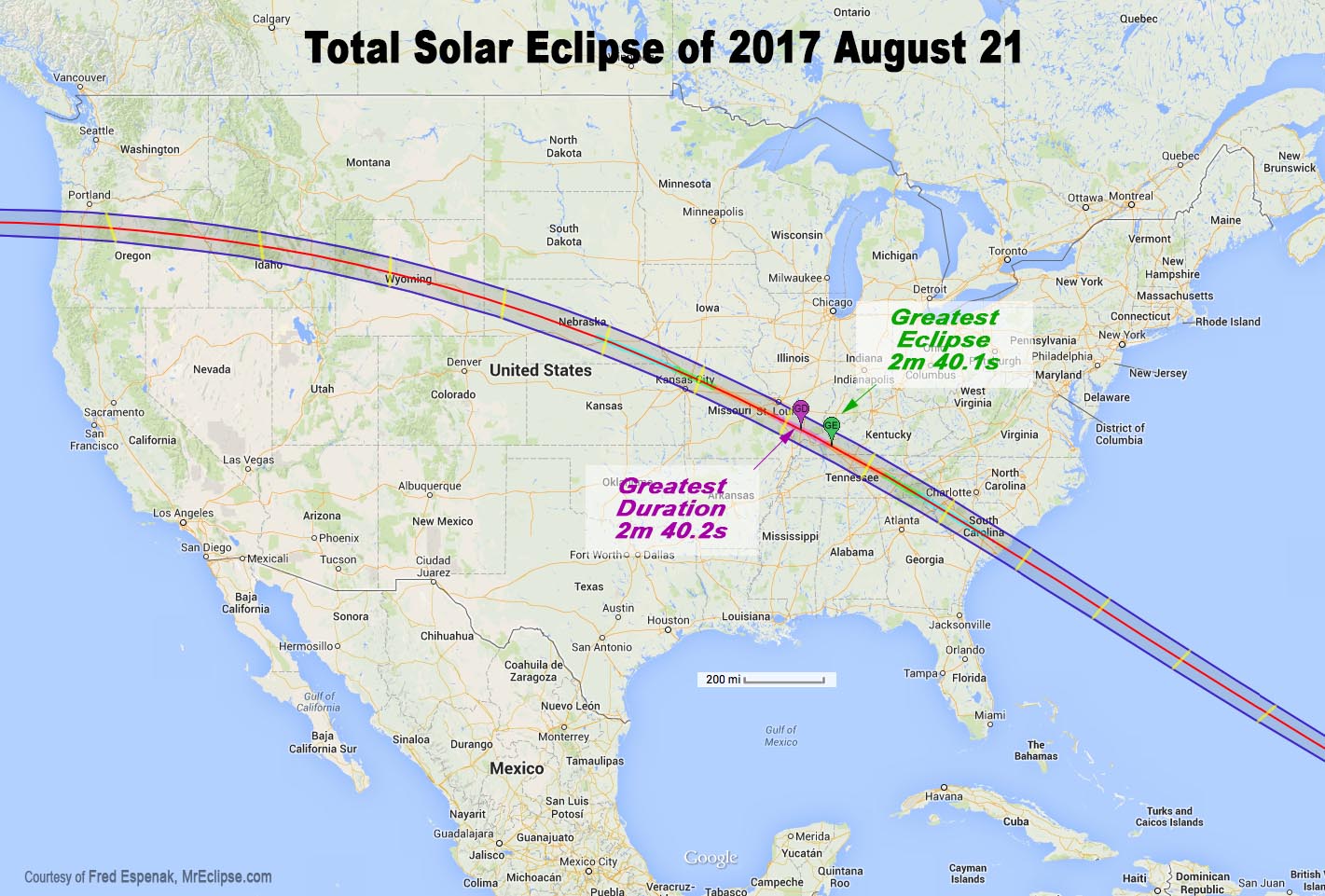
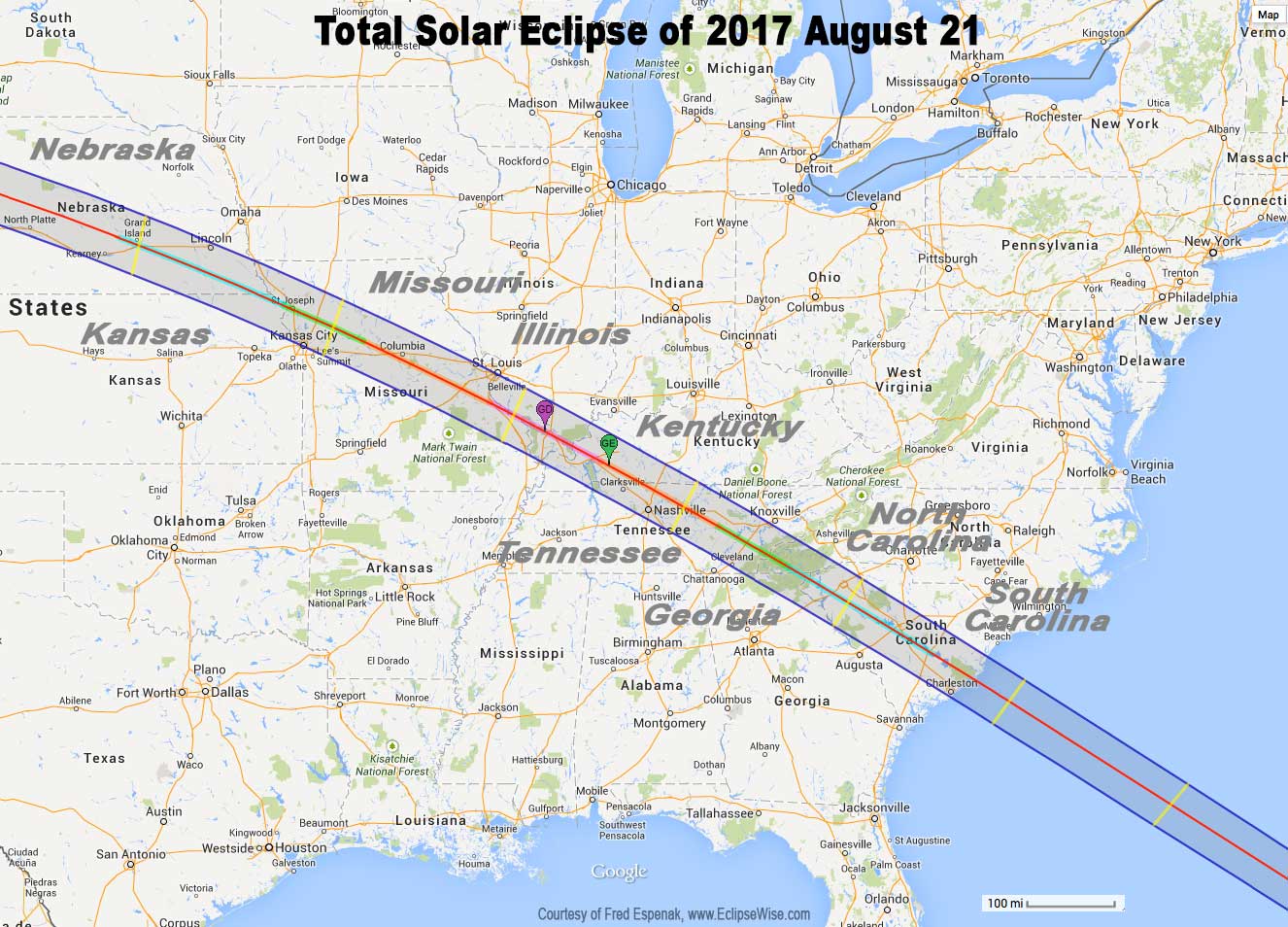
The August 21, 2017, eclipse was a "coast-to-coast" event in the United States. The path of totality—the narrow track where the Moon completely obscures the Sun—stretched from Oregon to South Carolina. Outside this path, all of North America, along with parts of South America, Africa, and Europe, saw at least a partial solar eclipse.
Precise Timing of the Path of Totality
The shadow of the Moon first touched the surface of the Earth in the Pacific Ocean and moved eastward. The total eclipse first reached the Oregon coast at approximately 10:15 AM PDT. The shadow then raced across the country at speeds exceeding 1,400 miles per hour, eventually leaving the South Carolina coast at approximately 2:48 PM EDT.
The maximum duration of totality—the period of total darkness—was recorded near Carbondale, Illinois, lasting 2 minutes and 40.2 seconds. For observers in 2026, these metrics are vital for comparing the "Great American Eclipse" to the more recent 2024 eclipse and the upcoming European total eclipse in August 2026.
Visibility Details by Major City (August 21, 2017)
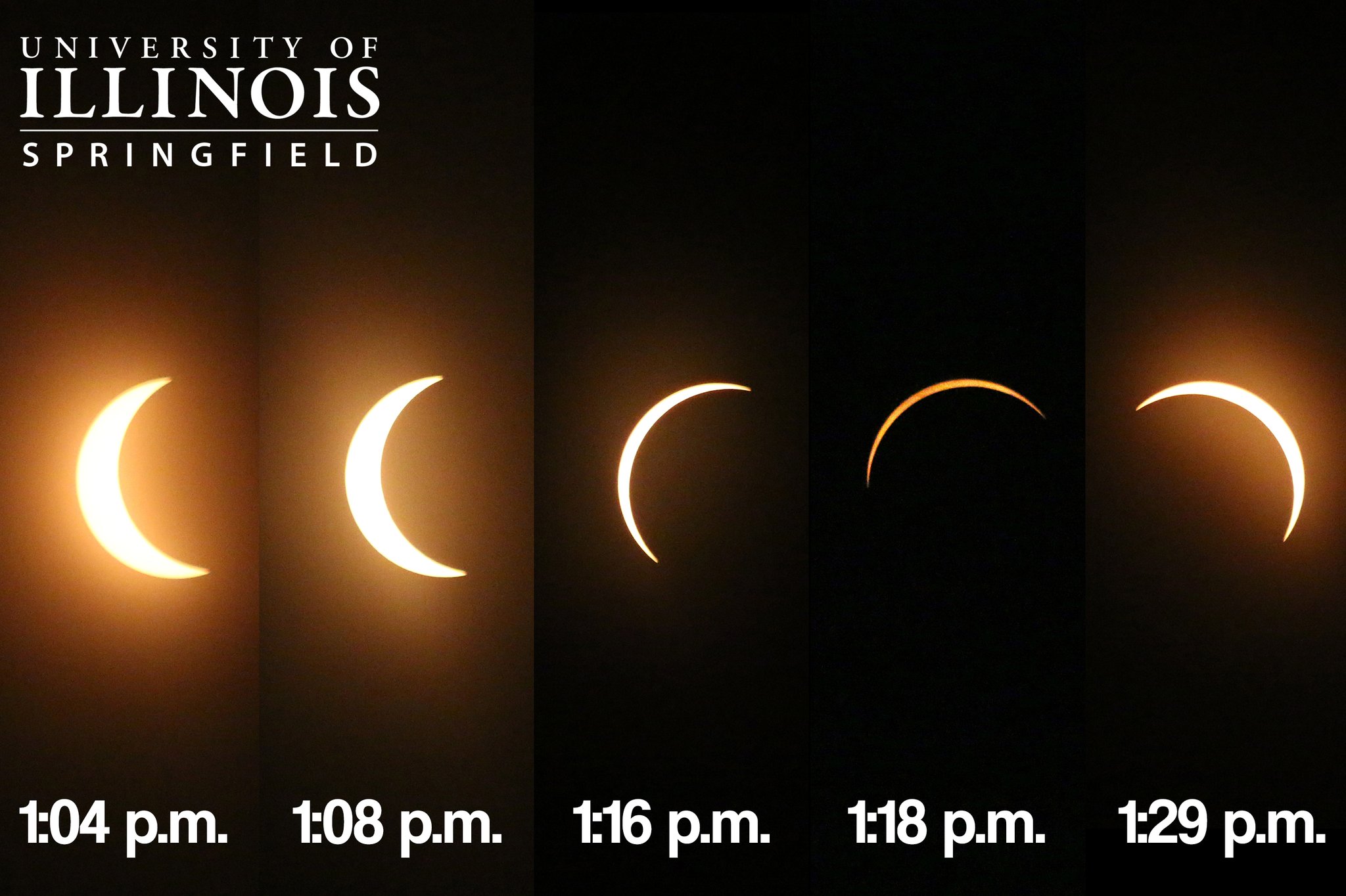
Visibility varied significantly based on geographical location. While millions were within the path of totality, hundreds of millions more saw a partial eclipse where the Sun appeared as a crescent.
| Location | Partial Begins (Local Time) | Totality Begins | Duration of Totality | Magnitude |
|---|---|---|---|---|
| Madras, OR | 9:06 AM PDT | 10:19 AM PDT | 2m 02s | 1.00 |
| Casper, WY | 10:22 AM MDT | 11:42 AM MDT | 2m 26s | 1.00 |
| St. Joseph, MO | 11:40 AM CDT | 1:06 PM CDT | 2m 38s | 1.00 |
| Nashville, TN | 11:58 AM CDT | 1:27 PM CDT | 1m 55s | 1.00 |
| Columbia, SC | 1:13 PM EDT | 2:41 PM EDT | 2m 30s | 1.00 |
| New York, NY | 1:23 PM EDT | N/A (Partial) | N/A | 0.71 |
| Los Angeles, CA | 9:05 AM PDT | N/A (Partial) | N/A | 0.62 |
| Chicago, IL | 11:54 AM CDT | N/A (Partial) | N/A | 0.87 |
The Mechanics of the August 21 Eclipse
Solar eclipses occur when the Moon passes directly between the Earth and the Sun, casting a shadow on the Earth's surface. The August 21, 2017 event was a Total Solar Eclipse because the Moon's apparent diameter was larger than the Sun's, completely blocking all direct sunlight and turning day into darkness for those in the path of totality.
The Umbra and Penumbra
During the August 21 event, two types of shadows were cast:
- The Umbra: The innermost, darkest part of the shadow. Those standing within the umbra experienced a total eclipse. In 2017, the umbra was approximately 70 miles wide.
- The Penumbra: The outer part of the shadow. Those in the penumbra saw a partial eclipse. The further an observer was from the center of the path, the less of the Sun was obscured.
Astronomical Geometry
The August 21, 2017 eclipse occurred when the Moon was relatively close to perigee (its closest point to Earth), allowing its disk to cover the Sun fully. If the Moon had been further away (near apogee), it would have resulted in an annular eclipse, like the one seen on June 10, 2021.
Visibility Factors: Weather and Atmosphere
Visibility is never guaranteed by astronomy alone; local weather conditions play a decisive role. On August 21, 2017, the weather across the United States was largely favorable, particularly in the western and midwestern states.
- Oregon and Wyoming: These regions experienced nearly perfectly clear skies, providing some of the best visibility for the entire event.
- The Southeast (South Carolina): Observers in the Southeast faced higher humidity and the potential for afternoon cloud buildup, though many still successfully viewed totality through gaps in the clouds.
- Atmospheric Effects: During totality, observers noted a significant drop in temperature—often between 5 and 15 degrees Fahrenheit. The sky took on a deep twilight hue, and stars like Regulus and planets like Venus and Mars became visible to the naked eye.
Scientific Impact of the August 21 Total Eclipse
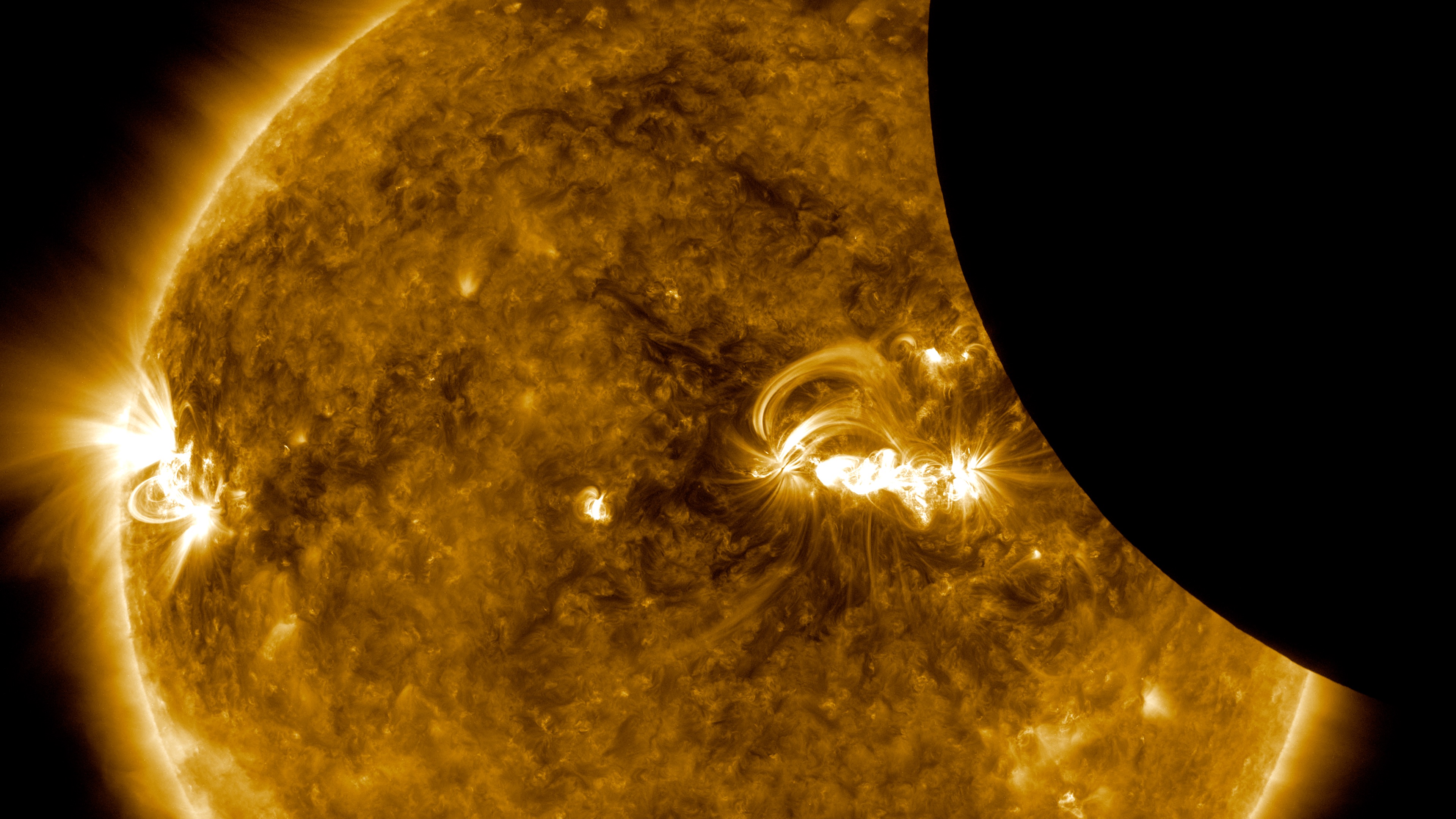
The 2017 eclipse was not just a public spectacle; it was one of the most studied astronomical events in history. Scientists used the visibility of the Sun’s corona—the outer atmosphere usually hidden by the Sun’s glare—to conduct critical research.
Studying the Solar Corona
The corona is significantly hotter than the Sun’s surface, a phenomenon that remains one of the great mysteries of solar physics. Because the August 21 eclipse crossed a massive landmass with a developed infrastructure, NASA and various universities were able to deploy high-altitude balloons, aircraft, and ground-based telescopes to capture continuous data for over 90 minutes as the shadow moved across the country.
Ionospheric Changes
Researchers also studied how the sudden loss of solar radiation affected the Earth’s ionosphere. This layer of the atmosphere is crucial for radio communication and GPS signals. Data from the 2017 eclipse showed "bow waves" in the ionosphere, similar to the wake created by a boat in water, caused by the Moon's shadow racing through the atmosphere.
Safety and Observation Methods
Looking back from the perspective of 2026, the safety standards established during the August 21, 2017 event remain the gold standard for eclipse observation. The primary rule of any solar eclipse is that it is never safe to look directly at the Sun without specialized eye protection, except during the brief period of totality.
Proper Solar Filters
Standard sunglasses, even those with very dark tints, are insufficient for looking at the Sun. "Eclipse glasses" must meet the ISO 12312-2 international safety standard. These filters are thousands of times darker than ordinary sunglasses and block nearly all visible light as well as harmful ultraviolet and infrared radiation.
Indirect Viewing: Pinhole Projectors
For those without glasses, the August 21 eclipse popularized the use of pinhole projectors. By poking a small hole in a piece of cardstock and allowing the Sun's light to pass through it onto a second surface, observers could safely watch the progress of the eclipse. In 2017, many people even used common household items like colanders or the shadows of tree leaves to create "natural" pinhole projectors, revealing hundreds of tiny crescent Sun shapes on the ground.
Lessons for the 2026 Solar Eclipse
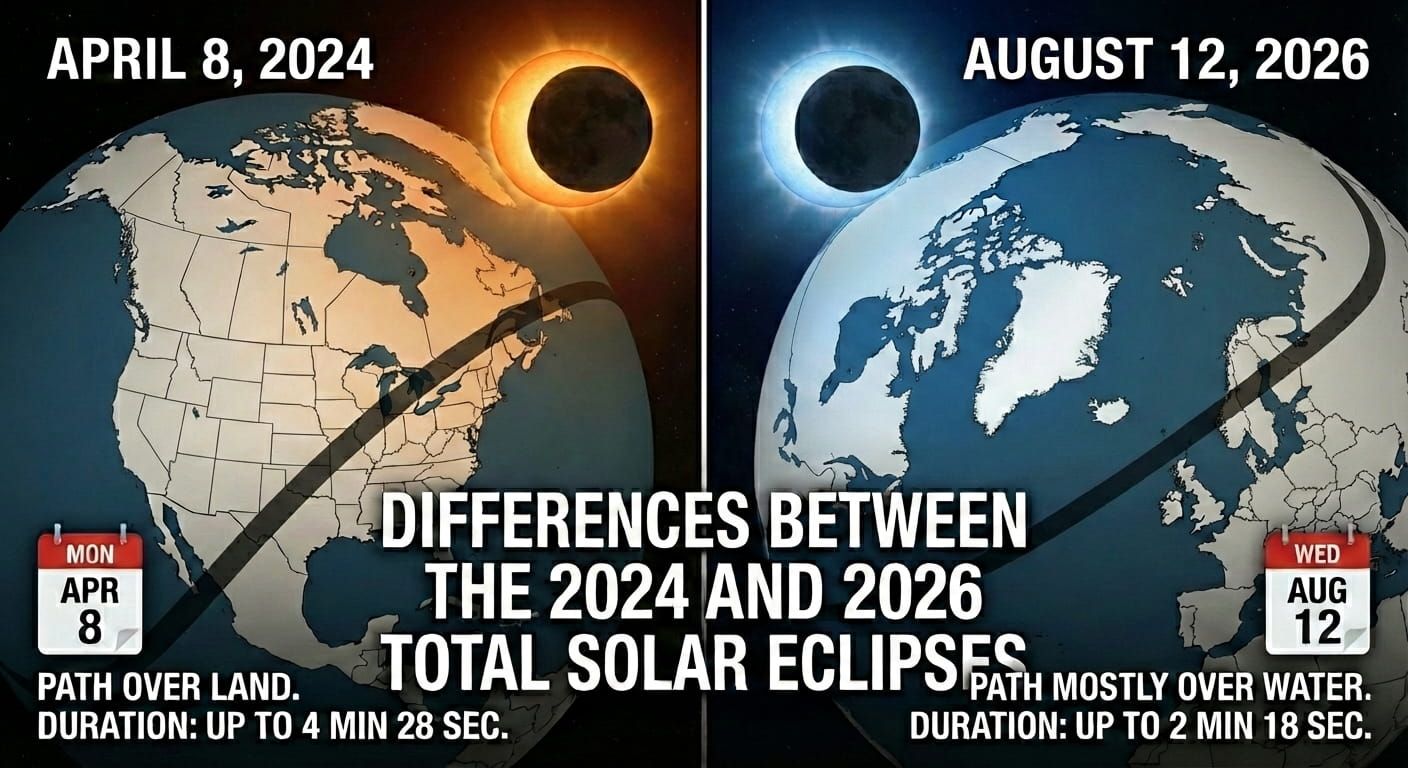
As we inhabit the year 2026, the August 21, 2017 eclipse serves as a vital historical reference for the August 12, 2026 Total Solar Eclipse. This upcoming event will be visible in Greenland, Iceland, and Spain.
Comparisons in Visibility
Unlike the 2017 eclipse, which moved west to east across a continent, the 2026 eclipse will pass over the Atlantic and terminate in the Mediterranean. Those who remember the timing of the August 21 event will note that the 2026 eclipse will occur much later in the day for European observers, leading to a "sunset eclipse" in parts of Spain—a visually stunning but technically different observation experience compared to the midday peak seen in the United States in 2017.
Equipment Longevity
A common question in 2026 is whether eclipse glasses from 2017 or the 2021/2024 events are still safe to use. Generally, if the filters are not scratched, punctured, or peeling, and they meet the ISO 12312-2 standard, they may still be effective. However, many manufacturers recommend replacing glasses after three to five years due to potential degradation of the frame or filter adhesive. For the 2026 event, purchasing new, certified equipment is the safest course of action.
Frequently Asked Questions
Was there a solar eclipse on August 21, 2021?
No, there was no solar eclipse on August 21, 2021. The two solar eclipses in 2021 occurred on June 10 (annular) and December 4 (total). The confusion often arises from the famous "Great American Eclipse," which took place on August 21, 2017.
Where was the August 21, 2017 eclipse most visible?
The eclipse was most visible along a 70-mile-wide path of totality that crossed 14 U.S. states: Oregon, Idaho, Wyoming, Nebraska, Kansas, Missouri, Illinois, Kentucky, Tennessee, Georgia, North Carolina, and South Carolina. Outside this path, a partial eclipse was visible throughout all of North America.
How long did the August 21 eclipse last?
The duration of the total eclipse varied by location. The longest duration of totality was 2 minutes and 40.2 seconds near Carbondale, Illinois. For those seeing a partial eclipse, the entire process from the first "bite" taken out of the Sun to the final exit of the Moon took approximately two and a half to three hours.
What is the difference between the 2017 and 2021 eclipses?
The August 21, 2017 eclipse was a total solar eclipse, where the Moon completely covers the Sun. The June 10, 2021 eclipse was an annular solar eclipse, where the Moon is too far from Earth to cover the Sun completely, leaving a thin ring of light (the "Ring of Fire"). The December 4, 2021 eclipse was total but visible only in Antarctica.
When is the next solar eclipse after 2021?
Following the 2021 events, major solar eclipses occurred in 2023 (annular) and 2024 (total). In 2026, a total solar eclipse will occur on August 12, 2026, visible in the Arctic, Greenland, Iceland, and Spain.
Recommendation for Future Observers
If you are researching the "August 21 solar eclipse" in preparation for future events, the best next action is to verify the specific year of the eclipse you wish to track. For historical data, the August 21, 2017 eclipse remains the definitive record for that specific date in the 21st century.
For current 2026 planning, prioritize the August 12, 2026 event. Ensure you have ISO-certified solar filters and have checked the local timing for your specific longitude and latitude, as the shadow's path and timing change significantly with even small shifts in location. You can find precise local times for upcoming events through NASA’s Eclipse Explorer or TimeAndDate.