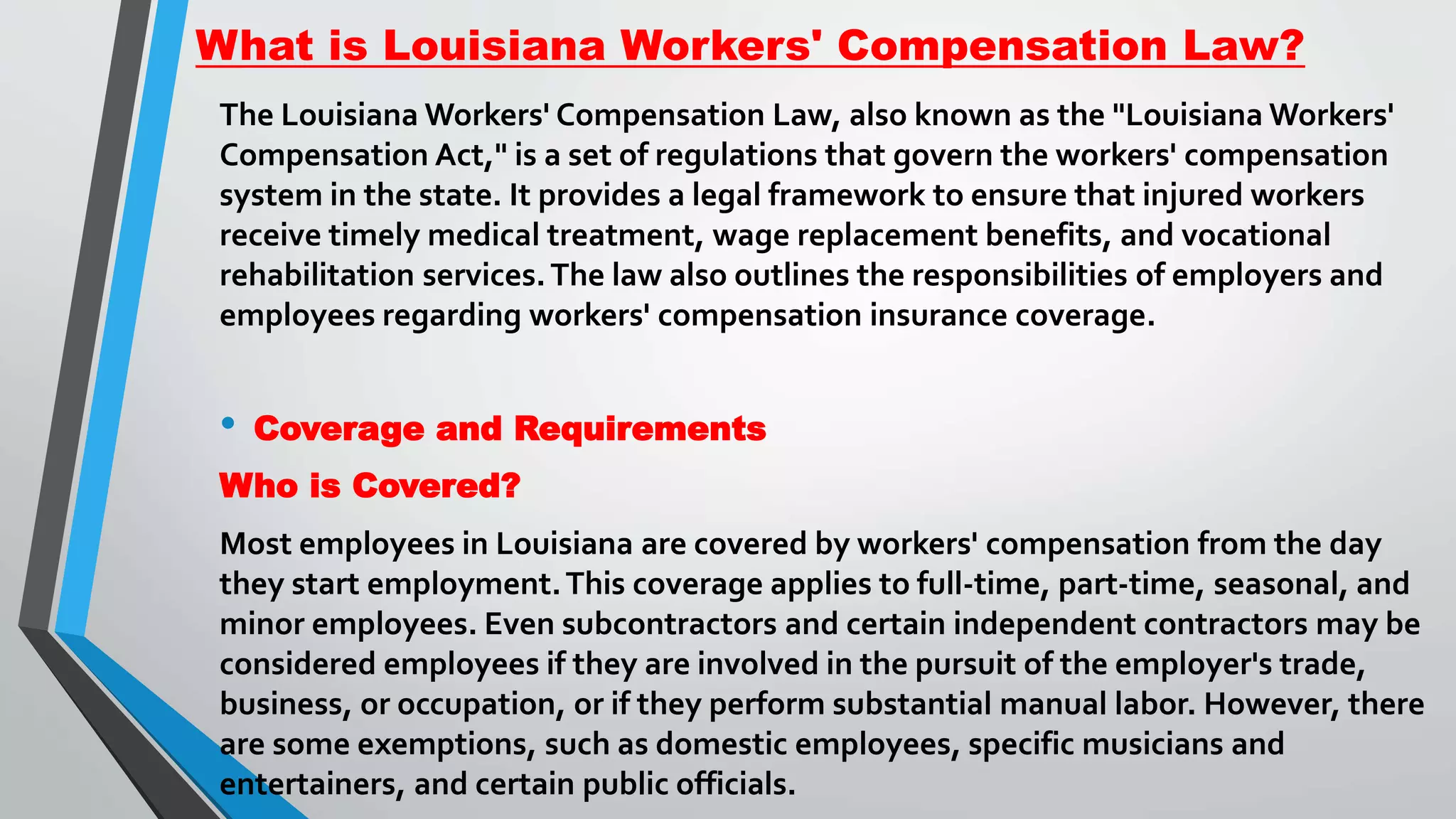
Whether you are covered by workers’ compensation depends primarily on your legal employment status and whether your injury or illness occurred within the "course and scope" of your job. Generally, if you are a W-2 employee, you are likely covered from your first day of work, as most states require employers to carry insurance even if they have only one employee. However, independent contractors, certain agricultural workers, and specific domestic employees are frequently excluded from mandatory coverage.
Workers’ compensation is a state-mandated insurance system designed to provide medical benefits and wage replacement to employees injured on the job. In exchange for these guaranteed benefits, employees generally give up their right to sue their employer for negligence—a concept known as the "exclusive remedy" or the "Grand Bargain." As of 2026, the landscape of workers’ compensation continues to evolve, particularly concerning remote work, mental health claims, and the classification of gig economy workers. To determine if you are protected, you must look at the specific laws of your jurisdiction and the nature of your working relationship.
The Foundation of Coverage: The Employer-Employee Relationship
The most critical factor in determining coverage is the legal nature of your relationship with the person or entity paying you. Workers’ compensation is specifically designed for employees. Under the law, an employee is typically someone whose work is directed and controlled by an employer. This control includes when you work, where you work, and the specific methods you use to complete your tasks.
Employees vs. Independent Contractors
The distinction between an employee and an independent contractor is the most common point of contention in coverage disputes. As of 2026, many states have adopted more stringent tests, such as the "ABC Test," to determine classification.
- Employees (Covered): You receive a W-2, the company withholds taxes, and the employer provides the tools and location for work. You are almost certainly covered by the employer's workers' compensation policy.
- Independent Contractors (Usually Not Covered): You receive a 1099, you set your own hours, use your own equipment, and work for multiple clients. In most states, companies are not required to provide workers’ compensation for true independent contractors.
However, many workers are "misclassified." If your employer calls you a contractor but treats you like an employee (controlling your schedule and methods), a state workers' compensation board may rule that you are a "de facto" employee entitled to benefits despite your 1099 status.
Statutory Employees
In some industries, particularly construction, you might be considered a "statutory employee." This occurs when a subcontractor fails to carry workers’ compensation insurance. In many jurisdictions, the general contractor becomes the "statutory employer" and is legally responsible for providing coverage to the subcontractor’s injured workers.
The "Course and Scope" of Employment
Even if you are a confirmed employee, you are only covered if the injury happened while you were performing work-related duties. This is legally defined as arising "out of and in the course of employment" (AOE/COE).
What Is Typically Covered?
Coverage is not limited to accidents like falling off a ladder. It also includes:
- Repetitive Stress Injuries: Conditions like carpal tunnel syndrome or tendonitis that develop over years of repetitive motion.
- Occupational Diseases: Illnesses caused by exposure to toxins at work, such as mesothelioma from asbestos or respiratory issues from chemical fumes.
- Work-Related Travel: If you are traveling between job sites or running an errand for your boss, you are generally covered.
What Is Usually Excluded?
- The "Going and Coming" Rule: Most states do not cover injuries that occur during your normal commute to and from a fixed place of business.
- Intoxication: If the injury was caused by the employee being under the influence of alcohol or non-prescribed drugs, coverage is typically denied.
- Self-Inflicted Injuries: Injuries sustained through horseplay or intentional self-harm are not covered.
- Off-Duty Activities: Injuries sustained at a voluntary company softball game or an after-hours happy hour are often excluded unless attendance was effectively mandatory.
State-Specific Mandates and Exemptions
Workers’ compensation is regulated at the state level, not the federal level (with exceptions for federal employees and longshoremen). This means the rules for "who is covered" vary significantly by geography.
Mandatory Coverage Thresholds
As of 2026, the majority of U.S. states require an employer to purchase insurance as soon as they hire their first employee. However, a few states maintain higher thresholds:
- Small Business Exemptions: Some states (like Alabama or Mississippi) only require coverage once an employer has three to five employees.
- The Texas Exception: Texas remains a "non-subscriber" state, meaning private employers can choose not to carry workers’ compensation insurance. However, if they opt-out, they lose their immunity and can be sued in civil court for work-related injuries.
Common Worker Exemptions
Even in states with mandatory coverage, certain classes of workers are frequently exempt from the requirement:
- Business Owners and Partners: Sole proprietors, partners, and LLC members are often excluded by default but can choose to "elect in" to coverage.
- Domestic Workers: Nannies, housekeepers, and gardeners are often excluded unless they work more than a specific number of hours per week for a single household.
- Agricultural and Farm Workers: Many states have exemptions for small family farms or seasonal agricultural labor.
- Real Estate Agents: In many jurisdictions, licensed real estate agents are legally classified as independent contractors and are not covered.
Remote and Hybrid Work Coverage in 2026
With the stabilization of remote and hybrid work models in 2026, the boundaries of the "workplace" have expanded. If you are a remote employee, you are still covered by workers’ compensation for injuries that occur in your home office, provided the injury occurred during work hours and while performing work tasks.
The challenge for remote workers is the "Personal Comfort Doctrine." This legal principle generally covers employees during brief deviations for personal comfort, such as getting a cup of water or using the restroom. However, if you trip over your dog while walking to the kitchen, the insurance carrier may argue the injury is not work-related. Documenting your work hours and maintaining a designated workspace are essential for remote workers to ensure their coverage is enforceable.
Summary of Coverage Eligibility by Category
The following table outlines the general coverage status for various types of workers under standard 2026 regulations. Note that specific state laws may override these generalities.
| Worker Category | General Coverage Status | Key Requirement for Coverage |
|---|---|---|
| Full-Time W-2 Employee | Covered | Injury must occur during work duties. |
| Part-Time/Seasonal Employee | Covered | Subject to the same rules as full-time staff. |
| Independent Contractor | Not Covered | Must provide their own disability or workers' comp policy. |
| Temporary Agency Worker | Covered | Usually covered by the staffing agency's policy. |
| Sole Proprietor | Optional | Must specifically purchase a policy for themselves. |
| Federal Employee | Covered | Covered under the Federal Employees' Compensation Act (FECA). |
| Undocumented Worker | Covered | Covered in most states (e.g., CA, NY) regardless of legal status. |
| Volunteer | Usually Not Covered | Except for specific groups like volunteer firefighters. |
How to Verify Your Coverage
If you are unsure whether your employer has the required insurance, you can take several proactive steps. In 2026, most of this information is accessible through digital portals.
- Check the Workplace Poster: Employers are legally required to post a workers' compensation notice in a conspicuous place (like a breakroom) that includes the name of the insurance carrier and contact information.
- Contact the State Workers' Compensation Board: Every state has a regulatory agency (e.g., the New York Workers' Compensation Board or the Industrial Commission of Ohio). Most have an "Employer Coverage Search" tool on their website where you can enter your company's name to see their policy status.
- Request a Certificate of Insurance (COI): If you are a contractor or working for a small business, you can ask for a COI to prove that coverage is active.
- Review Your Employment Contract: While a contract cannot legally waive your right to workers’ comp (in most states), it will clarify whether the company views you as an employee or a contractor.
What to Do If Coverage Is Denied
If you are injured and your employer or their insurance carrier claims you are not covered, do not accept the decision as final. Insurance companies often deny initial claims based on "employment status" to protect their bottom line.
- File a Formal Claim: Even if your boss says there is no insurance, file a claim with the state board. This forces a legal determination of your status.
- Gather Evidence of Control: If the denial is based on you being an independent contractor, gather emails, schedules, and pay stubs that prove the employer controlled your work.
- Uninsured Employer Funds: If your employer was legally required to have insurance but failed to buy it, many states have a "Uninsured Employers Fund" (UEF) that pays benefits to injured workers and then pursues the employer for reimbursement and penalties.
Frequently Asked Questions
1. Does fault matter for workers' compensation coverage?
No. Workers’ compensation is a "no-fault" system. Even if the injury was your fault (e.g., you were clumsy and tripped), you are still covered. The only exceptions are injuries caused by intoxication, willful intent to harm oneself, or participation in unapproved horseplay.
2. Can my employer fire me for checking if I’m covered or filing a claim?
No. It is illegal in almost every jurisdiction for an employer to retaliate against an employee for filing a workers' compensation claim or inquiring about their rights. If you are terminated or demoted for this reason, you may have grounds for a separate wrongful termination or retaliation lawsuit.
3. I am an undocumented worker; am I still covered?
Yes, in the vast majority of U.S. states, your immigration status does not affect your eligibility for workers' compensation benefits. States like California, Texas, and Pennsylvania have clear precedents stating that all workers, regardless of legal status, are entitled to medical care and lost wages if injured on the job.
4. What if I have a pre-existing condition?
You are still covered. Workers’ compensation covers "aggravation" of pre-existing conditions. For example, if you had a weak back but a work-related lift caused a disc to herniate, the insurance must cover the treatment required to return you to your "baseline" state before the workplace accident.
5. Are mental health issues covered in 2026?
Coverage for "mental-mental" claims (psychological injuries without a physical injury) has expanded significantly by 2026. Many states now cover PTSD for first responders and acute stress disorders for other employees, though the burden of proof is higher than it is for physical injuries. You generally must prove the stress was "extraordinary" compared to the normal stresses of the job.
6. Does workers' comp cover me if I'm working out of state?
Usually, yes. If you are based in one state but are injured while on a temporary assignment in another, your "home" state's coverage typically follows you. This is known as extraterritorial coverage.
Final Recommendation
Determining your coverage status should not be left until after an accident occurs. If you are a W-2 employee, ensure you know where your employer’s insurance information is posted. If you are an independent contractor or work in an exempt industry (like small-scale agriculture), consider purchasing a private disability insurance policy to bridge the gap. If you have been injured and are facing a coverage denial, consult with a qualified workers' compensation attorney immediately to protect your rights and secure the benefits you are owed.
For more information, visit the U.S. Department of Labor's Office of Workers' Compensation Programs or your specific state’s labor department website.