The Arizona Workers’ Compensation Claims Association (AWCCA) is the state’s premier professional organization dedicated to the education, ethical development, and networking of individuals involved in the administration of workers' compensation claims. Serving adjusters, attorneys, medical providers, and vendors, it ensures that Arizona’s "no-fault" insurance system remains efficient, legally compliant, and focused on returning injured workers to productivity.
As we navigate the complexities of the Arizona labor market in 2026, the role of the AWCCA has become increasingly vital. The organization serves as the primary bridge between the regulatory requirements of the Industrial Commission of Arizona (ICA) and the day-to-day operations of insurance carriers and self-insured employers. By fostering a community of practice, the AWCCA helps its members stay ahead of legislative shifts, medical advancements, and administrative changes that dictate how workplace injuries are managed.
The Mission and Organizational Structure of the AWCCA
The AWCCA operates as a non-profit professional association with a mission centered on three pillars: education, integrity, and communication. In 2026, these pillars are supported by a volunteer board of directors consisting of seasoned industry veterans who represent the various sectors of the workers' compensation ecosystem.
Unlike state agencies that focus on regulation and enforcement, the AWCCA is a member-driven body. Its primary goal is to elevate the standard of claims handling throughout the state. This is achieved by providing members with the tools needed to interpret the Arizona Revised Statutes (ARS), specifically Title 23, Chapter 6, which governs workers' compensation.
The organization’s structure includes various committees focused on specific areas such as education, membership, and the annual seminar. These committees ensure that the association remains responsive to the needs of its diverse membership base, which includes everyone from entry-level claims examiners to senior defense counsel and rehabilitation specialists.
The Intersection of AWCCA and the Industrial Commission of Arizona (ICA)
To understand the value of the AWCCA, one must understand its relationship with the Industrial Commission of Arizona (ICA). The ICA is the state agency responsible for the overall regulation of workers' compensation. While the ICA sets the rules and adjudicates disputes, the AWCCA provides the professional training that allows claims professionals to follow those rules accurately.
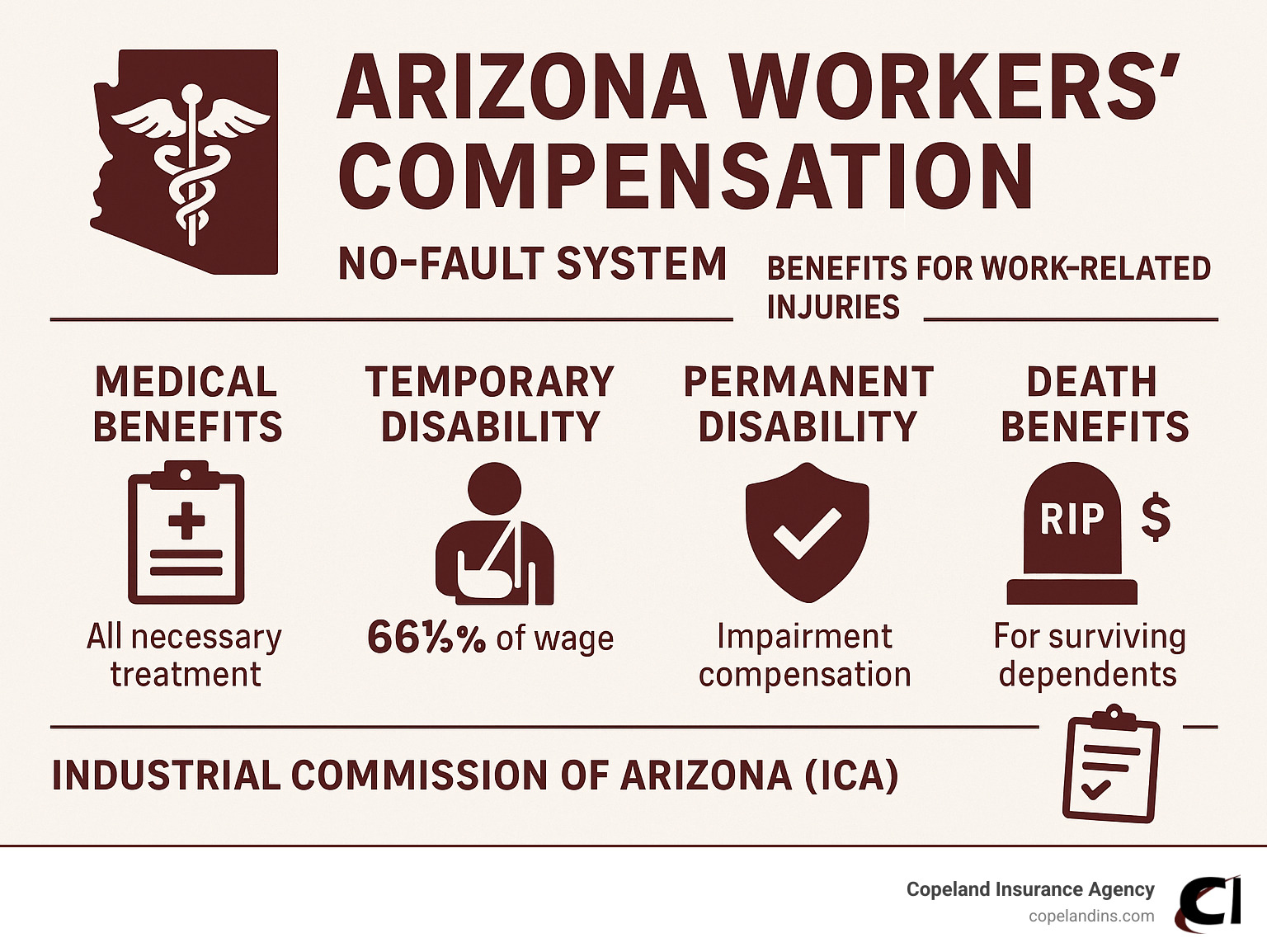
In 2026, Arizona continues to operate under a "no-fault" system. This means that an injured worker is entitled to benefits regardless of who was at fault for the accident, provided the injury occurred "out of and in the course of" employment. However, the administrative burden of verifying these claims falls on the adjusters. The AWCCA provides a forum where the ICA’s administrative law judges and directors can interact with the claims community to clarify expectations regarding:
- Timely Filing Requirements: Understanding the strict deadlines for filing notices of claim and notices of supportive care.
- Medical Documentation: Navigating the requirements for independent medical examinations (IMEs) and the use of the Official Disability Guidelines (ODG).
- Benefit Calculations: Ensuring that Average Monthly Wage (AMW) calculations—a frequent point of contention—are performed correctly according to the latest 2026 statutory caps.
By facilitating this dialogue, the AWCCA reduces the volume of litigation within the ICA system, as better-educated adjusters make fewer administrative errors that lead to disputes.
Membership Categories and Professional Benefits
The AWCCA offers several tiers of membership designed to accommodate the varied roles within the industry. Participation in the association is often seen as a prerequisite for career advancement in the Arizona insurance market.
Active Membership
This category is reserved for those directly involved in the adjudication and administration of claims. This includes claims adjusters working for insurance carriers, third-party administrators (TPAs), and self-insured employers. In 2026, active members benefit from deeply discounted rates on continuing education units (CEUs), which are essential for maintaining professional licenses in Arizona.
Associate Membership
Associate members include the "service" side of the industry. This includes workers' compensation defense attorneys, medical case managers, vocational rehabilitation experts, and investigative firms. For these professionals, the AWCCA provides unparalleled networking opportunities, allowing them to showcase their expertise to the decision-makers who hire their services.
Honorary and Lifetime Membership
The AWCCA also recognizes individuals who have made significant contributions to the Arizona workers' compensation field over several decades. These members often serve as mentors to the next generation of claims professionals, preserving the institutional knowledge of the Arizona legal landscape.
| Membership Type | Target Audience | Primary Benefit | 2026 Annual Dues (Estimated) |
|---|---|---|---|
| Active | Adjusters, TPA Staff, Self-Insured Admins | Free/Discounted CEUs, Legal Updates | $75 - $100 |
| Associate | Attorneys, Medical Vendors, Investigators | Networking, Directory Listing, Seminar Access | $150 - $200 |
| Corporate | Insurance Firms, Law Groups | Bulk Membership, Sponsorship Opportunities | $500 - $1,500 |
| Student | Aspiring Risk Management Students | Mentorship, Job Board Access | $25 |
Educational Programming and the Annual Seminar
The hallmark of the AWCCA is its commitment to ongoing education. The Arizona workers' compensation system is not static; it evolves through both legislative action and judicial interpretation by the Arizona Court of Appeals and the State Supreme Court.
The Annual AWCCA Conference
The 2026 Annual Conference serves as the state’s largest gathering of workers' compensation professionals. This multi-day event typically features:
- Legal Updates: A comprehensive review of the year’s most significant case law and how it changes the "reasonable and necessary" standard for medical treatment.
- Medical Breakthroughs: Presentations from leading orthopedic surgeons and pain management specialists on new surgical techniques or pharmacological trends affecting claim costs.
- Soft Skills Training: Workshops on communication strategies for dealing with unrepresented workers or managing the "psychosocial" factors that often delay a return to work.
Monthly Seminars and Webinars
In addition to the annual conference, the AWCCA hosts regular luncheon seminars (often in Phoenix or Tucson) and digital webinars. These sessions provide a "deep dive" into specific technical topics, such as the nuances of permanent partial disability (PPD) ratings or the complexities of the "Coming and Going" rule in an era where remote work remains prevalent.
Legislative Advocacy and Monitoring in 2026
While the AWCCA does not function as a lobbying firm, it plays a critical role in legislative monitoring. When bills are introduced in the Arizona State Legislature that could impact the workers' compensation system, the AWCCA informs its members of the potential practical implications.
In 2026, the association has been particularly focused on several key legislative areas:
- Presumptive Coverage Extension: Changes to how certain cancers or mental health conditions (like PTSD) are treated as compensable for first responders and healthcare workers.
- Telehealth Regulations: Clarifying the permanent role of virtual medical visits in the "Notice of Supportive Care" process.
- Artificial Intelligence (AI) in Claims: Guidelines for the ethical use of AI in predicting claim outcomes and automating routine administrative tasks without violating the duty of good faith.
By staying informed on these issues, AWCCA members can advise their respective organizations on how to adjust their reserves and claims handling protocols before new laws take effect.
Professional Ethics and Standards of Practice
The AWCCA places a heavy emphasis on the ethical handling of claims. In an industry where there is a natural tension between the employer’s cost-containment goals and the injured worker’s need for benefits, the AWCCA promotes a standard of "fair and prompt" administration.
Members are encouraged to follow a code of conduct that prioritizes:
- Transparency: Clearly communicating the reasons for claim denials or benefit changes to the worker.
- Responsiveness: Adhering to the statutory timeframes for responding to requests for treatment.
- Evidence-Based Decisions: Relying on peer-reviewed medical data rather than arbitrary cost-cutting measures.
This focus on ethics helps maintain the integrity of the Arizona system, ensuring it remains a viable alternative to the civil tort system. When claims are handled ethically, it reduces the friction that leads to costly and time-consuming litigation.
How to Join the AWCCA in 2026
For professionals looking to join the association in 2026, the process is streamlined through their digital portal. Prospective members must typically provide proof of their involvement in the industry and pay the annual dues associated with their membership tier.
- Application: Submit an online application via the official AWCCA website.
- Verification: The membership committee reviews the application to ensure the applicant meets the criteria for Active or Associate status.
- Payment: Dues are processed annually, typically on a calendar-year basis.
- Onboarding: New members gain immediate access to the membership directory, the archive of past educational materials, and registration links for upcoming events.
For out-of-state adjusters who handle Arizona claims, joining the AWCCA is particularly beneficial. Arizona law is unique, and the association provides the local context that national training programs often miss.
Frequently Asked Questions
Does the AWCCA provide legal advice to injured workers?
No. The AWCCA is a professional association for industry workers, not a legal aid society. If you are an injured worker seeking help with a claim, you should contact an attorney specializing in claimant-side workers' compensation or reach out to the Industrial Commission of Arizona for assistance with the filing process.
Are the CEUs provided by AWCCA valid for other states?
While the primary focus is on Arizona-specific licensing requirements, many AWCCA seminars are accredited for general insurance CEUs or CLEs (Continuing Legal Education) that may be reciprocal with other jurisdictions. However, it is the responsibility of the member to verify this with their respective state board.
Can medical providers join the AWCCA?
Yes. Medical providers, particularly those who perform IMEs or act as "treating physicians" within the workers' comp system, are encouraged to join as Associate members. Understanding the administrative side of the claim helps providers submit more effective documentation, which ensures faster authorization for treatments.
How does the AWCCA handle networking in 2026?
The association utilizes a hybrid approach. While physical mixers and the annual conference in Phoenix remain the highlights, the AWCCA also maintains a robust online member forum and LinkedIn group where professionals can discuss industry trends, ask for vendor recommendations, and share news in real-time.
What is the difference between AWCCA and the NCCI?
The National Council on Compensation Insurance (NCCI) focuses on data collection and rate-making for workers' compensation insurance. The AWCCA focuses on the people and the processes of managing individual claims. While NCCI deals with the macro-economics of the industry, the AWCCA deals with the micro-level execution of Arizona law.
Practical Recommendation for Professionals
If you are a claims professional, attorney, or service provider operating in the Arizona workers' compensation space in 2026, membership in the AWCCA is not merely an option—it is a career-defining necessity. The complexity of modern claims, ranging from "long-haul" occupational diseases to the integration of AI-driven risk modeling, requires a level of continuous education that cannot be obtained through standard corporate training alone.
By joining the AWCCA, you gain access to the collective wisdom of Arizona's top legal and medical minds. For those new to the field, it provides a mentorship network that can shave years off the learning curve. For seasoned professionals, it offers a platform to influence the direction of the industry and ensure that the Arizona workers' compensation system remains balanced, fair, and sustainable for all stakeholders.