To describe someone or something as anxiety-ridden means they are completely filled with, overwhelmed by, or dominated by intense feelings of anxiety, worry, or apprehension. The phrase combines "anxiety" (distress caused by fear of danger or misfortune) with the suffix "-ridden" (afflicted by, burdened with, or dominated by), signaling a state where anxiety heavily impairs thoughts, bodily sensations, or environments.
What Does "Anxiety-Ridden" Mean? A Linguistic Breakdown
Language shapes how people express emotional states. To fully understand what "anxiety-ridden" means, it helps to examine its grammatical structure, etymology, and proper context.
The Origin and Function of the Suffix "-Ridden"
In English, the suffix -ridden originates from Old English verbs related to being controlled, weighed down, or oppressed. When combined with a noun, it forms an adjective indicating that someone or something is completely dominated or afflicted by that noun.
Common parallels include:
- Bedridden: Confined to bed by sickness or weakness.
- Guilt-ridden: Overcome by pervasive feelings of guilt.
- Grief-ridden: Distressed by deep sorrow or mourning.
- Disease-ridden: Affected widespread by illness.
When applied to emotional states, "-ridden" implies a heavy burden. An anxiety-ridden person is not merely experiencing standard, fleeting nervousness before a speech. Instead, they are burdened by persistent, heavy anxiety that dictates their mood, cognitive function, and daily behavior.
According to dictionary definitions such as those provided by Merriam-Webster, using "-ridden" emphasizes that the subject is harassed, oppressed, or completely dominated by the specified condition.
Hyphenation Rules and Syntax
In standard formal English grammar, hyphenation depends on how the modifier functions within a sentence:
- Compound Adjective Before a Noun (Use Hyphen): When "anxiety-ridden" appears directly before the noun it modifies, it should always be hyphenated.
- Example: "She spent an anxiety-ridden afternoon waiting for the medical test results."
- Predicate Adjective After a Noun (Hyphenation Preferred): When following a linking verb, style guides like the Chicago Manual of Style and APA Style generally recommend keeping the hyphen for compound adjectives ending in "-ridden" to maintain clarity and prevent ambiguity.
- Example: "After hearing the news, he felt completely anxiety-ridden."
Synonyms vs. Subtle Nuances
While several words describe feeling nervous or distressed, "anxiety-ridden" carries specific emotional weight. Comparing it to related adjectives clarifies its exact usage:
- Anxious: A broad term describing feeling worried, nervous, or uneasy. It can range from mild, healthy apprehension to severe distress.
- Anxiety-Ridden: Describes a state where anxiety is pervasive, heavy, and dominating. It suggests an ongoing or severe feeling of being consumed by apprehension.
- Panic-Stricken: Indicates a sudden, acute, and often paralyzing surge of fear or terror (similar to a panic attack), whereas "anxiety-ridden" often refers to a sustained, heavy burden over a period of time.
- Stress-Ridden / Overwhelmed: Focuses on being overburdened by external demands or pressures, whereas "anxiety-ridden" explicitly targets the internal state of dread, anticipation, or panic.
Descriptive Language vs. Clinical Diagnosis
It is essential to distinguish between everyday descriptive vocabulary and formal psychiatric diagnoses. While "anxiety-ridden" accurately describes how a person feels, it is an informal descriptor rather than a clinical diagnosis.
| DISCLAIMER |
|---|
| This article is for informational and educational purposes only and does not constitute medical or psychological advice. If you or someone you know is experiencing severe distress or symptoms of an anxiety disorder, consult a licensed mental health professional or primary healthcare provider. |
How Mental Health Professionals Categorize Anxiety
Mental health clinicians use standardized manuals such as the Diagnostic and Statistical Manual of Mental Disorders, Fifth Edition, Text Revision (DSM-5-TR) published by the American Psychiatric Association to diagnose anxiety conditions.
In clinical evaluation, a patient described in everyday conversation as "anxiety-ridden" might meet the diagnostic criteria for one of several specific conditions:
- Generalized Anxiety Disorder (GAD): Characterized by persistent, excessive, and unmanageable worry about everyday activities, lasting for six months or longer.
- Panic Disorder: Marked by recurrent, unexpected panic attacks and constant dread of experiencing future attacks.
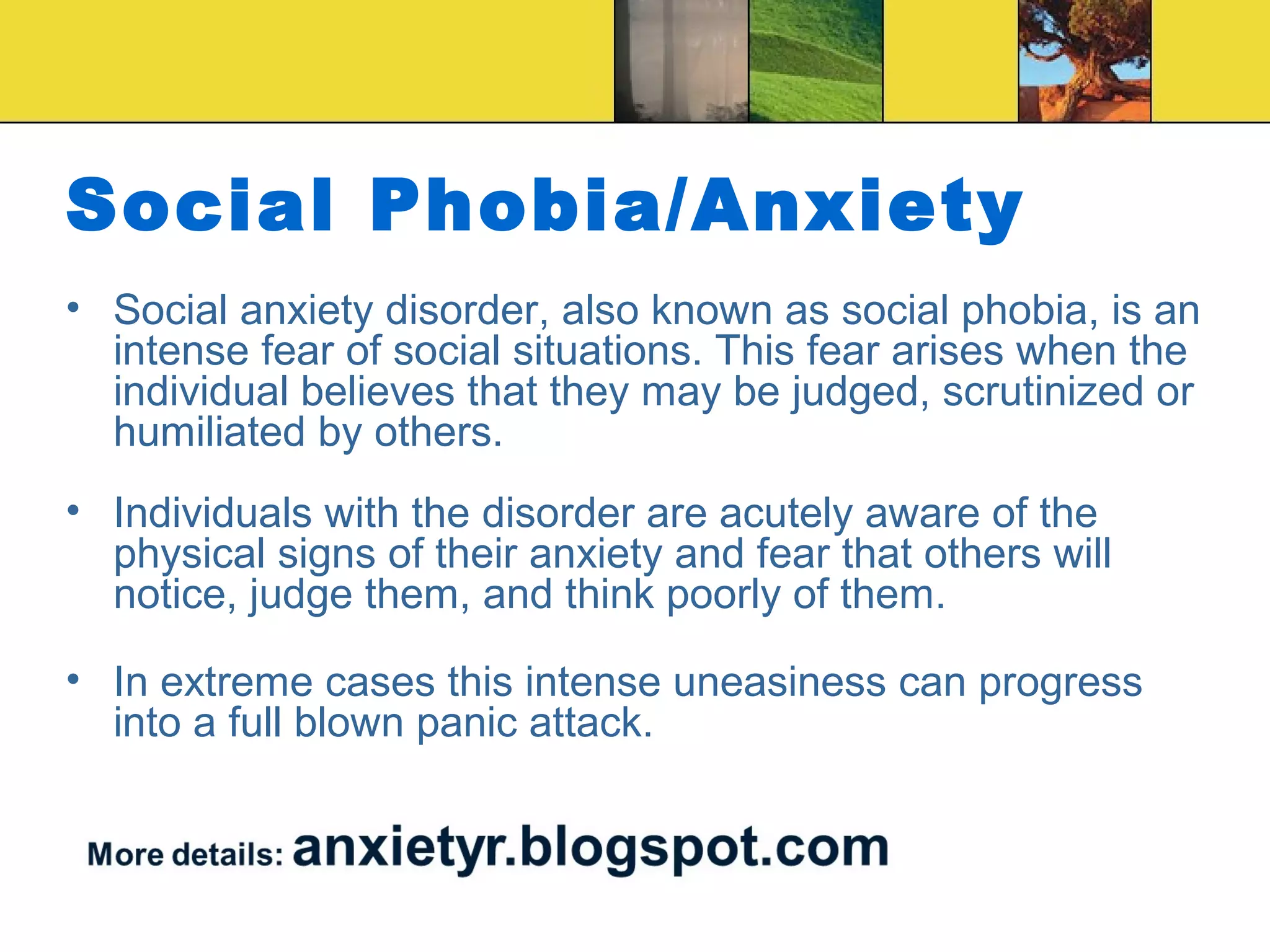
- Social Anxiety Disorder: Intense, persistent fear of being watched, judged, or negatively evaluated by others in social or performance settings.
- Specific Phobias: Extreme, irrational fear of specific objects, situations, or environments.
The National Institute of Mental Health (NIMH) notes that anxiety disorders involve more than temporary worry or fear. For a person with an anxiety disorder, the anxiety does not go away and can worsen over time, interfering significantly with job performance, schoolwork, and relationships.
When High Anxiety Becomes Clinical
Feeling anxiety-ridden during a major life crisis—such as a sudden job loss, bereavement, or severe illness—is a expected human response to stress. However, when an anxiety-ridden state occurs without an immediate external threat, or persists long after a stressful event has passed, it may indicate an underlying anxiety disorder.
Clinicians evaluate whether an anxiety-ridden state requires formal treatment by assessing three primary factors:
- Duration: Does the intense distress last for weeks, months, or longer?
- Intensity: Is the emotional response disproportionate to the actual level of danger or threat present?
- Functional Impairment: Does the anxiety prevent the individual from working, maintaining relationships, attending to self-care, or leaving home?
Recognizing the Signs of an Anxiety-Ridden State
An anxiety-ridden state manifests across physical, cognitive, and behavioral dimensions. Because the mind and body interact continuously, high anxiety frequently produces noticeable physical symptoms alongside mental distress.
Physical Manifestations
When a person feels anxiety-ridden, their central nervous system activates the autonomic "fight-or-flight" response. The adrenal glands release stress hormones, including adrenaline and cortisol, causing systemic physiological changes:
- Cardiovascular: Elevated heart rate, palpitations, elevated blood pressure, or tightness in the chest.
- Respiratory: Rapid, shallow breathing (hyperventilation) or a feeling of shortness of breath.
- Neuromuscular: Persistent muscle tension, trembling, twitching, jaw clenching, or tension headaches.
- Gastrointestinal: Nausea, stomach cramps, diarrhea, or a loss of appetite.
- Autonomic: Excessive sweating, cold hands and feet, hot flashes, or dry mouth.
Cognitive and Emotional Manifestations
Cognitively, an anxiety-ridden state distorts how a person processes information and perceives their environment:
- Catastrophizing: Automatically anticipating the worst possible outcome in any situation, regardless of probability.
- Hypervigilance: Constantly scanning the environment for potential threats, leading to mental exhaustion and irritability.
- Rumination: Getting stuck in repetitive cycles of negative, anxiety-inducing thoughts that feel impossible to stop.
- Brain Fog and Impaired Concentration: Difficulty focusing on tasks because cognitive bandwidth is consumed by worry.
- Depersonalization or Derealization: Feeling detached from one's own body or feeling as though surroundings are unreal or foggy during periods of intense distress.
Behavioral Manifestations
Behaviorally, individuals experiencing severe anxiety adapt their routines to minimize perceived danger, often leading to unhelpful coping mechanisms:
- Avoidance: Steering clear of places, people, conversations, or tasks that trigger anxiety.
- Restlessness: Inability to sit still, pacing, or fidgeting.
- Safety Behaviors: Relying on specific rituals, checking behaviors (e.g., re-checking locks or messages multiple times), or needing constant reassurance from others.
- Sleep Disturbances: Difficulty falling asleep due to racing thoughts, waking up frequently during the night, or experiencing disturbing dreams.
Comparing Terms: Anxiety-Ridden vs. Other States
To help clarify how "anxiety-ridden" compares to other terms commonly used to describe emotional distress, the following table summarizes key distinctions:
| Term | Primary Focus | Duration / Pattern | Intensity Level | Clinical Status |
|---|---|---|---|---|
| Anxiety-Ridden | Pervasive burden of worry and nervous dread | Prolonged or recurring state | High to severe | Informal descriptive term |
| Stressed | Feeling pressure from external demands | Typically tied directly to active stressors | Low to high | Informal descriptive term |
| Panic-Stricken | Sudden, overwhelming terror or acute fear | Short-lived, acute episodes | Extreme / Paralyzing | Informal descriptive term |
| Generalized Anxiety Disorder (GAD) | Excessive, uncontrollable worry across multiple domains | Chronic (at least 6 months) | Moderate to severe | Formal DSM-5 / ICD-11 diagnosis |
| Burnout | Physical and emotional exhaustion from prolonged stress | Chronic, developing over months/years | High (exhaustion-based) | Occupational phenomenon (ICD-11) |
Common Triggers and Root Causes
An anxiety-ridden state rarely arises in complete isolation. Usually, it stems from a complex interplay of environmental factors, biological predispositions, and psychological habits.
Environmental and Situational Stressors
Extremely stressful or unpredictable environments are major contributors to feeling anxiety-ridden:
- High-Pressure Workplaces: Environments characterized by tight deadlines, lack of control, toxic interpersonal dynamics, or job insecurity can leave employees feeling constantly anxiety-ridden.
- Financial Instability: Chronic worry over housing, debt, medical expenses, or basic living costs keeps the nervous system in a sustained state of alert.
- Relational Conflict: Ongoing marital distress, family disruption, or social isolation creates persistent emotional instability.
- Major Life Transitions: Even positive changes—such as moving to a new city, starting a new career, or having a child—can trigger high levels of anxiety due to uncertainty.
Biological and Genetic Factors
Research documented by health organizations such as the American Psychological Association (APA) demonstrates that biological factors play a key role in how prone an individual is to anxiety:
- Genetics: A family history of anxiety disorders or mood disorders increases individual susceptibility.
- Neurobiology: Imbalances or functional differences in neurotransmitter systems (such as serotonin, dopamine, and GABA) and heightened activity in the amygdala—the brain's fear center—contribute to emotional over-reactivity.
- Medical Conditions: Thyroid dysfunction (such as hyperthyroidism), cardiovascular disease, respiratory disorders, and vitamin deficiencies (e.g., Vitamin D or B12) can directly produce physical symptoms of anxiety.
Psychological and Behavioral Habits
Certain patterns of thinking and behavior can amplify baseline anxiety into an anxiety-ridden condition:
- Perfectionism: Holding impossibly high standards and viewing anything less than perfection as a failure.
- Cognitive Distortions: Habits such as all-or-nothing thinking, overgeneralization, and emotional reasoning (believing that because you feel endangered, you are endangered).
- Substance Use and Withdrawal: High caffeine intake, alcohol abuse, or withdrawal from prescribed medications or recreational substances can significantly elevate physical anxiety.
Evidence-Based Strategies for Managing High Anxiety
When anxiety reaches a level where a person feels anxiety-ridden, grounded, practical strategies can help restore emotional balance and nervous system regulation.
1. Somatic and Physiological Regulation
Because anxiety activates the physical stress response, interventions that work directly on the body often yield the fastest reduction in acute distress:
- Diaphragmatic Breathing (Box Breathing): Inhale slowly through the nose for 4 seconds, hold for 4 seconds, exhale through the mouth for 4 seconds, and hold empty for 4 seconds. Repeat for 3 to 5 minutes. Slow, deep exhales stimulate the vagus nerve, promoting the parasympathetic nervous system's "rest-and-digest" response.
- Progressive Muscle Relaxation (PMR): Systematically tense specific muscle groups (e.g., shoulders, calves, hands) for 5 seconds, then release completely while focusing on the sensation of relaxation.
- Grounding Techniques (The 5-4-3-2-1 Method): Re-anchor attention in the immediate physical present by identifying:
- 5 things you can see around you.
- 4 things you can physically touch.
- 3 things you can hear.
- 2 things you can smell.
- 1 thing you can taste.
2. Cognitive Restructuring
Cognitive techniques draw heavily from Cognitive Behavioral Therapy (CBT), an established evidence-based treatment for anxiety:
- Identify the Core Thought: Ask, "What specific scenario is my brain telling me to fear right now?"
- Evaluate Evidence: Examine the thought objectively. Ask, "What evidence proves this outcome is guaranteed? What evidence suggests a neutral or positive outcome is possible?"
- Differentiate Possibility from Probability: Remind yourself that just because a bad outcome is possible does not mean it is probable.
- Develop a Coping Plan: Shift focus from endless worrying to constructive problem-solving by answering: "If the worst does happen, what specific steps would I take to handle it?"
3. Lifestyle and Behavioral Adjustments
Long-term reduction of anxiety requires supporting overall brain and bodily health through consistent daily habits:
- Limit Stimulants: Excessive caffeine, nicotine, and energy drinks directly mimic and amplify panic symptoms like tachycardia and tremors.
- Prioritize Sleep Hygiene: Sleep deprivation dramatically increases amygdala reactivity. Maintain a consistent sleep-wake schedule and limit blue-light exposure before bed.
- Regular Physical Exercise: Moderate aerobic exercise (such as brisk walking, swimming, or cycling) helps metabolize excess stress hormones like cortisol and increases endorphins.
4. Seeking Professional Mental Health Support
If feeling anxiety-ridden is a frequent occurrence that disrupts work, social life, or health, professional guidance is recommended. Standard treatment options supported by medical research include:
- Psychotherapy: Modalities such as Cognitive Behavioral Therapy (CBT), Acceptance and Commitment Therapy (ACT), and Exposure Therapy help individuals reshape unhelpful thought patterns and build tolerance to anxiety triggers.
- Pharmacotherapy: Licensed medical providers (such as psychiatrists or primary care physicians) may prescribe medications, including Selective Serotonin Reuptake Inhibitors (SSRIs), Serotonin-Norepinephrine Reuptake Inhibitors (SNRIs), or short-term anxiolytics, to manage severe symptoms.
- Medical Evaluation: A standard medical checkup can rule out underlying physical health conditions (such as thyroid disorders or cardiac arrhythmias) that cause anxiety-like symptoms.
Frequently Asked Questions
Is "anxiety-ridden" an official medical term?
No, "anxiety-ridden" is an informal descriptive adjective, not an official clinical diagnosis. Clinicians use formal diagnostic categories such as Generalized Anxiety Disorder (GAD), Social Anxiety Disorder, or Panic Disorder, as codified in manuals like the DSM-5-TR.
What is the difference between "anxiety-ridden" and "anxious"?
While both words refer to worry or dread, "anxious" is a general term that can range from mild, temporary apprehension to stronger feelings. "Anxiety-ridden" explicitly denotes a severe, pervasive state where a person or environment is completely overwhelmed and burdened by anxiety.
How should "anxiety-ridden" be hyphenated?
When used as a compound modifier directly before a noun (e.g., "anxiety-ridden thoughts"), it should always be hyphenated. When placed after a verb (e.g., "she felt anxiety-ridden"), standard English style guides recommend keeping the hyphen to preserve clarity.
Can an environment or situation be described as anxiety-ridden?
Yes. Beyond describing people, "anxiety-ridden" frequently describes situations, periods of time, or atmospheres characterized by high tension and worry—such as an "anxiety-ridden work environment" or an "anxiety-ridden election season."
What are quick ways to calm down when feeling anxiety-ridden?
Immediate nervous-system regulation strategies include diaphragmatic breathing (such as box breathing), sensory grounding (using the 5-4-3-2-1 technique), splashing cold water on the face to activate the mammalian dive reflex, and stepping away from the immediate stressor to take a brief walk.
When should someone seek professional help for feeling anxiety-ridden?
Professional help should be sought if anxiety persists for several weeks, feels unmanageable, triggers panic attacks, causes significant disruption at work or in relationships, leads to unhealthy coping behaviors (such as alcohol or substance misuse), or is accompanied by thoughts of self-harm.
Recommended Next Steps
If you or someone you care about frequently feels anxiety-ridden, taking targeted, practical actions can break the cycle of overwhelm:
- Track Patterns: Keep a simple daily journal noting when anxiety spikes, what environmental triggers were present, and how your body responded. Identifying patterns is the first step toward effective management.
- Practice One Regulation Skill Daily: Select a physiological tool, such as 4-7-8 breathing or progressive muscle relaxation, and practice it daily when calm so it becomes natural to execute during high-stress moments.
- Schedule a Professional Consultation: Reach out to a primary care physician or a licensed mental health clinician to discuss your symptoms, rule out underlying physical health issues, and explore evidence-based therapies tailored to your needs.