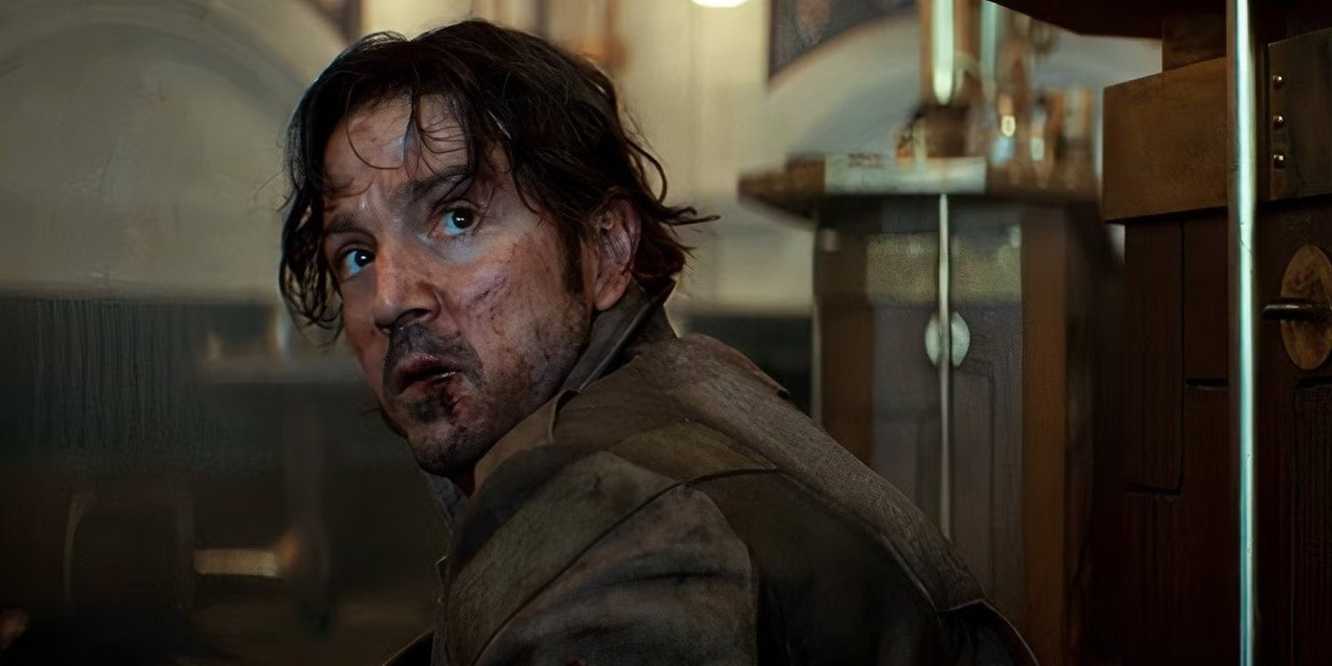
The critically acclaimed Star Wars series Andor concludes with its second season because showrunner Tony Gilroy designed the show as a finite, two-act prequel leading directly into the events of Rogue One: A Star Wars Story. This deliberate creative decision ensures a focused, high-stakes narrative that bridges the five-year gap between Cassian Andor’s introduction and his ultimate sacrifice.
The realization that "Andor is over after season 2" may come as a surprise to fans used to the multi-season runs of other Disney+ series, but for the creative team, this was a calculated move to preserve the show's structural integrity. As we look back from the perspective of 2026, the legacy of Andor is defined not by its longevity, but by its precision. This article examines the narrative necessity of the two-season limit, the unique structure of the final episodes, and how this decision influenced the broader Star Wars television landscape.
The Evolution of the Two-Season Plan
When Andor was first announced, there were internal discussions at Lucasfilm regarding a potential five-season arc. The original concept followed a traditional television model, where each season would cover roughly one year of Cassian Andor’s life within the burgeoning Rebellion. However, the sheer scale of production required for a series of this caliber—utilizing massive practical sets and on-location filming rather than relying solely on "The Volume" (StageCraft)—made a ten-year production cycle logistically daunting for the cast and crew.
Tony Gilroy, known for his work on the Bourne franchise and the original Rogue One reshoots, realized that a condensed structure would actually enhance the storytelling. By pivoting to a two-season format, the production could maintain a cinematic level of quality while ensuring that Diego Luna (Cassian Andor) remained at the appropriate age for the character’s transition into the 2016 film. This decision shifted the series from a sprawling biography into a tight, ideological thriller focused on the radicalization of a revolutionary.
The Shift from Five Seasons to Two
The transition from the proposed five-season plan to the finalized two-season structure was a pivotal moment in Star Wars history. Gilroy noted in several industry interviews that the physical demand of filming 12-episode seasons was immense. To complete five seasons at the established quality level, the project would have occupied nearly a decade of the primary actors' lives.
By compressing the final four years of the timeline into Season 2, the writers were forced to adopt a "block" storytelling method. This method didn't just save time; it added a sense of urgency and momentum that mirrored the escalating desperation of the Rebel Alliance. Each block of episodes acts as a self-contained narrative unit, allowing the audience to witness the evolution of the galaxy in high-velocity snapshots.
The Structural Innovation of Season 2
While Season 1 focused on a single year in Cassian’s life—covering his initial recruitment and his time in the Narkina 5 prison—Season 2 takes a much more ambitious approach to time. To cover the remaining four years leading up to Rogue One, the final 12 episodes are divided into four distinct three-episode arcs. Each arc represents a full year of story time.
The Three-Episode Block Format
This structural choice is unique in modern prestige television. Between each three-episode block, a narrative jump of one year occurs. This allows the show to highlight the most critical "tinderbox" moments in the Rebellion's history without the need for filler episodes.
- Year 2 of the Rebellion (Episodes 1-3): Focuses on the immediate fallout of the Ferrix uprising and the hardening of Imperial crackdowns.
- Year 3 of the Rebellion (Episodes 4-6): Explores the difficult logistical challenges of uniting disparate rebel cells, such as the tension between Saw Gerrera’s partisans and Mon Mothma’s political faction.
- Year 4 of the Rebellion (Episodes 7-9): Deals with the increased sophistication of the Imperial Security Bureau (ISB) as they close in on "Axis" (Luthen Rael).
- Year 5 of the Rebellion (Episodes 10-12): The final countdown, leading directly to the moments before Cassian arrives on the trade outpost in the Ring of Kafrene, as seen in the opening of Rogue One.
| Feature | Season 1 (The Awakening) | Season 2 (The Revolution) |
|---|---|---|
| Timeline Span | 1 Year (5 BBY) | 4 Years (4 BBY – 0 BBY) |
| Episode Count | 12 Episodes | 12 Episodes |
| Primary Theme | Radicalization and Prison Break | Organizational Unity and Sacrifice |
| Narrative Structure | Continuous, linear progression | Four 3-episode blocks with 1-year gaps |
| Key Antagonist Focus | Syril Karn & Dedra Meero (Local/Sector) | The ISB & Grand Moff Tarkin (Galactic) |
| Connection Point | The spark on Ferrix | The start of Rogue One |
The Narrative Necessity: Why It Must End
The primary reason "Andor is over after season 2" is the fixed point in time represented by the film Rogue One. Unlike other series that can expand indefinitely into the future, Andor is a tragedy in the classical sense. We know exactly where the protagonist dies, how he dies, and why he dies. The series isn't about if he survives, but how he became the person willing to give everything for a cause he once despised.
Bridging the Gap to Rogue One
The final moments of Season 2 are designed to be a seamless handoff. For years, fans wondered how Cassian became a trusted intelligence officer for the Alliance. Season 2 meticulously documents his rise through the ranks, his developing relationship with the droid K-2SO (whose origin is a major focal point of the final season), and his ultimate acceptance of the "darker things" he has to do for the Rebellion.
By ending the show at the exact moment Rogue One begins, the two seasons of Andor and the film create a unified, 30-plus hour epic. Watching the final episode of Season 2 and then immediately starting the film provides a complete character arc that is arguably the most complex in the Star Wars mythos.
Character Resolutions and the Cost of Rebellion
As the series concludes, it doesn't just resolve Cassian’s story; it provides closure for the diverse ensemble cast that defined the show’s gritty, grounded tone. The "over after season 2" status means that every character's fate is tied to the start of the Galactic Civil War.
Mon Mothma’s Political Descent
Season 2 dives deep into the high-stakes world of Coruscant politics. We see Mon Mothma move from a frustrated senator to a fugitive leader. The series explores the crushing personal cost of her decisions, including the sacrifices she must make regarding her family and her moral compass to fund the fleet that will eventually destroy the Death Star.
Luthen Rael and the "Burned Life"
One of the most compelling questions heading into the finale was the fate of Luthen Rael. As a character who does not appear in Rogue One or the original trilogy, his absence is palpable. The conclusion of Season 2 addresses why this architect of the Rebellion is not part of the later leadership, reinforcing the show's theme that those who start a revolution are rarely the ones who get to see it flourish.
The Transformation of the ISB
On the Imperial side, the conclusion of the series shows the terrifying efficiency of the ISB. Dedra Meero and Syril Karn represent the "banality of evil"—bureaucrats whose obsession with order facilitates a fascist regime. The end of Season 2 illustrates how their efforts, while successful in hunting down individuals, ultimately fail to quench the fire of a galaxy-wide uprising.
The Production Reality in 2026
By 2026, the television landscape has shifted, but Andor remains a benchmark for quality. One reason the series did not continue beyond Season 2 was the logistical commitment. Filming across various locations in the UK and Spain required a massive crew and a significant budget. Disney and Lucasfilm recognized that extending the show beyond its natural narrative conclusion would risk diluting the brand.
Furthermore, the "prequel to a prequel" nature of the show meant that any further seasons would have to take place during the events of Rogue One or after, which is impossible given the character's death. There were rumors of spin-offs focusing on other characters, but Tony Gilroy has been vocal about his desire to move on to other projects, and the cast has expressed a sense of completion with the current ending.
Why "Andor is Over After Season 2" is Good for Fans
While it is bittersweet to see a high-quality show end, the two-season limit is a victory for storytelling. In an era of "stretched" television, where shows often stay on the air long after they have run out of ideas, Andor stands as a model of narrative economy.
- No Filler: Every episode contributes to the evolution of the character or the state of the galaxy.
- Increased Stakes: Knowing the end is near makes every confrontation feel more dangerous.
- Creative Focus: The writers knew exactly where they were going from the first day of filming Season 2.
- Legacy Preservation: By ending on a high note, the show avoids the "final season slump" that plagues many long-running series.
The conclusion of the series allows it to be viewed as a "limited event," making it more accessible for future viewers who can binge the entire 24-episode saga and the film in one coherent journey.
Frequently Asked Questions
Does Andor Season 2 lead directly into the movie Rogue One?
Yes. Tony Gilroy has confirmed that the final scene of Season 2 is designed to walk the audience right into the beginning of Rogue One. It fills in the final gaps of Cassian’s history, including his status as a veteran intelligence operative for the Rebel Alliance.
Why wasn't there a Season 3 for Andor?
The series was always planned as a finite story. The original five-season idea was condensed into two seasons for both creative and logistical reasons. The story of Cassian Andor concludes with his death in Rogue One, leaving no room for a chronological sequel featuring the main character.
Will there be any spin-offs after Andor ends?
While there are no official "Andor spin-offs" in production as of 2026, the success of the series has influenced the tone of other Star Wars projects. Lucasfilm has shifted toward more "grounded" stories, though they are focusing on different eras or characters rather than continuing the specific plotlines of the Andor series.
Does K-2SO appear in the final season?
Yes, the iconic security droid K-2SO, voiced by Alan Tudyk, plays a significant role in Season 2. The season explains how he was reprogrammed and how he developed his unique, sardonic relationship with Cassian, bridging one of the most anticipated character gaps in the series.
Is the tone of Season 2 as dark as Season 1?
Season 2 maintains the gritty, espionage-heavy tone of the first season but increases the scale. As the Rebellion moves from small, isolated cells to a more organized military force, the moral complexities grow, often leading to darker choices by the protagonists.
Final Recommendation for Viewers
For those finishing the series in 2026, the best next step is a re-watch of Rogue One: A Star Wars Story. Seeing the film with the context of Cassian’s radicalization, Mon Mothma’s sacrifices, and Luthen Rael’s philosophy transforms the movie from a standard action-adventure into a poignant finale of a much larger struggle. The decision to end Andor after two seasons was not a sign of failure, but a commitment to excellence, providing a definitive beginning to the most important era in the Star Wars timeline.