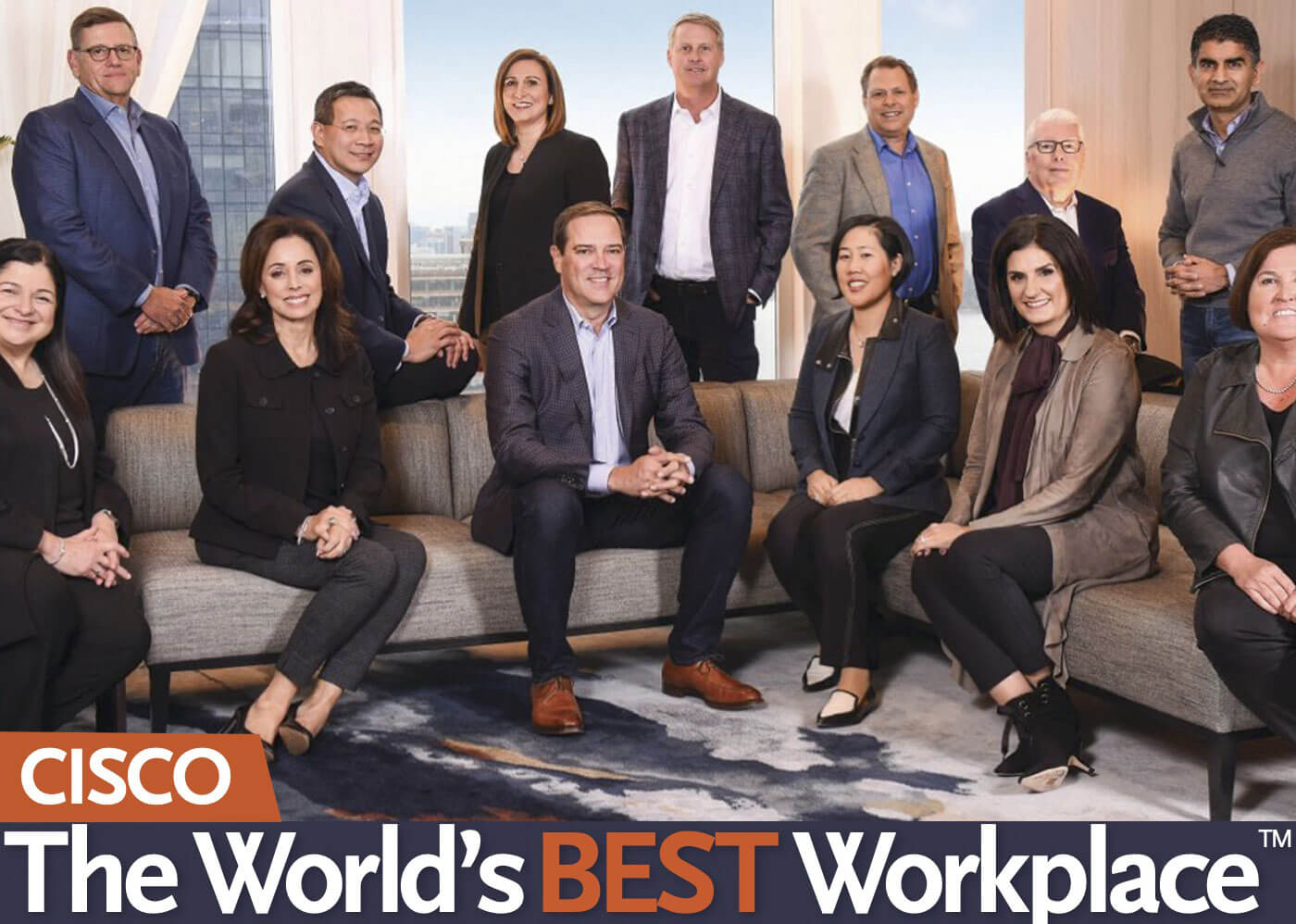
Amy Chang is a renowned tech executive and entrepreneur who served as the Executive Vice President and General Manager of Cisco’s Collaboration Technology Group from 2018 to 2020. Following Cisco's $270 million acquisition of her startup, Accompany, she led the strategic overhaul of Webex, integrating artificial intelligence and relationship intelligence into the platform to compete in the modern SaaS landscape.
The Strategic Arrival of Amy Chang at Cisco
In May 2018, Cisco Systems made a definitive move to modernize its aging collaboration suite by acquiring Accompany, an AI-driven relationship intelligence platform. At the center of this acquisition was Amy Chang, the founder and CEO of Accompany. Chang was not merely a founder being "acquihired"; she was a seasoned veteran of the Silicon Valley ecosystem, having previously led Google Analytics as a high-ranking executive.
Upon joining Cisco, Chang assumed leadership of the Collaboration Technology Group, a multi-billion dollar business unit that included Webex, Cisco Spark, and the company's hardware portfolio of meeting room devices. Her arrival marked a cultural and technological shift for Cisco. For years, Cisco had been viewed primarily as a networking and hardware giant. Chang’s mandate was to pivot the collaboration business toward a "software-first" and "AI-first" mentality.
The acquisition of Accompany for $270 million was a clear signal that Cisco intended to move beyond simple video conferencing. Accompany’s technology specialized in using machine learning to create comprehensive profiles of people and companies, providing users with "relationship intelligence" before they entered a meeting. Integrating this into Webex was the cornerstone of Chang’s "Cognitive Collaboration" vision.
The Accompany Acquisition and Relationship Intelligence
To understand Amy Chang’s impact on Cisco, one must understand the technology she brought with her. Accompany was designed to be a digital chief of staff. It leveraged massive datasets—scanning millions of public records, news articles, and social feeds—to build real-time dossiers on professionals.
When Cisco integrated Accompany, it rebranded these features under the umbrella of Cisco People Insights. The goal was to solve a common pain point in the enterprise: the "who is this?" problem. Before a meeting started, Webex users could see the professional history, interests, and recent news regarding their participants.
This transition was critical for several reasons:
- Data-Driven Differentiation: In a market increasingly crowded by Zoom and Microsoft Teams, Cisco needed a differentiator that leveraged its massive enterprise footprint. Relationship intelligence provided a layer of utility that competitors lacked at the time.
- SaaS Transformation: Chang’s background at Google Analytics gave her a unique perspective on user engagement and data. She pushed Cisco to treat Webex not just as a tool, but as a platform that provides value through data.
- Modernizing the Stack: The integration required a complete rethink of how Cisco handled metadata and user privacy, pushing the company toward more modern cloud-native architectures.
Reimagining Webex: The Era of Cognitive Collaboration
Under Amy Chang’s leadership, the term "Cognitive Collaboration" became the North Star for Cisco’s team. This wasn't just a marketing buzzword; it represented a shift in the product roadmap toward automation and intelligence.
During her tenure, Cisco accelerated the development of several key technologies:
Facial Recognition and Names
By leveraging AI, Webex began to offer "name labels" for participants in a conference room. If a group of people sat in a Cisco-equipped boardroom, the camera could identify them and place their names on the screen for remote participants. This removed the friction of introductions and made large-scale meetings more personal.
Background Noise Suppression
One of the most praised updates during this era was the integration of advanced audio intelligence. By acquiring specialized AI startups and focusing on digital signal processing, Chang’s team significantly improved Webex's ability to filter out distracting noises like sirens, barking dogs, or typing—a feature that became essential during the 2020 shift to remote work.
Unified App Experience
Prior to Chang, Cisco’s collaboration tools were somewhat fragmented, with separate experiences for Webex Meetings and Webex Teams (formerly Spark). Chang spearheaded the effort to converge these into a single, unified application. This "one app" strategy aimed to simplify the user experience, making it easier for IT departments to deploy and for employees to switch between messaging, calling, and video.
Competitive Landscape: Cisco vs. Zoom and Microsoft
Amy Chang’s tenure coincided with one of the most volatile periods in the history of collaboration software. As Zoom moved toward its 2019 IPO and Microsoft Teams was bundled aggressively with Office 365, Cisco found itself squeezed between a nimble, "born-in-the-cloud" competitor and a platform incumbent.
Chang’s strategy focused on "Enterprise Grade" reliability combined with "Consumer Grade" ease of use. She often spoke about removing the "friction" from meetings. While Zoom won on simplicity, Chang’s Cisco sought to win on intelligence and security. She emphasized that Cisco’s hardware (Webex Boards and Room Kits) provided a superior "integrated" experience that software-only companies could not match.
By 2026, looking back at this period, it is clear that Chang’s focus on AI-driven insights laid the groundwork for the modern Webex ecosystem, which now heavily utilizes generative AI and automated meeting summaries—technologies that were in their infancy during her leadership but were part of the strategic roadmap she helped establish.
Career Transitions and Board Leadership
In 2020, Amy Chang announced she would be stepping down from her executive role at Cisco for personal reasons, taking a leave of absence that eventually transitioned into a full departure from the company's daily operations. However, her influence in the tech world only expanded from there.
Even during her time at Cisco, Chang was a highly sought-after board member. By 2026, her portfolio of board positions has become a blueprint for modern corporate governance. Her experience as both a deep-tech founder and a large-scale corporate executive made her an asset to various industries.
Major Board Appointments
- The Walt Disney Company: Chang joined the Disney board, bringing her expertise in data analytics and consumer platforms to a company undergoing a massive shift toward streaming and digital personalization.
- Procter & Gamble (P&G): Her role here involves guiding the consumer goods giant through digital transformation and e-commerce scaling.
- Marqeta and Samsara: Chang has also been involved with high-growth fintech and IoT companies, providing strategic oversight on scaling AI and platform architectures.
Summary of Career Milestones (to 2026)
| Period | Organization | Role | Key Achievement |
|---|---|---|---|
| 2005–2012 | Global Head of Product, Google Analytics | Scaled Google Analytics to over 80% of the market. | |
| 2013–2018 | Accompany | Founder & CEO | Developed AI-driven relationship intelligence; sold to Cisco. |
| 2018–2020 | Cisco Systems | EVP & GM, Collaboration | Transformed Webex into a "Cognitive Collaboration" platform. |
| 2021–Present | Multiple Boards | Independent Director | Serving on boards of Disney, P&G, and others. |
The Legacy of Amy Chang at Cisco
Amy Chang’s legacy at Cisco is defined by the "SaaSification" of the collaboration business. Before her arrival, Webex was often criticized for having a dated user interface and a complex user experience. She infused the team with a startup-like urgency and a focus on design thinking.
She was also a significant advocate for diversity and inclusion within the engineering ranks at Cisco. As one of the few women leading a multi-billion-dollar tech business unit, she prioritized the recruitment of diverse talent and mentored numerous women who have since moved into high-ranking roles within the company and the broader tech industry.
Her departure in 2020 was seen as a loss for Cisco's executive leadership, but the technical foundation she built—specifically the integration of AI into the meeting flow—continues to be the backbone of Cisco’s collaboration strategy today.
Frequently Asked Questions
Why did Cisco buy Accompany?
Cisco acquired Accompany for $270 million primarily to obtain its AI-driven relationship intelligence engine and to bring Amy Chang into the executive leadership team. Cisco wanted to move Webex beyond simple video calls by providing users with data-rich profiles of the people they were meeting, a feature that helped differentiate Webex from competitors like Zoom.
What is Amy Chang's background before Cisco?
Prior to Cisco, Amy Chang was the founder and CEO of Accompany. Before that, she spent seven years at Google, where she led Google Analytics as the Global Head of Product. She also held positions at eBay and McKinsey & Company. She holds both a BS and an MS in Electrical Engineering from Stanford University.
Is Amy Chang still at Cisco in 2026?
No, Amy Chang stepped down from her role as Executive Vice President and General Manager of Cisco Collaboration in 2020. Since then, she has focused on her roles as an independent director on several major corporate boards, including The Walt Disney Company and Procter & Gamble.
What was "Cognitive Collaboration" at Cisco?
"Cognitive Collaboration" was a strategic initiative led by Amy Chang that integrated artificial intelligence, machine learning, and relationship intelligence into the Cisco Webex portfolio. Key features included facial recognition, automatic name labels, background noise suppression, and "People Insights" which provided professional biographies of meeting participants.
Which boards does Amy Chang serve on?
As of 2026, Amy Chang has served on several high-profile boards, most notably The Walt Disney Company and Procter & Gamble. She has also served on the boards of Marqeta, Samsara, and Splunk, as well as advisory roles for startups and venture capital firms.
Recommended Actions for Researchers and Professionals
If you are analyzing Amy Chang’s impact on Cisco or the broader tech landscape, consider the following steps:
- Review Cisco’s 2018-2020 Earnings: Look at the "Collaboration" segment reports to see the revenue shift from hardware to software during her tenure.
- Study the "Cognitive Collaboration" Whitepapers: Research the original technical documentation for "People Insights" to understand how relationship intelligence was built.
- Monitor Board Appointments: For those interested in corporate governance, track Chang’s contributions to Disney’s digital strategy, as it often mirrors the data-centric approach she took at Google and Cisco.
- Evaluate Webex’s Evolution: Compare the current features of Webex in 2026 to the roadmap established in 2018 to see the long-term execution of the AI-first strategy.