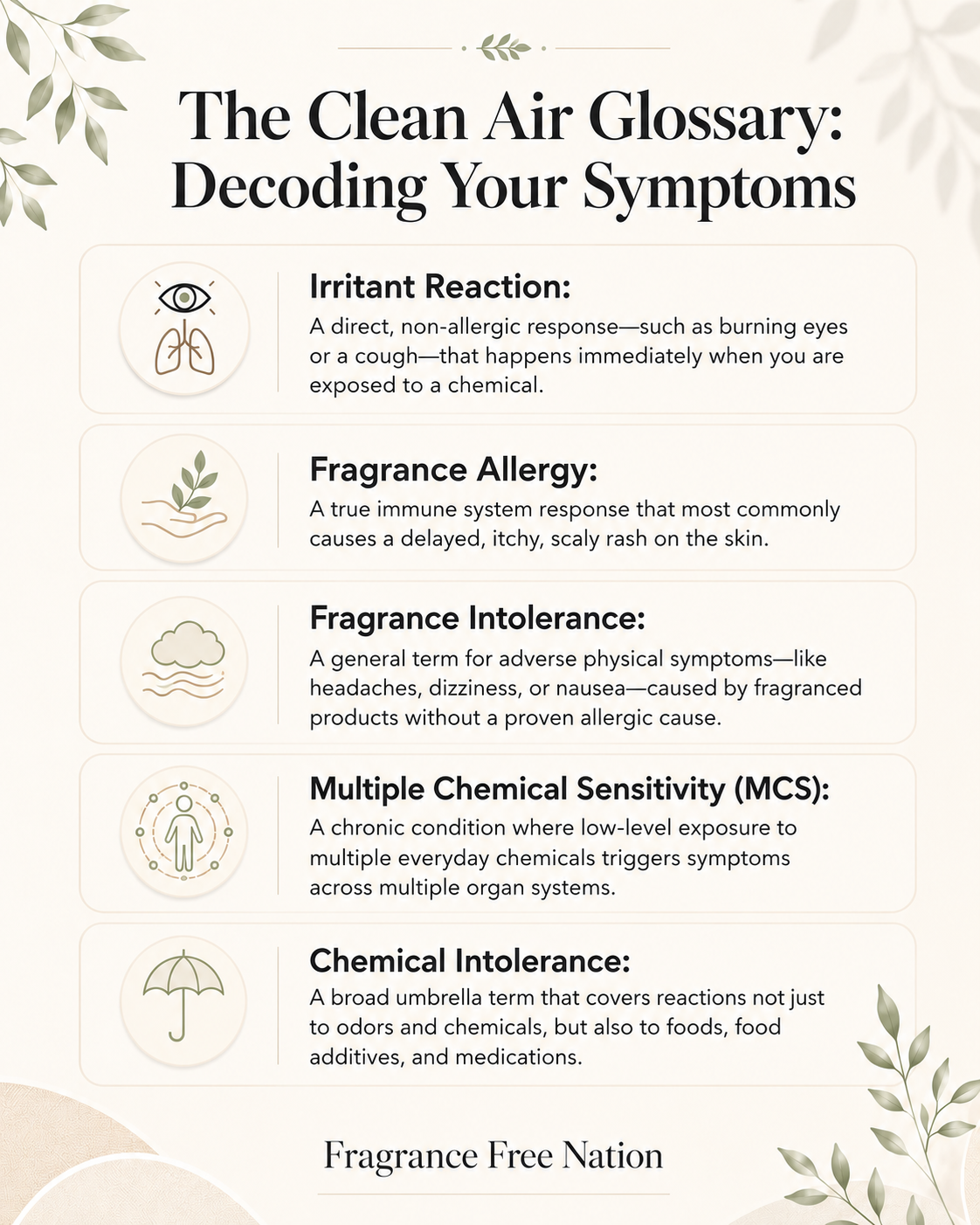
Fragrance allergy, or fragrance contact dermatitis, is a common reaction where the immune system overreacts to specific chemical components found in scented products. Because "fragrance" is often listed as a single ingredient on labels—masking hundreds of potential chemical compounds—identifying an allergy requires a clinical approach involving patch testing, ingredient awareness, and a systematic audit of your personal care and household environment.
The Complexity of Fragrance as an Ingredient
When you look at a label on shampoo, moisturizer, or cleaning spray, you may see the word "fragrance" or "parfum." Under current consumer protection regulations in many jurisdictions, companies are permitted to protect their proprietary formulas by listing these ingredients collectively under a single umbrella term. This presents a significant hurdle for those with sensitivities, as a single fragrance cocktail can contain dozens, or even hundreds, of individual chemicals, including both natural essential oils and synthetic isolates.
For an individual, this means that even if you know you are reactive to one specific chemical, you cannot easily scan a product label to see if that chemical is present. The lack of granular transparency in labeling is the primary driver of fragrance-related contact dermatitis. To determine if your skin or respiratory issues are linked to these mixtures, you must look beyond the label and toward professional medical assessment.
Recognizing the Symptoms of a Fragrance Allergy
Fragrance allergies generally manifest in two primary ways: cutaneous (skin-related) and respiratory. Contact dermatitis is the most frequent presentation, characterized by red, itchy, or swollen skin where a scented product was applied. In some cases, the reaction may involve blistering, scaling, or a burning sensation.
Respiratory reactions are also documented, particularly in individuals with pre-existing conditions like asthma or chronic rhinitis. These symptoms can include sneezing, coughing, wheezing, or tightness in the chest when exposed to aerosols or highly scented environments. While medical professionals often distinguish between true allergies and "sensitivities" or "irritations," both result in significant discomfort and require management. It is important to note that reactions do not always occur immediately; in some cases, symptoms may appear hours or even days after exposure, making it difficult to pinpoint the offending product.
The Clinical Diagnostic Process: Patch Testing
If you suspect you are allergic to fragrance, the gold standard for confirmation is a patch test performed by a board-certified dermatologist or allergist. Unlike a skin-prick test used for food or pollen allergies, a patch test involves applying various standardized allergens—including common fragrance mixes—to your back using specialized adhesive patches.
These patches remain on your skin for 48 hours. After this period, the physician removes the patches and assesses the skin for localized reactions. A follow-up examination at 72 or 96 hours is often required to ensure that delayed reactions are captured. Because fragrances are so diverse, dermatologists typically test using "Fragrance Mix I" and "Fragrance Mix II," which contain the most common offenders, such as cinnamal, eugenol, and geraniol. If you test positive for one of these mixes, your provider can help you create a strategy to avoid specific chemical classes in the future.
Strategic Product Auditing and Avoidance
Once you have established that your symptoms are indeed linked to fragrance, the next step is a rigorous audit of your environment. Transitioning to a "fragrance-free" lifestyle is often the most effective path to symptom resolution.
However, consumers must learn the critical distinction between "unscented" and "fragrance-free."
- Fragrance-Free: This label generally indicates that no fragrance materials have been added to the product. However, it does not guarantee that the base ingredients do not have a natural scent or that trace amounts of fragrance chemicals aren't present.
- Unscented: This term is often misleading. An "unscented" product may still contain masking fragrances—chemicals added to neutralize the scent of other ingredients.
To minimize exposure, focus on these categories during your audit:
- Personal Care: Transition to cleansers, moisturizers, and shampoos that explicitly state they are free of added synthetic and natural fragrances.
- Home Environment: Switch to fragrance-free laundry detergents and fabric softeners. Dryer sheets are a common source of high-concentration fragrance exposure.
- Household Cleaners: Use fragrance-free or vinegar-based cleaning solutions.
- Air Quality: Discontinue the use of scented candles, reed diffusers, and plug-in air fresheners.
Comparative Overview of Product Labeling
| Terminology | Regulatory Definition | Best Practice for Allergy Sufferers |
|---|---|---|
| Fragrance-Free | No added fragrance ingredients. | Generally safe, but verify ingredient lists. |
| Unscented | May contain chemicals to mask odors. | Avoid; likely contains unknown chemicals. |
| Hypoallergenic | Marketing claim; no legal standard. | Do not rely on this label; check full list. |
| Natural/Organic | Refers to source, not allergenicity. | Be wary; essential oils are common allergens. |
The Role of Essential Oils
A common misconception is that "natural" essential oils are inherently safer than synthetic fragrances. In reality, essential oils are complex mixtures of chemical compounds, many of which—such as linalool and limonene—are known sensitizers. If you are allergic to a specific synthetic fragrance component, you may find that you also react to the "natural" plant-based oil that contains that same molecule.
When reviewing ingredient lists, look for the INCI (International Nomenclature of Cosmetic Ingredients) names of these common sensitizers. If you see them on a label, the product likely contains a significant enough concentration of the ingredient to trigger a reaction in sensitive individuals.
Living with and Managing Sensitivities
Managing a fragrance allergy is an ongoing process of vigilance. It is rarely enough to remove products once; you must maintain a habit of checking labels every time you purchase a new item, as formulations can change without prominent notification on the packaging.
- Communication: Inform friends, family, and coworkers if your sensitivity is significant, particularly if you work in an office where aerosolized fragrances or heavy colognes are common.
- Maintenance: Keep a symptom diary. If a flare-up occurs, look back at the last 48 hours of product usage. Did you try a new soap? Did you stay in a hotel that provides scented toiletries?
- Emergency Care: If you experience severe allergic reactions, such as swelling of the lips or throat, or difficulty breathing, seek immediate emergency medical care. These can be signs of anaphylaxis, which, while rare for fragrance contact, requires urgent intervention.
Frequently Asked Questions
Is a fragrance allergy the same as an intolerance? No. A true fragrance allergy is an immune system response where the body develops specific antibodies to fragrance chemicals. An intolerance or sensitivity is often a direct irritation of the skin barrier that does not necessarily involve the immune system but causes similar symptoms of redness and discomfort.
Can I develop a fragrance allergy if I have used the same product for years? Yes. You can develop a contact allergy to a substance at any point in your life, even after years of trouble-free exposure. This is known as "sensitization." Once the immune system identifies a chemical as a threat, future exposures are likely to trigger a reaction.
Does washing off the product immediately stop the reaction? It helps minimize the duration of contact, but it may not stop a reaction that has already begun. If you have sensitive skin, immediately rinse the area with cool water and a soap-free, pH-balanced cleanser to remove any residue, but avoid harsh scrubbing, which can further damage the skin barrier.
Are there specific chemicals I should look for on labels? Yes. Regulations in regions like the European Union require manufacturers to list 26 specific fragrance allergens if they exceed certain concentrations. Familiarizing yourself with names like Citral, Farnesol, and Coumarin can help you identify potentially problematic products before purchasing.
Will my fragrance allergy ever go away? Unfortunately, contact allergies to chemical compounds are typically permanent. While you may have periods where your skin is less reactive, consistent avoidance of the triggers is the only effective way to remain symptom-free.
Next Steps for Your Health
If you suspect you are allergic to fragrance, your first action should be to schedule an appointment with a board-certified dermatologist. Request a patch test to confirm your sensitivity to specific fragrance mixes. In the meantime, stop using all scented personal care products and switch to fragrance-free alternatives. This will allow your skin barrier time to recover and provide a "clean slate" to help you identify if specific products were the source of your irritation. Always maintain a list of products that you know are safe for your skin, and use that list as your primary guide for future purchases.