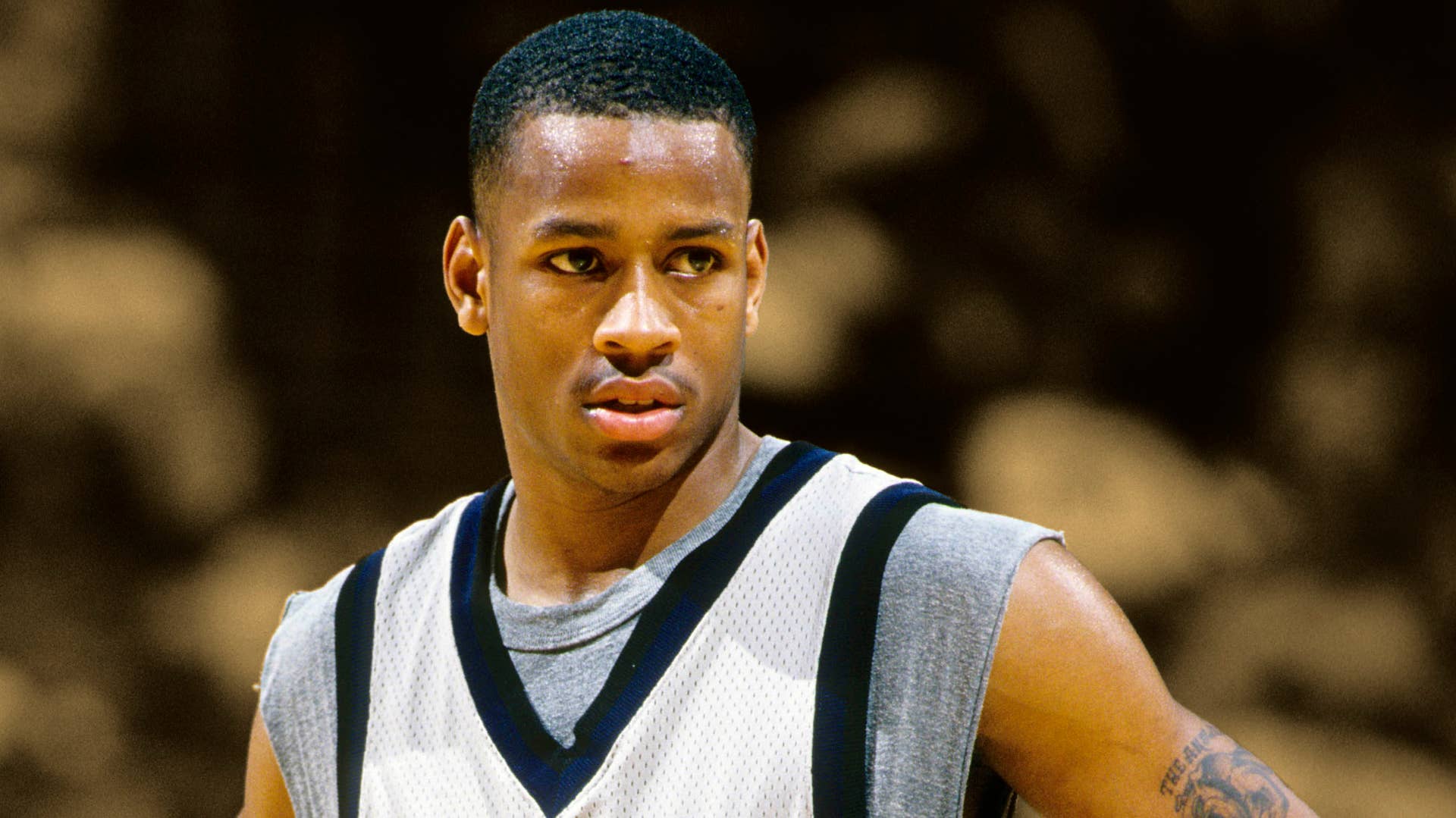
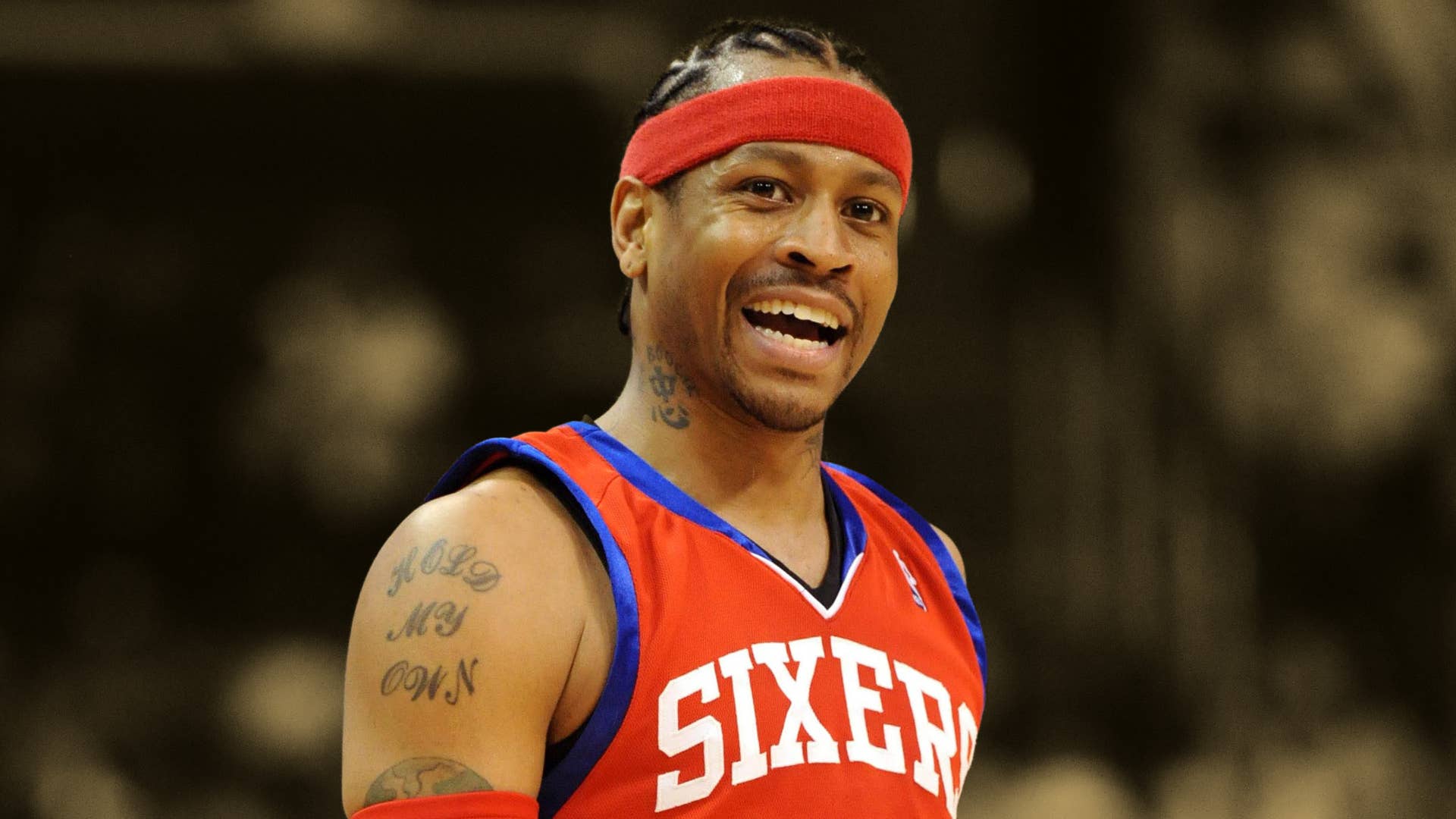
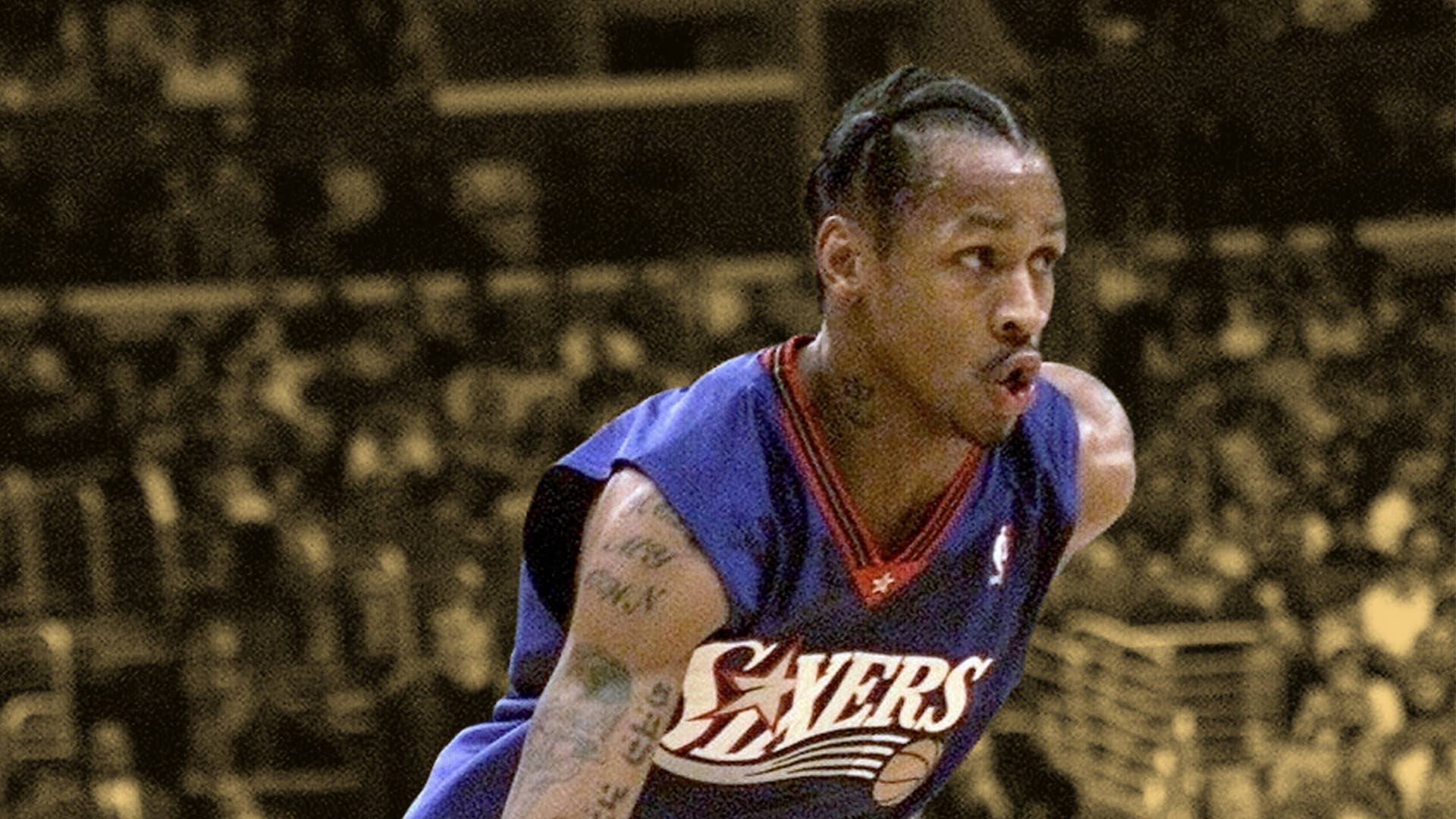
As of 2026, Allen Iverson has officially reached the landmark age of 50, triggering the final phase of his legendary 2001 lifetime contract with Reebok. This milestone grants him access to a $32 million trust fund specifically designed as a "safety net" during his playing days. However, due to a 2013 divorce settlement, Iverson will reportedly split the proceeds with his ex-wife, Tawanna, while continuing to receive an $800,000 annual stipend from the sportswear giant.
The story of Allen Iverson’s finances at age 50 is one of the most fascinating case studies in professional sports history. It is a narrative that combines the foresight of corporate executives, the volatility of a superstar’s lifestyle, and the structural protections that have saved "The Answer" from the financial ruin that has claimed the fortunes of so many of his peers.
The Genesis of the Reebok Lifetime Agreement
To understand why 2025 and 2026 are such pivotal years for Iverson’s bank account, one must look back to 2001. At the height of his powers—fresh off an MVP season and a historic run to the NBA Finals—Iverson was the undisputed face of Reebok. While most athlete endorsements are structured in five or ten-year increments, Reebok executive Tom Shine and Iverson’s management team negotiated a lifetime deal.
This contract was revolutionary. It didn't just pay Iverson for his current marketing value; it accounted for his long-term financial health. The agreement was structured in three primary tiers:
- Immediate Compensation: Millions in annual base pay during his active NBA career.
- The Annual Stipend: A $800,000 yearly payment that continues for the rest of his life, ensuring a baseline of liquidity.
- The Deferred Trust: A $32 million principal sum set aside in a trust, untouchable by Iverson until his 50th birthday on June 7, 2025.
By the time 2026 arrived, this trust had become more than just a bonus; it became the centerpiece of Iverson’s financial legacy. It served as a guardrail against the heavy spending and legal fees that characterized much of his post-NBA life.
The $32 Million Question: Who Gets the Money?
While the $32 million figure is often cited as Iverson’s "birthday present," the reality of the payout is more complex. The legal proceedings surrounding Iverson’s divorce from his high school sweetheart, Tawanna Turner, significantly altered the distribution of these funds.
During their divorce proceedings, which were finalized in 2013, details of the Reebok trust became public record. Despite the tumultuous nature of their separation, the settlement reached between the two parties ensures that Tawanna Iverson is entitled to a significant portion of the trust. Reports indicate that the $32 million is to be split, with Tawanna receiving half of the principal.
Furthermore, it has been suggested that the remaining $16 million allocated to Allen remains subject to specific management oversight. This arrangement was designed to prevent the rapid depletion of the funds, a concern that surfaced during the early 2010s when reports of Iverson’s liquidity struggles became tabloid fodder. Even with the split, the payout remains one of the largest single "retirement" windfalls in the history of the league.
The Importance of the $800,000 Annual Stipend
While the public focus is often on the $32 million lump sum, the $800,000 annual payment from Reebok has been the engine of Iverson’s financial stability over the last decade. In the years following his final professional game in Turkey in 2011, Iverson faced several financial hurdles, including the foreclosure of his mansion in Georgia and various lawsuits.
The $800,000 stipend acts as a non-negotiable floor for his income. In an era where NBA players frequently lose their wealth to poor investments or excessive "entourage" spending, this guaranteed income provided Iverson with a lifestyle that, while more modest than his peak earning years, remains well above that of the average American.
This stipend is not a gift; it is payment for Iverson’s continued role as a brand ambassador. Even in 2026, Iverson remains a high-value asset for Reebok, particularly in the "retro" sneaker market. His "Question" and "Answer" shoe lines continue to be top sellers for the brand, appealing to both the fans who watched him play and a new generation of sneaker collectors.
Comparative Breakdown of Allen Iverson’s Financial Structure
To visualize how Iverson’s wealth is distributed and the impact of the 50th-birthday milestone, the following table outlines the key components of his financial agreement with Reebok and his career earnings.
| Financial Component | Estimated Value | Terms & Frequency |
|---|---|---|
| Total NBA Salary Earnings | ~$154.5 Million | Earned over 14 seasons (1996–2010) |
| Reebok Annual Stipend | $800,000 | Paid annually for life |
| Reebok Trust Principal | $32 Million | Accessible at age 50 (June 2025) |
| Divorce Settlement Split | 50% ($16 Million) | Transferred to Tawanna Iverson |
| Net Trust Payout (AI) | $16 Million | Subject to taxes and management fees |
| Current Reebok Role | Undisclosed Salary | Vice President of Reebok Basketball (Appointed 2023) |
The "Iverson Model" of Wealth Management
The success of the Reebok trust has fundamentally changed how modern sports agents and financial advisors approach endorsement deals. The "Iverson Model" highlights the necessity of deferred compensation for athletes who enter the league at a young age and experience a massive influx of wealth.
When Iverson signed the deal in 2001, he was often criticized for his off-court associations and lifestyle. Reebok’s decision to lock away $32 million until he was 50 was a paternalistic but ultimately brilliant move. It recognized that the version of Allen Iverson at 26 might not have the same priorities or financial discipline as the version of Allen Iverson at 50.
In the current landscape of 2026, we see similar structures being implemented for younger stars. Many financial advisors now mandate that a percentage of endorsement income be placed into long-term annuities or trusts that cannot be liquidated until the athlete reaches middle age. This "forced savings" mechanism is the most effective hedge against the "broke athlete" syndrome that was famously documented by Sports Illustrated and other investigative outlets.
Iverson’s Professional Rebirth: VP of Basketball
Another critical factor in Iverson’s financial status at 50 is his renewed professional relationship with Reebok. In late 2023, Reebok (under the new ownership of Authentic Brands Group) appointed Iverson as the Vice President of Reebok Basketball. This was not merely a ceremonial title; Iverson was tasked with player recruitment, brand strategy, and revitalizing the company's presence in the performance basketball market.
This role provides Iverson with a fresh stream of active income, likely independent of his lifetime stipend. Working alongside fellow NBA legend Shaquille O’Neal (who was named President of Reebok Basketball), Iverson has been instrumental in signing new talent and launching contemporary iterations of his classic sneaker line. This corporate evolution ensures that Iverson is not merely living off a trust fund but is actively contributing to the brand that has supported him for a quarter-century.
Lessons in Financial Resilience
The story of Iverson’s money at 50 is also a story of resilience. Iverson’s career earnings of over $150 million were once thought to be entirely depleted. In 2012, during a court hearing, Iverson famously shouted, "I don't even have money for a cheeseburger!" to his ex-wife. While this was likely a hyperbolic moment of frustration during a heated legal battle, it underscored the liquidity issues he faced.
The 50th-birthday payout represents a "second chance" at wealth management. With $16 million in new capital (post-split) and a steady $800,000 annual income, Iverson is in a position to secure his family's future for generations. The primary challenge for any retired athlete in this position is managing the "social tax"—the pressure to fund the lifestyles of friends and extended family members—which Iverson has admitted was a drain on his finances in the past.
Common Misconceptions About the Payout
There are several myths regarding the $32 million payout that deserve clarification for those tracking Iverson’s financial journey in 2026:
- "He gets the full $32 million today": As noted, the divorce settlement and taxes significantly reduce the "take-home" amount. After federal and state taxes, the $16 million portion could effectively look closer to $9–10 million in liquid cash.
- "He was broke until he turned 50": This is false. The $800,000 annual stipend ensured he was never truly "broke" in the traditional sense, though his expenses often exceeded his liquid cash flow.
- "Reebok can cancel the deal": The "lifetime" nature of the contract is legally binding. Unless Iverson committed specific "morals clause" violations that were never triggered, the payments are guaranteed.
Frequently Asked Questions
Why did Reebok set the age at 50?
The age of 50 was chosen as a strategic milestone for long-term maturity. In financial planning, 50 is often seen as the threshold where an individual transitions from their "earning years" to their "legacy years." By delaying access for 24 years (from the time the contract was signed), the money had decades to grow through interest and remained protected from the high-spending years of Iverson’s immediate post-retirement.
How much did Allen Iverson earn in total from his NBA career?
Iverson earned approximately $154,494,445 in cumulative salary over his 14 seasons in the NBA. This does not include his dozens of other endorsement deals with brands like Gatorade, Sega, and various international companies, which are estimated to have pushed his total career earnings well above $200 million.
Does his ex-wife really get half of the $32 million?
Yes. Multiple legal filings and reports from journalists covering the 2013 divorce have confirmed that the $32 million trust was a primary point of contention. The settlement reached between Allen and Tawanna Iverson stipulated that she would receive 100% of her share (50% of the total) when the trust matured in 2025.
What is Allen Iverson’s role at Reebok now?
As of 2026, Iverson serves as the Vice President of Reebok Basketball. He focuses on athlete relations, community impact, and the aesthetic direction of the basketball category. He works closely with Shaquille O’Neal to re-establish Reebok as a top-tier competitor against Nike and Adidas.
Is the $800,000 annual stipend adjusted for inflation?
The specific details of inflation adjustments in the 2001 contract are not public. However, most lifetime endorsement contracts of that era were set at a fixed nominal rate. While $800,000 has less purchasing power in 2026 than it did in 2001, it remains a substantial annual income for a retired athlete.
Final Recommendation for Observers
The Allen Iverson Reebok deal serves as a masterclass in financial structuralism. For athletes, influencers, and high-net-worth individuals, the takeaway is clear: immediate access to wealth is often less valuable than guaranteed long-term security.
If you are looking to apply the "Iverson Model" to your own financial planning, consider establishing a deferred compensation structure or an irrevocable trust that limits your access to capital until a specific age. This ensures that your "future self" is protected from the impulses or misfortunes of your "current self." Iverson’s journey to 50 proves that while fame is fleeting, a well-structured contract can last a lifetime.