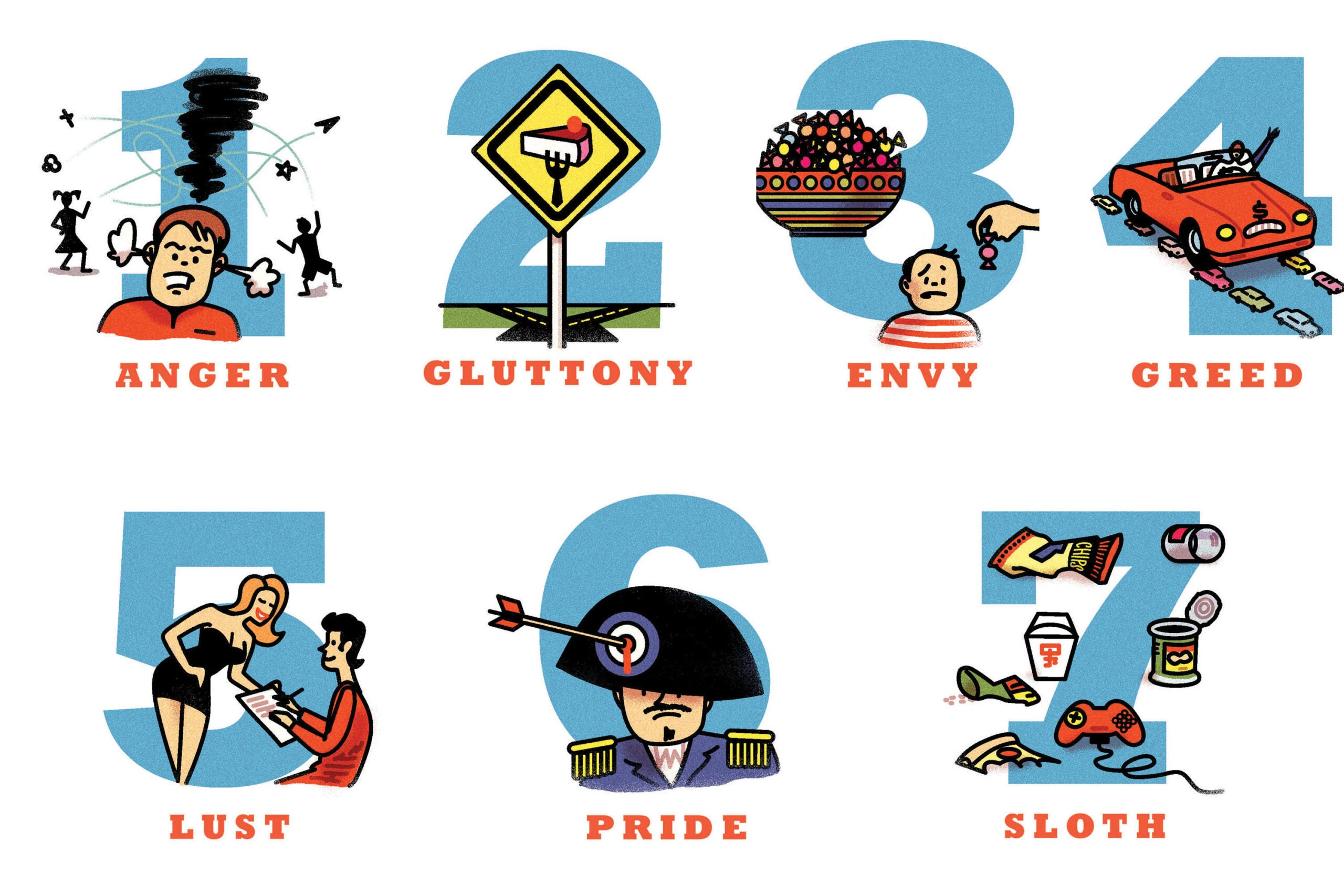
The seven deadly sins, also known as the capital vices or cardinal sins, are a classification of moral failings within Christian teachings used to educate and protect followers from basic human instincts that lead to spiritual decay. These seven sins—pride, greed, lust, envy, gluttony, wrath, and sloth—are considered "capital" because they are the origins or "heads" from which all other immoral behaviors and specific sins arise.
While the concept of the seven deadly sins is deeply rooted in early Christian theology, its influence has permeated global culture, literature, psychology, and ethics. Understanding these sins requires looking beyond their surface definitions to explore their historical development, their philosophical implications, and how they are perceived in a modern, secular context as of 2026.
The Historical Origins of the Seven Deadly Sins
The list of seven deadly sins did not originate directly from a single verse in the Bible. Instead, it evolved through the centuries as a pedagogical tool for monastic discipline and later for the general laity.
From the Desert Fathers to the Eight Evil Thoughts
The framework began with the Desert Fathers, specifically Evagrius Ponticus, a 4th-century monk. Evagrius identified eight "evil thoughts" (logismoi) that troubled the souls of monks: gluttony, lust, avarice, sadness, anger, acedia (spiritual apathy), vainglory, and pride. He believed these thoughts were the primary obstacles to achieving a state of "apatheia" or holy detachment.
In the 5th century, John Cassian brought these teachings to Western Europe. His work, The Institutes, refined the list but maintained the eight-fold structure. These early lists were designed specifically for those in religious life, focusing on the mental and spiritual distractions that prevented deep communion with God.
Pope Gregory I and the Standardized Seven
The transition from eight thoughts to the seven sins we recognize today occurred in the late 6th century under Pope Gregory I (Gregory the Great). In his commentary on the Book of Job, titled Moralia in Iob, Gregory consolidated the list. He merged "vainglory" into "pride" and "acedia" into "sadness," while adding "envy" to the list. Gregory argued that Pride was the root of all evil, the "queen of the vices," which gave birth to the others.
By the 13th century, Saint Thomas Aquinas further solidified this structure in his monumental work, Summa Theologica. Aquinas defined these as "capital" sins (from the Latin caput, meaning "head"), explaining that they are the primary motivations that lead to further transgressions. Under his influence, the list became a central part of Catholic confession and moral instruction.
A Deep Dive into Each of the Seven Sins
To understand the seven deadly sins, one must look at the specific psychological and spiritual corruption each represents. Each sin is often described as a perversion of a natural human desire.
1. Pride (Superbia) – The Root of All Vices
Pride is historically considered the gravest of the seven sins and the source of all others. In a theological sense, pride is not just "feeling good about oneself," but rather a state of extreme self-centeredness where an individual elevates themselves above both God and their fellow human beings.
- The Nature of the Sin: Pride involves a distorted self-perception. It is the belief that one’s own will and achievements are superior to the grace of God or the contributions of others. It leads to "vainglory," an excessive desire for the admiration of others.
- The Distortion: It is a perversion of the natural human need for self-worth and dignity. When this need becomes an obsession with dominance and self-sufficiency, it turns into Superbia.
- Modern Context: In the digital age of 2026, pride is often discussed in the context of "performative identity" on social media, where the curation of an idealized self-image can lead to a disconnect from reality and an inability to accept one's flaws.
2. Greed (Avaritia) – The Endless Want
Greed, or avarice, is the immoderate desire for earthly possessions, wealth, and power. Unlike some other sins that focus on the body, greed is a sin of the spirit and the mind, characterized by an "insatiable" nature.
- The Nature of the Sin: Greed is not merely the possession of wealth but the attachment to it. It manifests as a refusal to share and a constant anxiety about losing what one has or not acquiring enough.
- The Distortion: It perverts the healthy instinct for security and provision. Instead of seeking enough to live and help others, the greedy person seeks accumulation for its own sake.
- Consequences: Thomas Aquinas noted that greed leads to "treachery, fraud, and restlessness of spirit." It blinds the individual to the needs of the community, prioritizing capital over human connection.
3. Lust (Luxuria) – The Misplaced Desire
Lust is the disordered desire for sexual pleasure, where the pursuit of such pleasure is divorced from its relational and procreative purposes.
- The Nature of the Sin: Lust treats other human beings as objects to be used for personal gratification rather than persons to be loved and respected. It is characterized by an intensity of desire that overrides reason and moral boundaries.
- The Distortion: It is the perversion of the natural, healthy human desire for intimacy and union. When the "other" is reduced to a means to an end, the spiritual and emotional components of human connection are discarded.
- Historical Perspective: Early theologians viewed lust as a "sin of the flesh," often considered less grave than "sins of the spirit" (like pride) because it involved a weakness of the body rather than a calculated malice of the soul.
4. Envy (Invidia) – The Bitter Resentment
Envy is often confused with jealousy, but they are distinct. Jealousy is the fear of losing something you possess; envy is the sorrow or resentment felt at another person's good fortune.
- The Nature of the Sin: Envy is unique because it is the only sin that provides no pleasure to the sinner. It is a state of constant dissatisfaction. The envious person views the success or happiness of others as a personal injury or a slight against their own worth.
- The Distortion: It perverts the desire for justice and fairness. Instead of seeking to improve one's own life, the envious person wishes for the downfall of others to level the playing field.
- Cultural Impact: Envy is frequently cited as a primary driver of social conflict and political polarization, as it feeds on the comparison of lifestyles and status.
5. Gluttony (Gula) – The Excess of Consumption
Gluttony is typically associated with overeating, but in theological tradition, it covers any form of overindulgence or excessive preoccupation with food, drink, or physical substances.
- The Nature of the Sin: Pope Gregory I identified five ways to commit gluttony: eating too soon, eating too expensively, eating too much, eating too eagerly, or eating too daintily (being overly fussy). It is the act of making physical pleasure the primary goal of consumption.
- The Distortion: It perverts the natural need for nourishment. When the pleasure of the palate becomes more important than the health of the body or the needs of the hungry, it becomes a vice.
- Modern Expansion: In 2026, the concept of gluttony has expanded to include "digital gluttony"—the excessive and mindless consumption of information and media that prevents productive action.
6. Wrath (Ira) – The Destructive Fire
Wrath is defined as uncontrolled feelings of anger, rage, and even hatred. While anger can sometimes be "righteous" (such as anger at injustice), wrath is characterized by a desire for vengeance that exceeds the bounds of reason.
- The Nature of the Sin: Wrath is a "passion" that clouds the mind. It often manifests in physical violence, verbal abuse, and the long-term harboring of grudges. It seeks to destroy rather than to correct.
- The Distortion: It is a perversion of the sense of justice. While a healthy person feels anger at a wrong, the person possessed by wrath seeks to inflict suffering as a response to perceived slights.
- Psychological View: Modern psychology often views wrath as a secondary emotion, a defensive mechanism used to hide deeper feelings of hurt or fear.
7. Sloth (Acedia) – The Spiritual Indifference
Sloth is the most misunderstood of the seven sins. While modern definitions equate it with physical laziness, its original Latin name, Acedia, refers to "spiritual apathy" or a "lack of care."
- The Nature of the Sin: Sloth is a refusal to do what one ought to do, particularly regarding one's spiritual life and duties toward others. It is a state of "spiritual boredom" where the individual finds the effort required to do good too burdensome.
- The Distortion: It perverts the need for rest and contemplation. Instead of resting to recharge for meaningful work, the slothful person sinks into a state of "busy-ness" that achieves nothing or a lethargy that avoids responsibility.
- Dante’s View: In his Purgatorio, Dante Alighieri describes sloth as "insufficient love." It is the failure to love God and neighbor with the intensity required.
The Counter-Remedies: The Seven Heavenly Virtues
To provide a framework for moral improvement, the Catholic Church emphasized the "Seven Heavenly Virtues" as direct antidotes to the seven deadly sins. These virtues help the individual re-orient their desires toward the "good."
| Sin | Latin Name | Corresponding Virtue | Definition of the Virtue |
|---|---|---|---|
| Pride | Superbia | Humility | Selflessness, recognizing one's limitations and giving credit to others. |
| Greed | Avaritia | Charity | Generosity, the willingness to give of oneself and one's resources. |
| Lust | Luxuria | Chastity | Purity of mind and body; respecting the dignity of others in intimacy. |
| Envy | Invidia | Gratitude | Being thankful for what one has and rejoicing in the success of others. |
| Gluttony | Gula | Temperance | Moderation and self-control in all physical pleasures. |
| Wrath | Ira | Patience | Forbearance and the ability to endure hardship without seeking revenge. |
| Sloth | Acedia | Diligence | Persistence, carefulness, and a commitment to one's duties and spiritual growth. |
Cultural Representations and Legacy
The seven deadly sins have served as a foundation for countless works of art and literature, which helped solidify their place in the public consciousness.
Dante Alighieri’s Divine Comedy
Perhaps the most influential depiction of the seven sins is found in Dante’s Divine Comedy (14th century). In the Inferno, sins are punished in descending order of gravity based on how much they involve the intellect. In the Purgatorio, the sins are categorized as "love distorted" (pride, envy, wrath), "love defective" (sloth), or "love excessive" (greed, gluttony, lust). Dante's vivid imagery—such as the envious having their eyes sewn shut with wire or the proud carrying heavy stones—remains the standard artistic reference for these concepts.
Artistic and Modern Interpretations
During the Renaissance, artists like Hieronymus Bosch and Pieter Bruegel the Elder created intricate paintings depicting the sins as grotesque and cautionary tales. In the 20th and 21st centuries, the sins have been explored in films like Se7en (1995), various anime series (such as Fullmetal Alchemist), and modern literature.
In 2026, the sins are often used as a shorthand in psychological thrillers and ethical debates to explore the darker side of human nature without necessarily invoking traditional religious dogma.
Psychological Perspectives in 2026
While the "Seven Deadly Sins" is a theological term, many modern psychologists view these behaviors as "maladaptive personality traits" or "behavioral dysfunctions."
- Narcissism vs. Pride: Modern clinical psychology often links the traditional concept of pride to Narcissistic Personality Disorder (NPD), where an inflated sense of self masks deep insecurity.
- Addiction vs. Gluttony/Lust: What was once seen purely as a moral failing is now understood through the lens of neurobiology. Addictive behaviors regarding food or pornography are treated as disruptions in the brain's reward system.
- Depression vs. Sloth: It is critical to distinguish between Acedia (a spiritual choice to ignore duty) and clinical depression, which is a medical condition involving chemical imbalances. Modern ethics emphasizes that a "sin" requires a degree of free will that a medical illness may limit.
FAQs about the Seven Deadly Sins
Are the seven deadly sins in the Bible?
The specific list of seven "deadly" sins does not appear in the Bible as a single list. However, Proverbs 6:16-19 lists "six things the Lord hates, seven that are detestable to him," which includes things like "haughty eyes" (pride) and "a heart that devises wicked schemes." The formalized list was a later theological development by the early Church Fathers.
Why are they called "deadly" sins?
They are called "deadly" (or mortal) because, in traditional Catholic theology, committing these sins with full knowledge and consent results in the "death of the soul"—a complete separation from God’s grace. If not confessed and forgiven, they are believed to lead to eternal damnation.
What is the difference between a cardinal sin and a deadly sin?
In this context, the terms are interchangeable. "Cardinal" comes from the Latin cardo, meaning "hinge," indicating that these are the sins upon which all other vices turn. "Capital" refers to them being the "head" or source of other sins.
Can a person be forgiven for these sins?
Yes, in Christian theology, there is no sin that cannot be forgiven if the individual is truly repentant. The "unforgivable sin" mentioned in scripture (blasphemy against the Holy Spirit) is generally interpreted by theologians as a final, persistent refusal to accept God's forgiveness.
Is "sadness" still considered one of the sins?
In the original list by Evagrius Ponticus, "sadness" (tristitia) was a sin. Pope Gregory I eventually merged it with "acedia" to form what we now call "sloth." The logic was that excessive worldly sorrow (different from godly sorrow for sin) represented a lack of trust in God’s providence.
Which sin is considered the worst?
Theological tradition almost universally identifies Pride as the worst of the seven sins. It is considered the "sin of sins" because it was the sin of Lucifer and is the psychological foundation that allows all other sins to occur.
Next Actions for Further Understanding
To deepen your understanding of the seven deadly sins and their role in ethics and history, consider the following steps:
- Read Original Sources: Explore the Summa Theologica by Thomas Aquinas (Second Part of the Second Part) for a technical breakdown of each vice.
- Study Literature: Read Dante’s Purgatorio to see how the sins are categorized based on the "distortion of love."
- Reflect on the Virtues: Instead of focusing solely on the "vices," study the Seven Heavenly Virtues as a practical guide for personal development and ethical living.
- Consult Ethical Frameworks: Compare the seven deadly sins with other ethical systems, such as the Aristotelian "Golden Mean" or Buddhist concepts of "the three poisons" (greed, hatred, and delusion).