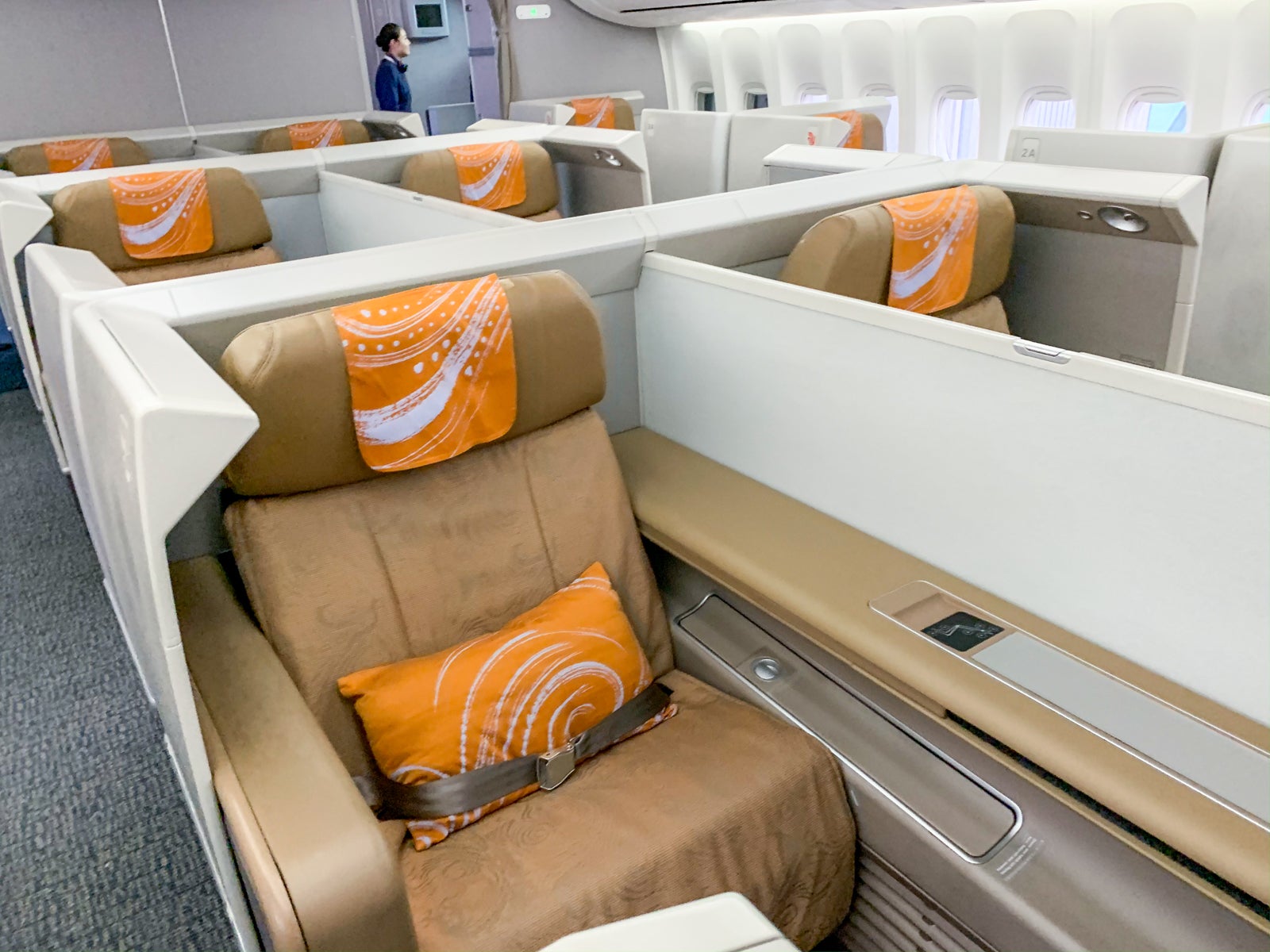
Air China’s First Class on the Boeing 777-300ER, branded as the "Forbidden Pavilion," provides an ultra-premium 1-2-1 configuration across eight exclusive suites. Featuring fully lie-flat beds, personalized tea ceremonies, and expansive gourmet dining, it remains the airline's flagship international product for long-haul travel across its global network in 2026.
The Architecture of the Forbidden Pavilion Cabin
The Boeing 777-300ER (Extended Range) serves as the backbone of Air China’s long-haul fleet, and its First Class cabin represents the pinnacle of the airline's "Zijin Hao" service philosophy. Unlike many modern carriers that have opted to remove First Class in favor of dense Business Class configurations, Air China maintains a dedicated eight-seat cabin at the front of the aircraft. This 1-2-1 layout ensures that every passenger has direct aisle access, a prerequisite for any competitive international First Class product in 2026.
The cabin aesthetic is characterized by a blend of traditional Chinese elegance and modern industrial design. Soft whites and greys are accented by mahogany-toned wood finishes, creating a serene environment that mimics the atmosphere of a high-end boutique hotel. While the suites are not fully enclosed with ceiling-high doors, the high partitions and staggered entryways provide significant visual privacy from other passengers and the galley. This design choice prioritizes an open, airy feel while still protecting the passenger’s personal space.
For solo travelers, the window seats (A and L) are the gold standard, offering two or three dedicated windows and a sense of total isolation. For couples traveling together, the center pairs (D and H) allow for easy communication, though a retractable privacy divider can be raised if you find yourself seated next to a stranger. The 777’s wide fuselage allows for an exceptionally wide seat, which is crucial for comfort during the 12-to-15-hour transpacific or Eurasian flights that this aircraft typically operates.
Detailed Seat Specifications and Ergonomics
The "Forbidden Pavilion" suite is built upon a heavy-duty mechanical frame designed for maximum reliability and comfort. When in the upright position, the seat offers a pitch of approximately 80 inches and a width of nearly 30 inches, making it one of the most spacious seats in the Star Alliance network. The ergonomics are controlled via a touch-sensitive tablet and secondary manual buttons, allowing for micro-adjustments to the lumbar support, leg rest, and backrest angle.
When it is time for rest, the seat converts into a fully flat bed that extends to 80 inches. Air China’s cabin crew provides a full turndown service, which includes the addition of a thick quilted mattress pad, a heavy down duvet, and a choice of pillows (including traditional buckwheat or soft down). The flat-bed surface is impressively wide at the shoulders, accommodating side-sleepers who often find narrower Business Class seats restrictive.
Storage is another area where the 777 First Class suite excels. Each suite features a dedicated coat closet, a deep side bin for laptops and tablets, and a massive under-ottoman space that can accommodate a standard-sized carry-on bag. This eliminates the need for passengers to use the overhead bins, further contributing to the spacious feel of the cabin. A large, sturdy mahogany-patterned dining table slides out from the side console, providing a stable surface for both multi-course meals and productive work sessions.
The Ground Experience: Beijing Capital and Beyond
A First Class journey on Air China officially begins long before boarding. In 2026, the airline continues to offer a premium chauffeur service in key hub cities like Beijing, Shanghai, and Chengdu, as well as select international destinations such as London and Los Angeles. For passengers departing from Beijing Capital International Airport (PEK), a dedicated premium check-in area in Terminal 3 provides a seamless transition from the car to the lounge.
The Air China First Class Lounge in Beijing Terminal 3E is the flagship ground facility. It is divided into several zones designed for different passenger needs:
- The Dining Room: Features an extensive buffet of both Chinese and Western dishes, alongside an à la carte menu featuring seasonal specialties like Peking duck or handmade noodles.
- The Tea House: A quiet corner dedicated to traditional Chinese tea culture, where staff can prepare premium loose-leaf teas according to regional customs.
- Sleeping Pods: For those on long layovers, private nap rooms with real beds (not just recliners) are available on a first-come, first-served basis.
- Showers and Wellness: High-pressure shower suites stocked with premium toiletries allow travelers to freshen up before their long-haul departure.
One distinct advantage for First Class passengers is the "Fast Track" security and immigration lanes, which significantly reduce the transit time through PEK’s sprawling Terminal 3. For international arrivals, Air China also provides lounge access and, in some cases, hotel day-room vouchers for passengers with long connections.
Culinary Excellence and the Onboard Tea Ceremony
Dining is the centerpiece of the Forbidden Pavilion experience. Air China’s catering focuses on authentic regional Chinese cuisine, often curated by renowned chefs from the Beijing and Shanghai culinary scenes. The meal service is "dine on demand," meaning passengers can choose to eat at any point during the flight rather than following a fixed schedule.
The menu typically begins with an elaborate caviar service, accompanied by traditional garnishes and a glass of vintage Champagne (often Krug or Dom Pérignon). This is followed by a series of appetizers and a soup course—a staple of Chinese fine dining. Signature main courses frequently include braised abalone, stir-fried lobster with ginger and scallion, or slow-cooked wagyu beef.
Perhaps the most unique aspect of the service is the Traditional Tea Ceremony. Air China trains its First Class flight attendants in the art of tea preparation. Passengers can choose from a curated list of high-grade teas, such as Dragon Well (Longjing), Tieguanyin, or aged Pu-erh. The tea is served in delicate porcelain ware, and the process is treated with a level of ritual that reflects China’s rich cultural heritage. For many travelers, this ceremony is a highlight of the flight, offering a moment of zen at 35,000 feet.
Amenities, Technology, and In-flight Entertainment
In 2026, connectivity is no longer an option but a requirement. Air China’s 777-300ER fleet is equipped with high-speed satellite Wi-Fi. First Class passengers typically receive complimentary unlimited data for the duration of the flight, allowing for seamless video streaming and professional communication.
The hardware for entertainment includes:
- Display: A 23-inch high-definition touchscreen monitor.
- Content: An expansive library of international movies, "Hollywood" blockbusters, and a deep selection of Chinese cinema and documentaries.
- Audio: High-quality noise-canceling headphones are provided at each seat, though the system also supports Bluetooth pairing for personal devices.
The amenity kit is another area where Air China showcases its premium partnerships. In 2026, these kits usually feature products from high-end French or Swiss skincare brands (such as L'Occitane or La Prairie), containing essentials like lip balm, facial mist, and hand cream. Passengers are also provided with high-quality cotton pyjamas and slippers, which are theirs to keep. The pyjamas are often designed with subtle Chinese motifs, such as cloud patterns or traditional collars, aligning with the "Forbidden Pavilion" theme.
Comparative Analysis of the 777 First Class Product
| Feature | Air China 777-300ER First Class | Industry Standard (Avg) |
|---|---|---|
| Configuration | 1-2-1 (8 Suites) | 1-2-1 or 1-1-1 |
| Bed Length | 80 inches | 78-82 inches |
| Seat Width | 29.5 inches | 26-30 inches |
| Screen Size | 23-inch HD | 18-24 inch |
| Wi-Fi | Complimentary Unlimited | Paid or Limited |
| Dining | Dine on Demand + Tea Ceremony | Scheduled or Dine on Demand |
| Ground Service | Chauffeur + Dedicated Terminal | Lounge Access Only |
This table illustrates that while Air China may not have the "closed door" suites found on some Middle Eastern carriers, its core specifications—particularly seat width and bed length—remain at the top of the industry. The inclusion of complimentary Wi-Fi and a chauffeur service adds significant value that is often stripped away by other airlines.
How to Book and Maximize Value
Booking a First Class seat on the 777 can be done through cash or miles, though the strategies differ significantly. Cash fares for a round-trip from the US or Europe to China in First Class typically range from $12,000 to $20,000. However, Air China frequently offers competitive "First Plus" fares from Southeast Asian gateways (like Bangkok or Singapore) to North America via Beijing, which can be significantly cheaper than departing directly from a major hub.
For award redemptions, Air China is a member of the Star Alliance. This means you can use miles from partners like United Airlines (MileagePlus), Air Canada (Aeroplan), or Avianca (LifeMiles) to book these seats.
- Availability: Air China generally releases First Class award space to partners about 330 days in advance, though it is often limited to one seat per flight.
- PhoenixMiles: Using Air China’s own loyalty program, PhoenixMiles, provides the best access to "Forbidden Pavilion" inventory, including the ability to upgrade from Business Class (J/C/D/R classes) using miles.
- Taxes and Surcharges: Unlike some European carriers, Air China’s fuel surcharges are relatively moderate, making it a "sweet spot" for Aeroplan users who want to avoid the high fees associated with Lufthansa or Swiss First Class.
Frequently Asked Questions
Is there Wi-Fi on Air China 777 First Class?
Yes, in 2026, all Air China Boeing 777-300ER aircraft operating international routes are equipped with satellite-based Wi-Fi. First Class passengers receive complimentary, unlimited access. While the speed is sufficient for browsing, email, and social media, peak usage times may see slight latency during video streaming over the Pacific.
How does Air China First Class compare to their Business Class?
The leap from Business to First on the 777 is substantial. While Air China’s 777 Business Class offers a lie-flat seat in a 2-2-2 or 1-2-1 configuration (depending on the specific aircraft sub-version), First Class provides nearly double the personal space, a dedicated turndown service with a mattress pad, significantly higher-end catering (including caviar), and access to the more exclusive First Class lounges.
Do First Class passengers get a chauffeur?
Yes, Air China provides a chauffeur-driven luxury sedan service for First Class and full-fare Business Class passengers in many of its hub cities and several international destinations. This service must be booked at least 24 to 48 hours in advance through the Air China app or customer service hotline.
What is the "Forbidden Pavilion" branding?
"Forbidden Pavilion" (or Zijin Hao) is the marketing name for Air China's First Class. It is inspired by the Forbidden City in Beijing, aiming to evoke the luxury and service once reserved for Chinese royalty. This is reflected in the cabin decor, the tea ceremony, and the high-end materials used in the bedding and amenity kits.
Is the seat a fully enclosed suite?
The 777 First Class seat is a "suite-style" product with high partitions, but it does not feature sliding doors that close completely. However, due to the 1-2-1 layout and the angle of the seats, privacy is excellent. You cannot see other passengers once you are seated and reclined.
Final Recommendation for Travelers
Air China First Class on the 777-300ER is an excellent choice for travelers who value space, cultural authenticity, and a quiet cabin environment. While it may lack the flashy "apartment" style suites of some competitors, it compensates with one of the most comfortable beds in the sky and a service level that is deeply attentive without being intrusive. For the best experience, aim to book the window suites (1A or 2L) and take advantage of the chauffeur and lounge facilities in Beijing to ensure a seamless door-to-door luxury journey.