Accounting key words are the foundational vocabulary used to document, classify, and interpret the financial health of an organization or individual. Mastering these terms is essential for accurate bookkeeping, regulatory compliance, and effective decision-making, as they provide the standardized language necessary to communicate complex economic events through financial statements.
The Role of Standardized Accounting Terminology
In the world of finance, precision is not merely a preference; it is a requirement. Accounting key words act as a universal bridge between raw transactional data—such as invoices, receipts, and bank statements—and the final reports that stakeholders, tax authorities, and investors rely upon. When a business uses standardized terminology, it ensures that an "asset" in one jurisdiction or software system is defined identically to an "asset" in another.
This standardization is primarily governed by frameworks such as Generally Accepted Accounting Principles (GAAP) in the United States or the International Financial Reporting Standards (IFRS) globally. These frameworks define how specific terms are categorized, ensuring consistency in financial reporting. By utilizing the correct terminology, accountants prevent ambiguity, minimize the risk of audit failures, and provide a clear narrative of the business’s financial performance over time.
Categorizing Core Financial Concepts
To understand the scope of accounting, it is helpful to categorize key words into the three primary financial statements they serve: the Balance Sheet, the Income Statement, and the Cash Flow Statement.
1. Balance Sheet Terms
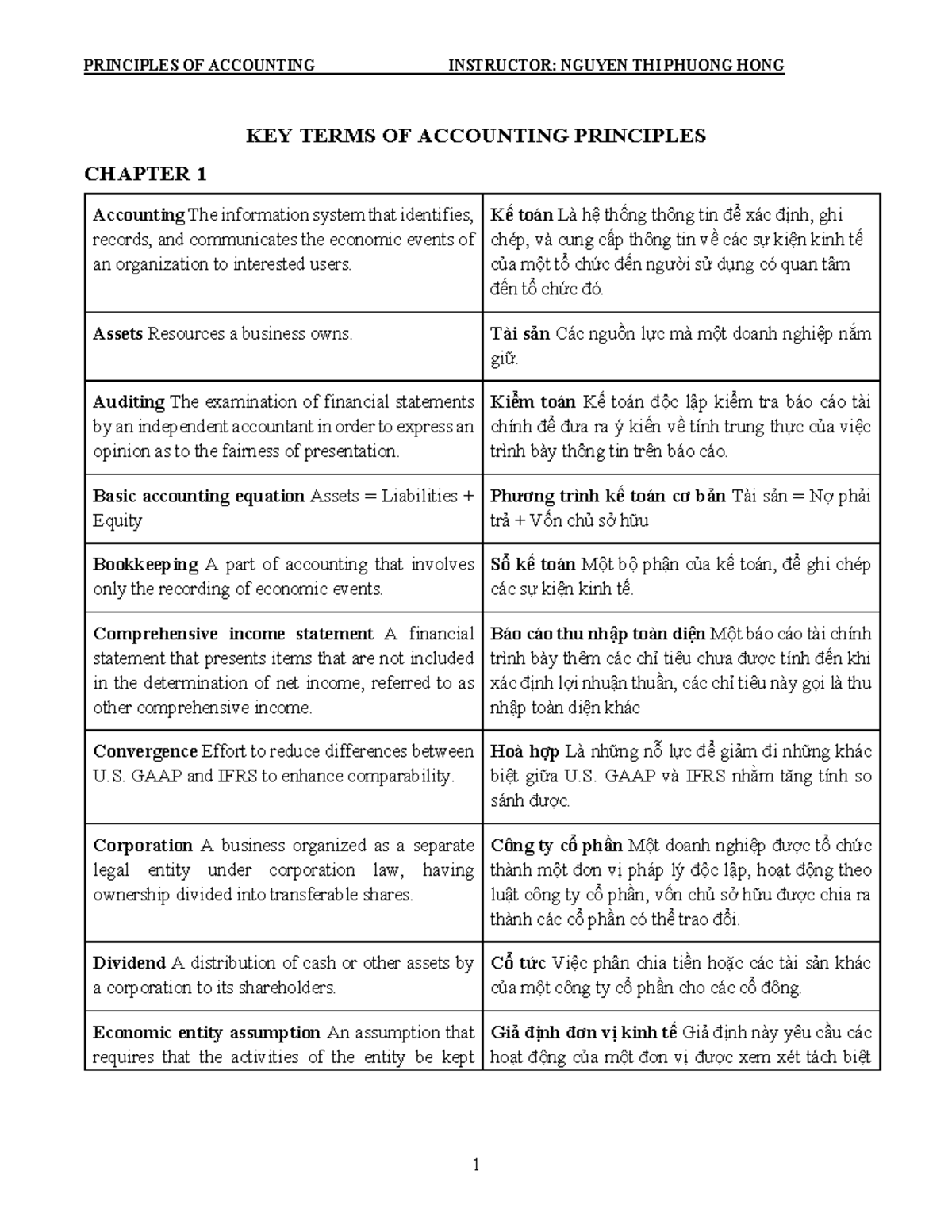
The Balance Sheet provides a snapshot of a company's financial position at a single point in time. It relies on the fundamental accounting equation: Assets = Liabilities + Equity.
- Assets: Resources owned by an entity that have economic value. These are typically split into current assets (convertible to cash within a year) and non-current assets (long-term holdings like property and equipment).
- Liabilities: Financial obligations that an entity owes to outside parties. Like assets, these are divided into current liabilities (due within a year) and long-term liabilities (due in the future).
- Equity: Also known as shareholder’s equity or owner’s equity, this represents the net worth of the business—the amount that would remain if all assets were liquidated and all debts were paid.
2. Income Statement (Profit and Loss) Terms
The Income Statement tracks financial performance over a specific period. It centers on the formula: Revenue - Expenses = Net Income.
- Revenue: The gross inflow of economic benefits arising from the ordinary activities of the business.
- COGS (Cost of Goods Sold): The direct costs attributable to the production of the goods sold by a company.
- Gross Profit: Revenue minus COGS.
- Operating Expenses: The costs required to run the day-to-day operations, such as rent, salaries, and utility bills.
- EBITDA: An acronym for Earnings Before Interest, Taxes, Depreciation, and Amortization. It is often used as an indicator of a company's core operational profitability.
3. Cash Flow Statement Terms
While the Income Statement reflects accounting profit, the Cash Flow Statement tracks the actual movement of cash.
- Operating Activities: Cash generated from the core business services.
- Investing Activities: Cash used for or received from the purchase and sale of long-term assets.
- Financing Activities: Cash flow from transactions with owners or creditors, such as issuing stock or paying dividends.
Comparison of Financial Metrics
Understanding how these metrics interact allows for a deeper analysis of business viability. The table below outlines common key words and their specific financial functions.
| Term | Context | Primary Purpose |
|---|---|---|
| Accounts Receivable | Balance Sheet | Represents money owed to the business by customers for credit sales. |
| Accounts Payable | Balance Sheet | Represents money the business owes to suppliers for goods or services. |
| Amortization | P&L / Cash Flow | The process of spreading out the cost of an intangible asset over its life. |
| Depreciation | P&L / Cash Flow | The allocation of the cost of a tangible asset over its useful life. |
| Accrual | Accounting Method | Recording income or expenses when they occur, not when cash changes hands. |
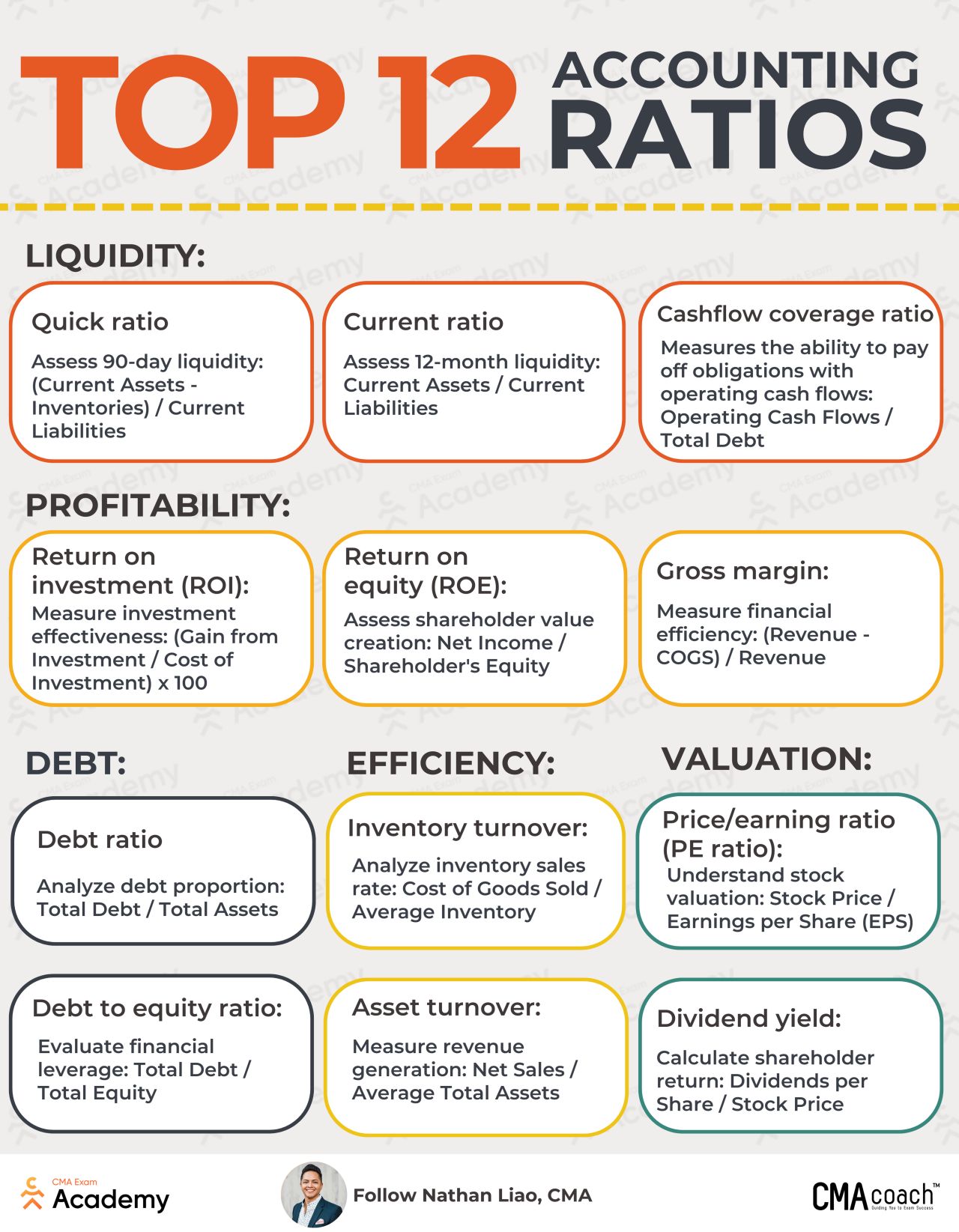
| Liquidity | Financial Analysis | The ability of a company to meet its short-term debt obligations. |
The Distinction Between Accrual and Cash Basis Accounting
One of the most critical conceptual areas for any business owner or student is the difference between Cash Basis and Accrual Basis accounting. The chosen method fundamentally changes how key words are applied in practice.
Under Cash Basis Accounting, transactions are recorded only when cash actually enters or leaves the bank account. This is simple and intuitive but may provide a misleading picture of a company’s long-term health, as it ignores pending obligations or earned but uncollected revenue.
Accrual Basis Accounting requires that revenue be recorded when it is earned, regardless of when the payment is received, and expenses be recorded when they are incurred, regardless of when the bill is paid. This method provides a more accurate view of a company's financial position and is mandatory for most medium-to-large businesses under GAAP. Mastering "accrual" as a keyword is vital, as it introduces concepts like prepaid expenses and deferred revenue into the ledger.
Common Pitfalls and Misunderstandings
Even experienced professionals can encounter difficulties when applying accounting terminology. A frequent error involves conflating "profit" with "cash flow." A company might show a healthy profit on the Income Statement (due to high sales volume) but suffer a liquidity crisis because those sales were made on credit and the cash hasn't yet materialized.
Another common mistake is the misclassification of capital expenditures versus operating expenses.
- Capital Expenditures (CapEx): Significant purchases (like machinery) that provide benefits over many years. These are recorded as assets on the Balance Sheet and "depreciated" over time.
- Operating Expenses (OpEx): Routine costs that are fully deducted in the period they occur.
Confusing these two leads to inaccurate tax filings and distorted profit margins. Always consult with a certified professional or tax advisor when unsure about the classification of a significant financial transaction, as local tax laws—such as those enforced by the IRS in the United States—dictate specific treatments for these categories.
Integrating Technology and Software Terminology
In 2026, most businesses rely on cloud-based accounting software to manage their ledgers. Understanding the terminology specific to these platforms is just as important as understanding traditional accounting theory.
- Ledger: The central repository for all financial data.
- Chart of Accounts: The index of all financial accounts in the general ledger of a company. It is the "map" that dictates where every dollar spent or received is categorized.
- General Ledger (GL) Reconciliation: The process of ensuring that the internal records match external sources, such as bank statements or vendor invoices.
- Cloud-Based Accounting: Software that enables real-time access to financial data from multiple locations, automating the categorization of transactions through "bank feeds."
When evaluating these tools, look for software that aligns with your specific industry needs. Some platforms use specialized key words for inventory management, manufacturing, or service-based billing that go beyond the basic terminology required for retail or freelance work.
FAQ: Navigating Accounting Vocabulary
Why is "liquidity" considered a critical accounting keyword? Liquidity refers to a business’s ability to pay its immediate debts. If a company has high "solvency" (enough assets to cover long-term debt) but low "liquidity" (no cash on hand to pay the electric bill), the business can still face insolvency.
How does "depreciation" affect my tax liability? Depreciation is a non-cash expense. By spreading the cost of an asset over its useful life, it lowers your taxable income each year without requiring a massive cash outlay in the year of purchase.
What is the difference between a "bookkeeper" and an "accountant" in terms of terminology usage? A bookkeeper is typically responsible for the day-to-day recording of transactions (the "data entry" phase of accounting), while an accountant is responsible for analyzing those records, interpreting the data, and providing high-level financial guidance.
Can I change my accounting method after I have started my business? Yes, but it often requires notification or approval from tax authorities. Because switching between cash and accrual methods changes how you report revenue and expenses, it can have significant tax consequences.
What is "EBITDA" and why do investors look for it? EBITDA strips away the effects of financing (interest), taxation, and accounting decisions (depreciation/amortization). It allows investors to compare the operating performance of two companies regardless of how they are financed or how they depreciate their assets.
Next Steps for Financial Proficiency
To move from basic knowledge to practical application, perform an annual review of your Chart of Accounts. Ensure that every category label is intuitive and aligned with the current operational structure of your business. If your financial reports are consistently confusing, the issue is often not the data itself, but the way your accounts are named and structured. Start by reconciling your accounts monthly to ensure that the key words you use in your software actually match the financial reality of your bank statements.