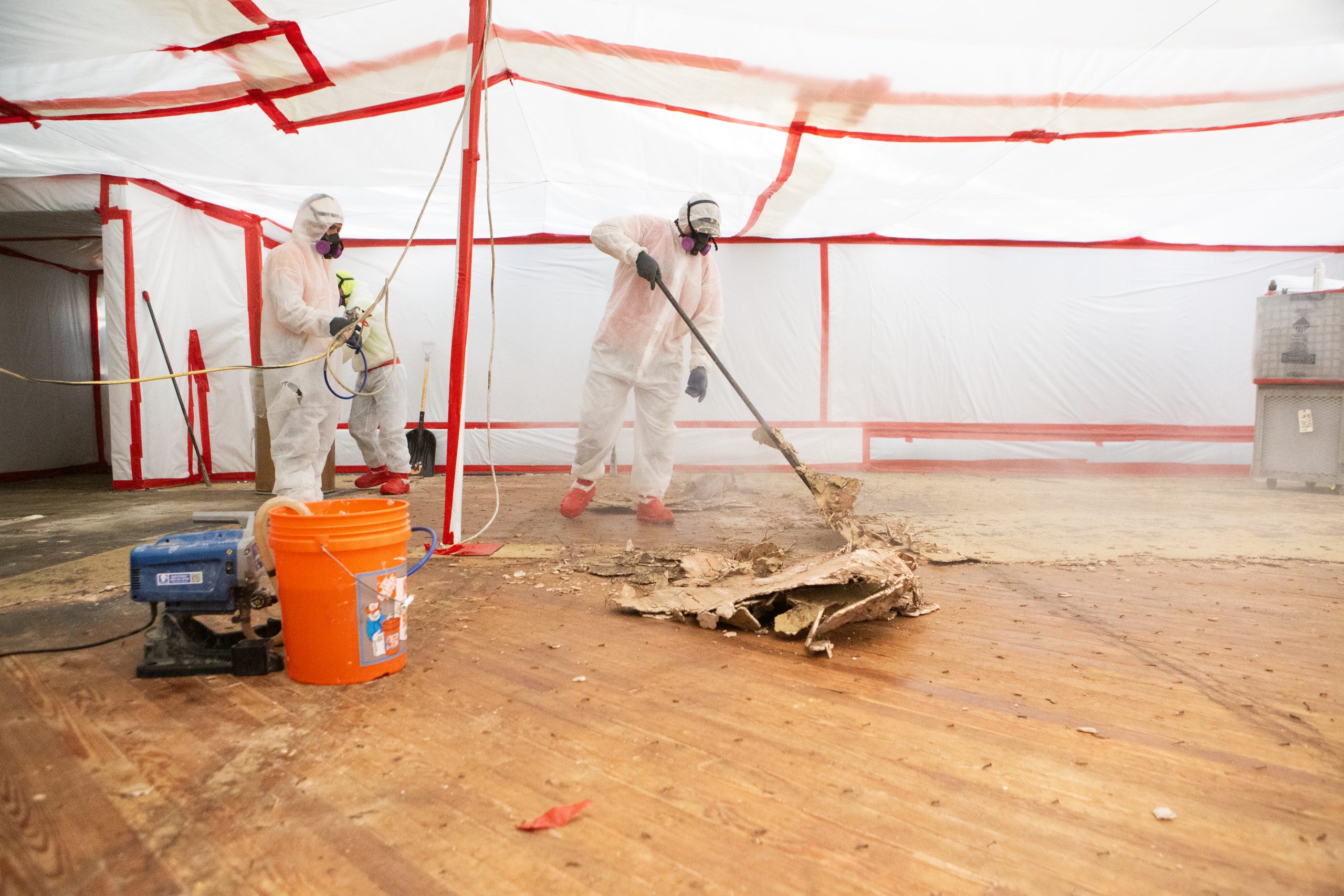
Asbestos abatement in urban projects is the highly regulated process of identifying, enclosing, or removing asbestos-containing materials (ACM) from buildings in densely populated areas. This procedure is critical during renovation or demolition to prevent the airborne release of toxic fibers, ensuring the safety of workers, building occupants, and the surrounding metropolitan public.
The Complexity of Urban Asbestos Abatement
In 2026, asbestos abatement remains a cornerstone of urban redevelopment. Unlike rural or isolated industrial sites, urban projects face a unique set of logistical and environmental challenges. High-density environments mean that a single breach in containment can potentially expose thousands of people in neighboring office towers, residential complexes, or public transit hubs.
The "urban factor" necessitates a higher level of precision. Buildings in major cities are often interconnected or share structural components. When a pre-war skyscraper undergoes a "gut renovation," the abatement team must manage not only the internal environment but also the external impact. This includes managing exhaust from high-efficiency particulate air (HEPA) filtration units, which cannot simply be vented into a narrow alleyway where pedestrians congregate.
Furthermore, urban projects often involve historical structures where asbestos was used extensively in floor tiles, pipe insulation, roofing felt, and spray-on fireproofing. The preservation of architectural integrity while performing invasive hazardous material removal requires a specialized workforce trained in both remediation and structural preservation.
Regulatory Requirements and Compliance Standards in 2026
As of 2026, the regulatory landscape for asbestos is governed by a multi-layered framework of federal, state, and municipal laws. In the United States, the Environmental Protection Agency (EPA) and the Occupational Safety and Health Administration (OSHA) set the primary benchmarks.
EPA NESHAP Regulations
The National Emission Standards for Hazardous Air Pollutants (NESHAP) requires that owners or operators of a demolition or renovation activity notify the appropriate state agency before work begins. This applies to all "regulated asbestos-containing material" (RACM). In urban settings, the definition of RACM is strictly enforced, particularly regarding friable materials—those that can be crumbled or reduced to powder by hand pressure when dry.
OSHA Worker Safety Standards
OSHA's asbestos standard (29 CFR 1926.1101) dictates the safety protocols for employees. This includes the mandatory use of Personal Protective Equipment (PPE), such as N100 or P100 respirators and disposable coveralls. In 2026, OSHA mandates rigorous medical surveillance for workers exposed to asbestos above the permissible exposure limit (PEL) of 0.1 fiber per cubic centimeter of air as an eight-hour time-weighted average.
Municipal Codes and Permitting
Urban centers like New York City, Chicago, and London have established their own local departments (e.g., the NYC Department of Environmental Protection) that require independent asbestos surveys and specialized "ACP-7" or equivalent filings. These local codes often exceed federal requirements, demanding stricter perimeter air monitoring and more frequent site inspections.
Detailed Procedural Steps for Urban Removal
The abatement process is a linear sequence of events designed to isolate the hazard. In a city environment, the margin for error is zero, making each phase critical.
Pre-Abatement Assessment and Surveying
Before any tool touches a wall, a certified asbestos inspector must perform a comprehensive survey. This involves taking bulk samples of suspected materials and analyzing them using Polarized Light Microscopy (PLM) or Transmission Electron Microscopy (TEM).
In urban projects, the surveyor must also map out the building's HVAC system. Because ventilation systems in older buildings often interconnect floors, the abatement plan must include "critical barriers"—airtight seals over vents, windows, and doors—to prevent cross-contamination to non-work areas.
Establishing Containment in High-Density Areas
The gold standard for urban abatement is the Negative Pressure Enclosure (NPE). Contractors seal the work area with multiple layers of 6-mil fire-retardant polyethylene sheeting.
Negative air machines, equipped with HEPA filters, are used to pull air out of the enclosure. This creates a vacuum effect; if a leak occurs in the plastic, air rushes into the work zone rather than escaping out. In 2026, these systems are typically linked to digital manometers that provide real-time pressure readings to off-site monitors, ensuring that containment is never lost during off-hours.
Removal Techniques and Dust Suppression
Once containment is verified, the actual removal begins. The primary strategy is the "wet method." Asbestos materials are saturated with amended water (water treated with a surfactant to penetrate fibers) before they are disturbed. This keeps the fibers heavy and prevents them from becoming airborne.
For smaller urban jobs, such as removing pipe insulation in a basement, "glove bags" are used. These are heavy-duty plastic bags with built-in gloves that allow a technician to strip the asbestos from the pipe without ever exposing the material to the room's atmosphere.
Waste Management and Logistics in Urban Centers
One of the most difficult aspects of urban abatement is the "cradle-to-grave" responsibility for asbestos waste. Removing the material from the building is only half the battle; transporting it through a congested city requires meticulous planning.
- Bagging and Labeling: All waste must be double-bagged in 6-mil bags, clearly labeled with danger warnings, and goose-neck taped.
- Decontamination Units: Workers and bagged waste must pass through a three-stage decontamination unit (clean room, shower room, and equipment room). This ensures no fibers leave the site on clothing or bag surfaces.
- Loading Docks and Permitting: In 2026, urban projects often require "street activity" permits to place waste containers (dumpsters) on the curb. These containers must be lined with plastic and locked at all times.
- Manifesting: Every pound of asbestos must be tracked. The waste shipment record (WSR) follows the material from the urban site to a licensed hazardous waste landfill, providing legal proof of proper disposal.
Air Quality Monitoring and Final Clearance
In a city, the public's perception of safety is as important as the reality. Third-party air monitoring is mandatory for most urban projects to avoid conflicts of interest.
Air pumps are placed inside the work area, at the entrance to the decontamination unit, and at various "ambient" locations outside the containment. If any pump detects a fiber count above the regulated threshold, work stops immediately until the source is identified and mitigated.
The project is only deemed complete after a "Final Clearance" test. For large-scale urban renovations, this usually requires Transmission Electron Microscopy (TEM) analysis. While more expensive than Phase Contrast Microscopy (PCM), TEM can distinguish between asbestos fibers and non-hazardous fibers (like fiberglass or cotton), providing a definitive "all-clear" for subsequent construction trades to enter the area.
Cost Analysis for Urban Abatement Projects (2026 Estimates)
Costs in 2026 reflect the increased prices of specialized labor and the high overhead of urban logistics. Unlike suburban projects, urban abatement incurs significant costs related to parking, security, and restricted working hours.
| Abatement Element | Estimated Cost (2026 USD) | Complexity Factor |
|---|---|---|
| Pre-Construction Survey | $1,500 - $5,000 | Higher for multi-unit buildings |
| Floor Tile Removal | $5 - $12 per sq. ft. | Dependent on mastic (glue) type |
| Pipe Insulation | $25 - $45 per linear foot | High in narrow utility shafts |
| Spray-on Fireproofing | $15 - $30 per sq. ft. | Requires full negative pressure |
| Air Monitoring (Daily) | $600 - $1,200 | Required by local mandates |
| Disposal Fees | $150 - $300 per ton | Includes urban transport surcharges |
Note: These figures are baseline estimates for the 2026 fiscal year and can fluctuate based on building height, accessibility, and the presence of other hazardous materials like lead paint.
Frequently Asked Questions
Can I occupy an urban building while asbestos is being removed?
Yes, provided the abatement is localized and the containment is managed under negative pressure. In multi-tenant urban buildings, abatement often happens at night or on weekends. Strict air monitoring ensures that the shared HVAC system and common hallways remain free of contaminants. However, if the project involves the main mechanical room or primary ventilation shafts, a temporary evacuation of the affected zones is usually required.
What is the difference between friable and non-friable asbestos in a city project?
Friable asbestos, such as pipe lagging or sprayed-on insulation, is the most dangerous because it can be easily crushed into dust. Non-friable materials, like vinyl floor tiles or transite siding, are bound in a solid matrix. In urban projects, even non-friable materials are often treated as friable if the demolition method (such as using jackhammers) is likely to pulverize the material.
How do 2026 regulations handle asbestos in "hidden" urban infrastructure?
Urban infrastructure, such as steam tunnels and underground electrical conduits, often contains asbestos. Regulations in 2026 require utility companies and developers to maintain a "Hazardous Materials Map." Before any excavation or "cut-and-cap" utility work, a site-specific health and safety plan (HASP) must be approved by the local environmental agency to protect both the workers and the public.
Is encapsulation a viable alternative to removal in urban settings?
Encapsulation involves sealing the asbestos with a specialized coating to prevent fiber release. While cheaper than removal, it is often discouraged in urban "gut renovations" because it leaves the hazard in place for future owners. In 2026, many urban lenders and insurance companies require full removal (abatement) rather than encapsulation to minimize long-term liability.
How do I verify if an abatement contractor is legitimate?
In the 2026 market, you should request three pieces of documentation: a current state-issued asbestos contractor license, proof of "pollution occurrence insurance" (which covers asbestos-related claims), and the individual certifications for every supervisor and handler on-site. You can verify these credentials through the EPA’s ASBESTOS portal or the respective state’s Department of Labor website.
Practical Recommendation for Project Managers
If you are overseeing an urban project in 2026, the most effective way to manage asbestos risk is through early detection and total transparency. Do not wait for the demolition phase to discover ACM. Conduct a "destructive survey"—where inspectors look behind walls and under subfloors—during the pre-design phase.
Communicate openly with neighboring property owners and community boards. Providing them with access to real-time air monitoring data can prevent costly legal injunctions and project delays. Finally, always hire a separate firm for air monitoring than the one performing the removal to ensure an unbiased safety verification.