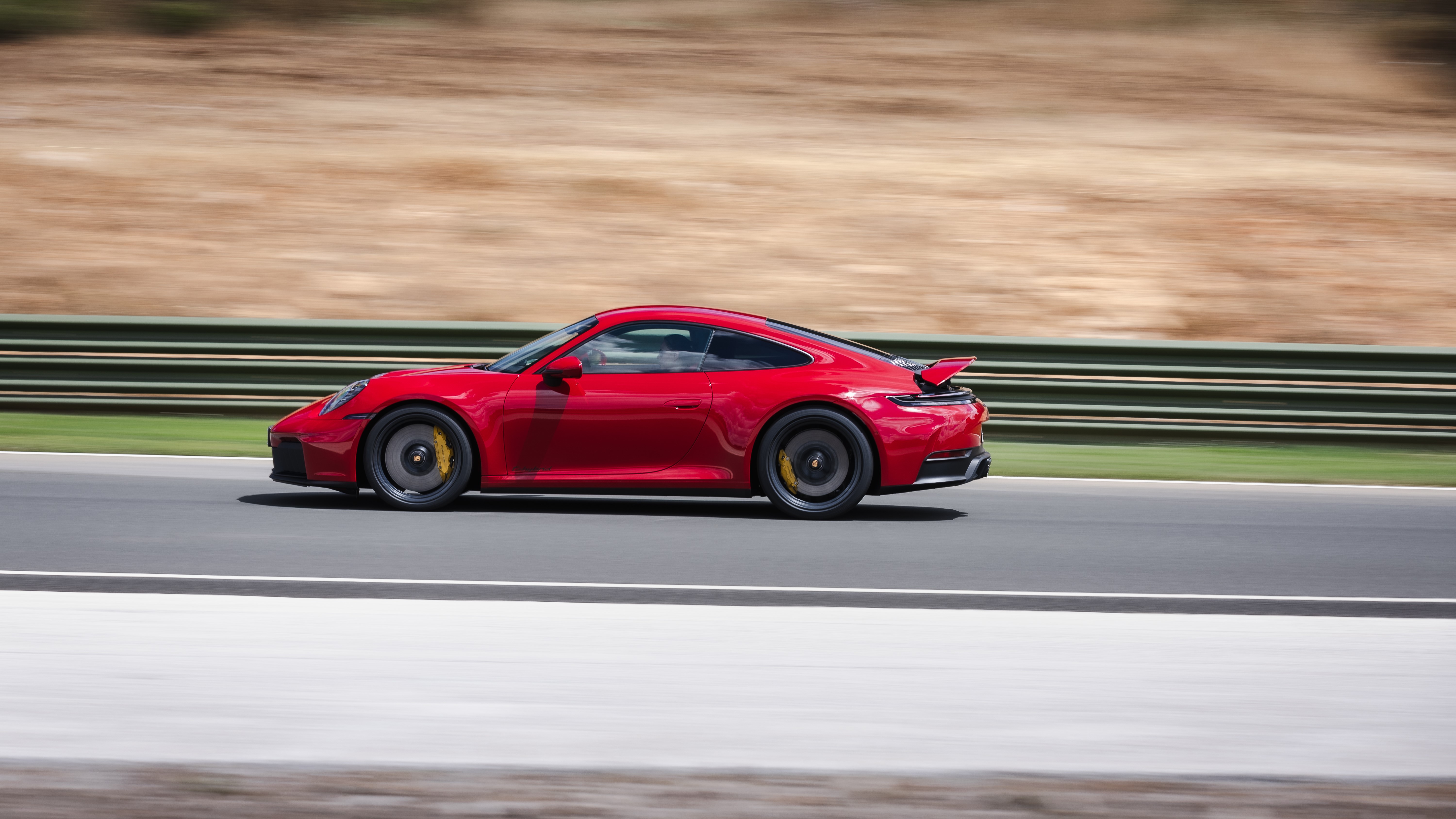
The Porsche 911 and the Carrera are not separate competitors; rather, the Carrera is the foundational trim level of the Porsche 911 range. While the 911 is often miscategorized as a compact sedan due to its small footprint and 2+2 seating, it is a dedicated rear-engine sports car. For most drivers, the Carrera wins by offering the perfect balance of legendary performance, daily usability, and a more accessible price point compared to high-performance variants.
Understanding the Relationship: 911 vs. Carrera
To choose between a "911" and a "Carrera," one must first understand that they are part of the same lineage. The Porsche 911 is the overarching model name for a car that has been in continuous production since 1963. The "Carrera" nameplate, which pays homage to Porsche’s success in the Carrera Panamericana race, serves as the entry-point and mid-tier designation for the 911 family.
In 2026, the 911 lineup (specifically the 992.2 generation) is more diverse than ever. When people ask "911 vs. Carrera," they are usually trying to decide whether the base Carrera is "enough" Porsche, or if they should step up to the more powerful Carrera S, the track-focused GTS, or the extreme Turbo and GT3 models.
The Misconception of the "Compact Sedan"
Before diving into technical specifications, it is vital to address a common terminological error. The Porsche 911 is frequently searched for as a "compact sedan." In automotive engineering terms, a sedan is a passenger car in a three-box configuration with A, B, and C-pillars and four doors.
The Porsche 911 is a 2-door sports car with a 2+2 seating configuration. While it is "compact" in terms of its dimensions compared to an American full-size sedan, its rear-engine layout and two-door silhouette place it firmly in the sports car category. If a buyer is looking for a Porsche that functions as a true sedan, they would typically look at the Porsche Panamera (gasoline/E-Hybrid) or the Porsche Taycan (all-electric). However, for the purpose of this analysis, we will treat the 911 Carrera as the "compact" daily-driver option within the high-performance sports car segment.
Technical Specifications and Performance Metrics
As of 2026, the Porsche 911 has undergone its mid-cycle refresh for the 992 generation. The base Carrera has seen significant updates, borrowing technology from previous-generation higher trims to maintain its competitive edge.
| Feature | 911 Carrera (Base) | 911 Carrera S | 911 Carrera GTS (T-Hybrid) |
|---|---|---|---|
| Engine Type | 3.0L Twin-Turbo Flat-6 | 3.0L Twin-Turbo Flat-6 | 3.6L T-Hybrid Flat-6 |
| Horsepower | 388 hp | 450 hp | 532 hp |
| 0-60 MPH | 3.7 seconds (w/ Sport Chrono) | 3.3 seconds | 2.9 seconds |
| Top Speed | 183 mph | 191 mph | 194 mph |
| Drivetrain | Rear-Wheel Drive (RWD) | RWD / AWD (4S) | RWD / AWD (4 GTS) |
| Transmission | 8-Speed PDK | 8-Speed PDK / 7-Speed Manual | 8-Speed PDK |
| Starting MSRP (2026) | ~$122,000 | ~$135,000 | ~$167,000 |
The Power of the Base Carrera
The 2026 911 Carrera utilizes an updated 3.0-liter twin-turbocharged boxer engine. While 388 horsepower might seem modest compared to modern electric vehicles, the 911’s "win" comes from its power-to-weight ratio and the efficiency of its 8-speed Porsche Doppelkupplung (PDK) transmission. The base Carrera is more than capable of handling highway merging and spirited mountain drives without the intimidating power overhead of the GTS or Turbo models.
The Carrera S: The Sweet Spot for Enthusiasts
For many, the Carrera S is the true "winner" of the lineup. It provides a significant jump in torque and horsepower over the base model. More importantly, the Carrera S often allows for the selection of a manual transmission, a feature that Porsche has increasingly reserved for enthusiast-spec models. The "S" also comes standard with larger wheels and more robust braking systems, making it a better choice for those who plan to attend occasional track days.
The 2026 T-Hybrid Innovation in the GTS
By 2026, the 911 Carrera GTS has moved into a new era of electrification. The "T-Hybrid" system is not designed for fuel economy in the traditional sense, but rather for performance augmentation.
This system uses an electric exhaust gas turbocharger and a permanent-magnet synchronous motor integrated into the PDK transmission. This eliminates turbo lag entirely, providing instant torque that was previously only available in fully electric vehicles or the 911 Turbo. While the GTS is the technical winner in terms of performance, its complexity and price point (approaching $170,000 before options) make it a less practical "compact" choice for the average buyer compared to the standard Carrera.
Engineering and Layout: Why the 911 Wins
The 911 "wins" against almost any other car in its footprint because of its unique rear-engine layout. By placing the engine behind the rear axle, Porsche achieves:
- Superior Traction: Under acceleration, the weight shifts over the rear wheels, providing incredible grip.
- Braking Efficiency: The weight distribution allows the rear brakes to do more work than in a front-engine car, leading to shorter, more stable stopping distances.
- Space Utilization: Despite its small size, the lack of an engine up front allows for a "frunk" (front trunk), which provides surprising utility for groceries or overnight bags.
For the driver looking for a "compact" experience, the 911’s short wheelbase makes it exceptionally easy to park and maneuver in urban environments, a task that larger sedans struggle with.
Daily Usability and Interior Comfort
In 2026, the interior of the 911 Carrera has reached a peak of digital integration. The Porsche Communication Management (PCM) system features a high-resolution touchscreen with wireless connectivity for all major smartphone platforms.
Seating and Cargo
While we clarified it is not a sedan, the 911 does have two rear seats. These are generally unsuitable for adults on long trips but serve as an excellent "parcel shelf" or seating for small children. When you combine the rear seating area with the 4.6 cubic feet of space in the frunk, the 911 Carrera offers more storage flexibility than almost any other dedicated two-door sports car.
Ride Quality
The standard Porsche Active Suspension Management (PASM) system allows the driver to toggle between a "Normal" mode—which is surprisingly supple over city potholes—and a "Sport" mode that stiffens the chassis for high-speed cornering. This dual-personality is the primary reason the Carrera is often cited as the only supercar you can comfortably drive every day.
Cost of Ownership and Maintenance in 2026
Owning a 911 Carrera is a premium experience that comes with premium costs. By 2026, labor rates at authorized Porsche Centers have stabilized, but parts for the 992.2 generation remain expensive due to their high-tech nature.
- Routine Maintenance: Oil changes and inspections typically occur every 10,000 miles or once a year. Expect to pay between $400 and $800 for basic service.
- Major Service: Every 30,000 to 40,000 miles, more extensive work (including spark plugs and belt inspections) can cost between $2,000 and $4,000.
- Tires: Because of the staggered setup (larger wheels in the back) and the rear-engine weight bias, rear tires typically wear out faster than the fronts. A full set of high-performance N-rated tires will cost approximately $1,500 to $2,200.
Resale Value
The 911 Carrera historically has one of the lowest depreciation rates of any vehicle on the market. While a typical compact luxury sedan might lose 50% of its value in three years, a well-maintained 911 Carrera often retains 70-80% of its value over the same period. This makes the "total cost of ownership" surprisingly competitive when compared to high-end sedans that depreciate rapidly.
Comparison: Carrera vs. Traditional Compact Sedans
If you are genuinely weighing a 911 Carrera against a high-performance compact sedan (like a BMW M3 or an Audi RS5), the "win" depends on your priority:
- Choose the Sedan if: You regularly transport more than one passenger, require a large trunk for golf clubs, or need the stealthy "sleeper" look for business meetings.
- Choose the 911 Carrera if: You value steering feel, iconic design, and a car that feels special at 20 mph just as much as it does at 120 mph. The 911 offers a level of prestige and mechanical connection that a sedan—no matter how fast—cannot replicate.
Common Mistakes When Buying a 911
- Over-Speccing: It is easy to add $40,000 in options to a base Carrera. Many buyers find that the "base" car with just a few choice options (like the Sport Chrono Package and Premium Package) is all they ever need.
- Ignoring the Carrera T: The Carrera T (Touring) is a lightweight version of the base Carrera. If you want the purest driving experience without the "S" or "GTS" price tag, the "T" is often the enthusiast's choice.
- Assuming AWD is Necessary: Unless you live in an area with heavy, unplowed snow, the rear-wheel-drive Carrera offers plenty of traction due to the engine weight over the rear tires. The Carrera 4 (AWD) adds weight and cost that may not be necessary for all drivers.
Frequently Asked Questions
Is the Porsche Carrera a 4-door car?
No, the Porsche 911 Carrera is strictly a 2-door sports car. If you require four doors, the Porsche Panamera is the sedan equivalent in the Porsche lineup, offering similar luxury and performance but with a much larger footprint and traditional sedan seating.
Which is faster, the 911 or the Carrera?
Since the Carrera is a version of the 911, the question usually refers to how the base Carrera compares to other 911s. The Carrera is the "slowest" 911, but in 2026, even the base model accelerates from 0-60 mph in under 4 seconds, which is faster than most high-performance sports cars from a decade ago.
Can the 911 Carrera be used as a daily driver?
Yes, the 911 Carrera is widely considered the most "daily-able" sports car in existence. Its visibility is excellent, its ground clearance (especially with the optional front-axle lift) is manageable, and its "Normal" driving mode is quiet and comfortable for commuting.
What is the difference between Carrera and Carrera S?
The "S" stands for "Sport" or "Super." The Carrera S features a more powerful engine (usually around 60-70 more horsepower), larger brakes, and larger wheels as standard. It also offers the option for a manual transmission, which is not available on the base 2026 Carrera.
Does the 2026 911 Carrera have a hybrid engine?
The base Carrera and Carrera S remain twin-turbocharged gasoline engines for the 2026 model year. Only the Carrera GTS features the new T-Hybrid system. This allows Porsche to cater to both traditionalists and those seeking the cutting edge of hybrid performance.
Final Recommendation: Which "Compact" Wins?
If your goal is to find the best-performing vehicle that still fits into a "compact" lifestyle, the Porsche 911 Carrera S is the definitive winner. It offers the best price-to-performance ratio in the 2026 lineup, providing enough power to thrill seasoned drivers while retaining the civility required for daily errands.
However, if you are looking for the most iconic experience with the lowest entry price and best resale value, the standard 911 Carrera is more than sufficient. It delivers 95% of the 911 experience for a significantly lower investment. Regardless of the trim, the 911 remains the gold standard for those who want a small, agile vehicle that makes no compromises on engineering excellence.