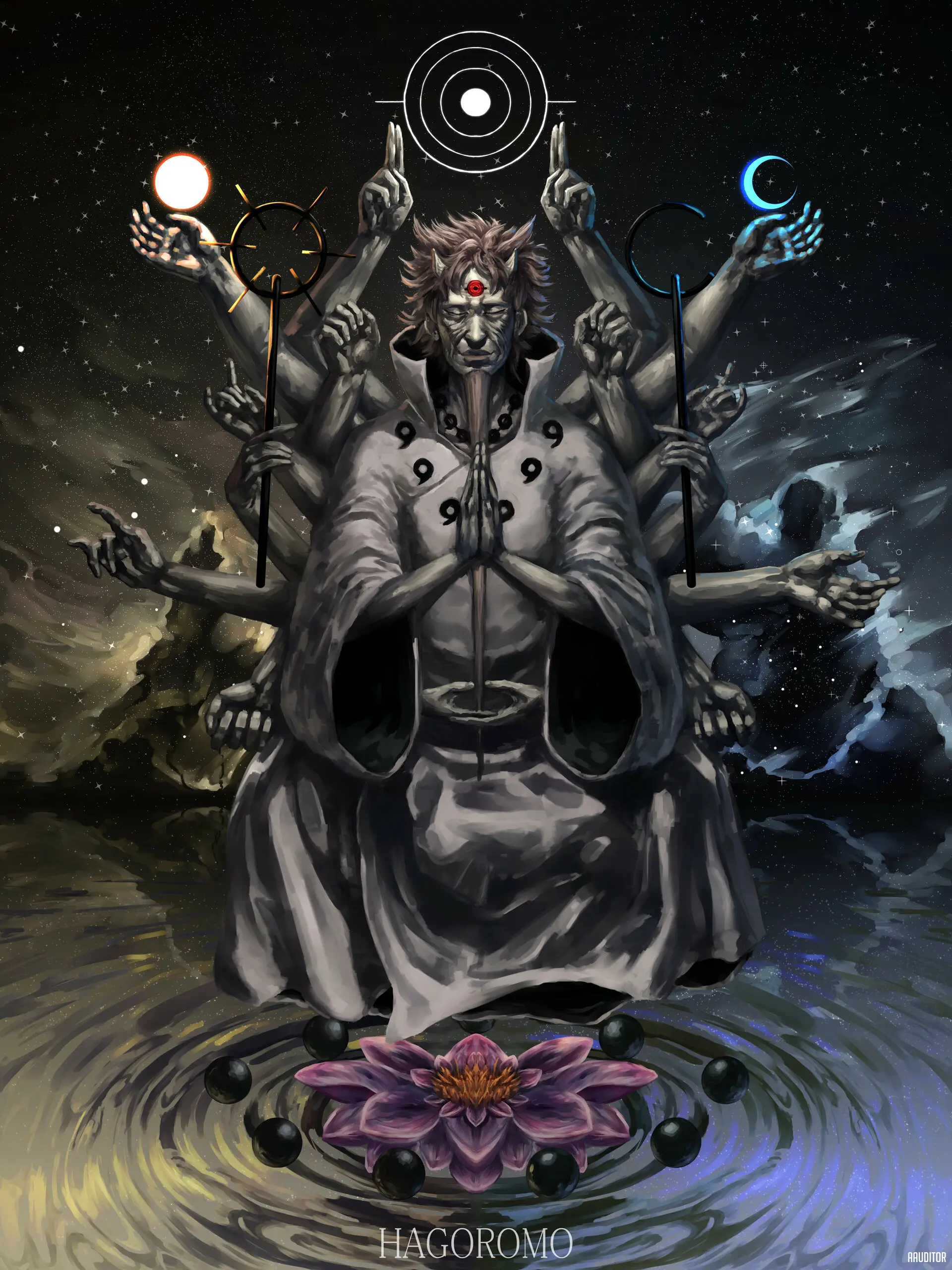
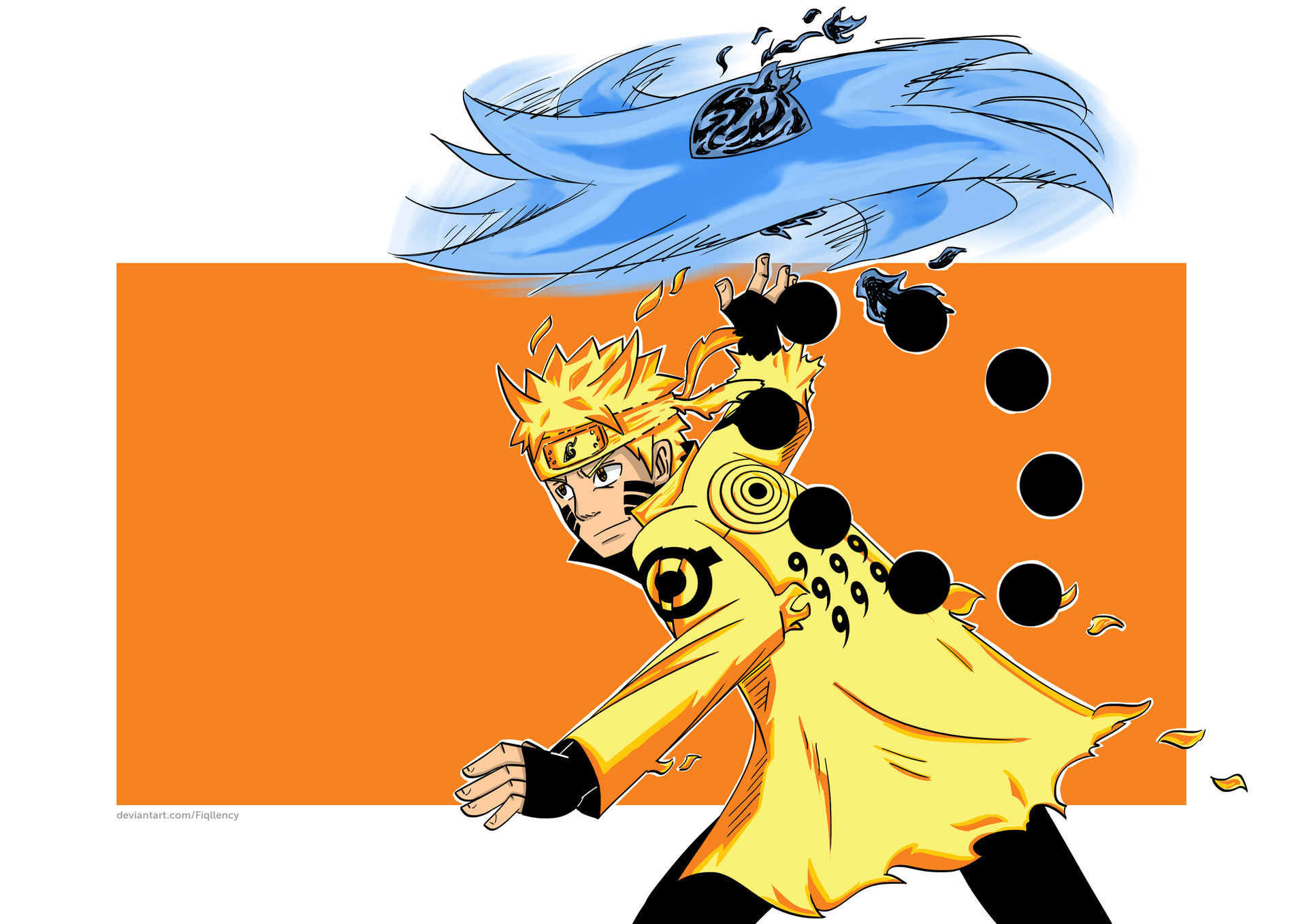
The Six Paths of the Sage refers to a suite of legendary abilities granted by the Rinnegan, the most exalted of the Three Great Dōjutsu. Originally wielded by Hagoromo Ōtsutsuki, these powers allow a single user to manifest six distinct types of god-like techniques: gravity manipulation, mechanical weaponry, soul extraction, multi-beast summoning, chakra absorption, and resurrection.
In the lore of the Naruto franchise, the Six Paths (Rikudō) represent the pinnacle of shinobi capability. While the term "Six Paths" can refer to the Sage of Six Paths himself or the specific chakra he possesses, it is most commonly associated with the Six Paths Technique. This technique allows a Rinnegan wielder to distribute their consciousness and abilities across six separate bodies, known as the Six Paths of Pain, or to utilize all these powers within their own single frame. As of 2026, these techniques remain the gold standard for power scaling within the series' historical archives, influencing the evolution of subsequent Ōtsutsuki-level threats.
The Origin of the Six Paths: Hagoromo Ōtsutsuki and Ninshū
To understand the Six Paths, one must first understand the progenitor: Hagoromo Ōtsutsuki. Hagoromo was the first to be born with the Rinnegan, inherited from his mother, Kaguya Ōtsutsuki. He used this power to defeat the Ten-Tails and seal it within himself, becoming the first Jinchūriki.
Hagoromo’s goal was not conquest but peace. He established Ninshū, a precursor to modern Ninjutsu, intended to connect the spiritual energies (chakra) of all living beings. The Six Paths were the manifestations of his mastery over the physical and spiritual worlds. When the Sage neared the end of his life, he divided the Ten-Tails' chakra into the nine Tailed Beasts, ensuring that no single entity would possess the overwhelming power of the Rinnegan and the Ten-Tails simultaneously.
The legacy of the Six Paths lay dormant for centuries, appearing only in the Uchiha and Senju lineages as diluted traits. It was not until Madara Uchiha awakened the Rinnegan by merging his DNA with Hashirama Senju’s that these paths returned to the world. Later, Nagato Uzumaki would become the most iconic practitioner of these arts, using the "Six Paths of Pain" to terrorize and eventually change the world of shinobi.
The Deva Path (Tendō): Mastery of Gravity
The Deva Path is widely considered the most powerful and versatile of the six. It grants the user the ability to manipulate attractive and repulsive forces, essentially allowing them to control gravity. This path is the primary offensive and defensive tool for any Rinnegan user.
Key Techniques of the Deva Path
- Shinra Tensei (Almighty Push): A repulsive force that can deflect any attack or level an entire city. The scale of the technique depends on the amount of chakra expelled. Its primary limitation is the five-second "cooldown" period between uses, a window of vulnerability that skilled opponents can exploit.
- Banshō Ten’in (Universal Pull): The opposite of Shinra Tensei, this ability pulls objects or people toward the user. It is often used to bring an opponent into range for a lethal strike.
- Chibaku Tensei (Planetary Devastation): The ultimate Deva Path technique. The user creates a black sphere of gravity that pulls the surrounding earth into a massive satellite, trapping the target inside. Hagoromo used a massive version of this to create the Moon and seal the Ten-Tails’ husk (the Gedō Mazō).
The Asura Path (Shuradō): Mechanical Transmutation
The Asura Path stands out as an anomaly within the world of Ninjutsu, as it allows the user to summon and manifest mechanical armor and weaponry. This path turns the user’s body into a cyborg-like entity, capable of sprouting extra limbs and firing high-tech projectiles.
Technical Capabilities
The Asura Path provides a massive tactical advantage in mid-to-long-range combat. A user can manifest:
- Multiple Limbs and Heads: Allowing for 360-degree vision and combat effectiveness.
- Internal Ballistics: The ability to fire chakra-powered missiles and laser-like beams from the arms or head.
- Serrated Blades and Drills: High-speed mechanical weapons that emerge from the joints or spine.
This path reflects the "Asura" in Buddhist mythology—beings of war and strife. In the context of the series, it represents the evolution of the body into a perfect weapon.
The Human Path (Ningendō): Soul Extraction and Intellect
While the Deva and Asura paths focus on physical destruction, the Human Path is specialized in interrogation and spiritual combat. This path allows the user to read the mind of any target simply by placing a hand on their head or chest.
Soul Extraction
The most terrifying aspect of the Human Path is the ability to rip the soul directly out of a person’s body. This process is instantaneous and provides the user with all the memories of the victim. However, the process is invariably fatal for the target. Unlike other interrogation techniques in the series, the Human Path cannot be resisted through mental willpower; once the "grip" is established, the information is extracted, and the life is extinguished.
The Animal Path (Chikushōdō): Infinite Summoning
The Animal Path grants the ability to summon various giant, immortal creatures without the need for a blood contract or hand signs. These summons are unique because they also possess the Rinnegan, providing the user with a shared field of vision.
Notable Summons
The Animal Path can call forth a variety of beasts, each with specialized abilities:
- The Giant Multi-Headed Dog: This creature splits into more dogs every time it is struck, making it nearly impossible to defeat through conventional physical attacks.
- The Giant Drill-Beaked Bird: Capable of high-speed aerial assaults and dropping explosive eggs.
- The Giant Rhino: Used for massive frontal charges to break through fortifications.
- The Giant Crustacean: Capable of using Suiton (Water Style) to clear obstacles or hide the user.
Because these summons share the user's vision, they act as a coordinated army, allowing a single Rinnegan wielder to control an entire battlefield simultaneously.
The Preta Path (Gakidō): Chakra Absorption
The Preta Path is the ultimate defensive counter to Ninjutsu. It allows the user to absorb any chakra-based attack, neutralizing it completely. This includes elemental transformations like fire, water, or lightning, as well as more complex forms like the Rasengan.
The Fūjutsu Kyūin (Blocking Technique Absorption Seal)
By creating a spherical barrier around themselves, the Preta Path user can absorb chakra from all directions. This ability is not limited to projectile attacks; if the user makes physical contact with an opponent, they can drain the chakra directly from their body, leaving them weakened or unable to mold chakra.
However, the Preta Path has a critical weakness: Senjutsu (Sage Chakra). If a user absorbs too much natural energy without proper training, they risk turning into stone, as seen during Nagato’s assault on Konoha when he absorbed Naruto's Sage Mode chakra.
The Naraka Path (Jigokudō): Judgment and Restoration
The Naraka Path controls the King of Hell, a massive, spectral entity that only the user and those they are interrogating can see. This path serves two primary functions: interrogation and restoration.
The King of Hell’s Functions
- Interrogation: The user grabs a target, and the King of Hell emerges. The user asks a question; if the target lies or refuses to answer, the King of Hell rips out their tongue and consumes it, resulting in death. If they tell the truth, they are spared but left exhausted.
- Restoration: The Naraka Path is the "medic" of the Six Paths. It can consume the damaged remains of other Paths (such as the mechanical parts of the Asura Path) and "spit" them back out fully repaired and functional. This makes a team of Six Paths incredibly difficult to defeat permanently.
Comparison Table of the Six Paths
| Path Name | Buddhist Origin | Primary Ability | Key Strategic Use |
|---|---|---|---|
| Deva | Heavenly Realm | Gravity Manipulation | Crowd control and massive AOE destruction |
| Asura | Semi-divine Realm | Body Weaponization | Long-range artillery and physical versatility |
| Human | Mortal Realm | Mind Reading/Soul Extraction | Instant interrogation and assassination |
| Animal | Animal Realm | Multiple Summons | Battlefield control and shared vision |
| Preta | Hungry Ghost Realm | Chakra Absorption | Defense against Ninjutsu and energy draining |
| Naraka | Hell Realm | Restoration/Interrogation | Healing allies and forced truth-telling |
The Seventh Path: The Outer Path (Gedō)
Beyond the standard six lies the Outer Path, which is the power of the Rinnegan wielder themselves. The Outer Path is the "control center" that coordinates the other six. It allows the user to manifest Black Receivers (Chakra Rods) to transmit their chakra into corpses or living beings.
Abilities of the Outer Path
- Gedō: Rinne Tensei no Jutsu (Samsara of Heavenly Life Technique): The user can bring deceased individuals back to life. This is the ultimate expression of the Sage’s power over life and death. However, using this technique on a large scale typically costs the user their life.
- Chakra Chains: The user can manifest chains that suppress the power of Tailed Beasts and can even bind the Gedō Mazō (Outer Path Statue).
- Shared Vision: By placing Black Receivers in the bodies of the Six Paths, the Outer Path user can see everything the six bodies see simultaneously, eliminating blind spots.
Strategic Application: The Six Paths of Pain
While Hagoromo and Sasuke Uchiha used these powers within their own bodies, Nagato Uzumaki famously utilized the Six Paths of Pain—six corpses reanimated and controlled remotely. This strategy allowed Nagato, who was physically frail, to remain hidden while his "proxies" fought on his behalf.
Each body was outfitted with numerous Black Receivers to ensure high-fidelity chakra transmission. This setup required Nagato to be in a high-altitude or nearby location to maintain the signal. The genius of this approach was the shared field of vision; because each Path had the Rinnegan, what the Deva Path saw, the Animal and Preta paths also saw. This made the Six Paths of Pain nearly impossible to hit with a surprise attack, as one Path would always be watching the back of another.
Requirements and Prerequisites for the Six Paths
Wielding the Six Paths of the Sage is not a feat any shinobi can achieve through training alone. It requires specific genetic and spiritual prerequisites:
- Awakening the Rinnegan: This typically requires the combination of Indra and Asura Ōtsutsuki’s chakra, essentially recreating Hagoromo’s chakra.
- Massive Chakra Reserves: Maintaining six bodies or utilizing high-level gravity manipulation drains chakra at an astronomical rate. Uzumaki or Ōtsutsuki lineage is almost always necessary to sustain these powers.
- Mental Fortitude: Controlling six different perspectives and bodies simultaneously requires immense mental processing power and focus.
Frequently Asked Questions
Can Sasuke Uchiha use all Six Paths?
Yes, Sasuke Uchiha has access to the Six Paths techniques through his Tomoe-Rinnegan. While he primarily uses the Deva Path (Chibaku Tensei) and the Outer Path (Preta Path chakra absorption), he is technically capable of using all of them. He often chooses to focus on his unique space-time ninjutsu, Amenotejikara, which is more suited to his combat style.
Why didn't Madara use the Six Paths of Pain?
Madara Uchiha preferred to use the Rinnegan's powers within his own body rather than through corpses. His combat style favored direct engagement and his unique "Limbo: Border Jail" technique, which creates invisible clones that exist in a parallel dimension—a power that is often more effective than managing six physical bodies.
Is the "Seventh Path" different from the Outer Path?
In most lore discussions, the "Seventh Path" and the "Outer Path" are used interchangeably. They both refer to the user who stands outside the six realms of reincarnation and controls them.
What is the weakness of the Six Paths?
The primary weakness is the chakra transmission. If the Black Receivers are disrupted or if the "signal" from the Outer Path user is blocked, the bodies become useless. Additionally, the five-second cooldown on the Deva Path’s Shinra Tensei is the most exploited tactical weakness in the entire suite of abilities.
Can a non-Uchiha use the Six Paths?
Nagato, an Uzumaki, is the primary example of a non-Uchiha using these powers. However, he did not awaken the eyes himself; they were transplanted into him by Madara. To awaken the power, one must have the specific DNA of the Sage’s lineage, but to use them, one only needs the eyes and sufficient chakra.
Final Recommendations for Understanding the Lore
For researchers and fans looking to master the intricacies of the Six Paths of the Sage, it is essential to study the tactical battles of the Pain Arc (specifically Naruto vs. Pain). This conflict serves as the definitive demonstration of how the paths interact, their limitations, and the sheer scale of the Deva Path's power. Furthermore, understanding the Buddhist philosophy of the Six Realms of Rebirth provides deep context into why each path was designed with its specific set of abilities. As we move further into the 2026 era of franchise analysis, the Six Paths remain the fundamental benchmark for what it means to achieve "godhood" in the world of shinobi.