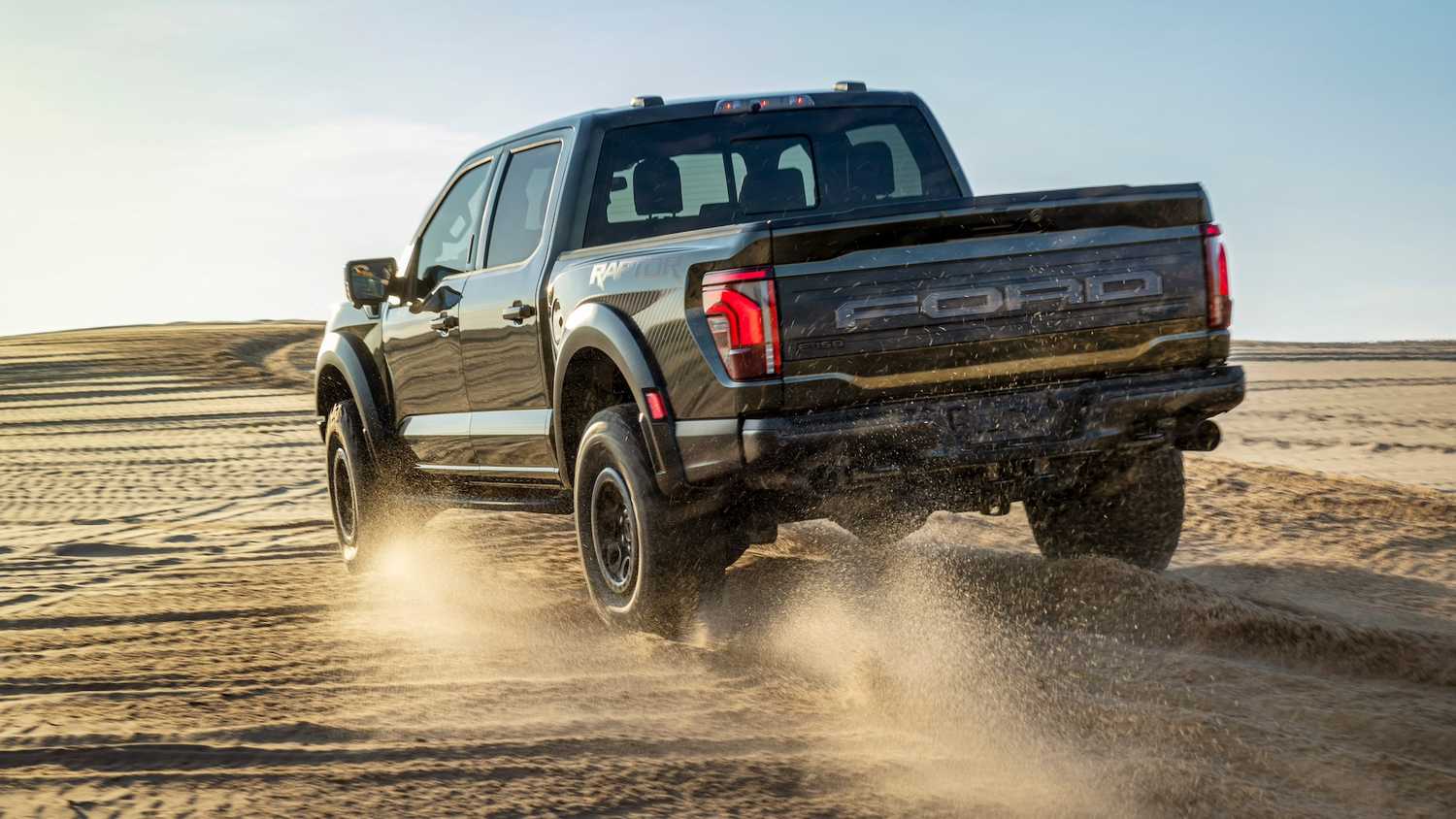
The Ford F-150 equipped with the 3.5-liter EcoBoost twin-turbocharged V6 regularly achieves a 0-to-60 mph acceleration time of approximately 5.7 seconds in independent automotive testing. This impressive speed for a full-size pickup stems from high low-end torque, a fast-shifting 10-speed automatic transmission, four-wheel-drive traction, and an aluminum-alloy body structure that reduces total curb weight.
The Engineering Behind the 3.5L EcoBoost’s Acceleration
To understand why a full-size truck weighing between 4,800 and 5,500 pounds can accelerate from a standstill to 60 mph in under six seconds, one must examine the architecture of Ford’s second- and third-generation 3.5-liter EcoBoost V6 engine.
Unlike traditional naturally aspirated V8 engines that build power gradually as engine revolutions per minute (RPM) climb, the 3.5-liter EcoBoost uses two small, quick-spooling turbochargers. This twin-turbo configuration forces pressurized air into the combustion chambers at lower RPM levels, virtually eliminating the throttle lag historically associated with turbocharged powertrains.
Engine Architecture & Output Snapshot:
- Displacement: 3.5 Liters (3,496 cc)
- Configuration: Twin-Turbocharged 60° V6
- Fuel Delivery: Dual-System (Port Fuel Injection + Direct Injection)
- Standard Output (14th Gen): 400 hp @ 6,000 RPM | 500 lb-ft torque @ 3,100 RPM
- High-Output / Raptor Variant: 450 hp @ 5,850 RPM | 510 lb-ft torque @ 3,000 RPM
The Role of Peak Torque at Low Engine Speeds
Acceleration from 0 to 60 mph relies far more heavily on torque distribution than on peak horsepower. The standard 3.5-liter EcoBoost produces 500 lb-ft of torque, peaking early at approximately 3,100 RPM. A significant portion of that torque is available as low as 2,000 RPM.
When a driver steps on the accelerator pedal from a standstill, the engine delivers immediate rotational force to the driveshaft. By combining high-pressure direct fuel injection with intake port fuel injection, Ford’s engine control unit (ECU) precise-tunes fuel delivery and spark timing under heavy acceleration, allowing maximum boost pressure (typically between 12 to 16 PSI in stock form) without triggering engine knock.
Aluminum Bodywork and Power-to-Weight Dynamics
Beginning with the 2015 model year (the 13th generation), Ford transitioned the F-150 from an all-steel body to a high-strength, military-grade aluminum-alloy body mounted on a fully boxed steel frame. This structural shift shed up to 700 pounds depending on the cab and bed configuration.
Reducing gross vehicle weight directly alters the power-to-weight ratio: $$\text{Power-to-Weight Ratio} = \frac{\text{Horsepower}}{\text{Curb Weight (lbs)}}$$
For a 5,000-pound SuperCrew 4x4 generating 400 horsepower, each horsepower moves only 12.5 pounds of vehicle mass. This ratio matches or exceeds many mid-size sedans and crossovers from previous eras, providing the mechanical baseline required to clock a 5.7-second sprint.
Drivetrain Components That Enable Rapid Starts
While engine power is vital, transferring that kinetic energy to the pavement without power loss or wheelspin is what converts potential engine output into verified acceleration times. Three core mechanical systems make the 5.7-second benchmark achievable: the transmission, the transfer case, and the rear axle ratio.
- 3.5L EcoBoost Engine
- 10R80 10-Speed Transmission (Short 1st Gear: 4.69:1)
- 2-Speed Automatic 4WD System (4A Mode Eliminates Wheelspin)
- Rear Axle Ratio (3.55 / 3.73) (Multiplies Torque to Wheels)
- 0-60 MPH in ~5.7 Seconds
The 10R80 10-Speed Automatic Transmission
Co-developed by Ford and General Motors, the 10R80 SelectShift 10-speed automatic transmission plays a pivotal role in acceleration.
- Aggressive First Gear: The first gear ratio in the 10R80 is an aggressive 4.69:1. This aggressive numerical gear ratio significantly multiplies engine torque at launch, pushing the truck forward immediately upon brake release.
- Close Gear Spacing: Because the 10 speed ratios are closely spaced, gear shifts keep the engine operating inside its optimal powerband (between 3,000 and 5,500 RPM). During hard acceleration, the engine does not experience major RPM drops between shifts, maintaining continuous momentum.
- Fast Shift Logic: In "Sport Mode," the transmission control module (TCM) executes direct gear shifts faster, holding gears longer and rev-matching downshifts when slowing down.
Four-Wheel Drive (4A / 4H) vs. Two-Wheel Drive (2H) Launches
Attempting a 0–60 mph launch in a rear-wheel-drive (2H) pickup often results in excessive wheelspin, triggering traction control intervention that reduces engine power and slows acceleration.
To achieve a 5.7-second or faster run, automotive testers routinely utilize four-wheel-drive. Trim levels such as the F-150 Lariat, King Ranch, Platinum, and Limited feature an automatic four-wheel-drive setting (4A). This system uses an electronically controlled clutch pack inside the transfer case to route torque to the front axle instantaneously when it detects rear-wheel slip.
Launching in 4A (or 4H with lockup) allows all four tires to dig into the asphalt, transferring maximum torque to the ground without spinning the tires or triggering stability control nannies.
Rear Axle Gear Ratios
The rear axle ratio dictates how many times the driveshaft rotates for every single rotation of the rear wheels. Ford offers several axle options for the 3.5L EcoBoost:
- 3.31:1 Axle Ratio: Optimized for highway fuel economy; yields slightly slower 0–60 times (~6.0 seconds).
- 3.55:1 Axle Ratio: The standard balance for towing and performance; regularly hits the 5.7-second mark.
- 3.73:1 Axle Ratio: Available with the Max Trailer Tow Package or FX4 Off-Road package; offers the shortest gearing, maximizing initial launch speed and occasionally dropping 0–60 times below 5.5 seconds under ideal conditions.
Real-World Variations: Trims, Cab Layouts, and Testing Conditions
A published 0–60 time of 5.7 seconds is a standardized metric, but actual real-world performance varies based on vehicle configuration and environmental variables.
Factors Influencing Acceleration Performance:
- Vehicle Configuration (Cab type, Bed length, Curb weight)
- Fuel Octane (93 Premium vs 87 Regular)
- Ambient Temperature & Density Altitude (Turbochargers prefer cold, dense air)
- Launch Technique (Brake-torquing vs Standing start)
Cab Style and Weight Impact
The term "Ford F-150" covers a broad array of configurations. A lightweight Regular Cab Short Bed configuration weighs drastically less than a fully loaded SuperCrew 4x4 featuring a panoramic sunroof, power running boards, and massaged leather seats.
- Regular Cab / Short Bed: Lowest curb weight (~4,400–4,600 lbs). Can achieve 0–60 times under 5.3 seconds when equipped with the 3.5L EcoBoost or High-Output variants.
- SuperCrew 4x4 (Lariat/XLT): Average curb weight (~4,900–5,200 lbs). Represents the standard 5.5 to 5.7-second benchmark published by outlets like Car and Driver.
- SuperCrew 4x4 (Platinum/Limited/Option Heavy): Highest curb weight (~5,300–5,600 lbs). Might yield 0–60 times in the 5.8 to 6.1-second range due to added luxury features and heavier wheel/tire combinations.
Fuel Octane and Knock Suppression
Ford rates the performance of its 3.5-liter EcoBoost engine using 93-octane premium unleaded fuel. While the engine's ECU can run on 87-octane regular unleaded without damaging hardware, it does so by altering ignition timing to prevent engine knock (detonation).
When running 87 octane under full-throttle conditions:
- The ECU retards timing under heavy boost.
- Engine output drops slightly (an estimated 10 to 20 horsepower loss under peak thermal load).
- 0–60 mph times increase by roughly 0.3 to 0.5 seconds, shifting a 5.7-second truck into the 6.0 to 6.2-second range.
Density Altitude and Ambient Temperature
Turbocharged engines perform better in thin air than naturally aspirated engines because the turbochargers can spin faster to compensate for low air density. However, extreme heat still impairs acceleration. Warm ambient air reduces intercooler efficiency, leading to higher intake air temperatures (IATs). When IATs rise past safe thresholds, the ECU cuts boost pressure to protect the internal engine components, slowing performance.
Comparing F-150 Powertrains
To put the 5.7-second time of the 3.5-liter EcoBoost into context, compare it with alternative engine options offered across the 13th and 14th generations of the Ford F-150.
| Powertrain Engine Option | Displacement / Layout | Horsepower (HP) | Torque (lb-ft) | Average 0–60 MPH Time | Primary Mechanical Advantage |
|---|---|---|---|---|---|
| 3.5L EcoBoost V6 | 3.5L Twin-Turbo V6 | 400 hp | 500 lb-ft | 5.3 – 5.7 sec | Massive low-end torque & broad powerband |
| 5.0L Coyote V8 | 5.0L Naturally Aspirated V8 | 400 hp | 410 lb-ft | 5.9 – 6.2 sec | High-RPM power output & linear revs |
| 2.7L EcoBoost V6 | 2.7L Twin-Turbo V6 | 325 hp | 400 lb-ft | 6.1 – 6.5 sec | Light engine block, rapid spooling |
| 3.5L PowerBoost Hybrid | 3.5L Turbo V6 + Electric Motor | 430 hp | 570 lb-ft | 5.3 – 5.6 sec | Instant electric motor torque offset |
| 3.5L High-Output (Raptor) | 3.5L Twin-Turbo V6 | 450 hp | 510 lb-ft | 5.2 – 5.5 sec | Larger turbos, tuned exhaust, aggressive ECU |
While the naturally aspirated 5.0-liter Coyote V8 matches the 3.5L EcoBoost in peak horsepower (400 hp), its peak torque of 410 lb-ft arrives much higher in the rev range (at 4,250 RPM). This delay in building torque translates to a slightly slower off-the-line launch, placing the standard V8 roughly a half-second behind the 3.5L EcoBoost in 0–60 mph sprints under identical conditions.
How Automotive Journalists Test 0–60 MPH Times
When reading published times from outlets like Motortrend or Car and Driver, it is essential to understand the methodologies used to calculate acceleration figures.
1-Foot Rollout Factor
Most North American automotive publications use a standard industry practice known as 1-foot rollout. In drag racing, timing clocks do not start until the front tire rolls past the initial staging beam (a distance of roughly 12 inches).
Subtracting this first foot of roll movement eliminates the time it takes the vehicle to physically start rolling from a dead stop.
- Raw 0–60 mph time (Standing Start): ~5.7 to 5.9 seconds
- With 1-Foot Rollout Subtracted: ~5.3 to 5.5 seconds
Brake-Torquing (Stall Launching)
Achieving the absolute fastest time requires built-up boost pressure before releasing the brakes. Testers use a technique called "brake-torquing":
- Select Sport Mode and engage 4A or 4H.
- Press firmly on the brake pedal with the left foot.
- Apply accelerator pressure with the right foot to build engine RPM up to roughly 2,000–2,500 RPM.
- Allow the turbochargers to build 5 to 8 PSI of boost pressure against the torque converter.
- Release the brake pedal completely while flooring the accelerator.
This technique eliminates turbo spooling delays during launch, immediately sending full power to all four wheels.
Safe Practices for Replicating Acceleration Times
If you own or operate a 3.5L EcoBoost F-150 and wish to safely test its performance capabilities, observe the following setup parameters to avoid damaging mechanical components:
Step 1: Pre-Launch Vehicle Preparation
Ensure the powertrain has reached standard operating temperature. Never attempt hard launches on a cold engine or cold transmission, as cold fluid fails to provide adequate lubrication to high-load components.
- Engine Coolant Temp: Nominal operating range (approx. 195°F–215°F)
- Transmission Fluid Temp: Above 160°F
- Fuel Quality: Tank filled with top-tier 93-octane unleaded fuel
Step 2: Select the Proper Drive Modes
Use the rotary drive mode selector on the center console:
- Turn the dial to Sport Mode. This changes the throttle mapping, sharpens shift speeds, and holds gears longer.
- Ensure the transfer case is set to 4A (4-Auto). If your trim lacks 4A, use 4H (4-High) only on dry, straight pavement for brief passes, as dry pavement cornering in 4H will cause driveline binding.
Step 3: Tire and Suspension Check
Make sure tire pressures match the cold inflation specification listed on the driver-side door jamb tag (typically 35 PSI cold). Under-inflated tires increase rolling resistance, while over-inflated tires reduce the contact patch size, lowering launch traction.
Unlocking Faster Performance: Aftermarket Modifications
Because the 3.5-liter EcoBoost relies on forced induction (turbocharging), it responds exceptionally well to basic performance modifications compared to naturally aspirated engines. Owners seeking to drop 0–60 mph times below the 5.0-second barrier often employ a few targeted upgrades.
Modifications & Expected Performance Gains:
- ECU Custom Tuning (Adjusts boost curves, spark timing, shift points)
- Upgraded Intercooler (Lowers Intake Air Temps to prevent power pull)
- High-Flow Cold Air Intake (Increases air volume to turbo compressor inlets)
- Performance Downpipes (Reduces exhaust backpressure for quicker spooling)
ECU Custom Tuning
An aftermarket engine calibration (tune) modifies parameters within the ECU, such as boost targets, fuel-to-air ratios, and ignition timing curves.
- Stock Boost: ~12 to 15 PSI
- Tuned Boost: ~18 to 22 PSI (on 93 Octane or E85 blends)
- Performance Gain: Adding an aftermarket tune can increase output by 60 to 100+ horsepower at the wheels. This modification alone can drop an F-150 SuperCrew 4x4's 0–60 time down into the 4.2 to 4.7-second range.
Upgraded Front-Mount Intercooler (FMIC)
The factory F-150 intercooler works well for daily driving, but repeated hard acceleration runs cause heat soak quickly. An upgraded, larger aluminum intercooler core retains cooler intake air temperatures (IATs) across successive pulls, preventing the ECU from pulling engine timing to compensate for heat buildup.
Frequently Asked Questions
Does launching an F-150 in 4WD cause drivetrain damage?
Launching in 4A (4-Auto) is entirely safe, as the system relies on an internal clutch pack to distribute power dynamically based on wheel slippage. If launching in 4H (4-High), only accelerate in a completely straight line. Never turn the steering wheel sharply on high-traction pavement while 4H is engaged, as the lack of differential slip between front and rear axles causes driveline binding and puts excessive stress on axle shafts and U-joints.
Why is the 3.5L EcoBoost faster than the 5.0L V8 from 0 to 60?
Although both engines produce 400 peak horsepower in modern configurations, the 3.5L EcoBoost reaches its peak torque of 500 lb-ft much earlier in the RPM range (3,100 RPM) than the 5.0L V8 (which produces 410 lb-ft at 4,250 RPM). The twin turbochargers deliver instant low-end boost, allowing the EcoBoost to launch off the line faster than the V8.
Will running 87-octane gas harm my 3.5L EcoBoost's 0–60 time?
Yes. The engine management system detects lower-octane fuel and retards ignition timing to prevent engine knock under high load. This timing drop reduces engine output by roughly 10 to 20 horsepower, adding 0.3 to 0.5 seconds to your 0–60 acceleration time.
How does the 3.5L PowerBoost Hybrid compare in 0–60 speed?
The 3.5L PowerBoost Hybrid pairs the twin-turbo V6 with a 44-horsepower electric motor integrated into the 10-speed transmission. Because the electric motor provides instantaneous torque off the line before the turbochargers reach full boost, the PowerBoost Hybrid matches or slightly beats the standard 3.5L EcoBoost, regularly posting 0–60 mph times between 5.3 and 5.6 seconds despite its extra battery weight.
Can a stock 3.5L EcoBoost F-150 break the 5-second 0–60 barrier?
A standard, unmodified SuperCrew 4x4 3.5L EcoBoost generally hits between 5.3 and 5.7 seconds. To run under 5.0 seconds in stock condition, you typically need a specialized lightweight trim—such as a Regular Cab Short Bed configured with the High-Output 3.5L engine or a custom gear setup—run on high-octane fuel with a prepared launch surface.
Practical Takeaway and Next Actions
The 5.7-second 0–60 mph performance of the 3.5-liter EcoBoost Ford F-150 is the result of focused engineering integration: early torque delivery from twin turbochargers, aggressive low-gear torque multiplication via the 10R80 10-speed transmission, efficient weight reduction via an aluminum body, and maximum traction via 4WD systems.
If you want to achieve peak performance from your 3.5L EcoBoost F-150:
- Run High-Octane Fuel: Always fill up with 93-octane fuel prior to performance testing or heavy towing to allow the ECU to advance ignition timing safely.
- Utilize Sport Mode & 4A: Engage Sport Mode to sharpen shift mapping and select 4A to eliminate wheelspin on launch.
- Monitor Maintenance: Keep spark plugs properly gapped (typically 0.028 to 0.030 inches on tuned/turbocharged setups) and change engine oil regularly, as twin-turbo engines subject motor oil to severe thermal shear stresses.