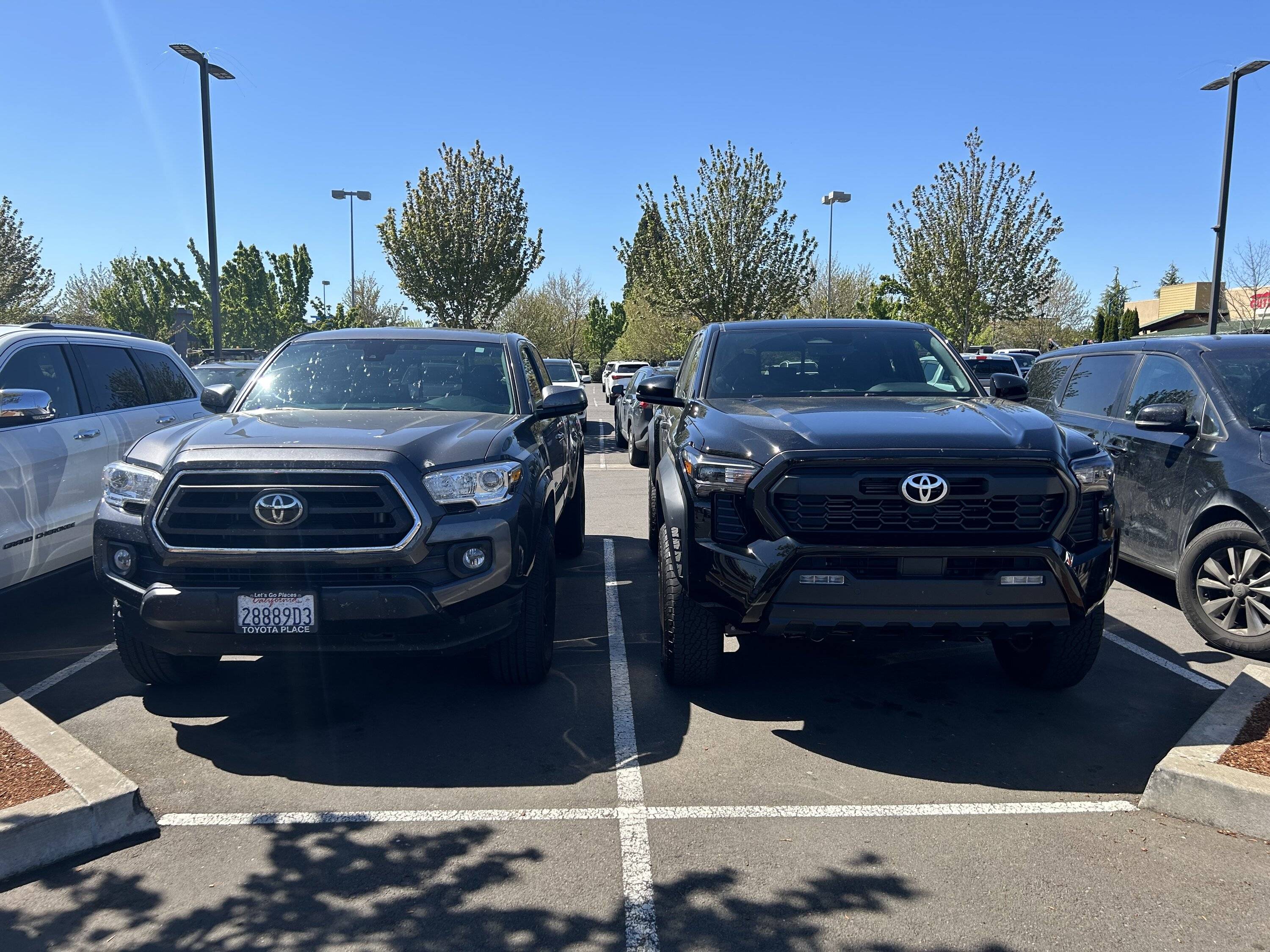
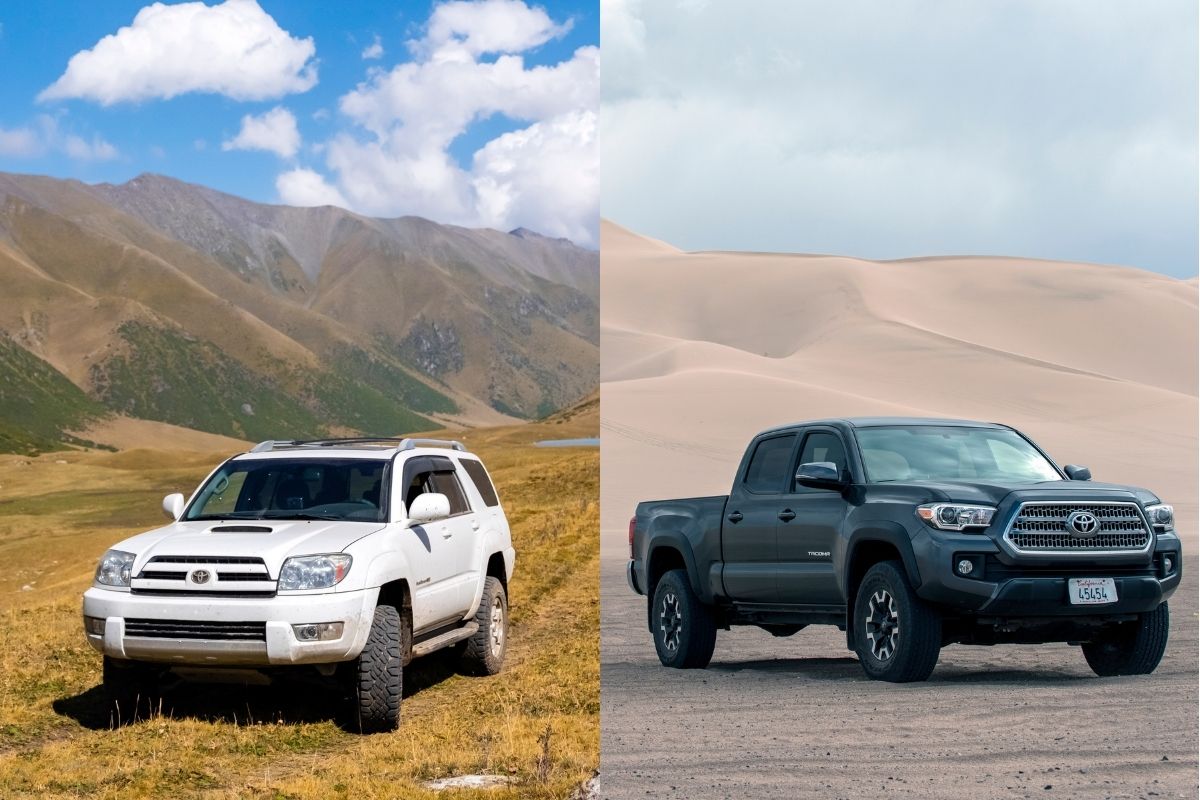
Choosing between the Toyota 4Runner and the Toyota Tacoma for off-road use depends primarily on your need for wheelbase agility and enclosed cargo space versus utility-focused bed versatility. While both vehicles now share the TNGA-F global truck platform, the 4Runner’s shorter wheelbase excels in technical rock crawling, whereas the Tacoma’s platform offers superior stability and gear separation for long-distance overlanding.
In 2026, the landscape of off-roading has been redefined by the full integration of high-torque hybrid powertrains and modular frame architectures. For decades, the 4Runner and Tacoma were distinct entities with different chassis philosophies. Today, they are more like siblings—sharing engines, transmissions, and suspension geometry—yet they remain optimized for very different types of terrain. This comparison breaks down the technical specifications, geometric advantages, and real-world performance of these two icons to help you decide which belongs in your garage.
The Foundation: The TNGA-F Platform and Shared Powertrains
The most significant shift in recent years is the move to the TNGA-F (Toyota New Global Architecture) high-strength boxed steel ladder frame. This platform is shared not only between the 4Runner and Tacoma but also the Land Cruiser and Tundra. For the off-roader, this means a massive increase in torsional rigidity across both models, which translates to better suspension tuning and less "frame flex" when negotiating uneven obstacles.
By 2026, the venerable 4.0L V6 and the aging five-speed automatic transmission are relics of the past. Both the 4Runner and Tacoma now utilize the i-FORCE 2.4-liter turbocharged four-cylinder engine. In high-trim off-road variants like the TRD Pro and Trailhunter, this is paired with the i-FORCE MAX hybrid system.
Technical Performance Specs
The i-FORCE MAX hybrid system is a game-changer for off-roading. It produces 326 horsepower and 465 lb-ft of torque, with the peak torque arriving at a low 1,700 RPM. This low-end grunt is essential for "crawling"—the ability to move over large rocks or through deep mud without needing to build excessive momentum or high engine speeds. The electric motor, sandwiched between the engine and the 8-speed transmission, provides instantaneous torque that helps overcome the initial resistance of an obstacle.
While the power outputs are identical, the way the vehicles handle that power differs slightly due to weight distribution. The 4Runner carries more weight over the rear axle due to its SUV body and glass, which can occasionally provide better traction in unladen scenarios compared to an empty Tacoma bed.
Geometric Advantages: Angles and Wheelbase
In the world of off-roading, "geometry is king." No matter how much power you have, if your bumpers hit a rock before your tires do, you aren't going anywhere. This is where the 4Runner and Tacoma diverge most sharply.
Approach, Departure, and Breakover
- Approach Angle: Both vehicles are highly competitive here, especially in TRD Pro trims which feature high-clearance front bumpers. Most configurations hover around 32 to 34 degrees.
- Departure Angle: This is the 4Runner’s primary advantage. Because it lacks the long rear "overhang" of a truck bed, the 4Runner consistently offers a better departure angle (roughly 24-26 degrees). The Tacoma, even with high-clearance modifications, often struggles with its "tail" dragging on steep ledges.
- Breakover Angle: This is a measurement of the vehicle's ability to crest a sharp ridge without high-centering on its frame. The 4Runner has a significantly shorter wheelbase (112.2 inches) compared to the Tacoma (131.9 inches for the short bed). Consequently, the 4Runner is much less likely to get stuck on its "belly" when crossing peaks.
Maneuverability
The 4Runner's shorter wheelbase also results in a tighter turning radius. On tight, wooded trails in the Pacific Northwest or narrow switchbacks in the Rockies, the 4Runner can often make a turn in a single maneuver where a Tacoma driver might need a three-point turn. If your off-roading involves dense forests or technical "jeep trails," the 4Runner is the superior tool.
Suspension Systems and Articulation
For 2026, Toyota has modernized the suspension across both lines, but the mechanical execution varies.
The 4Runner’s Multi-Link Rear
The 4Runner utilizes a coil-sprung multi-link rear suspension across all trim levels. This setup is inherently better for high-speed "whoops" and technical articulation. Coils allow for a more progressive spring rate and greater vertical travel without the friction-related binding common in leaf springs. This makes the 4Runner feel more planted and comfortable on "washboard" dirt roads.
The Tacoma’s Hybrid Approach
The Tacoma offers two rear suspension paths. Lower trims and the TRD PreRunner maintain traditional leaf springs, which are excellent for heavy hauling and simplicity. However, the off-road-focused trims (TRD Off-Road, TRD Pro, and Trailhunter) have moved to a multi-link coil rear similar to the 4Runner.
Stabilizer Disconnect Mechanism (SDM)
Both vehicles now offer a power-disconnecting front stabilizer bar. With the push of a button, the front sway bar detaches, allowing the front wheels to move independently with significantly more travel. This keeps the tires in contact with the ground on extremely uneven terrain, increasing traction and reducing the "tippy" feeling often felt in SUVs. In testing, the SDM increases articulation by upward of 30% compared to previous generations with fixed bars.
Off-Road Technology: Sensors and Software
The 2026 models are equipped with the latest iteration of Toyota’s off-road tech suite. These systems are designed to make difficult terrain accessible to novices while providing a "safety net" for experts.
- Multi-Terrain Select (MTS): This system adjusts wheel spin and brake pressure based on the surface (Mud, Sand, Rock, etc.). In the current generation, MTS now functions in both 4WD High and 4WD Low, a major improvement over older models that required 4LO for most modes.
- CRAWL Control: Think of this as off-road cruise control. It manages the throttle and brakes at very low speeds, allowing the driver to focus entirely on steering. The 2026 version is significantly quieter and smoother than the "chattering" systems found in the early 2010s.
- Multi-Terrain Monitor: High-resolution cameras provide views under the vehicle and around the tires. This is invaluable for solo drivers who don't have a spotter to help them avoid tire-slashing rocks.
- Downhill Assist Control (DAC): For steep, slippery descents, DAC maintains a target speed without locking up the brakes, preventing the vehicle from sliding sideways.
TRD Pro vs. Trailhunter: Different Missions
For 2026, Toyota has bifurcated its top-tier off-road offerings into two distinct philosophies: the TRD Pro and the Trailhunter.
TRD Pro: The Desert Runner
The TRD Pro is designed for high-speed desert crossings. It features FOX QS3 internal bypass shocks with remote reservoirs. These are tuned to soak up big hits at speed. The TRD Pro also includes the "IsoDynamic Performance Seats," which use an internal air-over-oil shock system to dampen the movement of the driver’s body, reducing fatigue during high-speed off-roading.
Trailhunter: The Overlander
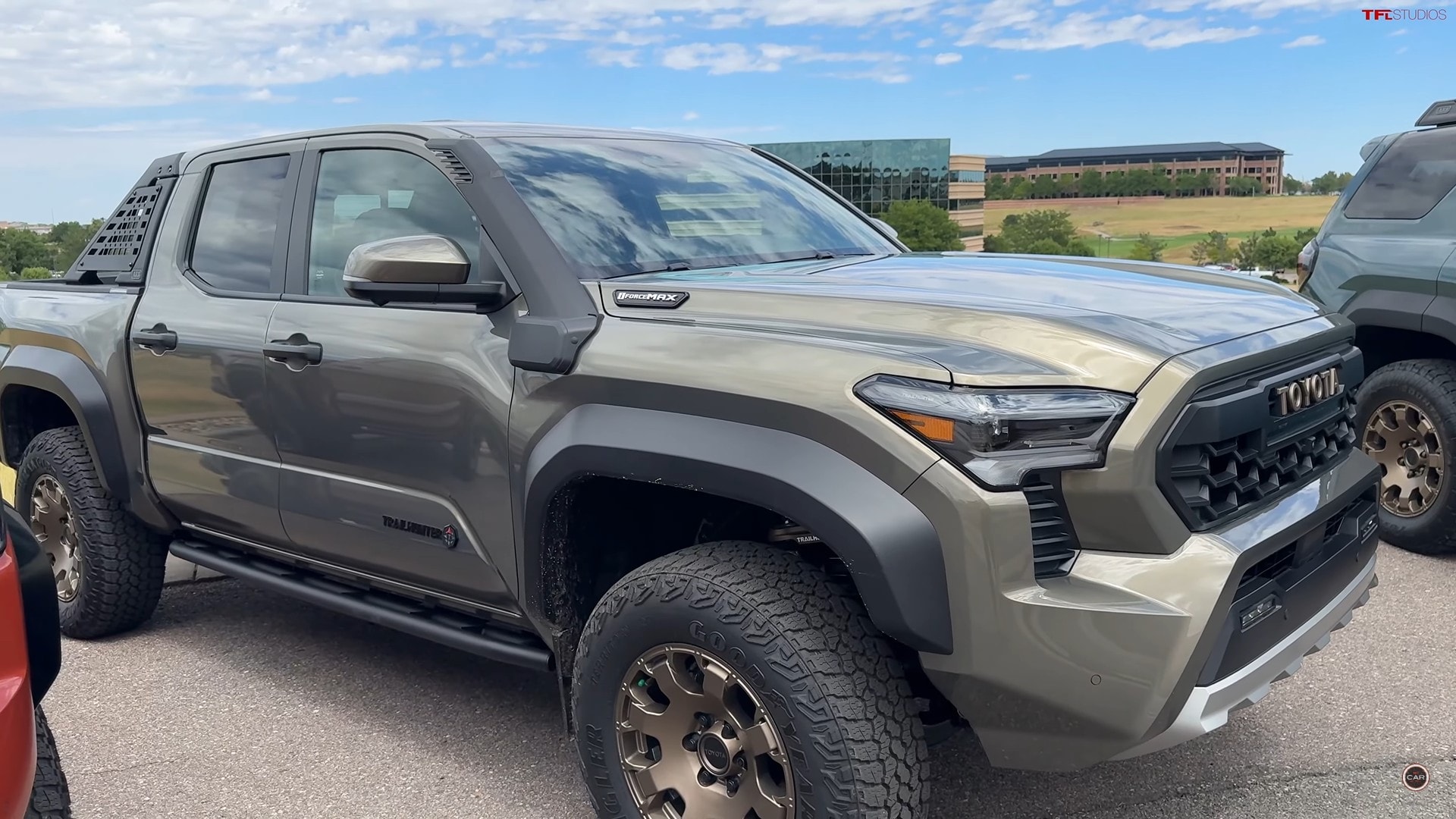
The Trailhunter is a new breed, developed in collaboration with ARB. Instead of FOX shocks, it uses Old Man Emu (OME) position-sensitive forged monotube shocks. These are tuned for carrying heavy loads over long distances—perfect for those who bolt rooftop tents, fridges, and steel bumpers to their rigs. The Trailhunter also comes factory-equipped with a high-clearance rear bumper, rock rails, and a bed utility bar (on the Tacoma) or an integrated roof rack (on the 4Runner).
| Feature | 2026 Toyota 4Runner TRD Pro | 2026 Toyota Tacoma TRD Pro |
|---|---|---|
| Wheelbase | 112.2 inches | 131.9 inches |
| Engine | i-FORCE MAX 2.4L Hybrid | i-FORCE MAX 2.4L Hybrid |
| Horsepower / Torque | 326 hp / 465 lb-ft | 326 hp / 465 lb-ft |
| Rear Suspension | Multi-link Coil | Multi-link Coil |
| Standard Tire Size | 33-inch Nittos | 33-inch Goodyears |
| Ground Clearance | 9.2 inches | 11.0 inches |
| Approach Angle | 32 Degrees | 33.8 Degrees |
| Departure Angle | 24 Degrees | 23 Degrees |
| Payload Capacity | ~1,500 lbs | ~1,700 lbs |
Practicality and Cargo: The "Wet vs. Dry" Debate
The decision between these two often comes down to how you carry your gear.
The 4Runner offers climate-controlled, secure storage. If you frequently travel with expensive camera gear, dogs, or camping equipment that needs to stay dry and dust-free, the SUV body is superior. The 4Runner also retains its signature power rear window, which allows for excellent ventilation and easy access to the cargo area without opening the liftgate. However, the interior height is somewhat limited by the battery placement in hybrid models.
The Tacoma offers the "dirty" utility of a truck bed. You can throw muddy recovery gear, fuel cans, and mountain bikes into the bed without worrying about ruining the upholstery. For overlanders, the bed provides a modular platform for "bed racks" and "canopies." Furthermore, the Tacoma's payload capacity is generally higher than the 4Runner’s, making it the better choice if you plan on building a heavy, armor-clad rig with a permanent living setup.
Interior Comfort and Technology
Inside the cabin, the 2026 models are nearly identical. Both feature a standard 14-inch Toyota Audio Multimedia touchscreen on higher trims, which supports wireless Apple CarPlay and Android Auto.
One area where the 4Runner wins is passenger comfort. The second-row seating in the 4Runner offers more legroom and a more natural seating position than the Tacoma’s "high floor" layout. While the new Tacoma has improved significantly in this regard, the 4Runner remains the better "family" off-roader. If you plan on taking four adults on a trail ride, the 4Runner is the only choice that won't result in rear-seat complaints.
Pricing and Value in 2026
By 2026, pricing has stabilized for these new-generation models. The 4Runner typically commands a slight premium over the Tacoma when comparing equivalent trims (e.g., TRD Off-Road to TRD Off-Road).
- Maintenance: Both benefit from Toyota's reputation for reliability, but the complexity of the i-FORCE MAX hybrid system means specialized service is required.
- Resale Value: Both vehicles historically hold their value better than almost anything else on the market. In 2026, the 4Runner continues to have a slight edge in depreciation curves due to its status as a "lifestyle" icon and its manufacturing origin (often still Japan-based for certain global markets, though US-market 4Runners vary).
Frequently Asked Questions
Which is better for rock crawling, the 4Runner or the Tacoma?
The 4Runner is generally better for technical rock crawling. Its shorter wheelbase (112.2") provides a superior breakover angle and a tighter turning radius, allowing it to navigate tight obstacles that might high-center the longer Tacoma. Additionally, its better departure angle prevents the rear bumper from dragging when coming off large ledges.
Does the Tacoma have more ground clearance than the 4Runner?
In standard TRD Pro or Trailhunter trims, the Tacoma often sits slightly higher, providing up to 11 inches of ground clearance compared to the 4Runner’s 9.2 to 10 inches. However, ground clearance is easily modified with aftermarket lifts and larger tires on both platforms.
Is the i-FORCE MAX hybrid reliable for remote off-roading?
The i-FORCE MAX system was designed with durability in mind, using a nickel-metal hydride battery known for its longevity in harsh climates. While more complex than the old V6, the hybrid system provides essential low-end torque for off-roading and includes failsafes that allow the vehicle to operate even if certain hybrid components are compromised, though with reduced power.
Can the 4Runner sleep two adults inside like the Tacoma can with a bed?
Yes, with the rear seats folded, the 4Runner offers enough length for two adults to sleep inside, though the "floor" may not be perfectly flat in hybrid models due to the battery hump. This provides a "hard-sided" camping experience that is more secure and warmer than a rooftop tent on a Tacoma.
Which vehicle has a higher towing capacity for off-road trailers?
The Tacoma generally has a higher towing capacity, often rated between 6,000 and 6,500 lbs depending on the trim. The 4Runner is typically rated around 5,000 lbs. If you plan on towing a heavy off-road camper like a Bruder or a Patriot Camper, the Tacoma provides a more stable towing platform due to its longer wheelbase.
Final Recommendation: Making the Choice
The choice between a 4Runner and a Tacoma for off-roading in 2026 is a matter of mission profiling.
Choose the Toyota 4Runner if:
- You prioritize technical trail performance and maneuverability.
- You need to transport more than two passengers regularly in comfort.
- You want your gear to be secured within a climate-controlled, lockable cabin.
- You frequently tackle steep "drop-offs" where departure angles matter.
Choose the Toyota Tacoma if:
- You need the versatility of a truck bed for hauling "dirty" gear or motorcycles.
- You plan on building a heavy-duty overlanding rig with a bed-mounted habitat.
- You prefer the high-speed stability offered by a longer wheelbase.
- You require a higher payload and towing capacity for long-distance treks.
Ultimately, both vehicles represent the pinnacle of Toyota's off-road engineering. Whether you are crawling through Moab or traversing the Dalton Highway, either choice provides a level of capability and reliability that remains the gold standard in the mid-size 4x4 segment.