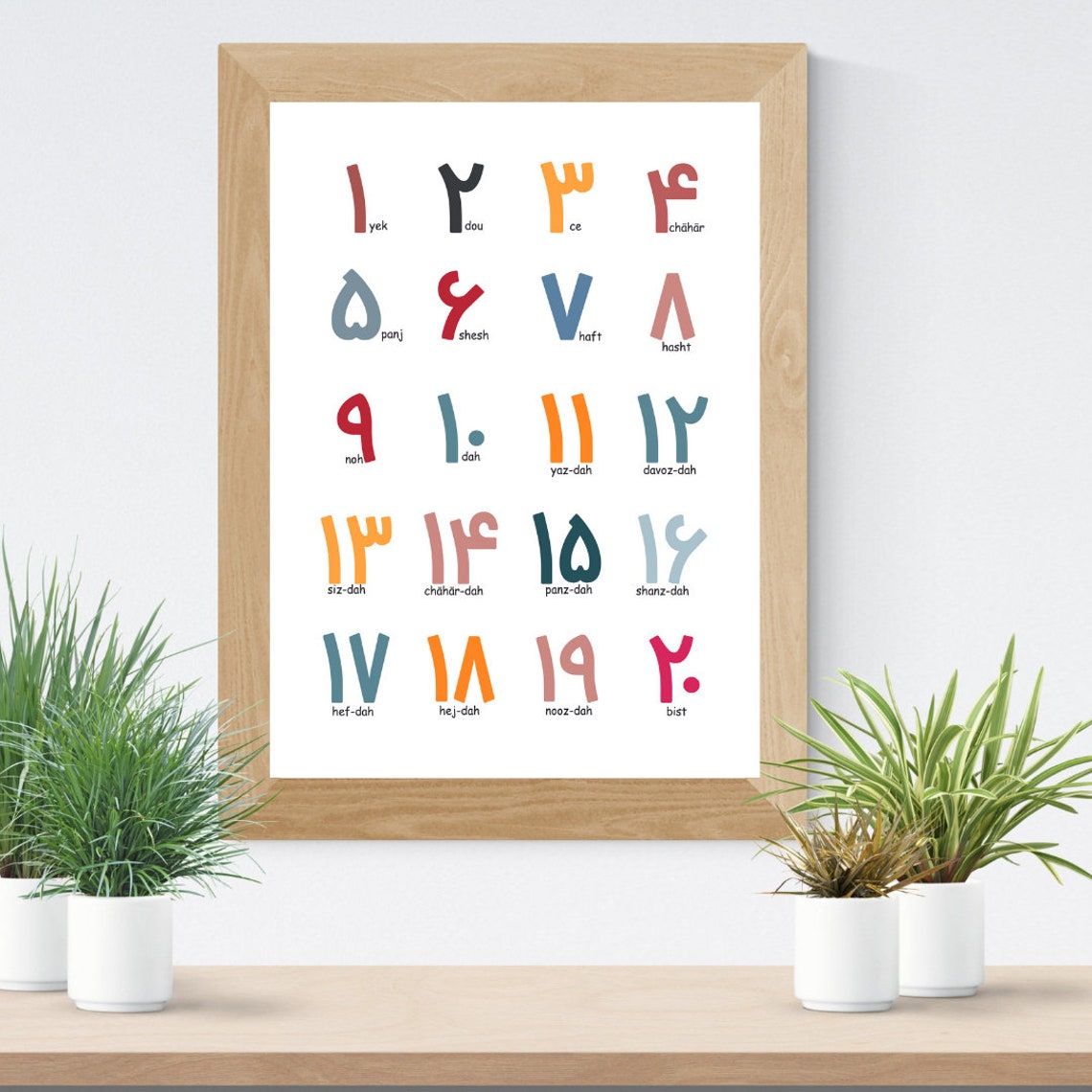
The Persian digit 4 (۴) is a distinct Unicode character (U+06F4) essential for accurate data representation in Persian-speaking regions. In digital identity, using the correct Persian script instead of Western or Arabic-Indic variants ensures database integrity, successful authentication, and compliance with national standards, preventing critical errors in identity verification and financial transactions.
The Technical Anatomy of the Persian Number 4 (۴)
To understand the role of the digit 4 in digital identity, one must first distinguish between the various numeric systems used in the Middle East and Central Asia. While many Western users refer to "Arabic numerals" as the digits 0-9, these are technically "Western Arabic numerals." In the Persian-speaking world—primarily Iran, Afghanistan, and Tajikistan—the "Eastern Arabic-Indic" script is used, but with specific Persian variations.
The Persian digit 4, represented as ۴, is technically defined in the Unicode standard as U+06F4 (EXTENDED ARABIC-INDIC DIGIT FOUR). This is fundamentally different from the standard Arabic-Indic digit 4 (٤), which is U+0664. Visually, the Persian 4 is typically "open" at the bottom or has a distinct shape that differentiates it from its Arabic counterpart.
As of 2026, the persistence of these distinct encoding points remains a cornerstone of internationalization (i18n). If a digital system treats "4", "٤", and "۴" as identical without a normalization layer, the underlying data architecture is flawed. For digital identity, where a single character mismatch can invalidate a National ID number or a biometric record, the distinction between U+06F4 and other "fours" is not just a matter of font—it is a matter of data precision.
Digital Identity and the Encoding Challenge
Digital identity (eID) relies on the unique identification of individuals across multiple platforms, including government portals, banking systems, and healthcare databases. In countries like Iran, where the Persian script is the official standard for documentation, the digit 4 appears frequently in National ID numbers (Melli Code), birth certificate numbers, and postal codes.
The primary challenge in 2026 remains the "Input Mismatch" phenomenon. Many legacy systems were built using Western ASCII characters (0-9). When a modern user interacts with these systems using a Persian keyboard on a smartphone or desktop, the input method editor (IME) sends the Persian Unicode character (۴). If the system's backend is not configured to handle Extended Arabic-Indic digits, the data may be rejected, or worse, stored as a "broken" character or a question mark.
In the context of digital identity, this leads to:
- Failed Authentication: A user enters their ID containing a ۴, but the database expects a 4. The system returns a "User Not Found" error.
- Duplicate Identities: A single individual might be registered twice—once with Western digits and once with Persian digits—leading to fragmented records and potential fraud.
- Inaccurate Biometric Binding: When fingerprints or facial recognition data are linked to a numeric ID string, any inconsistency in the script of that string can sever the link between the biological person and their digital persona.
The Impact on Database Indexing and Searchability
For software engineers and database administrators, the Persian 4 represents a significant indexing hurdle. Standard SQL databases or NoSQL clusters (like Elasticsearch) require specific collation and normalization rules to treat different numeric scripts as equivalent during a search.
Imagine a government database containing millions of records. If a clerk searches for a citizen using the Western digit "4" but the record was saved using the Persian script "۴", a standard query will fail. This necessitates the use of normalization layers at the application level. By 2026, best practices dictate that all numeric input should be normalized to a standard format (usually Western digits 0-9) for storage, while the UI (User Interface) remains in the user's preferred script.
However, many identity systems require the preservation of the original script for legal or "high-fidelity" reasons. In these cases, developers must implement "Multiple-Script Indexing," where a single identity attribute is indexed in both its native Persian form and its normalized Western form. This ensures that regardless of the user's keyboard settings, the identity remains discoverable and verifiable.
Security Implications: Homoglyphs and Spoofing
Digital identity is the frontline of cybersecurity. One of the more subtle threats involving the Persian digit 4 is the homoglyph attack. Because different Unicode characters can look identical or very similar in certain fonts, malicious actors can use them to create deceptive digital identities or URLs.
While "4" and "۴" look distinct to a trained eye, in some condensed digital interfaces or specific fonts, the Persian 4 (۴) might be confused with other symbols or digits from different scripts. In a phishing scenario, an attacker could register a digital credential or a domain name that substitutes a Persian 4 for a Western 4 or an Arabic ٤.
Furthermore, in automated systems that perform Optical Character Recognition (OCR) on identity documents—such as passports or driver's licenses—the "4" problem is a frequent source of error. An OCR engine that is not properly trained on the ISIRI 6219 (the Iranian standard for Persian characters) might misread a Persian ۴ as a Western 4 or even a letter, leading to "Identity Collision" where two different people are assigned the same digital footprint due to a reading error.
National Standards and the 2026 Digital Landscape
In 2026, the adoption of localized digital standards has become a prerequisite for international trade and domestic governance. The Iranian standard ISIRI 6219 specifically defines the character sets for Persian information exchange. It mandates the use of the Unicode block for Persian digits, including the specific Persian 4 (U+06F4) and Persian 6 (U+06F6), which differ from their standard Arabic counterparts.
Compliance with these standards is no longer optional for global tech companies operating in Persian-speaking markets. Digital identity providers must ensure that their SDKs (Software Development Kits) for mobile apps automatically detect and handle Persian numeric input. Failure to do so results in a poor User Experience (UX) and high abandonment rates during digital onboarding (KYC - Know Your Customer).
For example, when a user is setting up a digital wallet or a government e-portal account, the "Input Validation" logic (often using Regular Expressions or RegEx) must be inclusive. A common mistake is using the RegEx [0-9], which only recognizes Western digits. To be inclusive of the Persian 4 and other digits, the RegEx must be updated to [\u06F0-\u06F9] or a broader Unicode numeric category.
Comparison of Numeric Scripts in Identity Systems
The following table illustrates the differences between the three primary numeric systems encountered in digital identity systems within Persian-speaking regions.
| Digit Value | Western (Latin) | Arabic-Indic (Standard) | Persian (Extended Arabic-Indic) | Unicode Point (Persian) |
|---|---|---|---|---|
| 0 | 0 | ٠ | ۰ | U+06F0 |
| 1 | 1 | ١ | ۱ | U+06F1 |
| 2 | 2 | ٢ | ۲ | U+06F2 |
| 3 | 3 | ٣ | ۳ | U+06F3 |
| 4 | 4 | ٤ | ۴ | U+06F4 |
| 5 | 5 | ٥ | ۵ | U+06F5 |
| 6 | 6 | ٦ | ۶ | U+06F6 |
| 7 | 7 | ٧ | ۷ | U+06F7 |
| 8 | 8 | ٨ | ۸ | U+06F8 |
| 9 | 9 | ٩ | ۹ | U+06F9 |
As shown, the Persian 4 is not just a visual variation; it occupies a unique space in the digital character map. This distinction is the bedrock of why "identity matching" software must be script-aware.
Best Practices for Implementation
For organizations managing digital identities in 2026, the following steps are recommended to handle the Persian digit 4 effectively:
- Frontend Normalization: Use JavaScript or mobile-native libraries to intercept numeric input. Convert Persian digits to Western digits before sending them to the server if your database is standardized on ASCII.
- Unicode-Aware Databases: Ensure that your database collation is set to a "Persian-aware" or "UTF-8 General" setting that recognizes the numeric equivalence of U+06F4 and U+0034 (the Western 4).
- Visual Consistency: Use fonts that clearly distinguish between the Persian 4 (۴) and the Arabic 4 (٤) to prevent user confusion during the data entry process.
- OCR Verification: If your identity system involves scanning physical documents, ensure the OCR engine is specifically configured for the Persian character set to avoid misidentifying the "open" shape of the Persian 4.
- Validation Logic: Update all backend validation and "Melli Code" verification algorithms to accept both Western and Persian numeric inputs to prevent unnecessary form errors.
Frequently Asked Questions
Why does my ID number show an error when I type it in Persian digits?
This usually happens because the system's backend is programmed only to recognize Western digits (0-9). When you type the Persian 4 (۴), the system sees a character it doesn't recognize as a "number," even though it looks like one to you. Most modern systems in 2026 are fixing this by adding a normalization layer that converts your input automatically.
Is the Persian 4 (۴) the same as the Arabic 4 (٤)?
No. While they share a common ancestry, they are distinct characters in the Unicode standard. The Persian 4 is U+06F4, and the Arabic 4 is U+0664. They often have different shapes; the Persian version is typically more "open" at the bottom. Using the wrong one can lead to "Data Silos" where your information is stored under two different character codes.
How does this affect my digital signature?
Digital signatures rely on a cryptographic hash of your data. If your name or ID number was hashed using the Persian script "۴" but you later try to verify it using the Western "4," the hashes will not match, and the signature will be marked as invalid. Consistency in character encoding is vital for the legal validity of digital signatures.
Can hackers use the Persian 4 for identity theft?
Indirectly, yes. Attackers can use "Homograph Attacks," where they create a fake identity or account using characters that look like your real ones but have different Unicode values. If a system does not properly normalize these characters, it might allow a duplicate account to be created that looks identical to yours, which can be used for impersonation.
What should developers use for Persian number validation?
Developers should avoid using simple [0-9] ranges in their code. Instead, they should use Unicode-aware libraries or specific ranges that include Persian digits (\u06F0-\u06F9). This ensures that the digit 4 (۴) is correctly identified as a numeric value rather than a special character or a string error.
Practical Recommendation for 2026
If you are developing or managing a digital identity system, prioritize Identity Normalization at the Edge. This means that as soon as a user enters a Persian digit 4 (۴), the system should internally map it to the standard Western 4 for database operations, while continuing to display the Persian script to the user to maintain a localized experience. This "Double-Layer" approach ensures maximum compatibility with legacy systems while providing a modern, culturally appropriate user interface. For users, always ensure your keyboard is set to the standard "Persian" layout rather than "Arabic" to ensure you are inputting the correct Unicode characters for your national ID and financial records.