3D printing for automotive parts enables rapid prototyping, custom aftermarket fabrication, and end-use production of lightweight components using advanced additive manufacturing technologies. By leveraging digital 3D models, engineers can bypass traditional tooling constraints to build complex geometries, reduce vehicle weight, and streamline supply chains across both motorsport and passenger vehicle sectors.
Introduction to Additive Manufacturing in the Automotive Sector
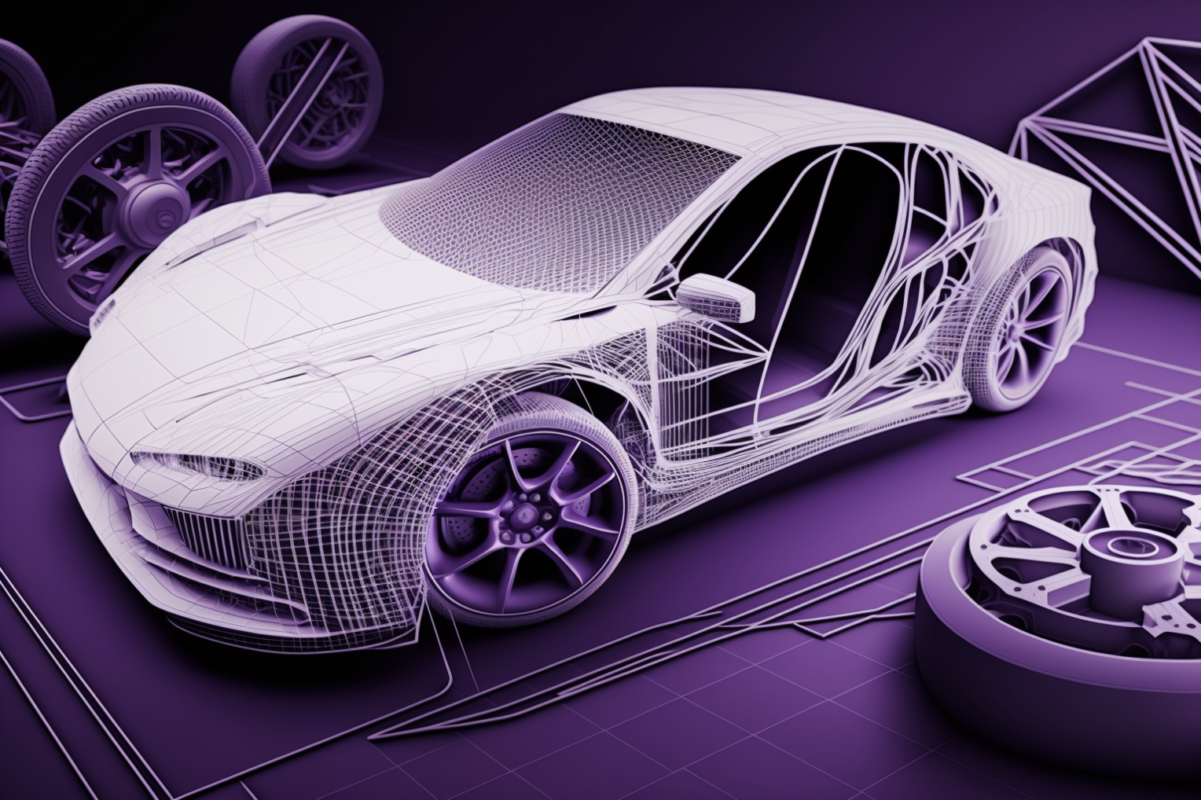
The automotive industry relies heavily on speed, precision, and economic efficiency. For decades, vehicle development was constrained by expensive metal casting, injection molding, and machining processes that required dedicated physical tooling. Additive manufacturing—commonly referred to as 3D printing—has fundamentally disrupted this paradigm. By building components layer by layer directly from Computer-Aided Design (CAD) data, automotive engineers and manufacturers can produce functional prototypes, specialized jigs, and production-grade end-use parts without waiting weeks or months for tooling fabrication.
Today, 3D printing is no longer confined to the prototyping workshop. Advancements in industrial printing hardware, high-performance engineering polymers, and metal powder bed fusion have pushed additive manufacturing directly onto the factory floor and into the aftermarket. Whether it is manufacturing lightweight brackets for electric vehicles (EVs), printing replacement interior trim pieces for classic cars, or producing direct digital manufacturing components for high-end racing teams, 3D printing delivers unmatched design freedom and agile supply chain capabilities.
Evolution of Automotive 3D Printing: From Prototyping to Production
To understand the current landscape of automotive 3D printing, it is helpful to examine how the technology has evolved over the past thirty years.
[Phase 1: Rapid Prototyping] ---> [Phase 2: Tooling & Fixtures] ---> [Phase 3: End-Use Production] Visual and ergonomic testing Assembly jigs and stamping dies Direct-to-vehicle components
1. Rapid Prototyping Era
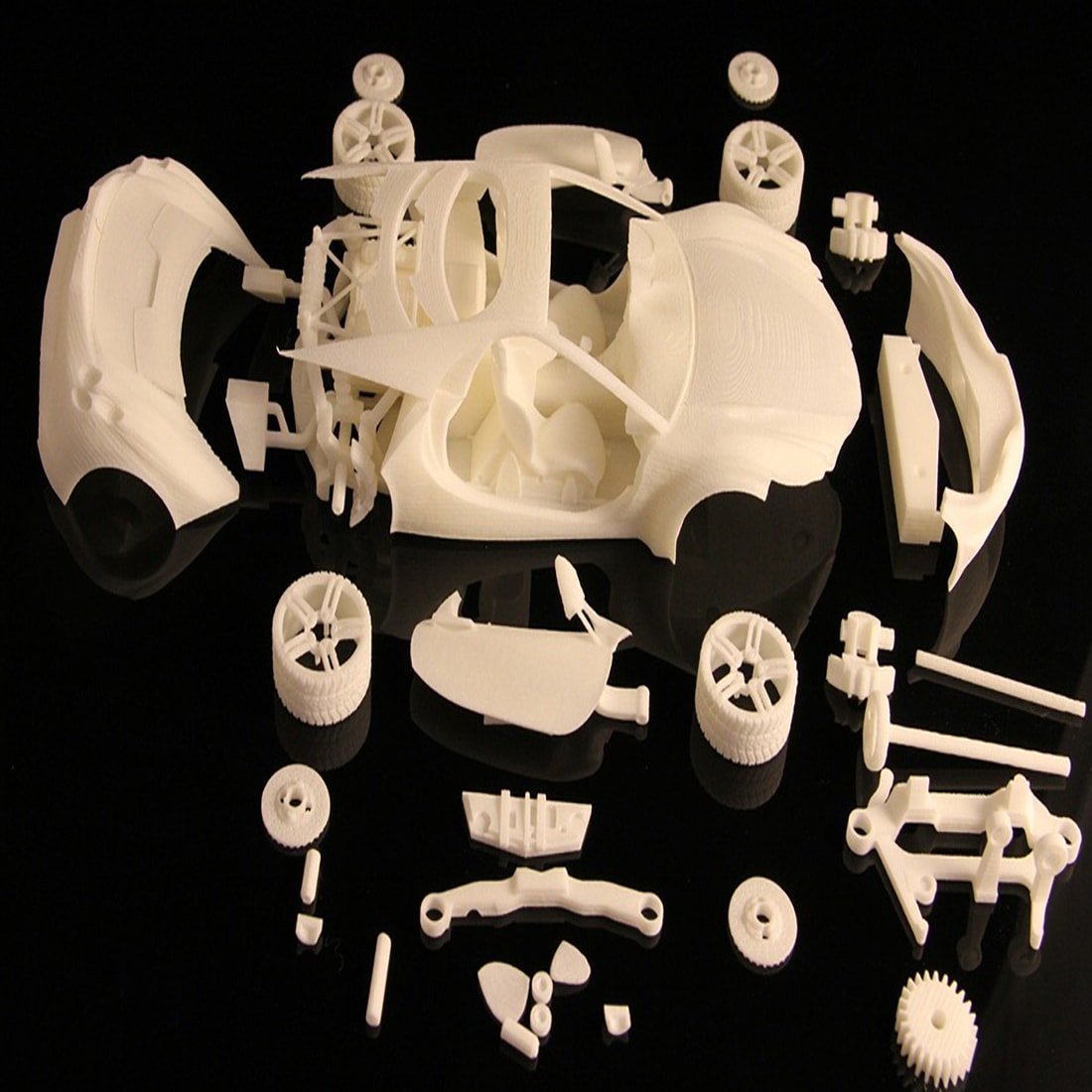
In the early days of stereolithography (SLA) and fused deposition modeling (FDM), 3D printing was used almost exclusively for visual and fit testing. Designers printed fragile polymer mock-ups to evaluate dashboard ergonomics, exterior styling cues, and packaging clearances before committing millions of dollars to steel and aluminum tooling. While these early parts lacked the mechanical strength required for operational environments, they drastically shortened vehicle development cycles.
2. Tooling, Jigs, and Fixtures
As printer reliability and material science improved, manufacturers realized that 3D printing offered immense value inside the manufacturing plant itself. Instead of machining complex metal assembly jigs, factories began printing customized alignment fixtures, welding guides, and robotic end-effectors using carbon-fiber-reinforced thermoplastics. This reduced assembly line downtime, lowered factory tooling costs by up to 90%, and allowed ergonomic customization for factory workers.
3. Direct Digital Manufacturing (DDM)
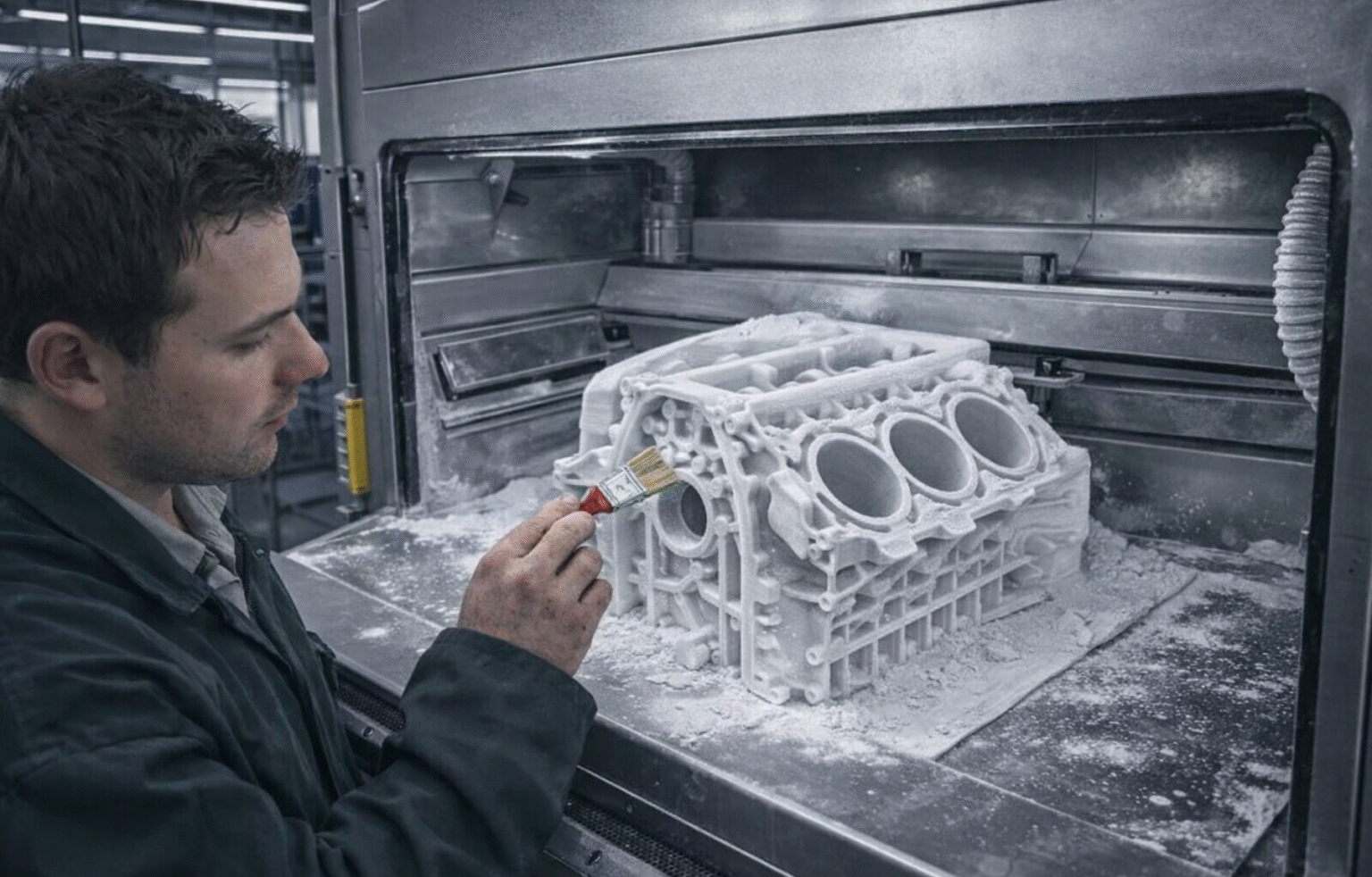
In the current production era, 3D printing creates functional components that go directly onto or into operational vehicles. Driven by selective laser melting (SLM) for metals and high-temperature laser sintering (SLS) for polymers, automotive brands now produce functional brackets, fluid reservoirs, heat exchangers, and structural nodes. This shift enables mass customization, distributed manufacturing, and on-demand spare parts inventory management.
Primary Technologies and Printing Methods
Different automotive applications require distinct additive manufacturing technologies. Selecting the correct printing process depends on mechanical load requirements, thermal exposure, surface finish expectations, and production volume.
Material Extrusion (FDM /FFF)
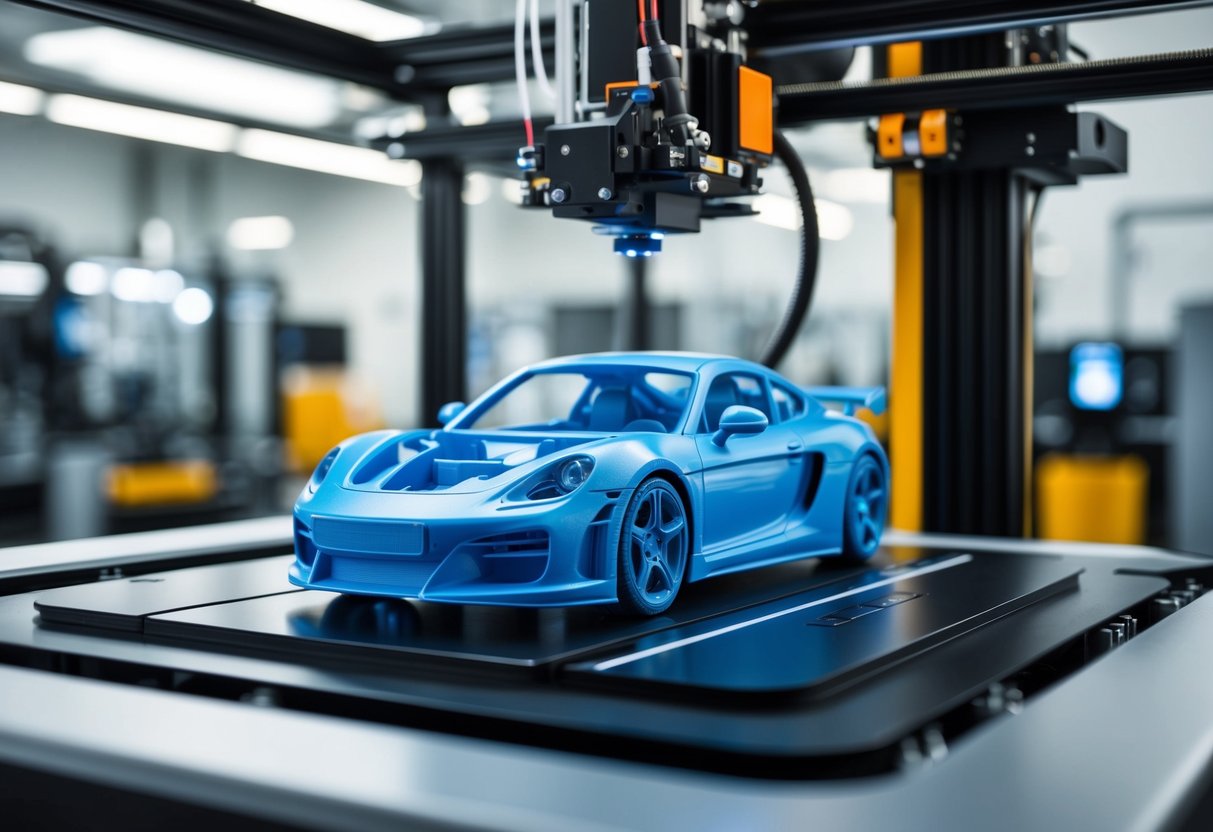
Fused Deposition Modeling (FDM) and related material extrusion techniques melt thermoplastic filaments and deposit them through a heated nozzle.
- Common Materials: ABS, ASA, Nylon, Polycarbonate, and continuous carbon-fiber-filled filaments (such as Onyx).
- Automotive Use Cases: Functional prototypes, large under-hood testing ducts, custom dash bezels, and durable factory assembly fixtures.
Vat Photopolymerization (SLA / DLP / MSLA)
These processes use ultraviolet lasers or projection screens to cure liquid photopolymer resins layer by layer.
- Common Materials: Standard engineering resins, rubber-like elastomers, and high-temperature ceramic-filled resins.
- Automotive Use Cases: Smooth-surface aesthetic models, clear lenses for lighting prototypes, investment casting patterns, and detailed wind-tunnel testing scale models.
Powder Bed Fusion (SLS / SLM / DMLS)
Powder bed fusion uses thermal energy—typically a high-powered laser or electron beam—to selectively fuse polymer or metal powders together.
- Selective Laser Sintering (SLS): Utilizes nylon powders to create durable, chemically resistant, snap-fit functional parts without requiring support structures.
- Selective Laser Melting (SLM) / Direct Metal Laser Sintering (DMLS): Fuses metal powders (aluminum, titanium, stainless steel, Inconel) to create high-strength, complex metal components.
- Automotive Use Cases: Lightweight structural brackets, custom exhaust components, high-efficiency heat exchangers, and race-tuned suspension elements.
Material Selection for Automotive Environments
Automotive environments are demanding. Parts must withstand wide temperature swings, continuous vibration, UV exposure, moisture, and contact with aggressive automotive fluids like gasoline, oil, and brake fluid.
| Material Class | Typical Process | Key Automotive Properties | Common Applications |
|---|---|---|---|
| Engineering Thermoplastics (Nylon, PC) | SLS / FDM | High impact resistance, durability, good fatigue strength | Snap-fit clips, interior trim, wiring brackets |
| Carbon-Fiber Reinforced Composites | Continuous Fiber FDM | Exceptional strength-to-weight ratio, rigidity | Structural brackets, robotics arms, stiffening ribs |
| High-Temp Polymers (PEEK, PEKK) | High-Temp FDM / SLS | Withstands temperatures above 200°C, chemical resistance | Under-hood sensors, engine bay covers, fluid routing |
| Aluminum Alloys (AlSi10Mg) | SLM / DMLS | Lightweight, high thermal conductivity, easily machined | Heat sinks, motor mounts, crash-structure nodes |
| Titanium (Ti6Al4V) | SLM / DMLS | Extreme strength, corrosion resistance, biocompatibility | High-stress motorsport suspension components, exhaust tips |
Key Benefits of 3D Printing in Automotive Manufacturing
Integrating additive manufacturing into automotive workflows delivers strategic advantages across design, engineering, and supply chain management.
Design Freedom and Topological Optimization
Traditional manufacturing methods—such as milling and casting—impose strict geometric limitations based on tool access and draft angles. 3D printing liberates designers from these constraints. Using generative design software and topological optimization, engineers can calculate the exact load paths a part must endure and remove excess material where stress is minimal. This results in organic, lattice-structured components that are up to 50% lighter than conventionally machined parts while maintaining identical or superior structural integrity.
Mass Customization and Low-Volume Production
For low-volume hypercars, luxury vehicle customization, and specialized motorsport applications, traditional injection molding is economically unviable due to high upfront tooling costs. 3D printing allows manufacturers to produce batch sizes of one or one thousand economically. Each part can be individually customized to exact client specifications without incurring tooling modifications.
Supply Chain Resilience and Spare Parts on Demand
Automotive manufacturers are required by law or market demand to supply replacement parts for vehicles long after production lines close. Storing physical inventories of thousands of slow-moving spare parts ties up warehouse space and capital. Additive manufacturing enables a "digital warehouse" model where components are stored as CAD files and printed locally on demand. This drastically reduces inventory carrying costs and eliminates lead times for obsolete parts.
Limitations, Challenges, and Operational Hurdles
Despite its advantages, 3D printing is not a universal replacement for traditional automotive manufacturing methods. Several technical and economic barriers remain.
- Production Speed and Throughput: Additive manufacturing is inherently slower than high-speed stamping, injection molding, or die-casting. While multi-laser metal systems and high-speed polymer sintering platforms are closing the gap, 3D printing remains uneconomical for millions of identical mass-market components.
- Post-Processing Requirements: Most 3D-printed parts require significant post-processing before installation. Metal parts often require support removal, heat treatment to relieve internal residual stresses, CNC machining for critical mating surfaces, and bead-blasting. Polymer parts may need sanding, vapor smoothing, or UV coating.
- Material Cost and Certification: Industrial-grade metal powders and high-temperature engineering filaments carry high material costs. Furthermore, certifying a 3D-printed metal part for safety-critical vehicle applications (such as steering links or braking systems) requires rigorous non-destructive testing (NDT), X-ray computed tomography (CT), and extensive destructive batch testing.
- Anisotropic Mechanical Properties: Many polymer printing processes create parts with directional strength variations (anisotropy). Parts are often weaker along the Z-axis (vertical build direction) due to interlayer adhesion limits, requiring careful build orientation planning by the operator.
Practical Applications Across Industry Segments
The adoption of 3D printing varies significantly depending on the specific automotive market segment.
Formula 1 and High-Performance Motorsport
Motorsport teams operate under extreme development velocity, often redesigning car components between race weekends. Formula 1 teams utilize in-house polymer and metal 3D printer farms to iterate aerodynamic packages, cooling ducts, and suspension wishbones overnight. In this sector, performance overrides initial component cost, making additive manufacturing an indispensable tool.
Electric Vehicles (EVs) and Lightweighting
Electric vehicle manufacturers face constant pressure to extend driving range through weight reduction. Lightweight brackets, optimized battery cooling manifolds, and integrated motor housing assemblies produced via selective laser melting help trim precious kilograms from the vehicle curb weight. Additionally, thermal management components with internal cooling channels—impossible to manufacture via traditional subtractive milling—are easily printed to keep EV battery packs at optimal operating temperatures.
Automotive Restorations and Aftermarket Customization
The aftermarket and classic car restoration sectors utilize 3D scanning and printing to recreate rare, discontinued mechanical parts, custom gauge pods, and unique body kits. Enthusiasts and boutique restoration shops can scan a damaged, obsolete metal casting, digitally repair the worn geometry, and print a functional replacement in aluminum or high-strength polymer.
Frequently Asked Questions
Can 3D-printed parts be used safely in critical engine or suspension applications?
Yes, but only when strictly engineered, manufactured, and certified for that purpose. High-end motorsport and aerospace sectors routinely use printed titanium and Inconel components in structural and high-stress environments. However, these parts undergo rigorous quality assurance protocols, including CT scanning and mechanical load testing, to verify structural integrity before deployment.
How does 3D printing reduce vehicle weight compared to traditional manufacturing?
3D printing enables topological optimization and complex internal lattice structures. Software algorithms remove material from areas experiencing low structural stress while reinforcing critical load paths. This creates organic, hollow, or cellular geometries that cannot be molded or CNC-milled, yielding significant weight savings without sacrificing stiffness.
What is the most cost-effective 3D printing technology for prototyping automotive parts?
Fused Deposition Modeling (FDM) and stereolithography (SLA) are generally the most cost-effective methods for prototyping. FDM is ideal for rugged, functional mechanical prototypes using engineering thermoplastics, while SLA is preferred for smooth, highly detailed visual models and master patterns.
Are 3D-printed automotive parts resistant to heat and chemicals?
Resistance depends entirely on the chosen material. Standard plastics like PLA degrade rapidly under engine bay temperatures and gasoline exposure. However, industrial materials such as PEEK, PEKK, carbon-fiber-filled nylons, and printed metals exhibit exceptional thermal stability up to several hundred degrees Celsius and robust chemical resistance.
How does on-demand 3D printing change automotive spare parts inventory?
On-demand digital manufacturing eliminates the need to warehouse thousands of physical replacement parts for aging vehicle models. Manufacturers can archive component designs digitally and print them locally only when an order is placed, freeing up working capital, reducing storage overhead, and preventing supply chain obsolescence.
Conclusion and Next Actions
Additive manufacturing has transitioned from a niche prototyping novelty into a foundational pillar of modern automotive engineering. For professionals looking to integrate 3D printing into their workflows, the most effective next action is to audit current production bottlenecks. Identify low-volume components, expensive metal assembly fixtures, or delayed spare parts where digital tooling can replace traditional manufacturing lead times. Partnering with certified service bureaus for an initial feasibility study on a single component allows engineering teams to evaluate structural performance, cost-per-part metrics, and material suitability before investing in dedicated in-house industrial hardware.