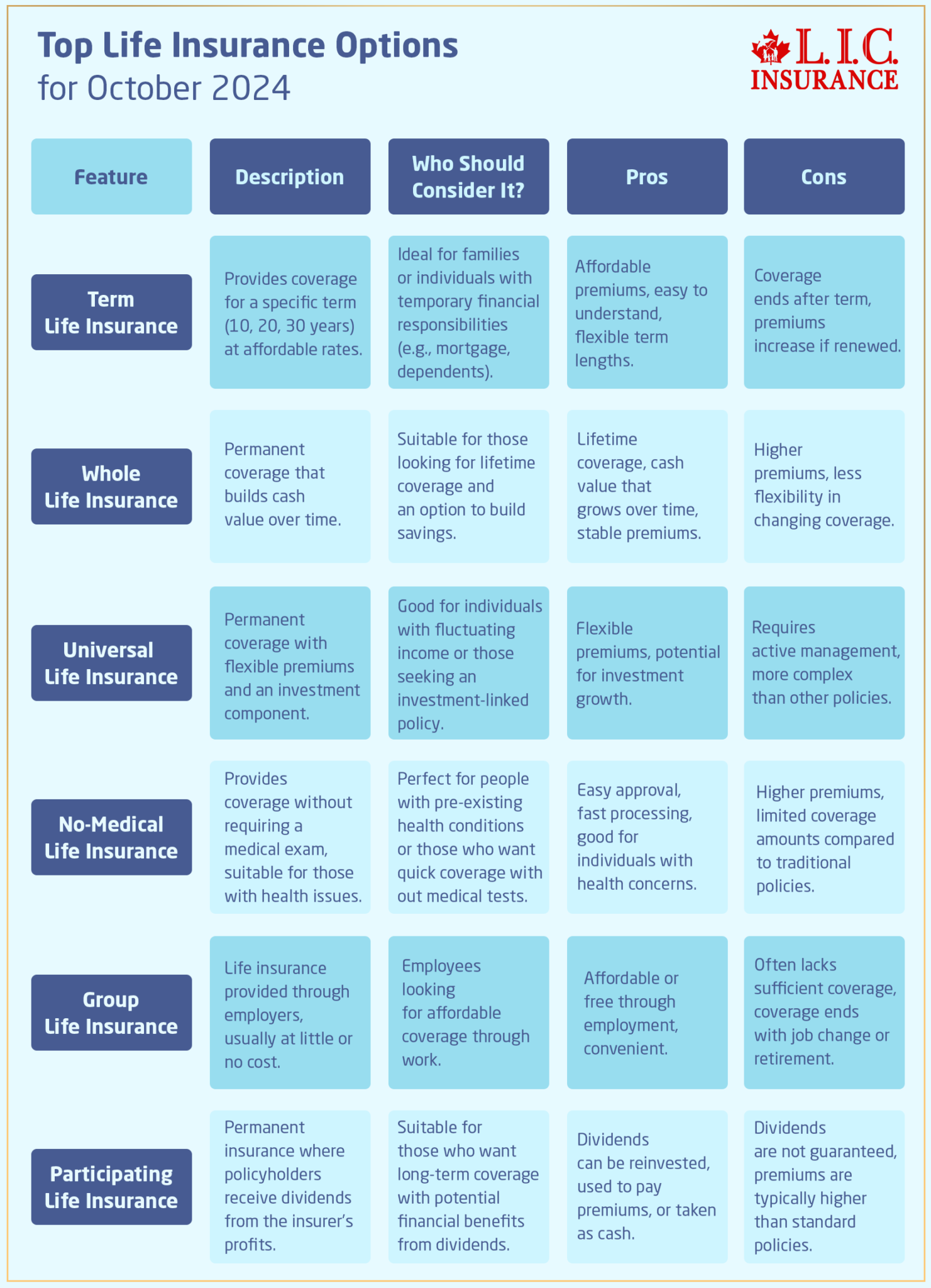
Finding life insurance after turning 70 is entirely achievable, though the available products, pricing structures, and underwriting requirements differ significantly from those marketed to younger demographics. For individuals over 70, the primary options typically narrow down to term life insurance, whole life insurance, and final expense (or burial) insurance, each serving distinct financial planning and legacy goals.
Navigating the life insurance market in your seventies requires a clear understanding of your financial objectives, current health status, and budget constraints. While premiums are naturally higher due to increased mortality risk, specialized products exist to provide income replacement, cover estate taxes, fund business succession, or simply ensure that funeral and final expenses do not burden surviving family members. Understanding how these three primary paths operate allows applicants to make informed, cost-effective decisions tailored to their unique circumstances.
1. Term Life Insurance for Seniors Over 70
Term life insurance provides coverage for a specific period, such as 10, 15, or 20 years. For someone over 70, term life insurance can be an effective way to secure a large death benefit for a lower cost than permanent insurance, provided the insured is in relatively good health.
How Term Life Works at Age 70 and Beyond
When an applicant over 70 applies for a term policy, insurance companies assess life expectancy through medical underwriting. Because term policies do not build cash value, they function purely as a financial safety net. If the insured passes away during the specified term, the beneficiaries receive the tax-free death benefit. If the term expires and the policy is not renewed or converted, the coverage terminates with no payout.
For older adults, finding a 20-year term policy may be difficult or prohibitively expensive, as many carriers cap the maximum age at issue or limit terms to 10 or 15 years. However, a 10-year term policy can be ideal for bridging specific financial gaps, such as covering the remaining years of a mortgage, funding a child's or grandchild's education, or protecting a spouse until traditional retirement accounts and pensions fully stabilize.
Underwriting and Health Requirements
Securing a term policy at age 70 almost always requires passing a medical exam, which typically includes drawing blood, checking blood pressure, and recording height and weight. Underwriters look closely at medical history, prescription drug usage, driving records, and lifestyle habits like smoking.
To qualify for favorable rates (such as Standard or Preferred tiers), a 70-year-old must generally manage chronic conditions—like high blood pressure or type 2 diabetes—effectively through medication and lifestyle. Those with severe health complications may face high premium quotes or outright denial, making guaranteed alternatives more attractive.
Advantages and Limitations
- Advantages: Offers the highest possible death benefit for the lowest relative monthly premium among traditional products, making it ideal for temporary, high-stakes financial obligations.
- Limitations: Premiums rise sharply with age, the policy eventually expires, and renewal rates after a term ends are typically unaffordable for seniors.
2. Whole Life Insurance for Permanent Protection
Whole life insurance is a form of permanent life insurance that remains in effect for the rest of the insured's life, provided premiums are paid. It features guaranteed level premiums that never increase and a cash-value component that grows at a fixed, predetermined rate.
Permanent Security and Cash Value Accumulation
For individuals over 70, whole life insurance is frequently used for estate planning, leaving a guaranteed legacy, or covering final expenses without the risk of the policy expiring. Unlike term insurance, a whole life policy builds cash value over time against which the policyholder can borrow or withdraw funds.
However, because the insurance company assumes the risk of insuring an older individual for the remainder of their natural life, the cost of insurance is front-loaded into the premium. Consequently, whole life policies for 70-year-olds come with substantial monthly or annual payments. Buyers must evaluate whether the long-term cost outweighs the benefit of permanent coverage.
Simplified Issue vs. Fully Underwritten Whole Life
Depending on the carrier and the applicant's health, whole life insurance for seniors can be secured through two primary underwriting paths:
- Fully Underwritten Whole Life: Requires a comprehensive medical exam and health history review. Healthy 70-year-olds who qualify can secure substantial face amounts at the best possible permanent rates.
- Simplified Issue Whole Life: Eliminates the medical exam, requiring only answers to a short medical questionnaire. While easier to obtain, these policies typically feature lower maximum death benefits and slightly higher premiums due to the lack of medical verification.
Advantages and Limitations
- Advantages: Coverage lasts a lifetime, premiums are locked in and never increase, and the policy builds a cash reserve that acts as a financial asset.
- Limitations: Significantly more expensive than term insurance; requires a long-term financial commitment to avoid policy lapse.
3. Final Expense Insurance (Burial Insurance)
Final expense insurance—frequently marketed as burial insurance—is a specialized, simplified form of whole life insurance designed specifically for older adults. It features smaller face amounts, typically ranging from $2,000 to $40,000, intended to cover funeral costs, medical bills, and residual consumer debt.
Purpose and Accessibility for Seniors Over 70
Final expense insurance is the most accessible form of coverage for individuals over 70, particularly those with past or current health issues. Most final expense policies require no medical exam. Instead, approval is based solely on answers to a concise health questionnaire, and in many cases, acceptance is guaranteed regardless of health status.
The primary goal of final expense insurance is to relieve surviving family members of immediate financial burdens following the policyholder's death. Average funeral and burial costs continue to rise, and final expense policies ensure that liquid funds are available immediately to cover mortuary services, caskets, plots, and related expenses.
Understanding Graded and Guaranteed Issue Tiers
When purchasing final expense insurance after 70, applicants generally encounter three underwriting tiers:
- Level Benefit: The policyholder receives full coverage from day one, provided they pass the health questionnaire. This offers the lowest cost per thousand dollars of coverage.
- Graded Benefit: Designed for individuals with moderate health issues. If the insured passes away from natural causes within the first two or three years of the policy, the beneficiary receives a refund of premiums plus interest (or a percentage of the death benefit), transitioning to the full payout thereafter.
- Guaranteed Issue: Requires no health questions and no medical exam. Anyone within the eligible age range (typically 50 to 80 or 85) is accepted. Like graded plans, these feature a two-to-three-year waiting period for non-accidental death benefits and carry the highest premium rates relative to the face amount.
Advantages and Limitations
- Advantages: Easy to qualify for, no medical exam required in most cases, fixed premiums, and guaranteed lifetime coverage for modest financial needs.
- Limitations: Lower maximum face amounts mean it cannot be used for substantial income replacement or large estate transfers; graded and guaranteed versions include waiting periods for natural death benefits.
Comparison of Life Insurance Options for Seniors Over 70
Evaluating the differences across these three options helps clarify which path aligns with specific financial goals, health conditions, and budgetary limits.
| Feature | Term Life Insurance | Whole Life Insurance | Final Expense Insurance |
|---|---|---|---|
| Duration | Fixed period (10–20 years) | Lifetime | Lifetime |
| Medical Exam | Usually required | Often required (or simplified) | Rarely required |
| Cash Value | None | Yes (Guaranteed growth) | Yes (Small amounts) |
| Premium Stability | Level during the term | Level for life | Level for life |
| Primary Use | Temporary debt, income protection | Estate planning, legacy building | Funeral and final costs |
| Maximum Age Limit | Typically caps at 75–80 | Available past 80 | Available past 85 |
Factors That Influence Life Insurance Costs at Age 70
Insurance carriers evaluate multiple risk variables when determining premium rates for applicants over 70. Understanding these factors can help applicants prepare for underwriting and anticipate potential costs.
Age and Gender
Age is the single most critical pricing metric. A policy purchased at age 70 will cost substantially more than one purchased at 65. Furthermore, actuarial data indicates that women generally live longer than men, meaning female applicants over 70 typically secure lower monthly premiums than male applicants of the same age and health profile.
Health and Medical History
Underwriters analyze current health status, chronic illnesses, and medical history. Conditions such as heart disease, cancer, stroke, or chronic obstructive pulmonary disease (COPD) directly impact pricing and policy availability. Conversely, well-managed high blood pressure, controlled cholesterol, and negative cancer screenings over a multi-year period can help applicants qualify for standard non-tobacco rates.
Tobacco and Lifestyle Habits
Tobacco use dramatically increases life insurance rates across all age groups, and this effect is magnified for individuals over 70. Smokers can expect to pay two to three times more for the same amount of coverage compared to non-smokers. Insurers typically classify anyone who has used cigarettes, cigars, pipes, or e-cigarettes within the past 12 months as a tobacco user.
Common Mistakes to Avoid When Buying Life Insurance Over 70
Navigating the senior life insurance market requires caution to avoid costly pitfalls that can compromise financial security.
Purchasing Unnecessary Coverage Amounts
Many older adults overestimate the amount of life insurance they need. If children are grown, the mortgage is paid off, and retirement funds are established, a multi-million-dollar policy is unnecessary. Calculating exact liabilities—such as final expenses, remaining debts, and survivor income needs—prevents overspending on excessive coverage.
Failing to Disclose Accurate Health Information
Omitting medical history or current prescriptions on an application can lead to claim denials later. Insurers have a contestability period (typically two years) during which they can investigate and rescind policies if material misrepresentation is discovered. Complete transparency during the underwriting process ensures that beneficiaries receive payouts without legal complications.
Overlooking Policy Riders
Policyholders should review available riders—optional policy amendments—that can enhance coverage. Common riders include accelerated death benefit riders, which allow the insured to access a portion of the death benefit early if diagnosed with a terminal illness, and waiver of premium riders (where applicable).
Frequently Asked Questions
Can someone over 70 qualify for life insurance without a medical exam?
Yes. Several products, including simplified issue whole life and guaranteed issue final expense insurance, do not require a medical exam. Approval is based on health questionnaires or is granted unconditionally, though these options generally feature higher premiums or lower maximum death benefits.
Is term life insurance a good choice for a 70-year-old?
Term life insurance can be a cost-effective choice if coverage is needed for a specific, time-bound financial obligation, such as a 10-year mortgage or short-term income support for a dependent spouse. However, because term policies expire, they are rarely suitable for permanent estate planning or final expense coverage.
What is the maximum age to buy a life insurance policy?
Most traditional term and whole life policies set maximum issue ages between 75 and 80. However, specialized final expense and guaranteed issue burial policies frequently accept applicants up to age 85, and in some cases, age 89.
How much does life insurance cost for a 70-year-old?
Costs vary widely based on the product type, health, gender, and face amount. A $10,000 final expense policy might cost between $50 and $150 per month, whereas a $100,000 fully underwritten permanent or term policy for a healthy 70-year-old can range from several hundred dollars per month upward.
Next Steps for Seniors Over 70 Seeking Coverage
To secure the most appropriate and cost-effective life insurance policy, start by defining your exact financial objective—whether that is covering funeral costs, settling remaining debts, or leaving a legacy. Gather your medical history, current medication lists, and estimated budget. Because underwriting guidelines and pricing vary significantly among carriers, compare quotes from multiple reputable insurance providers or consult an independent insurance broker who specializes in senior products to evaluate all available options objectively.