A 2x2 MIMO (Multiple-Input Multiple-Output) antenna system uses two separate transmitters and two separate receivers to transfer data simultaneously over the same radio frequency. By doubling the number of available data streams compared to traditional Single-Input Single-Output (SISO) systems, it significantly increases data throughput, improves signal stability, and enhances performance in environments with physical obstructions.
Understanding the Fundamentals of MIMO Technology
To grasp how a 2x2 MIMO antenna functions, it is essential first to understand the transition from traditional wireless communication to modern spatial multiplexing. In the early days of wireless networking, devices relied on SISO (Single-Input Single-Output). In a SISO architecture, one antenna on the transmitter communicates with one antenna on the receiver. While simple, this method is highly susceptible to interference and "multipath fading," where signals bouncing off walls or objects arrive at different times, causing data errors.
MIMO technology, which became a standard feature with the introduction of 802.11n (Wi-Fi 4) and has evolved through Wi-Fi 7 and 5G NR (New Radio), turns these environmental reflections into an advantage. Instead of a single stream, MIMO utilizes multiple antennas to send different parts of the data over different paths at the same time.
The "2x2" designation specifically refers to the number of radio chains or "spatial streams" available:
- The first '2': Represents the number of transmit (Tx) antennas or radio chains.
- The second '2': Represents the number of receive (Rx) antennas or radio chains.
This configuration allows the system to support two independent spatial streams. If the hardware supports it, these streams can either carry different data to double the speed (Spatial Multiplexing) or carry the same data to ensure the connection remains stable in poor conditions (Space-Time Block Coding).
How 2x2 MIMO Antennas Work
The core magic of 2x2 MIMO lies in its ability to manage Multipath Propagation. In a typical room or urban environment, a radio signal does not travel in a straight line. It hits desks, walls, buildings, and water, reflecting in various directions.
Spatial Multiplexing
In a 2x2 MIMO setup, the transmitter splits a high-speed data stream into two lower-speed streams. These are transmitted simultaneously on the same frequency channel but from two different antennas. Because the antennas are physically separated (or differently polarized), the signals take slightly different paths to the receiver. The receiver’s two antennas pick up these signals and use sophisticated Digital Signal Processing (DSP) to "untangle" them back into the original high-speed data.
Polarization Diversity
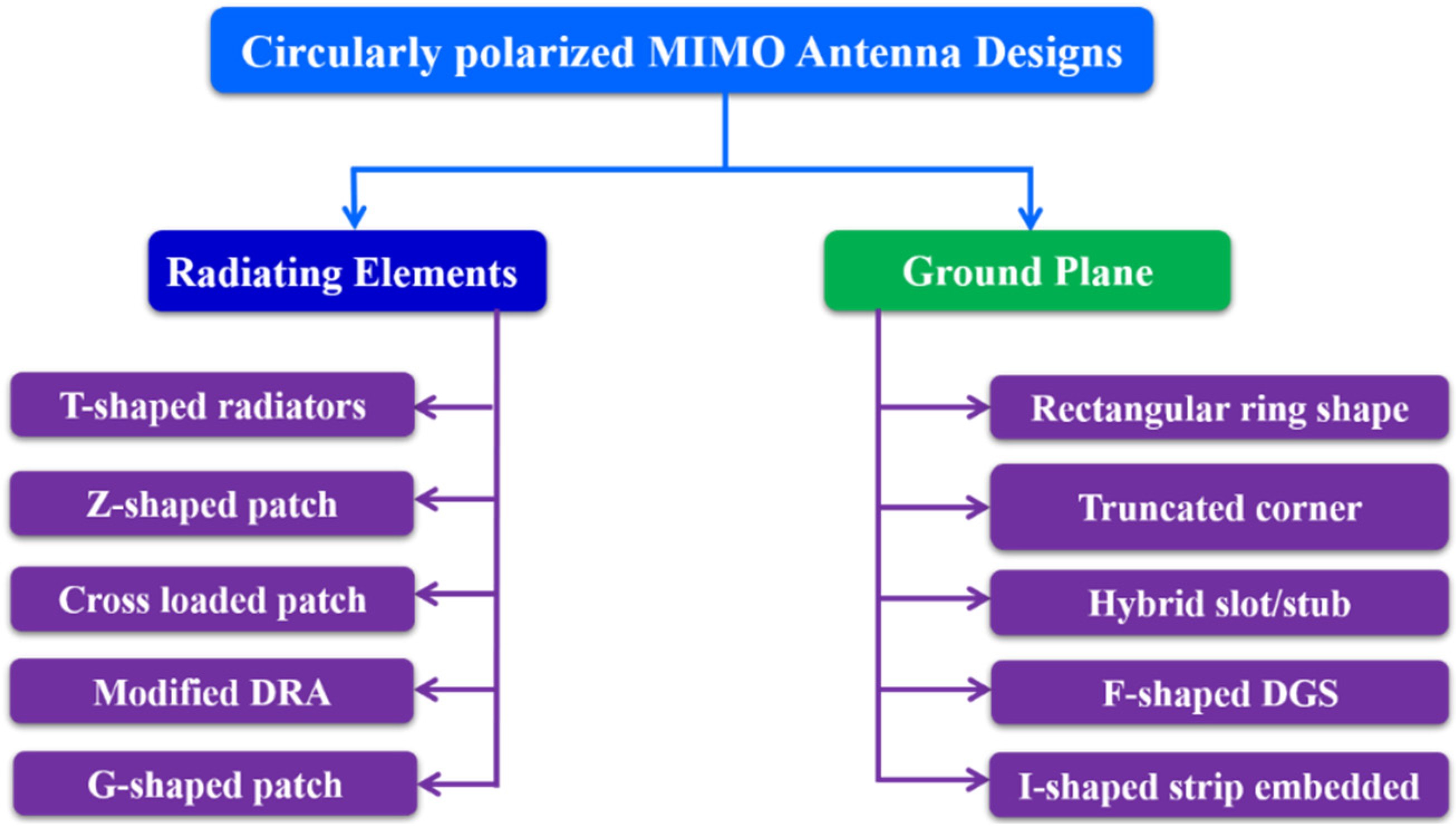
One of the most critical technical aspects of 2x2 MIMO, especially in outdoor or cellular (LTE/5G) applications, is cross-polarization. To ensure the two streams do not interfere with each other, one antenna is often oriented at a +45-degree angle while the other is at a -45-degree angle (often called "slant" polarization). Alternatively, one may be vertical and the other horizontal. This physical orientation ensures that even if the signals occupy the same frequency, they remain distinct to the receiver, maximizing the "isolation" between the two paths.
Signal Phasing and Combining
The receiver doesn't just "listen" to two different signals; it uses a process called Maximal Ratio Combining (MRC). If one antenna receives a weak version of a signal due to an obstacle, the other antenna might receive a stronger reflection. The system mathematically combines these inputs to produce a much cleaner, more reliable output than any single antenna could achieve alone.
Key Benefits of 2x2 MIMO Systems
By 2026, 2x2 MIMO has become the baseline for most consumer electronics, from mid-range smartphones to smart home hubs. Its popularity stems from several distinct advantages over older antenna configurations.
1. Increased Data Throughput
The most visible benefit is speed. Under ideal conditions, a 2x2 MIMO system can theoretically double the data rate of a 1x1 SISO system using the same channel bandwidth. For example, if a 20MHz channel allows for 72 Mbps on a single stream, a 2x2 MIMO configuration pushes that to 144 Mbps. In modern Wi-Fi 6 or Wi-Fi 7 environments, where channel widths can reach 160MHz or 320MHz, 2x2 MIMO allows for gigabit-plus wireless speeds on mobile devices.
2. Enhanced Link Reliability
Even when maximum speed isn't the goal, 2x2 MIMO provides "diversity gain." In areas with high interference or physical blockage, the system can use both antennas to ensure that if one path is blocked by a person moving through a room or a vehicle passing by, the other path maintains the connection. This results in fewer dropped packets and lower latency (ping), which is critical for gaming and video conferencing.
3. Better Performance at Range
As a mobile device moves further from an access point, the signal-to-noise ratio (SNR) typically drops. 2x2 MIMO helps maintain a usable connection at greater distances than SISO because the receiver has two chances to catch a clean signal. This effectively extends the "usable" range of a Wi-Fi router or a cellular base station.
Physical Implementation: Internal vs. External
The way 2x2 MIMO is implemented depends heavily on the device and its intended use case.
Internal Antennas
In smartphones and modern laptops, 2x2 MIMO is usually achieved through small patch antennas integrated into the chassis or the screen bezel. Due to the limited space, engineers must be incredibly precise with antenna placement to ensure enough "spatial decorrelation"—the two antennas need to be far enough apart or oriented differently so they don't just see the exact same signal.
External Antennas
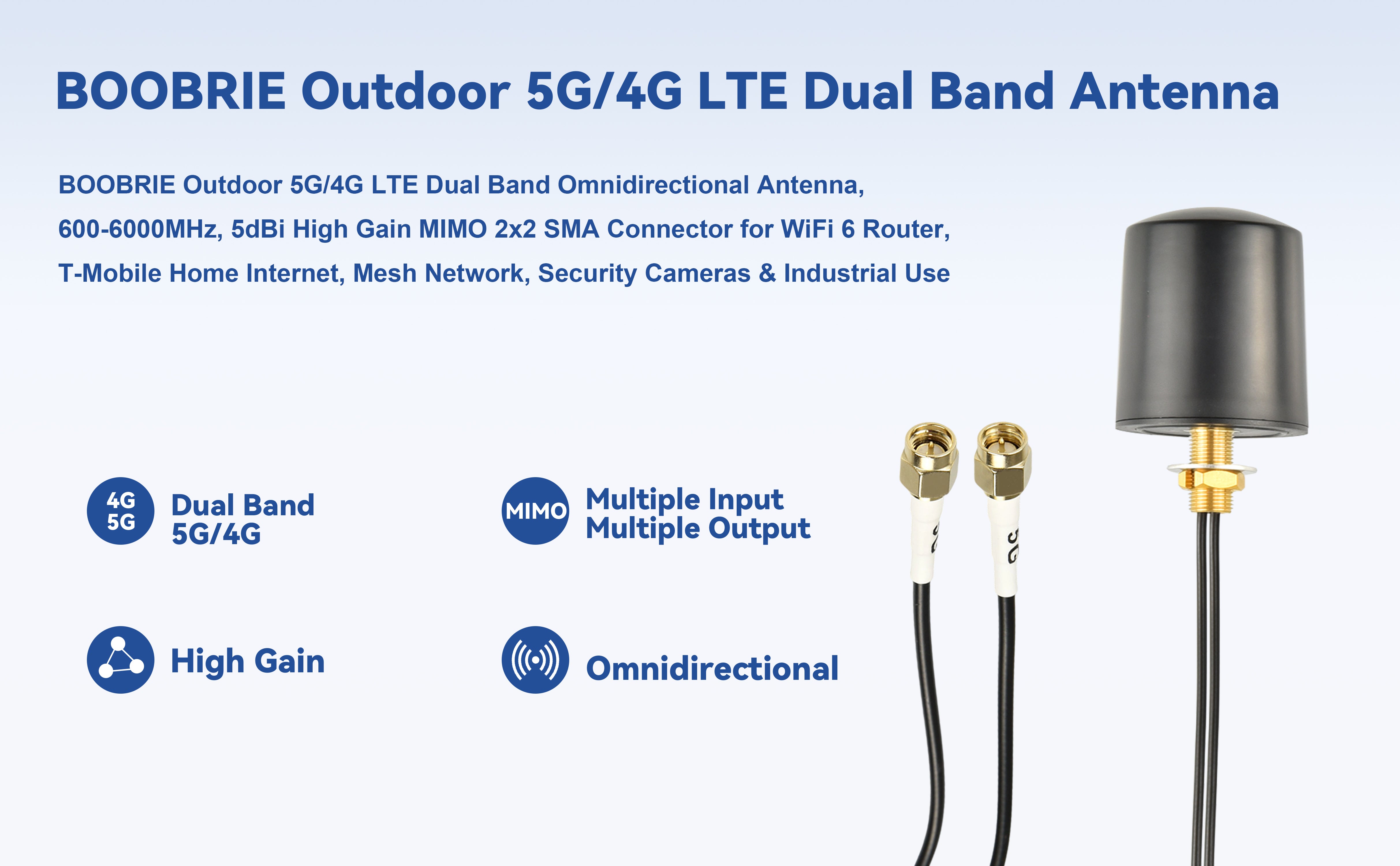
For 5G fixed wireless access (FWA) or rural internet setups, 2x2 MIMO often involves external antennas mounted on a roof. These are typically:
- Dual-lead Antennas: A single housing that contains two antenna elements inside, with two separate cables (SMA or TS-9) leading to the router.
- Individual Antennas: Two separate "Yagi" or "Panel" antennas mounted approximately 2 to 3 feet apart or cross-polarized to achieve the necessary isolation.
Comparing 2x2 MIMO with Other Configurations
While 2x2 is the standard for many devices, it sits in the middle of a hierarchy of wireless capabilities.
| Feature | 1x1 SISO | 2x2 MIMO | 4x4 MIMO |
|---|---|---|---|
| Antenna Elements | 1 Transmit / 1 Receive | 2 Transmit / 2 Receive | 4 Transmit / 4 Receive |
| Max Spatial Streams | 1 | 2 | 4 |
| Relative Throughput | 100% (Baseline) | ~200% | ~400% |
| Reliability | Low (Susceptible to fading) | High (Good diversity) | Very High (Superior diversity) |
| Typical Use Case | Budget IoT, legacy devices | Smartphones, Laptops, Routers | High-end Routers, 5G Towers |
| Power Consumption | Lowest | Moderate | Highest |
While 4x4 MIMO offers even higher speeds, it requires more power and more physical space for antennas. This is why 2x2 MIMO remains the "sweet spot" for portable, battery-powered devices in 2026.
Real-World Applications and 2026 Standards
In the current landscape of 2026, 2x2 MIMO is no longer an "advanced" feature; it is a fundamental requirement for the modern internet.
Wi-Fi 7 (802.11be) and 2x2 MIMO
Wi-Fi 7 devices frequently use 2x2 MIMO in the 6GHz band. By combining 2x2 spatial streams with 320MHz channel widths and 4K-QAM modulation, even a standard smartphone can achieve multi-gigabit speeds that rival wired Ethernet connections. This is essential for the high-bandwidth requirements of 8K streaming and wireless Augmented Reality (AR) headsets.
5G Cellular Connectivity
In 5G networks, 2x2 MIMO is often the minimum configuration for the "Uplink" (sending data from your phone to the tower), while the "Downlink" might use 4x4 or even Massive MIMO (64x64) from the tower side. The 2x2 antenna array in the handset ensures that even when the user is deep inside a building, the phone can maintain a stable upload stream for cloud backups or video calls.
Troubleshooting and Optimization of 2x2 MIMO
To get the most out of a 2x2 MIMO system, especially when using external antennas for LTE or 5G, several factors must be considered.
Cable Loss and Attenuation
Because MIMO relies on two separate signal paths, you must use two cables of equal length and quality. If one cable is significantly longer or of lower quality than the other, the signal levels will be "unbalanced." This forces the modem to downshift to a simpler 1x1 mode or reduces the effectiveness of the spatial multiplexing, negating the benefits of the 2x2 setup.
Antenna Placement
For external 2x2 MIMO kits, physical separation is key. If the antennas are too close together, they will receive nearly identical signals, making it impossible for the DSP to distinguish between the two streams. For most consumer frequencies (700MHz to 3500MHz), a separation of at least 18 to 24 inches is recommended if using vertical polarization. If using a cross-polarized (+45/-45) antenna, they can be housed in the same box.
Identifying "MIMO-Ready" Hardware
Not all routers with two antennas are 2x2 MIMO. Some older or cheaper devices use "Antenna Diversity," where the device has two antennas but only uses one at a time (whichever has the better signal). True 2x2 MIMO hardware will specify that it supports "two spatial streams" in its technical documentation or IEEE standards compliance list.
Common Mistakes to Avoid
- Mixing Antenna Types: Using one high-gain directional antenna and one low-gain omnidirectional antenna for a 2x2 MIMO port will result in a mismatched system that performs poorly.
- Incorrect Port Connection: Many 5G routers have four antenna ports (for 4x4 MIMO). If you only have a 2x2 antenna, you must identify which ports are the "primary" pair (usually labeled ANT0 and ANT1). Connecting to the wrong ports may result in no signal at all.
- Ignoring Polarization: When setting up two separate Yagi antennas, many users point them both vertically. Rotating one 90 degrees to be horizontal (or both 45 degrees to be cross-polarized) often results in an immediate 20-30% jump in throughput due to better stream isolation.
Frequently Asked Questions
Can I use a 2x2 MIMO antenna with a 4x4 MIMO router?
Yes, you can use a 2x2 MIMO antenna with a 4x4 router, but you will only utilize half of the router's potential spatial streams. You must ensure the antennas are connected to the correct primary ports specified in the manufacturer's manual. While you won't get 4x4 speeds, a 2x2 connection is still significantly better than a 1x1 connection.
Does 2x2 MIMO increase the range of my Wi-Fi?
Technically, MIMO is designed for throughput and reliability rather than raw distance. However, because it handles reflections and weak signals much better than SISO, you will find that your "effective" range—the distance at which you can still maintain a fast, stable connection—is significantly improved.
What is the difference between 2x2 MIMO and a Dual-Band router?
These are different concepts. "Dual-Band" refers to the frequencies the router uses (usually 2.4GHz and 5GHz). "2x2 MIMO" refers to how many data streams the router can send on each of those frequencies. A router can be Dual-Band and still only be 1x1 SISO, though most modern Dual-Band routers are at least 2x2 or 4x4 MIMO.
Why do I need two cables for an external 2x2 MIMO antenna?
MIMO requires two distinct paths for the radio signals to travel between the modem and the antenna elements. Each cable carries one of the two spatial streams. If you only connect one cable, the system reverts to SISO mode, and you lose the speed and stability benefits of the MIMO architecture.
Does 2x2 MIMO work through walls?
Yes, MIMO actually performs exceptionally well in environments with walls. Because walls cause signals to bounce and reflect, they create the "multipath" environment that MIMO thrives on. The multiple antennas allow the device to catch different reflections of the signal, which it then combines to create a stronger data stream than a single antenna could manage.
Practical Recommendation
If you are upgrading your home network or setting up a cellular internet connection in 2026, 2x2 MIMO should be considered the absolute minimum requirement. For standard smartphone use, streaming, and office work, 2x2 MIMO provides a perfect balance of power efficiency and high-speed performance.
When purchasing external antennas for a 5G router, always opt for a cross-polarized 2x2 MIMO kit rather than two separate vertical antennas. This simplifies the installation process and ensures the highest possible isolation between data streams, leading to more consistent speeds even in congested areas. For those in extremely remote areas with very weak signals, prioritizing antenna gain (dBi) is important, but never sacrifice the MIMO configuration to get a higher gain SISO antenna, as the stability of the MIMO link is usually more valuable than a slightly higher raw signal strength.