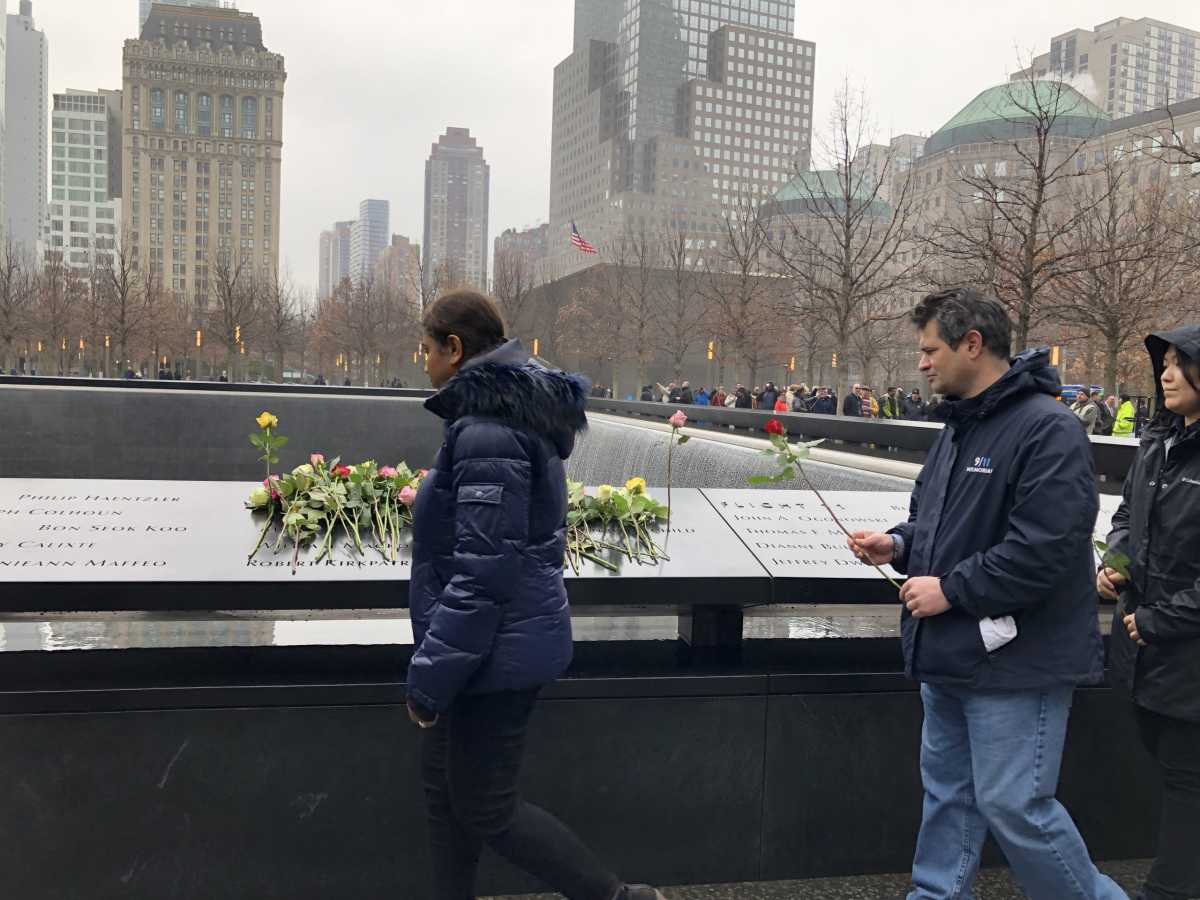
The 1993 World Trade Center bombing memorial timeline traces the history of remembrance from the initial 1995 granite fountain to its destruction on September 11, 2001, and its eventual integration into the National September 11 Memorial & Museum. Today, the six victims are honored on the North Pool’s bronze parapets.
The history of the World Trade Center is often dominated by the events of 2001, but for the families of the victims and the survivors of the February 26, 1993, bombing, the journey of memorialization began much earlier. The 1993 attack was the first major instance of international terrorism on United States soil, claiming six lives and injuring over a thousand people. Understanding the timeline of its memorialization requires looking at how the Port Authority of New York and New Jersey sought to honor the victims in the 1990s and how those efforts were tragically altered by subsequent events.
The Initial Tragedy: February 26, 1993
The timeline begins at 12:17 p.m. on a Friday in late February. A yellow Ryder rental truck, packed with approximately 1,200 pounds of urea nitrate-hydrogen gas enhanced explosives, was detonated in the underground parking garage of the World Trade Center’s North Tower (Tower 1). The blast created a 100-foot-wide crater, five stories deep, causing massive structural damage to the sub-grade levels.
Six individuals were killed in the immediate blast. They were:
- John DiGiovanni, 45, a dental products salesperson.
- Robert Kirkpatrick, 61, a senior structural maintenance supervisor for the Port Authority.
- Stephen Knapp, 47, a chief mechanical supervisor for the Port Authority.
- William Macko, 57, a general mechanical supervisor for the Port Authority.
- Wilfredo Mercado, 37, a purchasing agent for the Windows on the World restaurant.
- Monica Rodriguez Smith, 35, a Port Authority secretary who was seven months pregnant at the time.
The investigation that followed was one of the most complex in FBI history. By tracing a Vehicle Identification Number (VIN) found on a piece of wreckage from the Ryder truck, investigators were able to identify and eventually capture the perpetrators, including Ramzi Yousef and several co-conspirators.
The First Memorial (1995): A Circle of Remembrance
Following the attack, the Port Authority of New York and New Jersey commissioned a formal memorial to stand on the 16-acre World Trade Center site. The goal was to provide a space for reflection amidst the bustling commercial hub of Lower Manhattan.
In 1995, on the second anniversary of the bombing, the first memorial was dedicated. Designed by artist Elyn Zimmerman, the memorial was a circular granite fountain located on the Austin J. Tobin Plaza, directly above the site of the explosion between the Twin Towers.
Design and Symbolism of the Zimmerman Fountain
The fountain was crafted from white granite and featured an inscription of the names of the six victims. The design was intentional: the water flowed inward, symbolizing a quiet, contemplative space that contrasted with the verticality and noise of the towers. The inscription read: "On February 26, 1993, a bomb exploded below this site. This horrible act of violence killed innocent people, injured thousands, and left victims of us all."
For six years, this fountain served as the primary site for annual commemorative ceremonies. Families of the victims would gather every February 26 to lay wreaths and remember their loved ones. It was a localized, intimate memorial that many New Yorkers walked past daily, serving as a reminder of the vulnerability and resilience of the city.
The Destruction of the 1995 Memorial
The 1993 memorial timeline takes a devastating turn on September 11, 2001. When the Twin Towers were attacked and subsequently collapsed, the Austin J. Tobin Plaza was obliterated. The Elyn Zimmerman fountain was crushed under the weight of the falling debris of the North Tower.
In the aftermath of 9/11, as the massive recovery and cleanup operation (often referred to as "The Pile") began, the fate of the 1993 memorial was a secondary concern to the search for survivors and remains. However, for the 1993 families, the loss of their memorial felt like a second tragedy—a literal erasure of the site where they had mourned for over half a decade.
The Recovery of the Fragment
Amidst the millions of tons of steel and concrete removed from Ground Zero, workers made a poignant discovery. A small fragment of the 1995 granite fountain was recovered from the rubble. The fragment contained a portion of the name of one of the victims, John DiGiovanni.
This piece of granite became a powerful artifact. It represented the bridge between the 1993 and 2001 attacks, serving as physical evidence that the World Trade Center had been a target of terrorism twice. The fragment was carefully preserved and eventually designated for inclusion in the future museum, ensuring that the original memorial's legacy would not be entirely lost to history.
Modern Memorialization at the 9/11 Memorial & Museum
When plans for the National September 11 Memorial & Museum were developed, the "Reflecting Absence" design by Michael Arad and Peter Walker intentionally incorporated the 1993 victims. As of 2026, the memorial stands as a unified site of remembrance for both attacks.
The North Pool: Placement of the Six Names
The names of the six people killed in the 1993 bombing are inscribed on the bronze parapets surrounding the North Pool (the footprint of the original North Tower). They are located on Panel N-73.
The placement is not random. The 1993 victims are grouped together, reflecting a "meaningful adjacency" that acknowledges their shared experience and the specific location of the 1993 blast. Visitors to the memorial often find these names accompanied by white roses placed by memorial staff on the victims' birthdays, a tradition that applies to all victims honored at the site.
The 1993 Exhibit in the Museum
Inside the 9/11 Memorial Museum, which is located underground, the 1993 bombing is given significant historical context. The museum features:
- The Recovered Fragment: The piece of the 1995 fountain is on display, serving as a visceral link to the first memorial.
- The Axle of the Ryder Truck: One of the most famous pieces of evidence in FBI history—the axle that led to the bombers' arrest—is showcased to explain the investigative process.
- The Recorded Remembrances: Audio recordings and photographs of the six victims allow visitors to learn about their lives beyond the tragedy.
- A Scale Model: A model of the parking garage demonstrates the sheer scale of the structural damage caused by the 1993 blast.
Key Dates Table: 1993 World Trade Center Bombing Memorial Timeline
| Date | Event | Significance |
|---|---|---|
| Feb 26, 1993 | The Bombing | Six people killed; first major terror attack on the WTC. |
| Feb 26, 1995 | Dedication of First Memorial | Elyn Zimmerman's granite fountain dedicated on the plaza. |
| Sept 11, 2001 | Destruction of Memorial | The 1995 fountain is destroyed during the collapse of the towers. |
| 2002 - 2004 | Recovery of Fragment | A piece of the 1995 memorial is found in the debris. |
| Sept 11, 2011 | Dedication of New Memorial | The 9/11 Memorial opens; 1993 victims honored on the North Pool. |
| May 21, 2014 | Museum Opening | 1993 exhibits and the fountain fragment become accessible to the public. |
| Feb 26, 2023 | 30th Anniversary | A major milestone ceremony held at the North Pool. |
| Feb 26, 2026 | 33rd Anniversary | Annual ceremony held by the Port Authority and the Memorial. |
Commemorative Practices and Annual Rites
As we look at the status of remembrance in 2026, the rituals surrounding the 1993 bombing have become firmly established. Every February 26, the Port Authority of New York and New Jersey holds a ceremony at the 9/11 Memorial. This typically includes:
- A Moment of Silence: Observed at 12:17 p.m., the exact time of the explosion.
- The Reading of the Names: Family members and Port Authority officials read the names of the six victims and the unborn child of Monica Rodriguez Smith.
- Mass at St. Peter’s Church: A long-standing tradition where families gather at the nearby church on Barclay Street, which served as a place of refuge during both attacks.
These ceremonies are vital because they ensure that the 1993 bombing is not overshadowed by the larger scale of the 2001 attacks. For the survivors, many of whom still work in Lower Manhattan or for the Port Authority, these rites are a necessary recognition of their trauma and survival.
Comparison of Memorial Designs
The shift from the 1995 memorial to the 2011 memorial represents a change in how we process public grief.
The 1995 Memorial was an object in a space. It was a fountain that people could touch and sit near. It was integrated into the daily life of the World Trade Center as a functional piece of the plaza. Its destruction symbolized the total loss of the "old" World Trade Center.
The 2011 Memorial (the current site) is an environmental experience. The North and South Pools are voids—they represent the "absence" of the towers. By placing the 1993 names on the North Pool, designers integrated the two events into a single narrative of resilience. The current memorial is much larger in scale, reflecting the national and global impact of the site's history.
Visiting the Memorial in 2026
For those wishing to pay their respects at the 1993 memorial today, the process is straightforward but requires some navigation of the 16-acre site.
- Locate the North Pool: This is the pool closest to One World Trade Center (the Freedom Tower).
- Find Panel N-73: The names are located on the bronze parapet on the North Pool. You can use the "Find a Name" kiosks located around the plaza or the 9/11 Memorial website to pinpoint the exact location.
- Visit the Museum: To see the fragment of the original 1995 memorial, you must enter the museum. It is recommended to book tickets in advance, especially during the anniversary month of February.
- Observe the 1993 Blast Zone: While the original parking garage was reconstructed and reinforced, the museum provides clear signage and floor markers indicating where the 1993 blast occurred in relation to the current building footprints.
The FBI's historical record of the 1993 bombing provides additional context on why this site remains one of the most significant locations in American law enforcement history.
Frequently Asked Questions
Who were the perpetrators of the 1993 bombing?
The attack was carried out by a group of terrorists led by Ramzi Yousef. Other key figures included Mohammad Salameh, Nidal Ayyad, Mahmoud Abouhalima, and Ahmad Ajaj. The plot was also linked to "The Blind Sheikh," Omar Abdel-Rahman, who was convicted of conspiracy in a related "Day of Terror" plot targeting other New York landmarks.
Why are the 1993 victims on the North Pool and not the South Pool?
The 1993 bomb was detonated in the parking garage specifically beneath the North Tower (Tower 1). To maintain historical accuracy and "meaningful adjacency," the names of the victims are placed on the North Pool, which marks the footprint of that tower.
Can you still see the crater from the 1993 bomb?
No, the physical crater no longer exists. Following the 1993 bombing, the garage was repaired and reinforced. After the 2001 attacks, the entire sub-grade structure of the World Trade Center was excavated and rebuilt to support the new complex and the memorial. However, the 9/11 Memorial Museum is built within the original "slurry wall" that survived both attacks.
Is there a fee to visit the 1993 memorial names?
Visiting the outdoor memorial pools, where the names are inscribed, is free and open to the public daily. However, there is an admission fee to enter the 9/11 Memorial Museum to see the artifacts and historical exhibits related to the 1993 bombing.
Was the 1993 bombing considered an act of Al-Qaeda?
While Ramzi Yousef was the nephew of Khalid Sheikh Mohammed (the mastermind of 9/11), the 1993 attack is often viewed as a precursor to or an early operation of what would become the Al-Qaeda network, rather than a fully "Al-Qaeda-directed" operation in the way the 2001 attacks were.
Summary of Next Actions
If you are researching the 1993 World Trade Center bombing memorial timeline for educational purposes or planning a visit, consider the following steps:
- Consult the Port Authority Archives: For detailed records on the 1995 memorial design and its dedication ceremonies, the Port Authority of New York and New Jersey maintains significant historical documentation.
- Use the Name Finder Tool: Before visiting, use the 9/11 Memorial's online name search to find Panel N-73.
- Visit in February: If you wish to witness the annual commemoration, plan your visit for February 26. Be aware that security and crowds are higher on this day.
- Educational Resources: For a deeper dive into the investigation, review the National September 11 Memorial & Museum's digital archives, which contain oral histories from 1993 survivors.