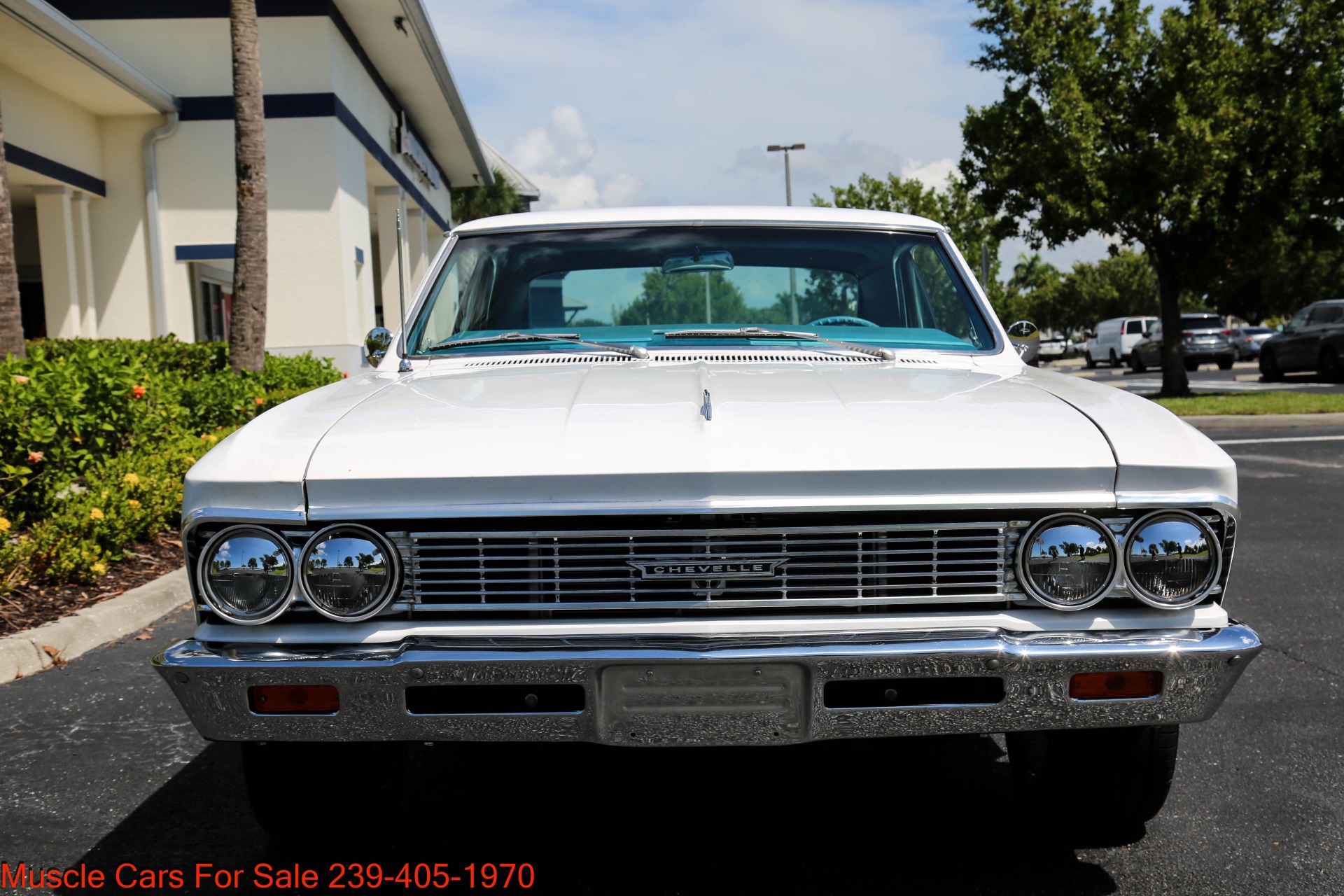
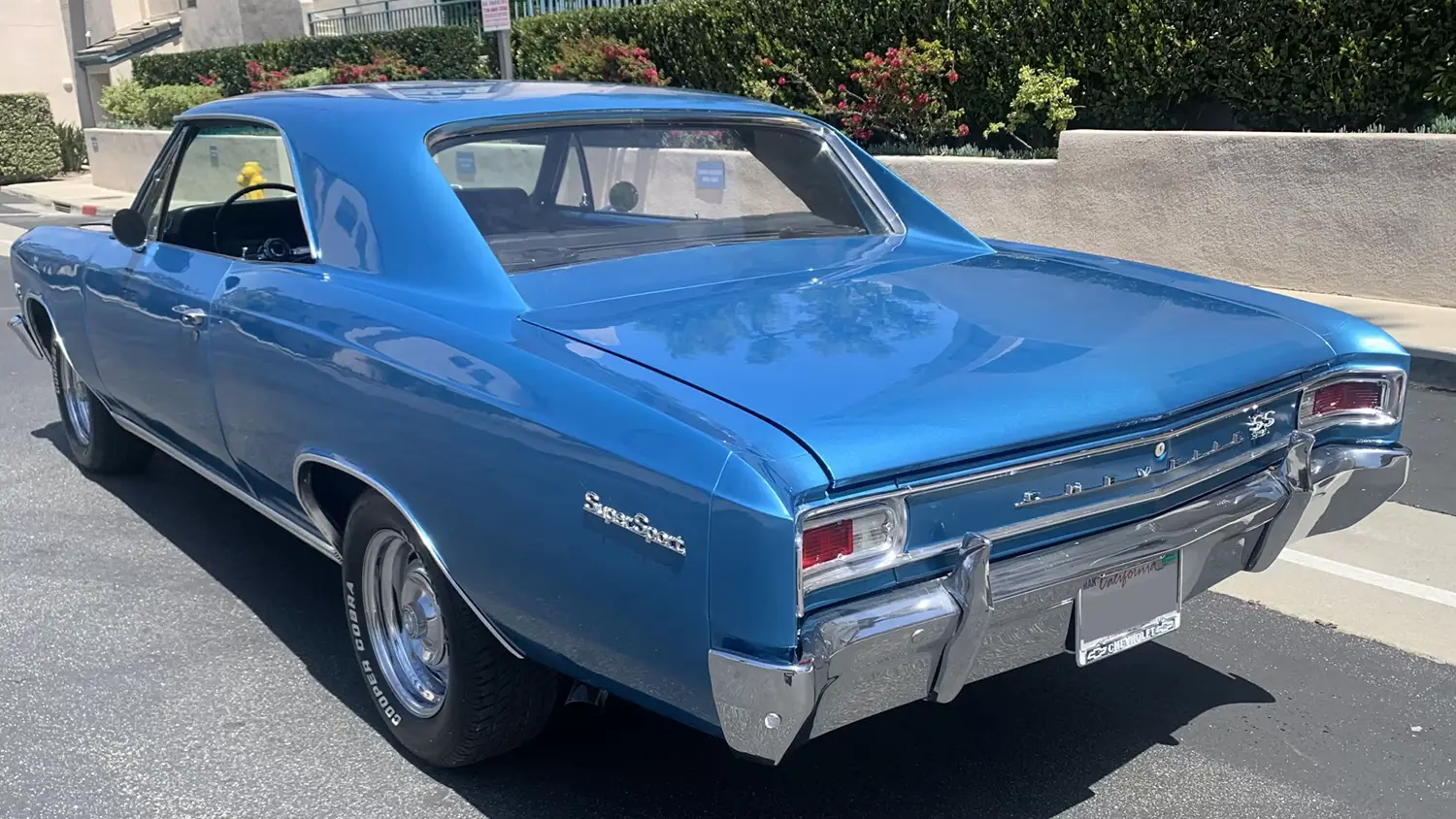
The 1966 Chevrolet Malibu 4-door sedan stands as a pillar of mid-century American automotive design, offering a balanced mix of everyday practicality, intermediate styling, and robust powertrain options during the peak of the muscle car era. Positioned above the entry-level Chevelle 300 series, the Malibu brought upscale trim, enhanced interior comfort, and timeless styling to families and daily commuters.
Historical Context and Positioning in the 1966 Chevelle Lineup
By 1966, Chevrolet's intermediate A-body platform was entering its second generation following a successful initial run launched in 1964. While the two-door hardtops and convertibles command the majority of modern collector attention, the four-door sedan body style formed the high-volume backbone of the lineup. It appealed directly to buyers who needed rear-seat accessibility and sensible dimensions without sacrificing the crisp, coke-bottle styling that defined mid-sixties General Motors design.
The Chevelle family for 1966 underwent a significant stylistic refresh. Designers introduced a more pronounced, curved beltline, a flying-roof pillar profile on hardtops, and a heavily revised front fascia featuring a distinct rectangular grille and integrated parking lamps. Although the four-door sedan retained a B-pillar for structural rigidity and door mounting, it shared the front-end sheet metal, hood styling, and rear deck aesthetics of its coupe counterparts. This gave the family sedan an upscale, muscular presence that separated it from the stark, utilitarian fleet cars of the era.
Exterior Styling and Body Architecture
The exterior design of the 1966 Chevrolet Malibu 4-door sedan captured the essence of mid-century automotive styling trends. Unlike the hardtop models, which lacked a permanent B-pillar, the four-door sedan utilized a conventional pillar structure to support four full-sized, front-hinged doors. This layout maximized cabin ingress and egress, making it a favorite for families requiring frequent child-seat installation or effortless rear-passenger entry.
Up front, the sweeping hood led into a flat-plane grille bisected by a horizontal chrome bar, flanked by single headlamps housed in square bezels. The Malibu trim package added liberal brightwork, including rocker panel moldings, wheel arch trim, bright window framing, and distinctive Malibu script badging on the front fenders and rear tail panel. The rear featured signature twin circular taillights set into a chrome-trimmed recessed panel, an iconic Chevrolet design cue of the mid-1960s. The body sat on a perimeter frame with a 115-inch wheelbase, providing a stable, highway-cruising footprint that absorbed road imperfections with ease.
Interior Accommodations and Amenities
Inside, the 1966 Malibu 4-door sedan prioritized comfort, utility, and simple elegance. While lower Chevelle trims featured heavy-duty rubber floor mats and vinyl bench seats, the Malibu stepped up with color-keyed loop-pile carpeting, patterned cloth-and-vinyl or all-vinyl bench seating, deep-dish steering wheels with horn rings, and padded dashboards designed to meet evolving safety standards.
Instrumentation was straightforward, centered around a horizontal sweep speedometer, fuel gauge, and a series of warning lights for oil pressure, generator status, and coolant temperature. Factory options could quickly elevate the cabin experience. Buyers could specify an in-dash pushbutton AM radio, power steering, power brakes, factory air conditioning, and a rear-seat speaker. The spacious cabin easily accommodated six passengers across its front and rear bench seats, while the cavernous trunk offered ample luggage capacity for cross-country road trips.
Powertrain Options and Mechanical Specifications
The mechanical versatility of the 1966 Chevelle lineup extended fully to the four-door Malibu sedan. Buyers could tailor the vehicle from a mild, fuel-efficient daily driver to a sleeper family cruiser equipped with potent small-block or big-block V8 power.
The base powerplant was the dependable 194-cubic-inch Turbo-Thrift inline-six, rated at 120 horsepower. Stepping up within the inline-six family brought the larger 230-cubic-inch engine producing 140 horsepower. For V8 enthusiasts, the bread-and-butter engine was the 283-cubic-inch small-block, available in 195-horsepower two-barrel or 220-horsepower four-barrel configurations. Moving further up the performance ladder, the legendary 327-cubic-inch small-block V8 delivered up to 275 horsepower in standard Malibu tune. For buyers seeking maximum torque, 1966 marked the introduction of the 396-cubic-inch Turbo-Jet big-block V8 to the Chevelle platform, though these were more commonly ordered in SS models or lighter two-door body styles.
Power was routed to the rear wheels through a variety of transmissions. Standard equipment included a 3-speed manual column-shifted transmission ("three on the tree"), with a 4-speed manual floor shifter available as an option. For automatic transmission buyers, the robust 2-speed Powerglide was widely selected, while the heavy-duty Turbo Hydra-Matic 3-speed automatic became available on select high-performance configurations.
| Engine Displacement | Configuration | Induction | Horsepower (net/gross est.) | Transmission Availability | Primary Application |
|---|---|---|---|---|---|
| 194 cu in (3.2 L) | Inline-6 | 1-barrel carburetor | 120 hp | 3-speed manual, Powerglide | Economy daily driver |
| 230 cu in (3.8 L) | Inline-6 | 1-barrel carburetor | 140 hp | 3-speed manual, Powerglide | Standard utility and comfort |
| 283 cu in (4.6 L) | V8 | 2-barrel carburetor | 195 hp | 3-speed manual, 4-speed, Powerglide | Balanced performance and cruising |
| 283 cu in (4.6 L) | V8 | 4-barrel carburetor | 220 hp | 3-speed manual, 4-speed, Powerglide | Enthusiast driving and towing |
| 327 cu in (5.4 L) | V8 | 4-barrel carburetor | 275 hp | 4-speed manual, Powerglide, TH350 | High-output performance cruiser |
Driving Dynamics and Ride Quality
Out on the road, the 1966 Chevrolet Malibu 4-door sedan delivers a classic, floaty ride characteristic of mid-1960s American body-on-frame engineering. The suspension setup utilized independent unequal-length control arms with coil springs and hydraulic shock absorbers up front, paired with a four-link rear suspension featuring coil springs and a live axle.
When equipped with power steering, the car offers effortless low-speed maneuvering, though steering feedback is characteristically light and indirect by modern standards. Drum brakes were standard on all four corners, requiring firm pedal pressure compared to modern disc-brake systems. Road noise is minimal at cruising speeds, and the long wheelbase absorbs highway expansion joints smoothly, making the sedan a remarkably comfortable long-distance cruiser.
Restoration and Collector Market Considerations
In the contemporary collector car market, the 1966 Chevrolet Malibu 4-door sedan occupies a unique space. While two-door hardtops and convertibles command higher financial valuations due to their sportier image, four-door sedans offer an accessible entry point into classic car ownership.
Parts availability for 1966 Chevelles and Malibus is exceptional. Virtually every piece of exterior sheet metal, interior upholstery, weatherstripping, and mechanical component is reproduced by aftermarket manufacturers. This high degree of parts interchangeability simplifies both cosmetic restorations and mechanical overhauls.
Buyers evaluating a prospective 1966 Malibu sedan should inspect common A-body rust areas closely. Critical inspection points include:
- Lower front and rear quarter panels
- Rocker panels and inner door sills
- Trunk floor pans and body mount reinforcements
- The base of the windshield and rear window channel
Ensuring structural integrity in these regions is paramount, as structural repairs can quickly exceed the market value of a four-door sedan.
Frequently Asked Questions
What engine came standard in the 1966 Chevrolet Malibu 4-door sedan?
The base engine was a 194-cubic-inch Turbo-Thrift inline-six producing 120 horsepower. However, many original buyers opted to upgrade to the 283-cubic-inch small-block V8 for enhanced performance and highway driveability.
Are replacement parts easy to find for a 1966 Malibu sedan?
Yes. Because the Malibu shared its front-end sheet metal, mechanical components, and interior layout with the popular Chevelle coupe and convertible models, reproduction body panels, interior trim, and mechanical parts are widely available through specialty suppliers.
Did the 1966 Malibu 4-door sedan come with factory air conditioning?
Factory air conditioning was available as an option across the Chevelle and Malibu lineup. Systems installed in 1966 utilized Frigidaire A6 compressors and integrated under-dash or dash-vented controls, though finding a surviving car with working original A/C often requires system conversion to modern R134a refrigerant.
How does the 4-door sedan differ from the 2-door hardtop in 1966?
The primary differences lie in the roofline, door configuration, and structural framing. The 4-door sedan features a permanent B-pillar and four full-sized doors for easier rear-seat access, whereas the 2-door hardtop features a pillarless side profile, longer front doors, and a lower, more raked roofline.
What kind of transmission options were offered?
Depending on the engine choice, buyers could select a 3-speed manual column-shift transmission, a 4-speed manual floor-shifted transmission, a 2-speed Powerglide automatic, or a 3-speed Turbo Hydra-Matic automatic.
Conclusion and Next Actions
The 1966 Chevrolet Malibu 4-door sedan represents an approachable, stylish, and mechanically straightforward entry into classic American motoring. For prospective buyers or restorers, the primary next step is to locate a structurally sound, rust-free example with a complete interior and matching drivetrain. Verify the cowl tag data to confirm original paint, interior trim codes, and factory equipment before committing to a purchase or beginning a comprehensive restoration project.