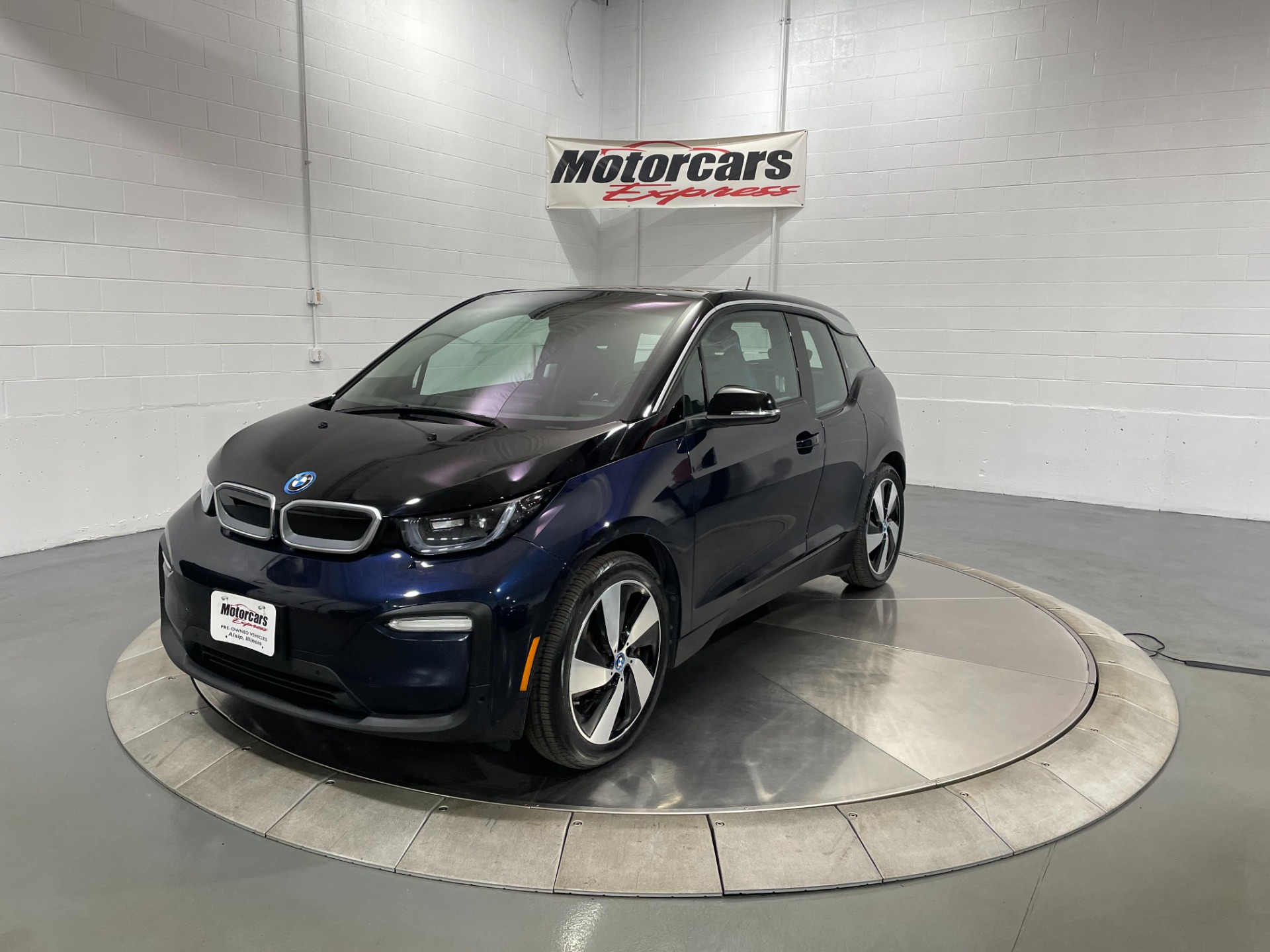
A 12-year-old BMW i3 typically delivers an estimated real-world driving range of 50 to 70 miles on a full charge, down from its original EPA rating of 81 miles for early 60Ah battery models. This reduction stems from natural lithium-ion battery capacity loss, ambient temperature variations, and driving habits over more than a decade of operation.
When the BMW i3 first entered the automotive market in the mid-2010s, it represented a radical departure from traditional manufacturing. Built around a carbon-fiber-reinforced polymer passenger cell and an aluminum chassis, it was designed from the ground up as an urban electric vehicle. Today, evaluating a 12-year-old model requires looking past its futuristic styling to understand how its pioneering battery technology has aged. Prospective buyers and current owners must examine the complex interplay between battery chemistry, thermal management, historical maintenance, and real-world environmental factors that dictate usable daily range.
Evolution of the BMW i3 Powertrain and Battery Capacities
To understand the range of an older BMW i3, one must first identify its specific model year and battery generation. BMW updated the i3 battery capacity several times during its production lifecycle, which directly impacts how much energy a vehicle retains after a dozen years on the road.
Early models, produced from 2013 through 2016 for international markets (and model years 2014 through 2017 in North America), feature a gross capacity of 22 kilowatt-hours (kWh) and a usable capacity of approximately 18.8 kWh. These vehicles are commonly referred to as the 60Ah (Amp-hour) generation.
Later production runs introduced larger battery packs:
- 94Ah Generation (2017–2018): Gross capacity of 33 kWh (approx. 27.2 kWh usable).
- 120Ah Generation (2019–2022): Gross capacity of 42.2 kWh (approx. 37.9 kWh usable).
Because a 12-year-old vehicle falls squarely into the earliest production bracket (primarily 2014 models), it almost certainly houses the original 60Ah battery pack. Understanding this baseline is crucial for setting realistic expectations regarding daily utility.
Battery Degradation and State of Health (SoH)
Lithium-ion batteries naturally degrade over time and through charge-discharge cycles. The high-voltage battery pack in the BMW i3 relies on prismatic lithium-ion cells supplied by Samsung SDI, housed within an aluminum casing liquid-cooled by the vehicle's air conditioning refrigerant circuit.
Typical Degradation Rates
Industry data and owner tracking indicate that the BMW i3 battery degrades at a relatively predictable rate, often losing between 10% and 20% of its initial capacity over the first decade. Factors influencing this rate include:
- Climate exposure: Vehicles operated consistently in hot desert environments experience faster capacity loss than those in temperate or cold climates.
- Charging habits: Frequent use of DC fast charging (SAE Combo CCS) generates more heat, accelerating wear compared to Level 2 home AC charging.
- Cycle count: Total lifetime mileage and the frequency of deep discharges heavily influence remaining State of Health (SoH).
Diagnosing Battery Health
Evaluating a 12-year-old i3 requires an OBD-II scanner and specialized software (such as BimmerLink) to read the exact Battery State of Health percentage. While BMW offered a warranty guaranteeing the battery against dropping below 70% capacity for 8 years or 100,000 miles, many 12-year-old vehicles now sit near or just above this threshold. A healthy 60Ah battery should retain roughly 75% to 85% of its original capacity, translating to a usable pool of about 14 to 15 kWh.
Real-World Range Factors: Why Numbers Fluctuate
An EPA rating of 81 miles for a brand-new 60Ah i3 assumes standardized laboratory conditions. On the road, a 12-year-old vehicle faces several compounding variables that alter the distance it can travel before depleting the battery.
Temperature and Thermal Management
The BMW i3 battery pack does not feature an active heater; it relies on ambient temperature and cabin climate control bleed to stay warm, though it does feature active cooling. In freezing winter temperatures, chemical reactions within the lithium-ion cells slow down, reducing available power and range by 30% to 40%. Conversely, extreme summer heat requires the cooling system to expend high amounts of energy, also drawing power from the main pack.
Driving Style and Topography
The i3 utilizes aggressive regenerative braking, which captures kinetic energy during deceleration and feeds it back into the battery. Stop-and-go city driving allows the i3 to excel in efficiency, frequently meeting or exceeding its base range estimates. However, sustained highway driving at speeds exceeding 65 mph dramatically increases aerodynamic drag and energy consumption, reducing real-world range significantly.
Auxiliary Loads
Running the cabin heater, seat warmers, headlights, and the infotainment system places an electrical load on the high-voltage battery (via the On-Board Electronics Controller, which steps down voltage for the 12V system). On older models with degraded packs, turning on the high-draw electric resistance heater can instantly knock 10 to 15 miles off the projected dashboard range.
Comparing BMW i3 Battery Generations and Real-World Range
| Battery Generation | Model Years | Original Gross Capacity | Original EPA Range | Estimated 12-Year Real-World Range (Moderate Climate) |
|---|---|---|---|---|
| 60Ah | 2014–2017 | 22.0 kWh | 81 miles | 50 – 70 miles |
| 94Ah | 2017–2018 | 33.0 kWh | 114 miles | 80 – 100 miles |
| 120Ah | 2019–2022 | 42.2 kWh | 153 miles | 110 – 135 miles |
Note: Real-world figures account for typical historical degradation, moderate ambient temperatures, and mixed urban/highway driving conditions.
The Role of the Range Extender (REx)
A significant percentage of early BMW i3 models were ordered with the optional Range Extender (REx) powertrain. The REx model features a small, 647cc two-cylinder motorcycle engine tucked away in the rear compartment alongside the electric motor.
How the REx Functions
The REx does not mechanically drive the wheels; instead, it acts as an onboard generator. When the high-voltage battery state of charge drops to approximately 6%, the gasoline engine automatically fires up to maintain that remaining charge level, adding roughly 70 to 80 miles of total driving range on a 1.9-gallon fuel tank.
Considerations for Older REx Models
While the REx eliminates range anxiety for a 12-year-old vehicle, it introduces additional mechanical complexity:
- Maintenance: The internal combustion engine requires regular oil changes, spark plug replacements, and fuel system upkeep, even if rarely used.
- Codding Restrictions: In certain regions like California, early REx models qualified for regulatory benefits that required strict operational parameters. Routine maintenance cycles (known as "maintenance mode runs") are mandatory to prevent fuel degradation and keep the engine operational.
Practical Maintenance and Ownership Reality
Operating a 12-year-old electric vehicle involves unique maintenance considerations that differ sharply from traditional internal combustion vehicles.
Suspension and Chassis Wear
Despite its carbon-fiber body structure, the underlying suspension components—such as control arms, bushings, and shocks—are conventional and subject to wear. The i3 is relatively heavy for its size due to the battery pack, which can accelerate wear on front suspension components, particularly when navigating potholed urban streets.
Tires and Wheels
The BMW i3 uses unusually narrow, large-diameter tires (typically 155/70 R19 or 175/60 R19) designed to minimize rolling resistance and aerodynamic drag. These specialized low-rolling-resistance tires wear relatively quickly due to the instant torque delivery of the electric motor, and replacement options are limited primarily to specific suppliers like Bridgestone and Goodyear.
12-Volt Battery Health
Like all modern vehicles, the i3 relies on a conventional 12-volt auxiliary battery to power computers, door locks, and contactors. On the i3, a failing 12V battery often triggers erratic electronic faults, warning lights, or an inability to power up the high-voltage system. Replacing this auxiliary battery every 3 to 4 years is a mandatory preventative maintenance item.
Frequently Asked Questions
Can the battery in a 12-year-old BMW i3 be replaced or upgraded?
Yes, the high-voltage battery pack is modular and can be removed or replaced. However, replacing it with a brand-new OEM unit from BMW is generally cost-prohibitive relative to the current market value of a 12-year-old vehicle. Some independent EV specialty shops offer module-level repairs or aftermarket capacity upgrades, though availability varies.
How much does it cost to charge an early BMW i3 at home?
Charging a 60Ah i3 from near-empty to full requires roughly 19 kWh of electricity. At an average US residential electricity rate of 16 cents per kWh, a full charge costs approximately $3.04. This translates to exceptionally low per-mile operational costs compared to gasoline vehicles.
Is a 12-year-old BMW i3 suitable for daily highway commuting?
Generally no. With a real-world highway range often dropping below 55 miles on older batteries, sustained high-speed commuting leaves very little safety margin. These vehicles excel primarily as urban runabouts, local delivery vehicles, or secondary commuter cars where charging infrastructure is readily available at both ends of the trip.
How do I check the exact battery capacity before buying an older i3?
You can verify the battery health by using an OBD-II dongle paired with an app like BimmerLink to read the remaining usable energy capacity (often listed as "Max. AC Capacity" or similar metrics). Comparing this figure against the original 18.8 kWh usable baseline reveals the exact percentage of degradation.
Final Recommendations for Buyers and Owners
If you are considering purchasing or maintaining a 12-year-old BMW i3, verify the vehicle's specific State of Health using diagnostic software rather than relying solely on the dashboard range estimator. Ensure access to reliable Level 2 home charging, as depending exclusively on public fast-charging networks for an early-generation EV is inefficient. For drivers with modest daily driving needs under 40 miles, an older i3 offers unique engineering, agile handling, and exceptionally low operating costs, provided the battery retains sufficient health for daily tasks.