In the United States, almost every state requires employers to provide workers' compensation insurance if they have a certain number of employees. This legal mandate ensures that workers injured on the job receive medical care and wage replacement while protecting employers from costly negligence lawsuits and financial ruin.
Workers' compensation serves as a "grand bargain" between the labor force and business owners. In exchange for the guaranteed provision of medical benefits and partial wage replacement regardless of who was at fault for an injury, employees generally forfeit their right to sue their employer for damages. As we move through 2026, the regulatory landscape surrounding these requirements has become increasingly automated, yet the fundamental legal obligation for employers to fund this system remains a cornerstone of American employment law.
The Legal Foundation of the Mandate
The requirement for workers' compensation is determined at the state level rather than the federal level. Consequently, there is no single "national" rule that applies to every business. Instead, each state legislature determines the specific thresholds and exemptions for its jurisdiction.
State-Specific Thresholds
While the vast majority of states require coverage the moment a business hires its first employee (full-time or part-time), others have established minimum employee counts. For instance, some jurisdictions may only mandate coverage once a business reaches three, four, or five employees. However, it is a common mistake for small business owners to assume they are exempt; in 2026, the trend has shifted toward "Day One" requirements in nearly 40 states, including California, New York, and Illinois.
The Outliers: Texas and New Jersey
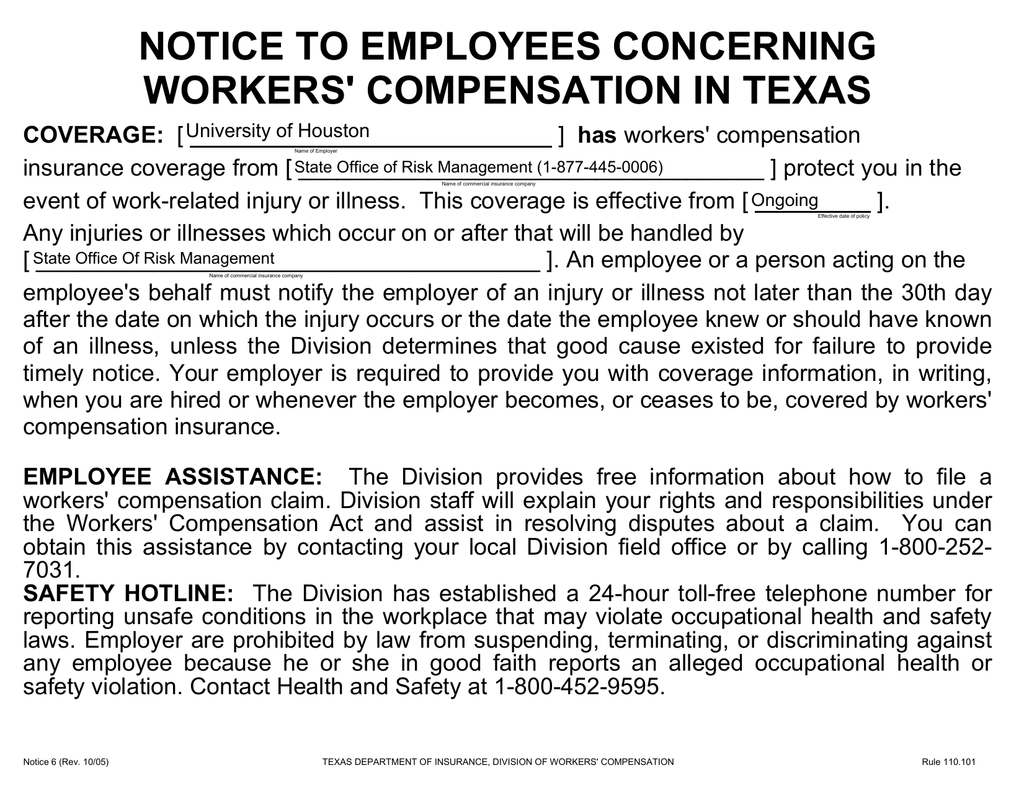
Texas remains the most notable exception to the mandatory rule. In Texas, private employers can choose to be "non-subscribers," meaning they opt out of the state-regulated workers' compensation system. However, this choice comes with significant risk: non-subscribing employers lose their immunity from personal injury lawsuits and can be sued for much higher amounts if an employee is injured.
New Jersey, while technically making insurance "elective," practically mandates it by requiring any employer who opts out to demonstrate an equivalent level of financial responsibility and protection, which is often more expensive or difficult than simply purchasing a policy.
Who Pays for the Coverage?
A common point of confusion for both new entrepreneurs and employees is where the funding for these premiums originates. By law, the employer is 100% responsible for the cost of workers' compensation insurance.
Prohibition of Payroll Deductions
It is strictly illegal in every state for an employer to deduct workers' compensation premiums from an employee’s paycheck. Unlike Social Security or Medicare, which are funded through shared contributions (FICA taxes), workers' compensation is viewed as a cost of doing business. Any attempt to pass this cost directly to workers through wage deductions can result in severe Department of Labor penalties, back-pay orders, and criminal charges.
Premium Structure
The cost of the insurance is not a flat fee. It is calculated based on three primary factors:
- Payroll Volume: The total amount of gross wages paid to employees.
- Classification Codes: The level of risk associated with the specific jobs performed. A roofer will have a significantly higher rate than a bookkeeper.
- Experience Modification Rate (MOD): A multiplier based on the company’s history of claims. Safer companies pay less; companies with frequent accidents pay more.
Determining Who Counts as an "Employee"
The legal requirement to pay for insurance hinges on the definition of an "employee." In 2026, misclassification of workers remains one of the most litigated areas of employment law, particularly with the continued growth of the gig economy and remote work arrangements.
W-2 Employees vs. 1099 Contractors
Generally, true independent contractors do not require workers' compensation coverage from the hiring entity because they are considered separate business owners. However, simply labeling someone a "contractor" does not make it so in the eyes of the law. States use the "Control Test" or the "ABC Test" to determine if a worker is actually an employee. If the employer controls how, when, and where the work is done, that person is likely an employee, and the employer must pay for their insurance.
Part-Time, Temporary, and Seasonal Workers
The mandate almost always extends to part-time and seasonal staff. If a business in a mandatory state hires a student for ten hours a week, that student must be covered. Many employers fail to realize that even "probationary" employees who have only been on the job for an hour are entitled to full coverage under the law.
Corporate Officers and Business Owners
In many jurisdictions, sole proprietors, partners, and LLC members are not required to cover themselves, though they may choose to do so. Conversely, corporate officers (Presidents, CEOs) are often counted as employees by default unless they specifically file an "exclusion" form with the state's workers' compensation board.
Penalties for Failing to Provide Coverage
Operating without workers' compensation insurance is one of the most dangerous financial risks a business can take. Because the system is designed to be a safety net, states treat "uninsured" status with extreme severity.
Financial Fines and Stop-Work Orders
State agencies frequently conduct audits. If a business is found to be non-compliant, it may face daily fines that can exceed $1,000 per day of non-compliance. In high-risk industries like construction, states often issue "Stop-Work Orders," which legally force the business to cease all operations until proof of insurance is provided and fines are paid.
Criminal Liability
In several states, including California and Pennsylvania, failing to carry workers' compensation insurance is a criminal offense. It can be charged as a misdemeanor or even a felony if the state determines the employer willfully avoided the law. This can lead to jail time for business owners.
Personal Liability for Injuries
The most catastrophic consequence occurs when an injury happens while a business is uninsured. Without the "Grand Bargain" protection, the employer is directly liable for every dollar of the injured worker's medical bills and lost wages. Furthermore, the injured worker can sue the employer in civil court for "pain and suffering"—damages that are not available under the standard workers' comp system. An uninsured business owner can lose personal assets, including their home and savings, to satisfy these judgments.
Mandatory Benefits Provided by the Employer
When an employer pays for this insurance, they are fulfilling their obligation to provide four primary types of benefits to their workforce. Understanding these helps explain why the insurance is a mandatory requirement for social stability.
| Benefit Category | Description | Coverage Duration |
|---|---|---|
| Medical Treatment | 100% coverage for hospital stays, surgeries, prescriptions, and physical therapy. | Until the worker reaches Maximum Medical Improvement (MMI). |
| Temporary Disability | Partial wage replacement (usually two-thirds of average weekly wage). | While the worker is unable to perform their job during recovery. |
| Permanent Disability | Compensation for lasting impairments (e.g., loss of limb or chronic back pain). | Based on state-specific disability rating schedules. |
| Death Benefits | Financial support for surviving dependents and funeral expenses. | Varies by state; often until a spouse remarries or children reach adulthood. |
The Role of "Pay-As-You-Go" in 2026
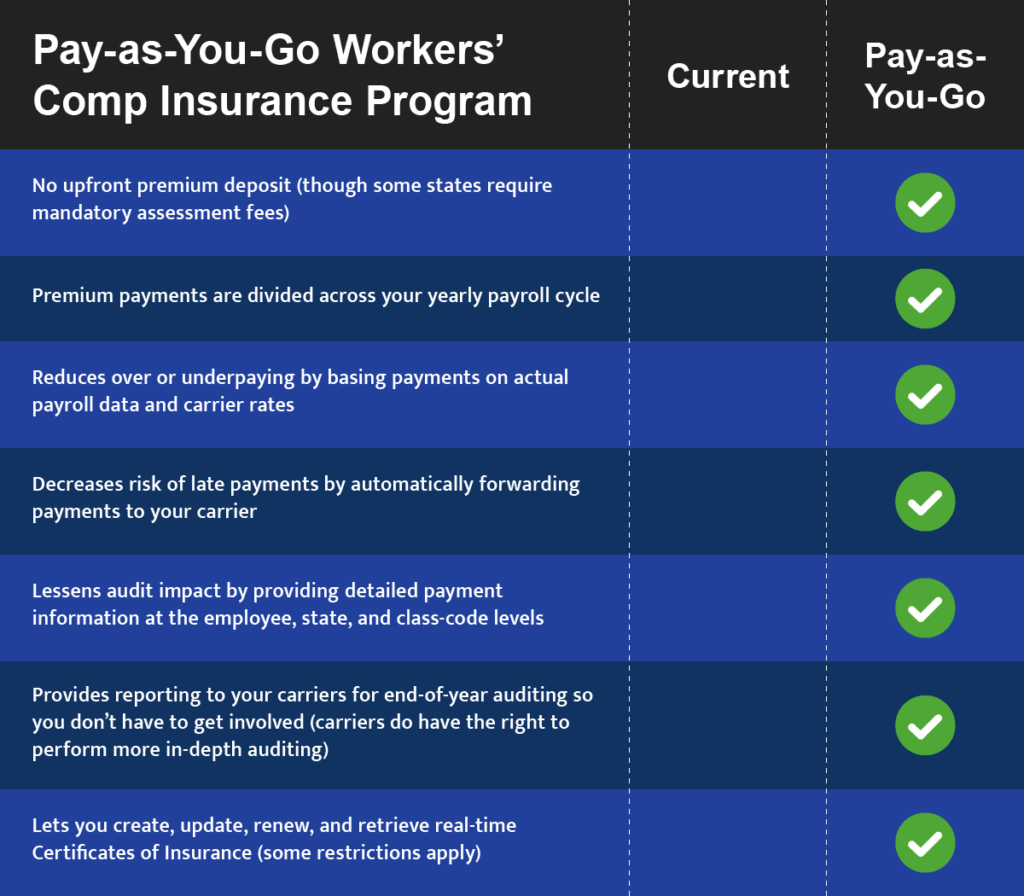
By 2026, the traditional method of paying an estimated annual premium followed by a painful end-of-year audit has largely been replaced by "Pay-As-You-Go" models. This system integrates the workers' compensation insurance with the employer's payroll software.
As the employer runs payroll each cycle, the exact premium owed for those specific wages is calculated and withdrawn automatically. This prevents "sticker shock" during audits and ensures the employer is always in compliance with state mandates. For small businesses, this technology has made it much easier to satisfy the legal requirement to pay for insurance without managing complex manual calculations.
Common Exemptions to the Rule
While the mandate is broad, there are specific niches where coverage might not be required. These vary wildly by state but typically include:
- Domestic Workers: Some states do not require coverage for nannies or housekeepers unless they work a high number of hours per week.
- Agricultural Workers: In certain rural states, small family farms are exempt from mandatory coverage for seasonal pickers.
- Real Estate Agents: Often classified as independent contractors by specific statutory language, exempting the brokerage from paying premiums.
- Casual Labor: Work that is "occasional" and not part of the employer's regular business trade (e.g., hiring a neighbor to paint an office once) might be exempt, though this is a legal grey area.
Frequently Asked Questions
Can an employee waive their right to workers' compensation?
No. In almost all jurisdictions, it is against public policy for an employee to sign away their right to workers' compensation benefits. Even if an employee signs a waiver, the court will likely find it invalid, and the employer will still be held responsible for the premiums and any potential claims.
Does the requirement apply to remote workers in other states?
Yes. Employers are generally required to provide coverage in the state where the employee actually performs the work. If a New York company hires a full-time remote worker in Florida, the employer must typically obtain a workers' compensation policy that complies with Florida state laws.
Are non-profit organizations required to pay for insurance?
Yes. Non-profit status does not exempt an organization from employment laws. If the non-profit has paid employees, it must provide workers' compensation. Some states provide exemptions for strictly volunteer-based organizations, but as soon as a stipend or wage is paid, the mandate usually kicks in.
Does workers' compensation cover accidents that happen off-site?
The requirement to pay for insurance covers any injury that occurs "in the course and scope of employment." This includes business trips, errands for the boss, and even some company-sponsored events. It is not limited to the physical office or job site.
What happens if I buy insurance mid-year?
Insurance is not retroactive. If an injury occurs on Tuesday and you purchase a policy on Wednesday, the Tuesday injury is not covered. You will be considered "uninsured" for that specific claim, highlighting the importance of having coverage in place before the first employee starts.
Practical Recommendation for Employers
To ensure full compliance in 2026, business owners should perform a "Classification Audit" twice a year. Ensure that every person performing work for your business—whether you call them a contractor, a freelancer, or an intern—is evaluated against your state’s legal definition of an employee.
If you have any doubt, it is far more cost-effective to include them in your workers' compensation policy than to face a state audit or an uninsured injury claim. Consult with a licensed insurance broker who specializes in your specific industry to ensure that your "Class Codes" are accurate; misclassification can lead to either overpaying for insurance or being penalized for under-reporting risk.