Arnold Schwarzenegger won his first Mr. Olympia title in 1970 at the age of 23, defeating the three-time defending champion Sergio Oliva in Columbus, Ohio. This victory established Schwarzenegger as the youngest Mr. Olympia in history—a record he still holds in 2026—and signaled the start of a legendary seven-title reign.
The 1970 Mr. Olympia was not merely a bodybuilding competition; it was a cultural shift that redefined the sport. To understand how a young Austrian newcomer managed to dethrone "The Myth," one must examine the specific technical improvements, psychological strategies, and the unique historical context of the International Federation of Bodybuilders (IFBB) during that era. By analyzing the 1970 showdown, we gain insight into the standards that still govern professional bodybuilding today.
The Foundation of the 1970 Victory: Redemption from 1969
To appreciate Arnold’s first win, one must look at his crushing defeat the previous year. In 1969, Arnold Schwarzenegger made his Mr. Olympia debut. At the time, Sergio Oliva was the undisputed king of the sport, possessing a level of muscularity and "V-taper" that seemed impossible for any human to match. Arnold, though massive, lacked the refinement and "finish" that Oliva displayed.
Schwarzenegger famously admitted that upon seeing Sergio backstage in 1969, he felt he had already lost. Sergio’s massive lats and tiny waist created an aura of invincibility. Arnold finished second, a result that fueled a year of unprecedented intensity in his training. Between 1969 and 1970, Arnold focused on high-volume training and refined his posing to hide his weaknesses—primarily his calves at the time—and accentuate his massive chest and biceps.
The Technical Breakdown: How Arnold Dethroned Sergio Oliva
The 1970 competition took place at the Veterans Memorial Auditorium in Columbus, Ohio. This event was significant because it was the first time the Mr. Olympia was held in Columbus, thanks to the efforts of promoter Jim Lorimer. The partnership between Schwarzenegger and Lorimer, which began here, would eventually lead to the creation of the Arnold Sports Festival, which remains one of the largest multi-sport events in the world as of 2026.
Physically, Arnold arrived in 1970 with several key technical advantages over his previous showing:
- Muscle Maturity and Density: Arnold had packed on significant muscle density, particularly in his upper back and shoulders, which allowed him to match Sergio’s width.
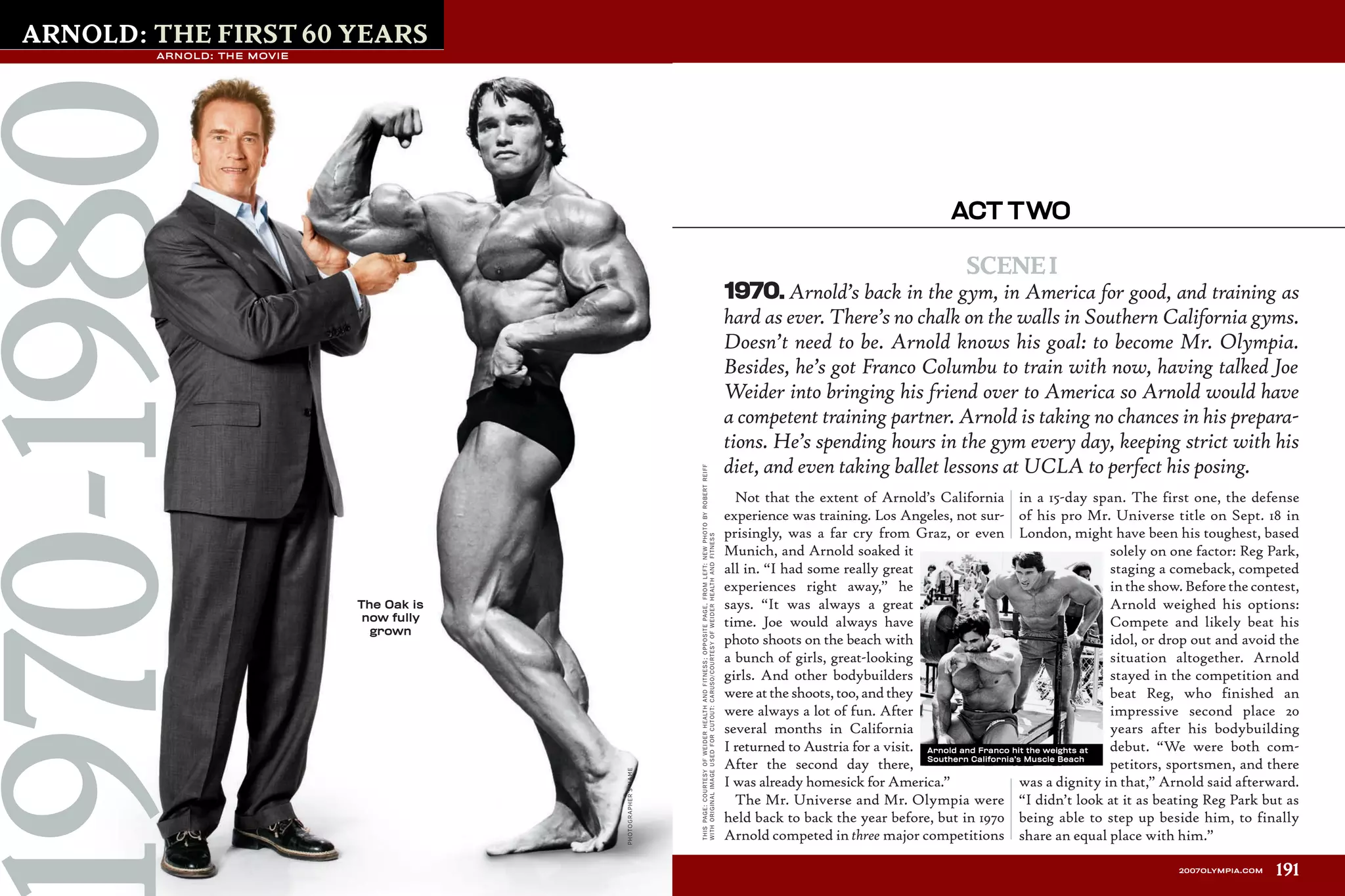
- Definition and Conditioning: While Sergio was known for his "mass with class," Arnold brought a level of "hardness" to his muscles that was rare for a man of his size (approximately 235 pounds at 6'2").
- Posing Artistry: Arnold began treating posing as a performance rather than a series of static holds. He utilized "vacuum" poses to make his waist look smaller and focused on fluid transitions that emphasized his 22-inch arms.
Comparison: Arnold Schwarzenegger vs. Sergio Oliva (1970)
The following table highlights the material differences between the two competitors during the 1970 Mr. Olympia finals.
| Feature | Arnold Schwarzenegger (1970) | Sergio Oliva (1970) |
|---|---|---|
| Height | 6'2" (188 cm) | 5'10" (178 cm) |
| Weight (approx.) | 235 lbs | 240 lbs |
| Primary Strength | Peak of Biceps & Chest Width | Massive Lats & Tiny Waist |
| Posing Style | Dramatic, Heroic, Emotional | Powerful, Imposing, Stoic |
| Key Advantage | Height and Stage Presence | Sheer Muscular Volume |
| Winning Factor | Psychological Edge & Definition | Aesthetic Flow (Runner-up) |
The Psychological Warfare of Columbus
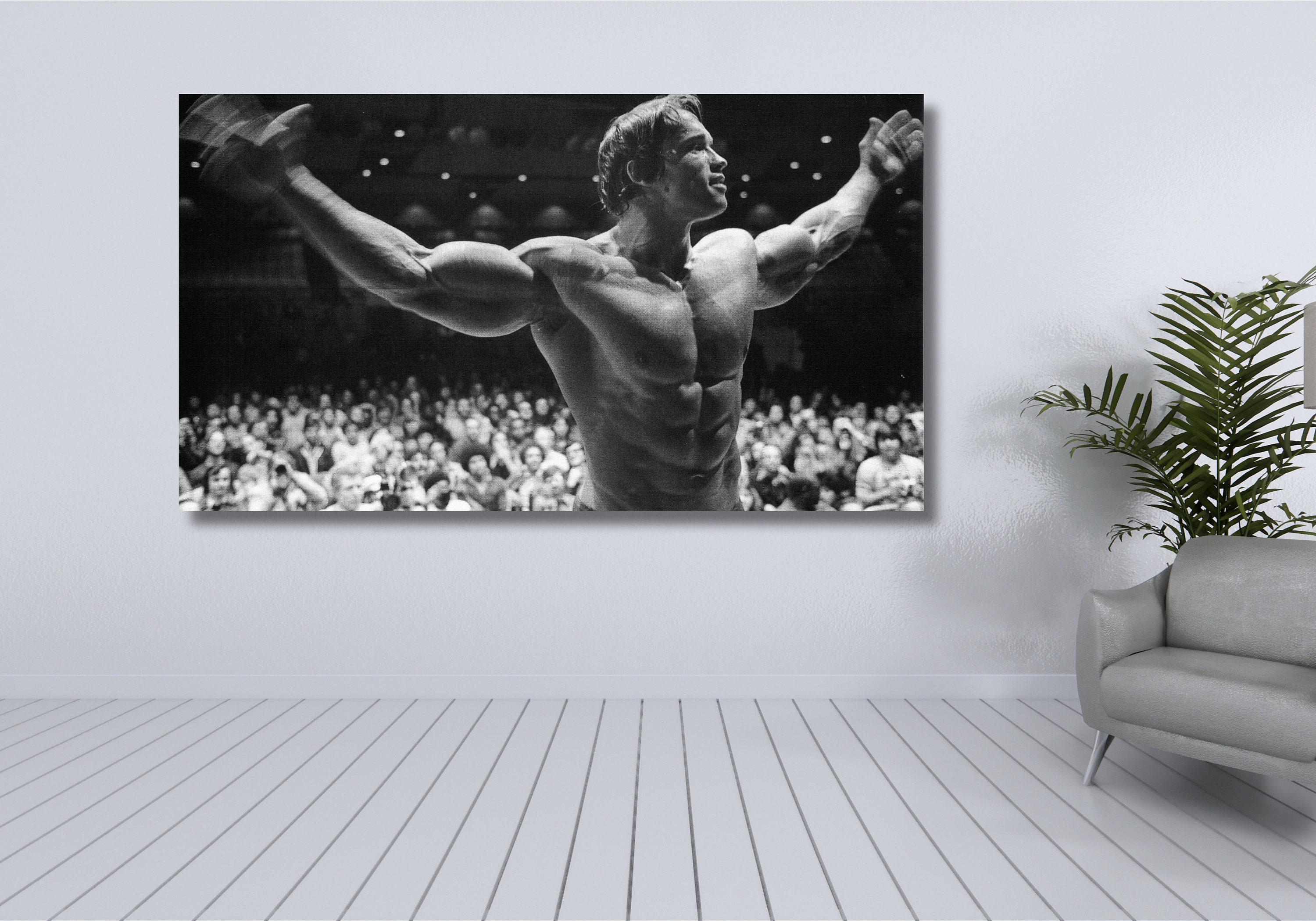
One of the most legendary stories in bodybuilding history involves the "trick" Arnold played on Sergio during the 1970 pose-down. After several rounds of grueling posing, the two athletes were neck-and-neck. The judges were struggling to separate them. Arnold leaned over to Sergio and whispered that he was exhausted and that they should both leave the stage.
Sergio, believing the battle was over for the moment, began to walk off. Arnold stayed behind, struck a massive front-double-biceps pose, and threw his arms up to the crowd. The audience erupted, and the judges saw a dominant Arnold standing alone while the champion appeared to be "quitting" or retreating. This moment of gamesmanship is often cited as the psychological breaking point that secured Arnold’s first Sandow trophy.
The Role of Joe Weider and the IFBB
The 1970 win was also a triumph for Joe Weider’s vision of bodybuilding. Weider, the founder of the International Federation of Bodybuilders (IFBB), had brought Arnold to America in 1968, believing he was the "Next Big Thing." Weider provided Arnold with a stipend, an apartment, and a platform through his magazines like Muscle & Fitness.
By winning in 1970, Arnold validated Weider's investment. The victory helped transition the sport from the niche, "muscle beach" subculture of the 1960s into a more organized, professional era. Arnold’s look—tall, charismatic, and classically handsome—made him the perfect ambassador for a sport that Weider wanted to take mainstream. This era began the "Golden Age of Bodybuilding," characterized by a focus on aesthetic symmetry and massive proportions that were still attainable through rigorous training and primitive (by 2026 standards) supplementation.
Training Methodology for the 1970 Crown
Arnold’s preparation for the 1970 Mr. Olympia was grueling. He famously utilized a "double-split" routine, training twice a day, six days a week. This high-volume approach was designed to maximize hypertrophy (muscle growth) while burning enough calories to maintain lean conditioning.
The Chest and Back Supersets
Arnold was a proponent of training opposing muscle groups together. By supersetting chest and back, he ensured a massive "pump" that expanded the ribcage and created the illusion of even greater size. A typical workout might include:
- Bench Press (Chest) immediately followed by Wide-Grip Pull-ups (Back).
- Incline Press (Chest) immediately followed by T-Bar Rows (Back).
- Dumbbell Flyes (Chest) immediately followed by Seated Cable Rows (Back).
This method allowed him to maintain a high heart rate, contributing to his cardiovascular health and muscle endurance—factors that proved vital during the long pose-downs against Sergio Oliva.
Dietary Focus
In 1970, the science of sports nutrition was in its infancy compared to the protocols seen in 2026. Arnold’s diet was centered on high-quality proteins: whole eggs, steak, chicken, and milk. He was a pioneer in using protein powders, often mixing them with cream or eggs to increase caloric density. Carbs were kept moderate, primarily coming from fruits and vegetables, with occasional complex carbohydrates like rice or baked potatoes to fuel heavy leg sessions.
Impact on the Sport and Future Titles
The 1970 win was the first of six consecutive Mr. Olympia titles for Schwarzenegger (1970–1975). He would later return for a controversial seventh win in 1980. However, the first win remains the most significant because it broke the dominance of Sergio Oliva and proved that the "Myth" could be beaten.
This victory also paved the way for the 1977 documentary Pumping Iron. While the movie focused on the 1975 Olympia, the narrative of Arnold as the king of bodybuilding was established on that stage in Columbus in 1970. It provided him with the fame and leverage necessary to transition into Hollywood, eventually becoming one of the most successful action stars and political figures of the 21st century.
As we look back from 2026, the 1970 Mr. Olympia stands as a historical marker for when bodybuilding moved from the shadows of physical culture into the spotlight of global entertainment. More information on the historical winners can be found on the official Mr. Olympia website.
Frequently Asked Questions
How old was Arnold when he won his first Mr. Olympia?
Arnold Schwarzenegger was 23 years old when he won his first Mr. Olympia title in 1970. He remains the youngest winner in the history of the competition to this day. His youth was a major talking point at the time, as most bodybuilders did not reach their physical peak until their late 20s or early 30s.
Who did Arnold beat to win the 1970 Mr. Olympia?
He defeated Sergio Oliva, the three-time defending champion known as "The Myth." Oliva is widely considered one of the greatest bodybuilders of all time, and his rivalry with Arnold is often cited as the greatest in the history of the sport. Arnold also faced competition from other legends of the era, but the battle was primarily between him and Oliva.
Where was the 1970 Mr. Olympia held?
The competition was held at the Veterans Memorial Auditorium in Columbus, Ohio. This location was significant as it marked the beginning of Arnold's long-term professional relationship with Jim Lorimer, the event promoter. Columbus would later become the permanent home of the Arnold Sports Festival.
What was Arnold’s height and weight during his first win?
In 1970, Arnold Schwarzenegger stood approximately 6 feet 2 inches tall and weighed around 235 pounds on stage. His height gave him a distinct advantage in terms of frame size, allowing him to carry a massive amount of muscle while maintaining an aesthetic, heroic look that appealed to both judges and fans.
Did Arnold win any other titles in 1970?
Yes, 1970 was a landmark year for Arnold. In addition to winning the Mr. Olympia, he also won the Mr. World and the NABBA Mr. Universe titles. This triple-crown achievement in a single year solidified his status as the undisputed number-one bodybuilder in the world.
How many times did Arnold win the Mr. Olympia in total?
Arnold Schwarzenegger won the Mr. Olympia a total of seven times. His consecutive wins occurred from 1970 to 1975. After a five-year retirement to focus on his acting career, he returned for one final win in 1980. His record of seven wins was later surpassed by Lee Haney and Ronnie Coleman, who both have eight titles.
Final Recommendations for Enthusiasts
For those looking to study the 1970 victory in greater detail, researching the early archives of Joe Weider’s publications provides the most authentic look at the training and mindset of that era. Aspiring bodybuilders should note that while modern science has evolved significantly by 2026, the foundational principles Arnold used—high volume, supersets, and a relentless focus on "the pump"—remain effective for muscle hypertrophy.
To verify historical placements and see rare footage of the 1970 event, visiting the International Federation of Bodybuilding and Fitness (IFBB) Hall of Fame or the Arnold Sports Festival historical archives is highly recommended. These sources offer a deep dive into the evolution of judging standards from the 1970s to the present day.