In Arizona, property damage auto insurance is a mandatory liability coverage that pays for repairs or replacement of another person’s property if you are found at fault in an accident. As of 2026, state law requires a minimum of $15,000 in property damage liability (PDL) coverage to legally operate a motor vehicle on public roads.
Property damage auto insurance is one of the most critical components of a standard Arizona vehicle policy. Because Arizona operates under a "tort" or "at-fault" system, the driver responsible for a collision is legally liable for the financial consequences, including the cost of repairing or replacing vehicles, structures, and other tangible assets damaged during the incident. Understanding the nuances of this coverage is essential for both legal compliance and financial protection.
The Legal Framework of Arizona Property Damage Liability
Arizona’s insurance requirements are dictated by the Arizona Revised Statutes (A.R.S. § 28-4009). The state follows a "25/50/15" rule for minimum liability coverage. This numerical shorthand translates to $25,000 for bodily injury per person, $50,000 for bodily injury per accident, and $15,000 for property damage.
The $15,000 property damage minimum has remained the standard for several years. However, in the economic landscape of 2026, this minimum often falls short of actual repair costs. With the proliferation of electric vehicles (EVs) and advanced driver-assistance systems (ADAS) that integrate expensive sensors into bumpers and mirrors, even a minor "fender bender" can easily exceed the $10,000 mark. If you carry only the state minimum and cause $25,000 in damage, you are personally responsible for the $10,000 gap, which can lead to wage garnishment or asset seizure.
Failure to maintain the required property damage insurance in Arizona carries significant penalties. The Arizona Department of Transportation (ADOT) Motor Vehicle Division (MVD) monitors insurance status electronically. If coverage lapses, the MVD may suspend your vehicle registration and driver's license. Reinstatement typically requires paying fees and filing an SR-22 certificate, which proves future financial responsibility and significantly increases insurance premiums.
What Does Arizona Property Damage Insurance Cover?
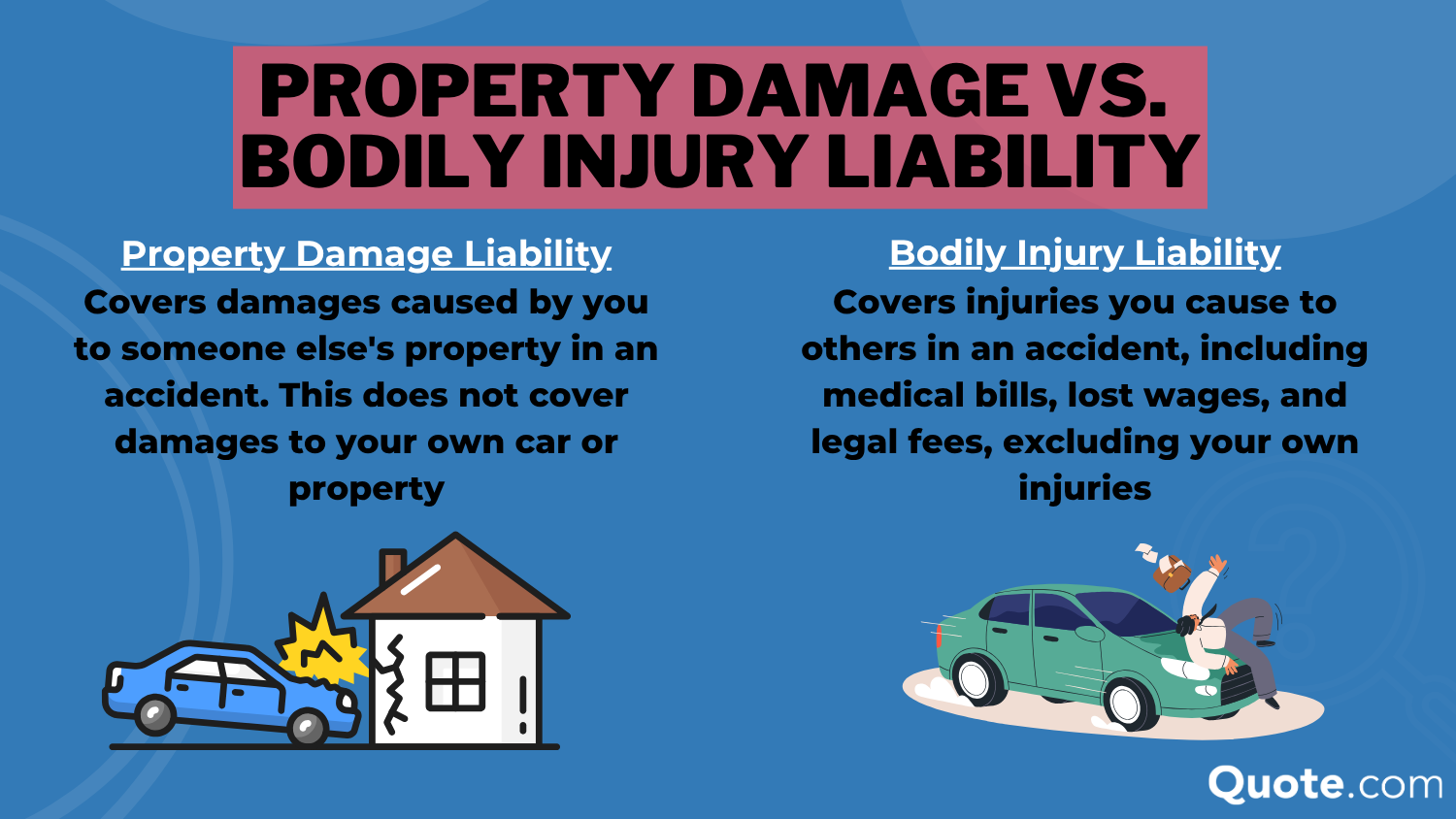
Property damage liability insurance is strictly "third-party" coverage. This means it protects you by paying for the damage you cause to others; it does not pay for your own vehicle’s repairs. In a typical Arizona accident, PDL coverage applies to:
- Other Vehicles: This is the most common application. It covers the cost to repair the other driver’s car or provides the actual cash value (ACV) if the vehicle is deemed a total loss.
- Public and Private Structures: If a vehicle leaves the roadway and strikes a fence, a building, a mailbox, or a storefront, the PDL portion of the policy handles these claims.
- Stationary Objects: This includes utility poles, traffic lights, and street signs. Damage to government-owned property can be surprisingly expensive, as municipalities often charge for both the materials and the specialized labor required for emergency repairs.
- Personal Property Inside the Vehicle: If a collision destroys a passenger's laptop or specialized equipment inside the other vehicle, those items are generally covered under the at-fault driver’s PDL policy.
Exclusions and Limitations
It is equally important to understand what property damage liability does not cover. It does not cover your own car—that requires "Collision" coverage. It also does not cover damage caused by weather, theft, or vandalism—that requires "Comprehensive" coverage. Furthermore, liability insurance generally excludes intentional acts of damage or damage occurring while the vehicle is being used for commercial purposes (such as delivery or rideshare) unless a specific endorsement is present.
The Financial Risk of Minimum Coverage in 2026
While $15,000 is the legal requirement, insurance experts in 2026 categorize this as "high-risk" levels of protection. The average cost of a new car in the United States has continued to climb, frequently exceeding $50,000. If an Arizona driver with minimum limits totals a moderately priced SUV, their insurance will pay the first $15,000, leaving them with a potential $35,000 personal debt to the other driver or their insurance carrier.
The Role of Subrogation
When you hit someone and your insurance isn't enough, the other driver’s "Underinsured Motorist Property Damage" (UMPD) or collision coverage might step in to pay for their repairs. However, this does not mean you are off the hook. The other driver’s insurance company will likely exercise their right of subrogation, meaning they will sue you personally to recover the funds they paid out to their policyholder because of your negligence.
Arizona Property Damage Claim Process
If you are involved in an accident in Arizona, the property damage claim follows a specific trajectory. Because Arizona is an at-fault state, the "victim" typically files a third-party claim with the at-fault driver’s insurance company.
- Determination of Fault: Insurance adjusters review the police report, witness statements, and photo evidence. Arizona uses a "pure comparative negligence" standard (A.R.S. § 12-2505). This means even if you are 90% at fault, you can still recover 10% of your damages, but your PDL will pay for 90% of the other party's damages.
- The Appraisal: An adjuster or a qualified auto body shop provides an estimate of the damage. In 2026, many insurers use AI-assisted photo appraisals for minor claims, though complex structural damage still requires physical inspection.
- Total Loss Evaluation: In Arizona, a vehicle is generally considered a "total loss" when the cost of repairs plus the salvage value exceeds the vehicle's actual cash value. While some states have a hard percentage (like 75%), Arizona adjusters often use a more fluid calculation known as the Total Loss Formula (TLF).
- Payment and Release: Once a settlement is reached for the property damage, the claimant signs a release form. This prevents them from coming back later to ask for more money for the same property damage incident.
Comparing Property Damage Limits and Costs
Increasing your property damage limits is often one of the most cost-effective ways to improve an insurance policy. Because the "first" $15,000 of coverage is where the most risk lies for the insurer, the jump from $15,000 to $50,000 or $100,000 in coverage typically results in a relatively small increase in the monthly premium.
| Coverage Limit | Protection Level | 2026 Suitability | Common Use Case |
|---|---|---|---|
| $15,000 | State Minimum | Poor | Drivers with no assets and very old vehicles. |
| $25,000 | Low | Marginal | Budget-conscious drivers in low-traffic areas. |
| $50,000 | Standard | Good | Average Arizona driver; covers most total losses. |
| $100,000+ | High | Excellent | Homeowners and those with significant savings. |
Diminished Value Claims in Arizona
One unique aspect of Arizona property damage law that residents should be aware of is the right to claim Diminished Value. Even if a car is perfectly repaired after an accident, its resale value is typically lower because it now has an accident history on reports like CARFAX.
Arizona case law (specifically State Farm Mut. Auto. Ins. Co. v. Mabry) has reinforced the principle that a victim should be "made whole." If you are the not-at-fault party in an Arizona accident, you can file a claim against the at-fault driver’s property damage insurance for the loss in the vehicle's market value. This is separate from the repair costs and is a crucial right for owners of newer or luxury vehicles.
Uninsured and Underinsured Property Damage (UMPD)
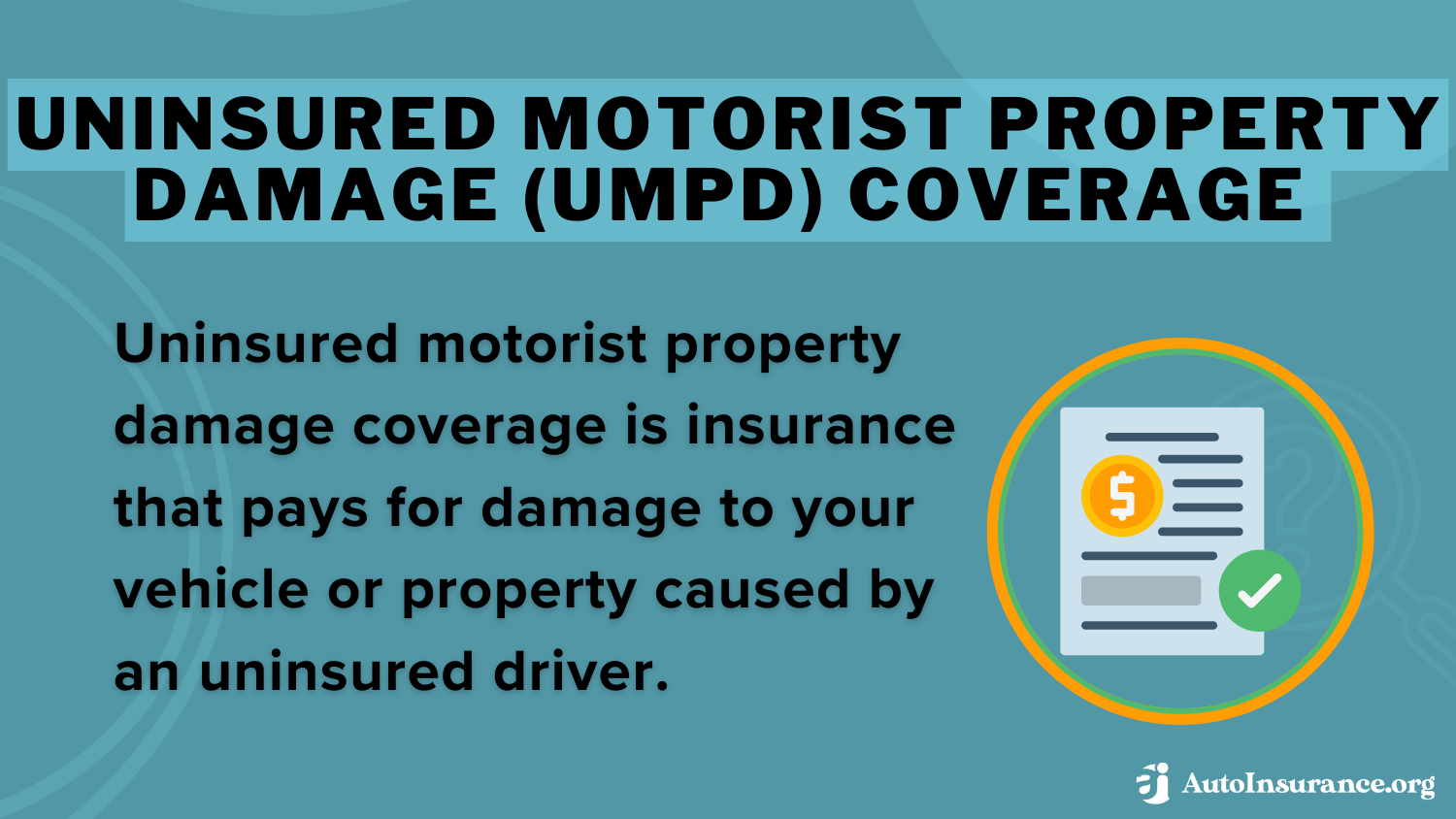
While liability insurance covers the damage you cause to others, what happens if someone hits you and they don't have insurance? In Arizona, Uninsured Motorist Property Damage (UMPD) is an optional coverage. If you do not have collision insurance, UMPD is highly recommended. It provides a specific fund (usually with a $250 deductible) to repair your car if the at-fault driver is uninsured or if you are the victim of a hit-and-run, provided the phantom vehicle is identified or there is corroborating evidence.
Frequently Asked Questions
What is the minimum property damage requirement in Arizona for 2026?
The legal minimum is $15,000. This is part of the 25/50/15 liability requirement mandated by A.R.S. § 28-4009. Driving without this minimum coverage can result in the suspension of your driver's license and vehicle registration.
Does Arizona property damage liability cover my own car?
No. Property damage liability only pays for damage you cause to other people's property. To cover repairs to your own vehicle in an at-fault accident, you must purchase "Collision" coverage. To cover non-collision damage (like fire or theft), you need "Comprehensive" coverage.
Can I sue for diminished value in Arizona?
Yes. Arizona is one of the states that recognizes diminished value claims. If your vehicle was damaged by another driver, you can seek compensation for the lost market value of your vehicle that remains even after it has been fully repaired.
What happens if the damage I cause exceeds my $15,000 limit?
If the repair costs exceed your limit, the insurance company will pay up to the $15,000 cap and then issue a "limits spent" notice. You are personally liable for the remaining balance. The other party or their insurer can sue you, obtain a judgment, and potentially garnish your wages or place liens on your property to recover the difference.
How long do I have to file a property damage claim in Arizona?
Under A.R.S. § 12-542, the statute of limitations for damage to personal property in Arizona is generally two years from the date of the accident. However, it is advisable to start the claim process immediately to ensure evidence is preserved and witnesses are available.
Does property damage insurance cover a hit-and-run in Arizona?
If you are the at-fault driver who flees, your insurance may still cover the victim's property damage, but you will likely face criminal charges and policy cancellation. If you are the victim of a hit-and-run, your own property damage liability will not help you; you would need Collision coverage or Uninsured Motorist Property Damage (UMPD) coverage to pay for your repairs.
Recommendations for Arizona Drivers
Given the high cost of vehicle technology and labor in 2026, relying on the $15,000 Arizona state minimum is a significant financial gamble. For most drivers, the most prudent course of action is to increase property damage liability limits to at least $50,000. This covers the replacement cost of the vast majority of vehicles on the road today.
Additionally, residents should contact the Arizona Department of Insurance and Financial Institutions (DIFI) to verify the standing of their insurance carrier and to understand their rights regarding claim settlements. Always keep a digital or physical copy of your insurance card in your vehicle, as Arizona law enforcement can verify coverage instantly through the MVD database during any traffic stop.